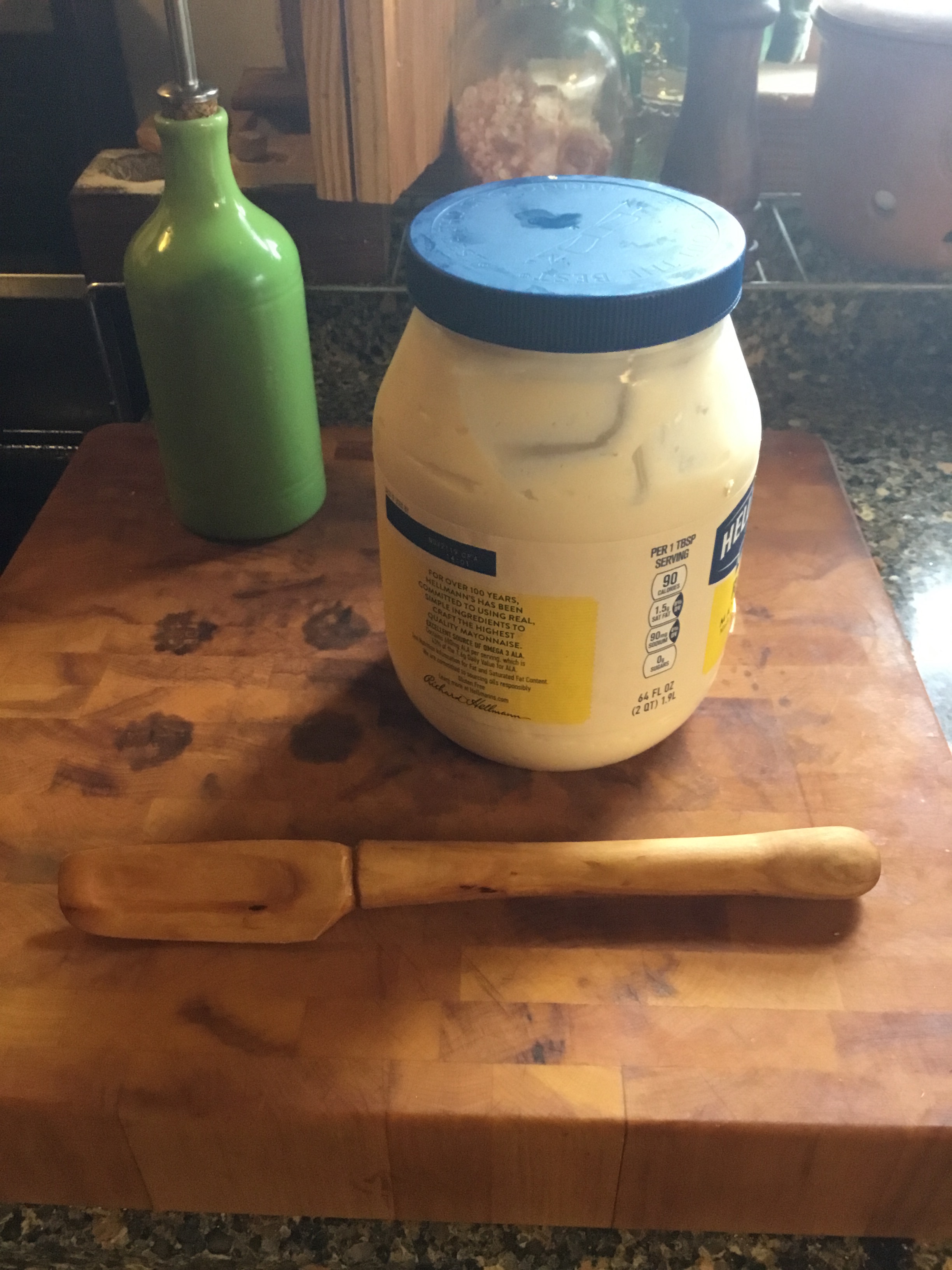
The Jar knife is the answer for everyone who has tried to scrap the last bit of goodness out of a jar of anything. By design, it reaches into the corner of any rounded jar, so that nothing is wasted. This one was made from green Maple wood from my property, which makes it easier to turn on a lathe, and carve, and then the jar knife was air dried. The finish is nothing, which is free, and available everywhere.
Treen is essentially a word passed down from Anglo-Saxon (Old English) and proto-Germanic, which just means “wooden.” The modern interpretation of the word is “wooden utensil” meant for household use. Before cheap metal and cheap plastic, that meant just about everything in the house, or hut, or shanty, or hollow tree (that last being a reference to one of the founders of Marlinton, West Virginia, who got so mad at his business partner, that he went to live in a hollow tree, instead of dealing with the guy. I doubt he had a Cuisinart in there).
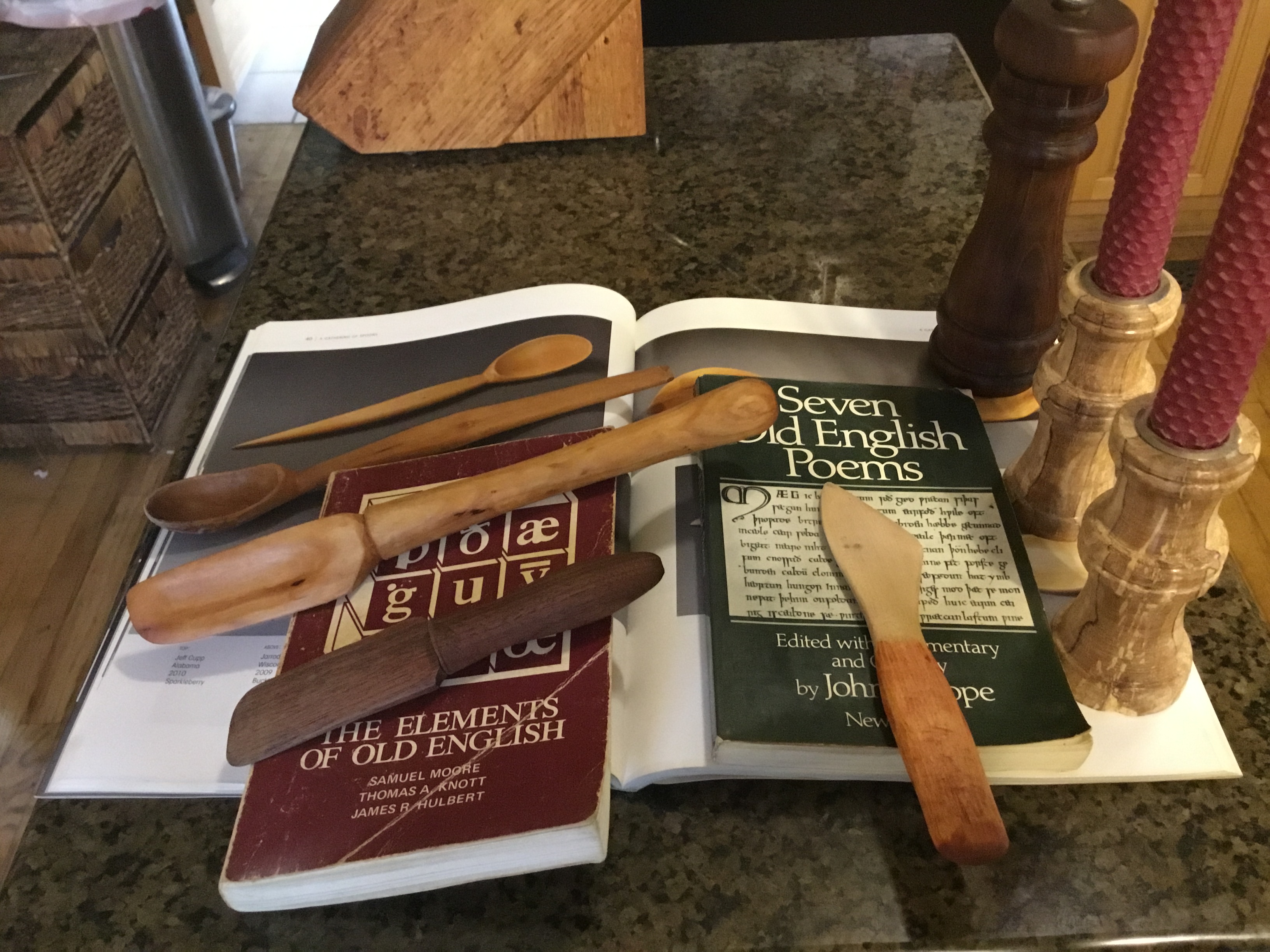
One of my too many hobbies is making treen, using only hand tools and traditional methods. The picture on the top left is a spoon I made that was part of a traveling museum exhibition, chronicled in the book A Gathering of Spoons, compiled and written by the Emeritus University of Connecticut Libraries Director Norman D. Stevens. The rest are all of local woods, including Maple, Dogwood, Black Walnut, and Sparkleberry. I’ll show those individually later, and tell what they all are made for. Cheap metal and cheap plastic are banned from this house, as my wife cringes every time she sees some TV chef scratch up a really nice pan with a crappy imported utensil.
A certain Monsieur Parmentier helped popularize the potato in France, and there was no trick that he wouldn’t use to do so. He had potato themed dinners with famous guests, like Ben Franklin and Thomas Jefferson. His best trick was to convince people that his potatoes were so valuable that they needed to be guarded by French troops. Then all the troops would leave at night, and he let peasants steal the potatoes. This famous soup is named in honor of the particularly clever Frenchman, and this is my version.
Ingredients
Butter
2 medium Leeks, trimmed
1 Shallot or Onion
1 clove Garlic
2 medium Potatoes, diced
2 cups Chicken Stock
Salt and Pepper
Cream (optional)
Using the green parts of the leek keeps your soup from looking like toothpaste
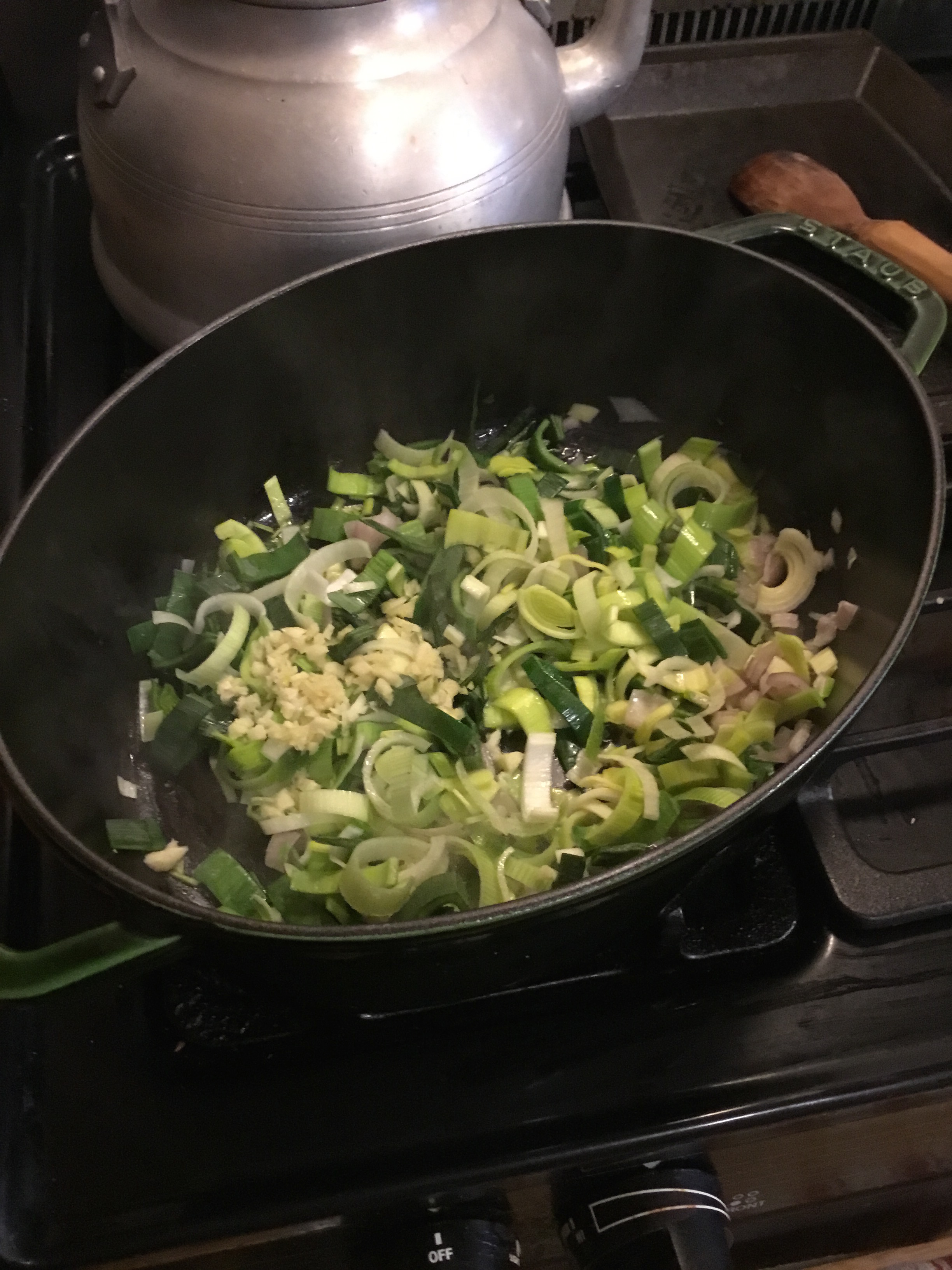
Split, carefully wash, and chop the leeks, including the green parts. Saute the chopped leek, onion, and garlic in butter until soft. Add the potatoes and chicken stock and simmer for forty five minutes to an hour, tasting occasionally for seasoning. Add water if needed. Cream is traditional but optional.
Soup simmering
Now for some nomenclature. Potage is just the French word for soup: this soup served unprocessed and usually without cream is called Potage Parisien. Run through a food mill, blended, or just hit with a potato masher, it becomes Potage Parmentier (I personally am a potato masher guy). Processed with cream, and served chilled, it gets the fancy sounding name of Vichyssoise. French names allow restaurants to charge ten bucks for what is essentially a bowl of Potato Soup.

 Southern Fusion Cooking