
Emma is on the left, Ziggy (Siegfried) is on the right. They’re Australian Shepherds who are supposed to guard the garden, the chickens and the bird feeders, but they mostly troll for table scraps. Shocking.

Emma is on the left, Ziggy (Siegfried) is on the right. They’re Australian Shepherds who are supposed to guard the garden, the chickens and the bird feeders, but they mostly troll for table scraps. Shocking.

I grew up on a farm where we had 10,000 chickens a year, and plots of fifteen acres of pink eye purple hull peas. No more of that. Here’s a typical spring garden now.
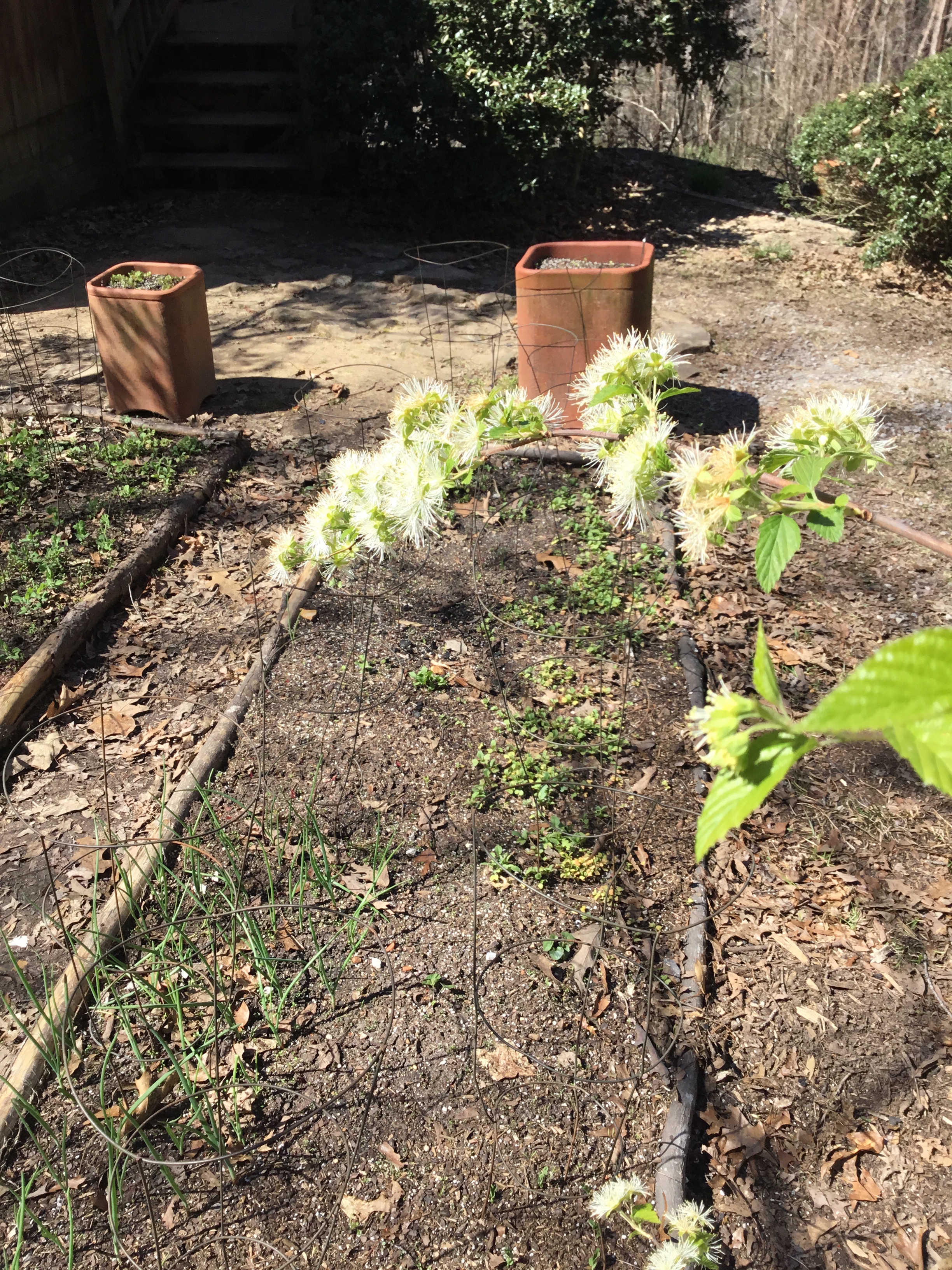
That’s Alabama Snow Wreath, Neviusia alabamensis, standing guard over my scallions, radishes, and peas. It’s an incredibly rare shrub. We’re already eating the scallions, and the mizuna will be next. Then comes the spring favorite: PEAS.

This is my first year growing Green Arrow english peas. So far the weather has been perfect, and I’ll hopefully have a recipe with fresh peas to share in a month or so.
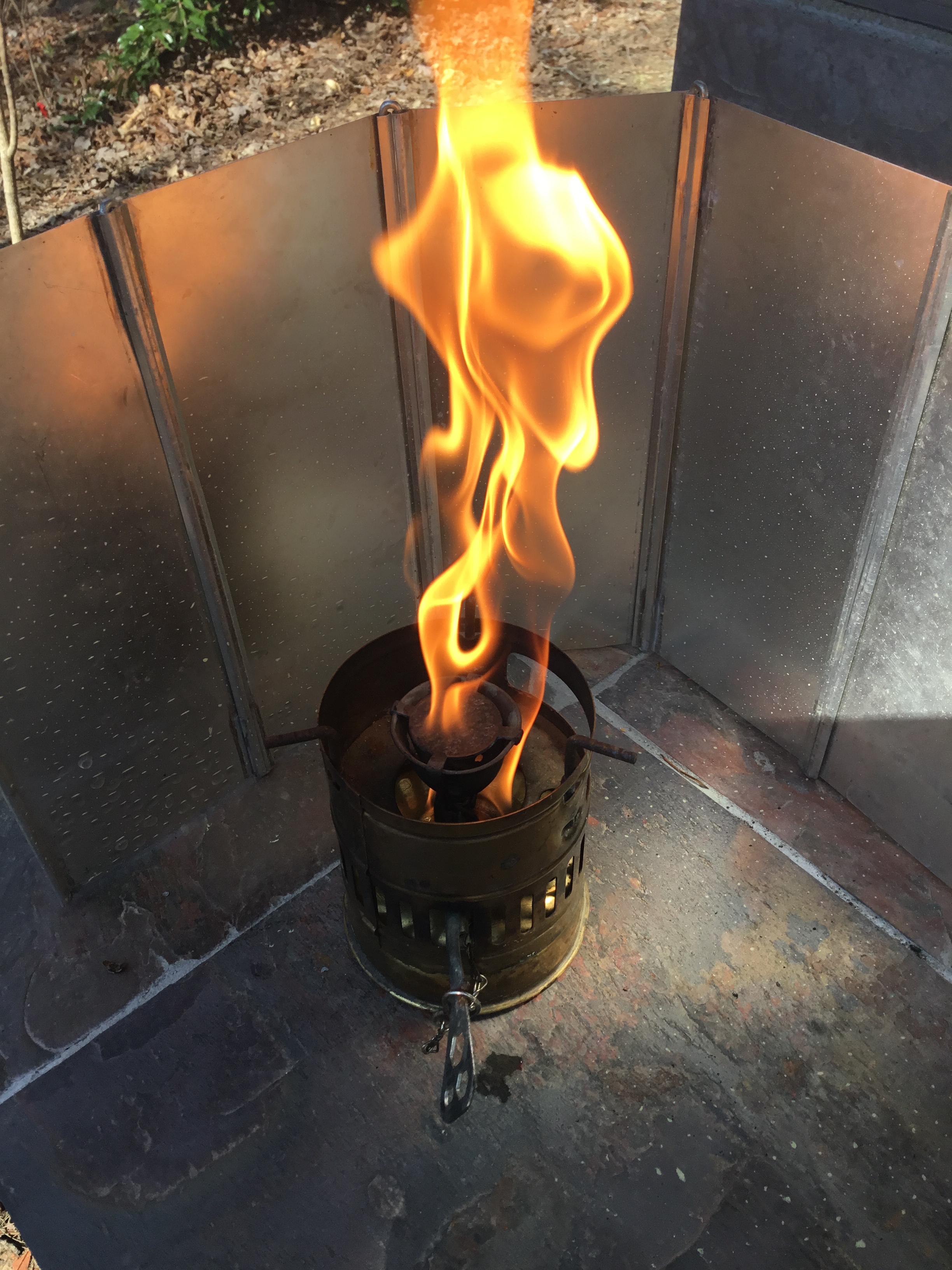
No one needs a 30,000 BTU kerosene burner all the time, so my go to outdoor stove is the venerable SVEA 123, based on a design which is well over a hundred years old. It’s so complex my version, the 123R, has TWO moving parts. In two decades, it has never needed a single repair.
Then there’s the drama. It burns white gas, aka petrol, coleman fuel, benzine, etc, so it needs to be primed in order to light. Pour a little fuel over the burner, light a match, throw it in the direction of the stove, and RUN AWAY. This stove is not recommended for use on oak tables.
Will it cook?
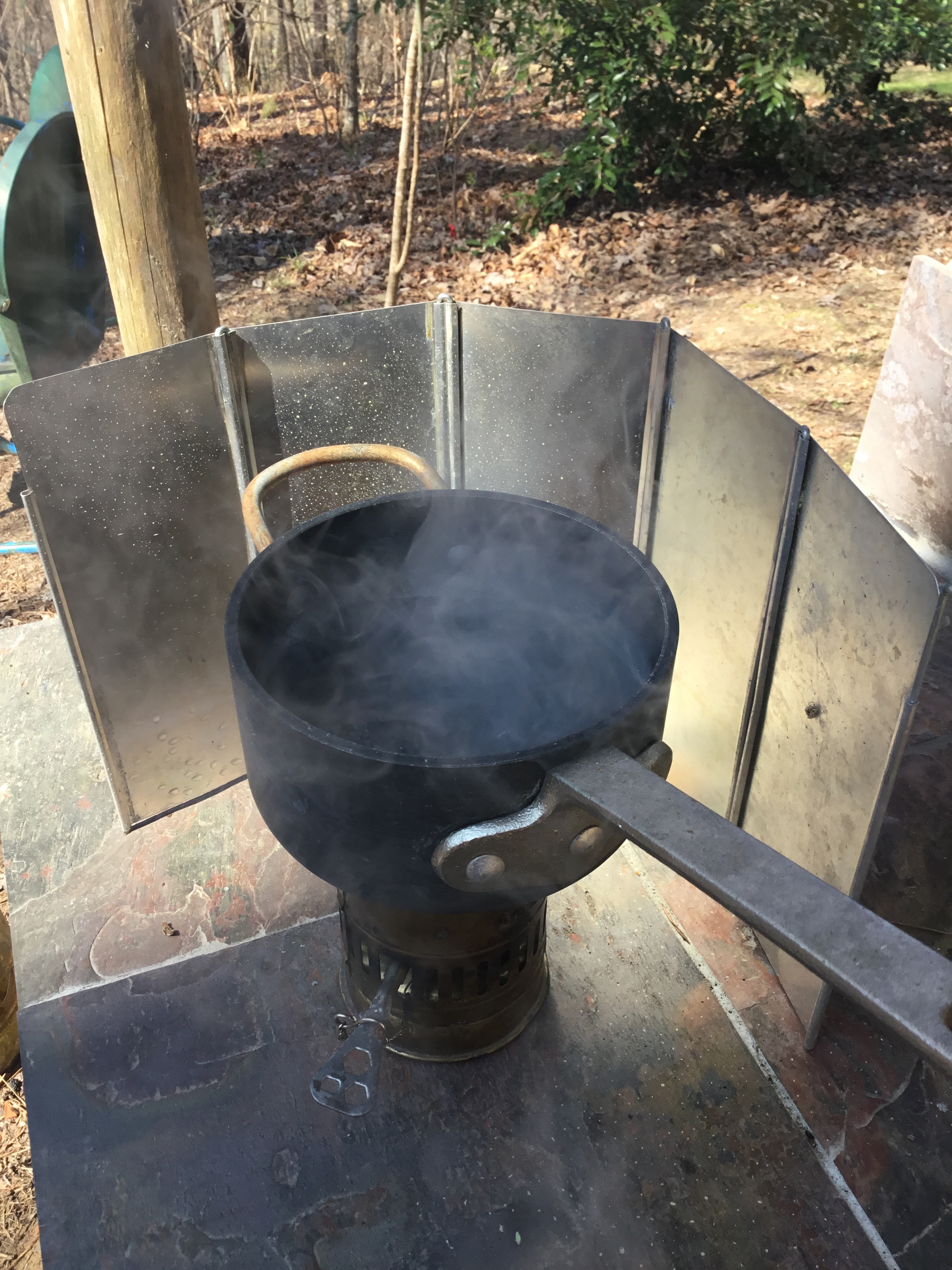
After the starter flame burns out, the stove is easily lit, and then comes the famous sound–a jet engine, or a rocket taking off. Mine sounds like a locomotive trying to get up a mountain-chug chug, chug chug. This is my favorite outdoor stove.
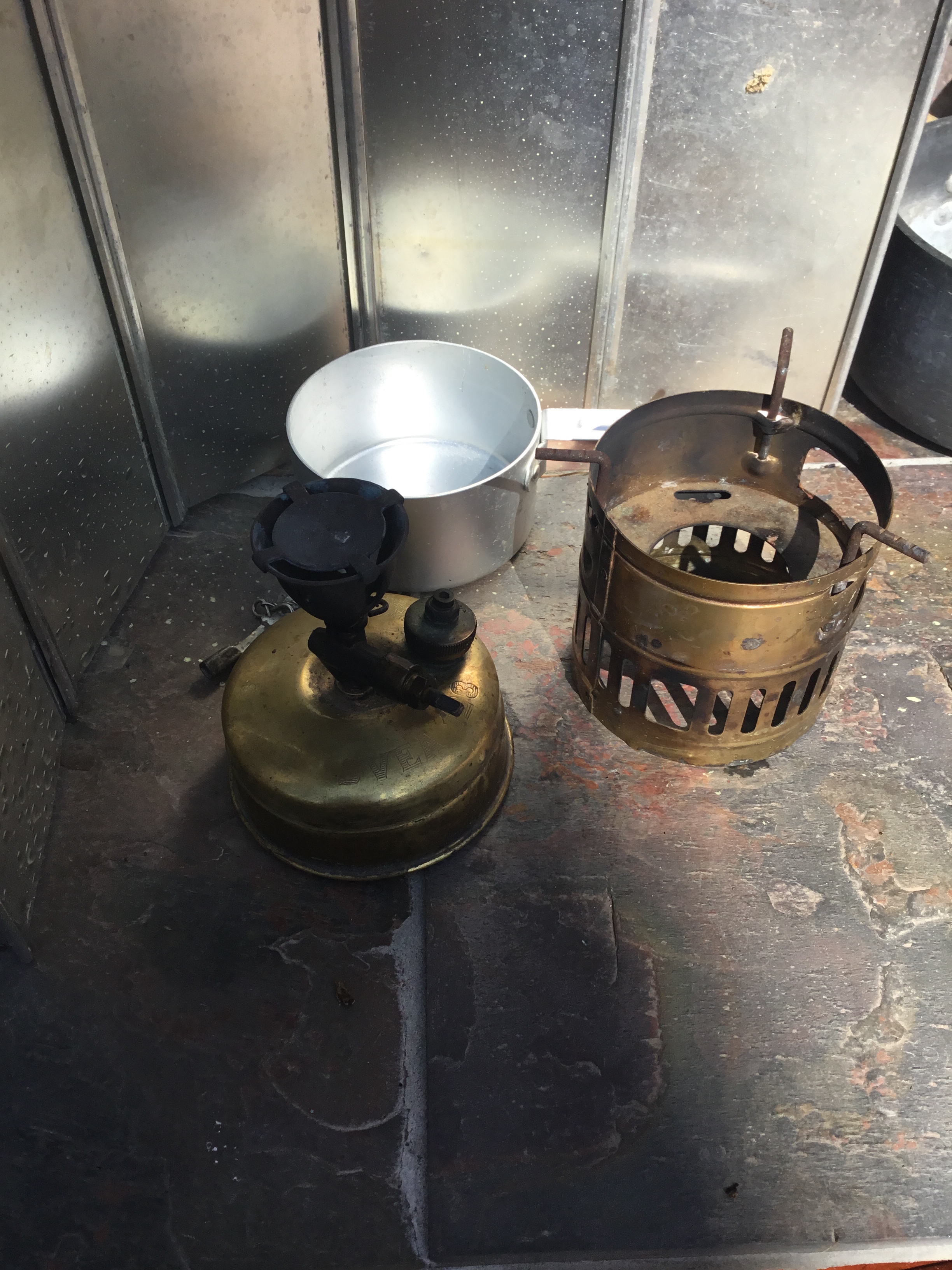
Buy one of the old solid brass Swedish made ones from eBay, and if you’re incredibly lucky, you can get one with the Sigg Tourist cook set. I admitted to my wife that I have a fetish for camping stoves–I have six–but I could live with just this one.
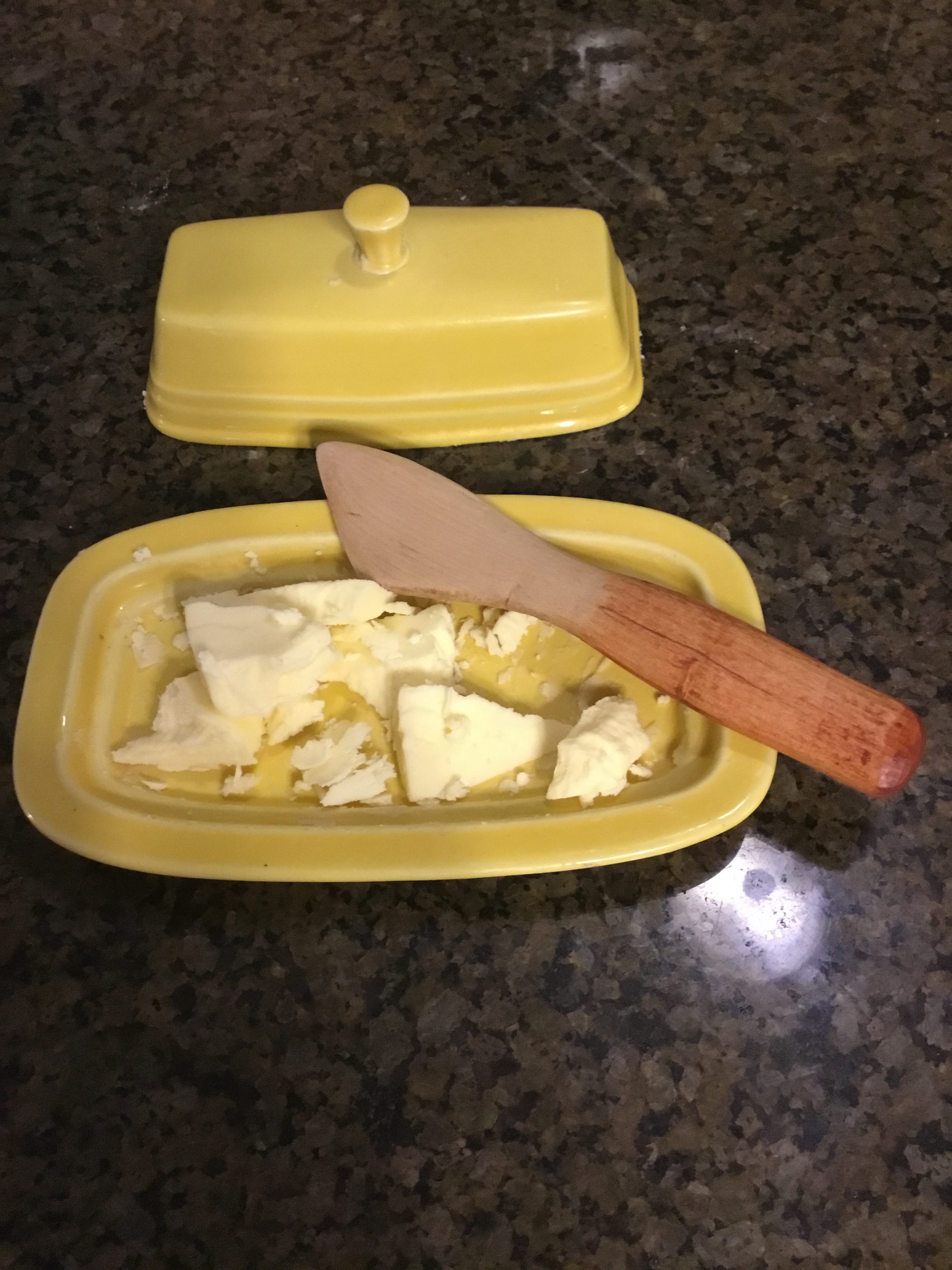
This is really the far south of Sweden, as the design is Swedish, but the maple came out of my yard here in Alabama. I decorated the handle with some homemade red stain made of iron oxide and food grade linseed oil–very Swedish. It actually gets used more as a jam and preserves spreader than as a butter knife.

After a decade of having red beans and rice for my birthday dinner every year, I decided to go full on native this year with Rabbit and Dumplings. So why not start with a nice marinade?
Marinade for Rabbit
Wine (I have loads of Apple Wine)
1 teaspoon Sea Salt
Black Peppercorns
You only need enough wine to cover the bunny. Marinate for at least an hour, preferably overnight, and then simmer the rabbit for about forty five minutes. Add water to the marinade for the simmering. Let the cooked rabbit cool, and then make the dumplings.
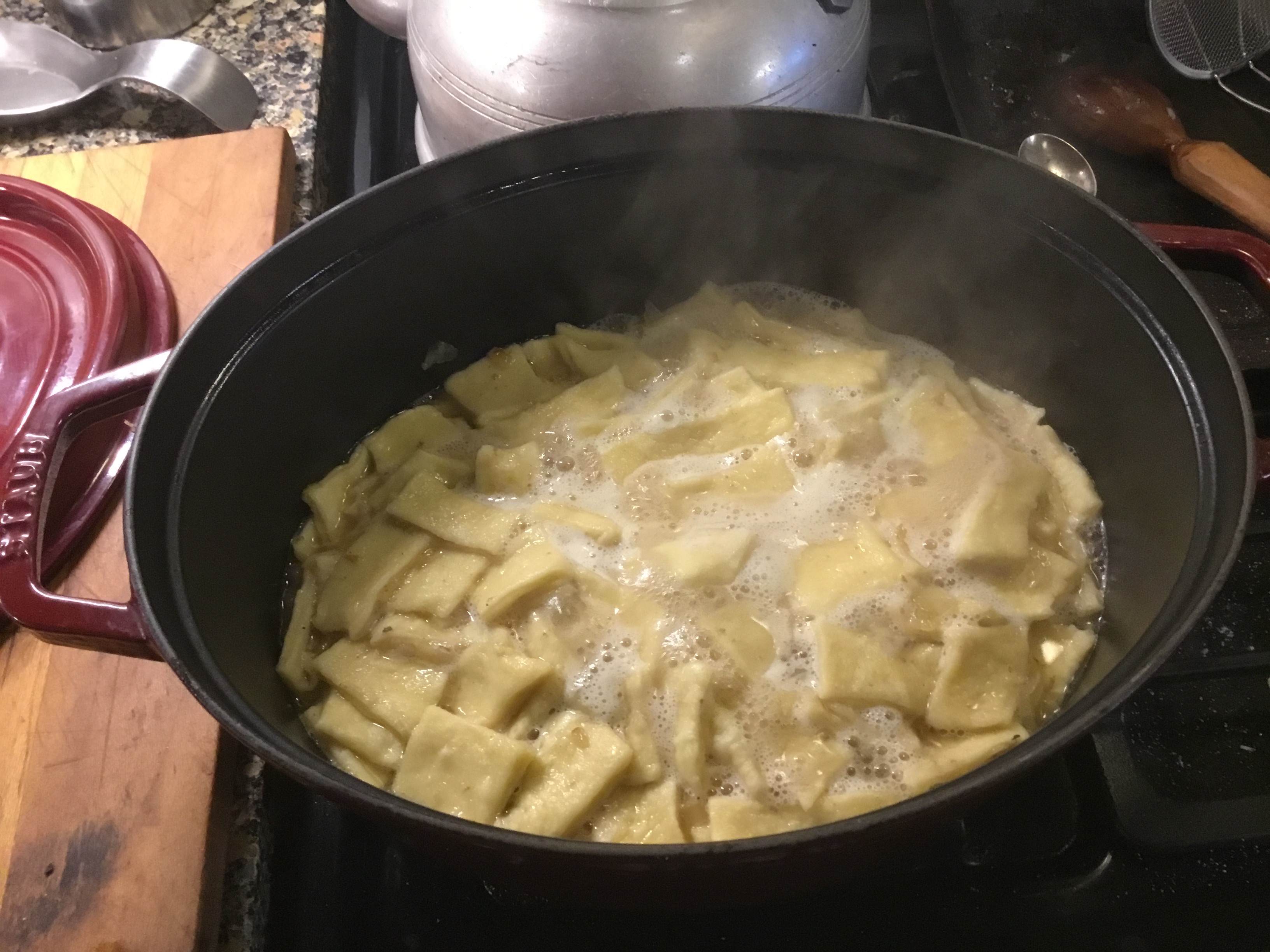
Dumplings
These are rolled dumplings, not the drop kind.
2 cups Flour
1 teaspoon Baking Powder
3 tablespoons Butter
2 Eggs
A little Milk
Mix these as with any dough. Keep plenty of flour handy, as they do tend to get very sticky. Roll out thin, cut into small rectangles, and cook in the rabbit cooking broth, along with:
2 cups Chicken Stock
1 Onion, chopped and cooked in Butter
Dumplings take some time to cook, so shred up the rabbit meat, and have a glass (or two) of wine. You’ll know when the dumplings are done, as they will no longer taste like raw dumplings. Finally, add the shredded rabbit meat, and heat through thoroughly.
Go to work the next day, and tell your co-workers that you ate pink-nosed bunny for your birthday, and see how they react.

Pi Day is gone, but Pie Days are here. One of the best meals I have ever eaten was at the French House at the University of Alabama, where we students of French were offered four different kinds of quiche–not surprisingly, I ate some of each one. My favorite was Asparagus Quiche. Here’s one with an all butter Creole Pie Crust.
Ingredients
8 ounces Swiss Cheese, cubed
6 large Asparagus Stalks
4 organic Eggs
Heavy Cream (Enough to fill the crust)
Salt and Pepper
Nutmeg
Crank your oven up to 400 degrees F, as this pie crust goes in uncooked. Break the asparagus at the point where it becomes tough (just try this once, and you’ll get the hang of it). Peel the lower half and cut into half inch pieces. Add the chopped pieces with the cheese into the uncooked pie shell. Mix the cream and egg mixture together, and season. Pour that over the filling in the pie shell, season with nutmeg, and arrange the asparagus spears into whatever Leonardo-esque shape you prefer.

Ok. so there’s some chopped up cooked bacon in there as well. What’s a meal without bacon? Bake at 400 degrees F for at least forty five minutes, until the quiche filling browns. Let the cooked pie rest, and then it’s time to chow down on some springtime.
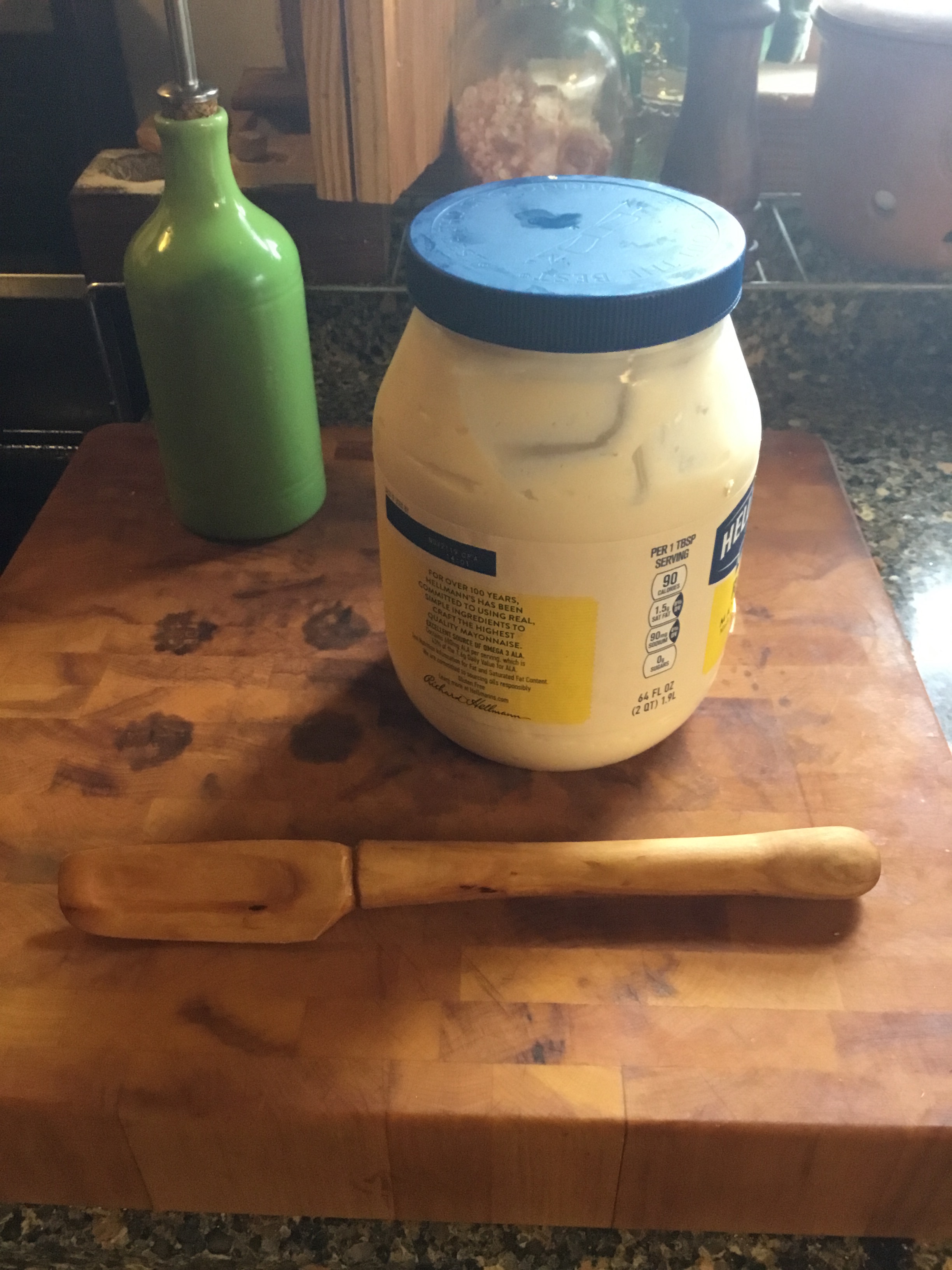
The Jar knife is the answer for everyone who has tried to scrap the last bit of goodness out of a jar of anything. By design, it reaches into the corner of any rounded jar, so that nothing is wasted. This one was made from green Maple wood from my property, which makes it easier to turn on a lathe, and carve, and then the jar knife was air dried. The finish is nothing, which is free, and available everywhere.
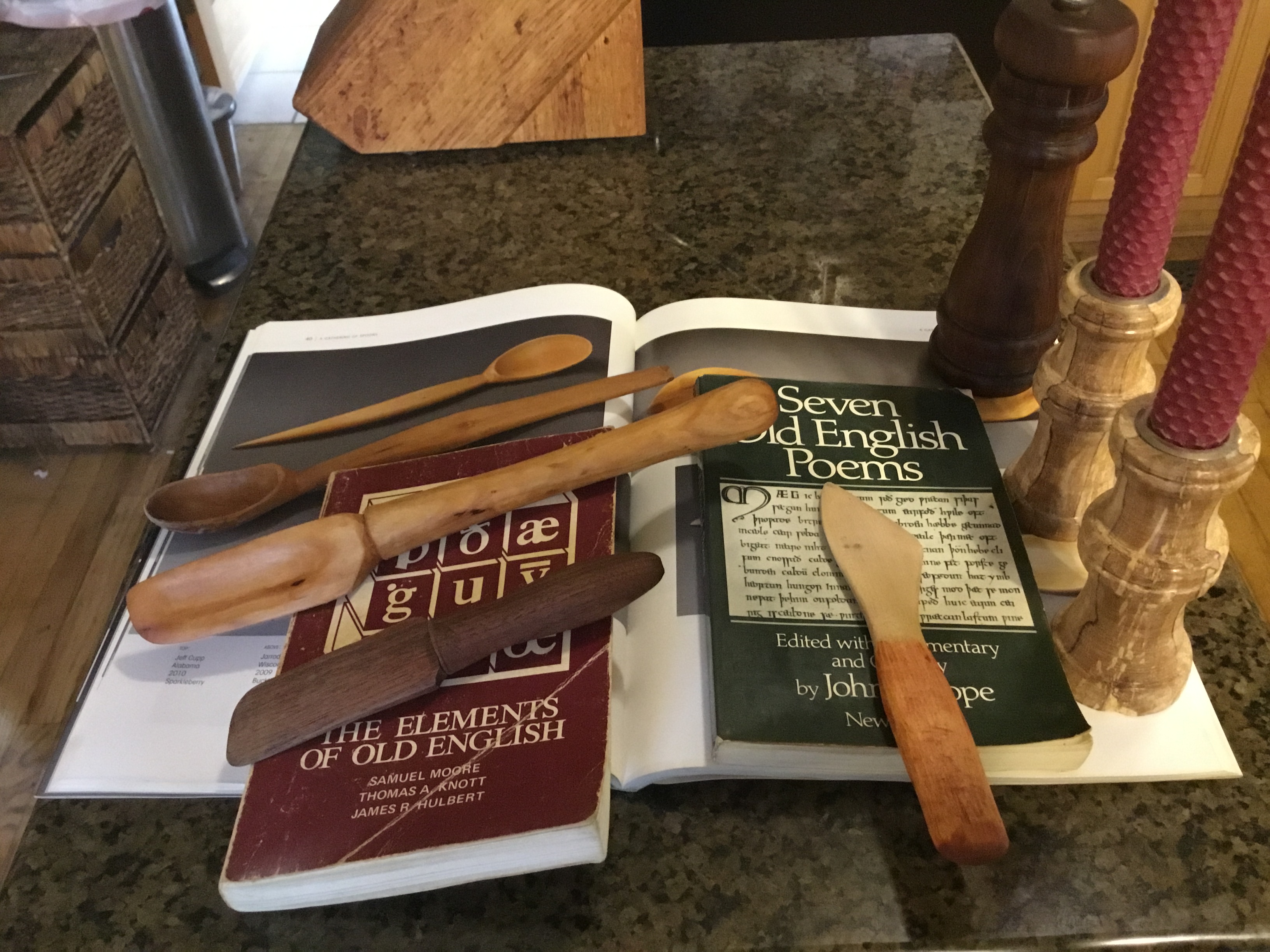
Treen is essentially a word passed down from Anglo-Saxon (Old English) and proto-Germanic, which just means “wooden.” The modern interpretation of the word is “wooden utensil” meant for household use. Before cheap metal and cheap plastic, that meant just about everything in the house, or hut, or shanty, or hollow tree (that last being a reference to one of the founders of Marlinton, West Virginia, who got so mad at his business partner, that he went to live in a hollow tree, instead of dealing with the guy. I doubt he had a Cuisinart in there).
One of my too many hobbies is making treen, using only hand tools and traditional methods. The picture on the top left is a spoon I made that was part of a traveling museum exhibition, chronicled in the book A Gathering of Spoons, compiled and written by the Emeritus University of Connecticut Libraries Director Norman D. Stevens. The rest are all of local woods, including Maple, Dogwood, Black Walnut, and Sparkleberry. I’ll show those individually later, and tell what they all are made for. Cheap metal and cheap plastic are banned from this house, as my wife cringes every time she sees some TV chef scratch up a really nice pan with a crappy imported utensil.
A certain Monsieur Parmentier helped popularize the potato in France, and there was no trick that he wouldn’t use to do so. He had potato themed dinners with famous guests, like Ben Franklin and Thomas Jefferson. His best trick was to convince people that his potatoes were so valuable that they needed to be guarded by French troops. Then all the troops would leave at night, and he let peasants steal the potatoes. This famous soup is named in honor of the particularly clever Frenchman, and this is my version.
Ingredients
Butter
2 medium Leeks, trimmed
1 Shallot or Onion
1 clove Garlic
2 medium Potatoes, diced
2 cups Chicken Stock
Salt and Pepper
Cream (optional)
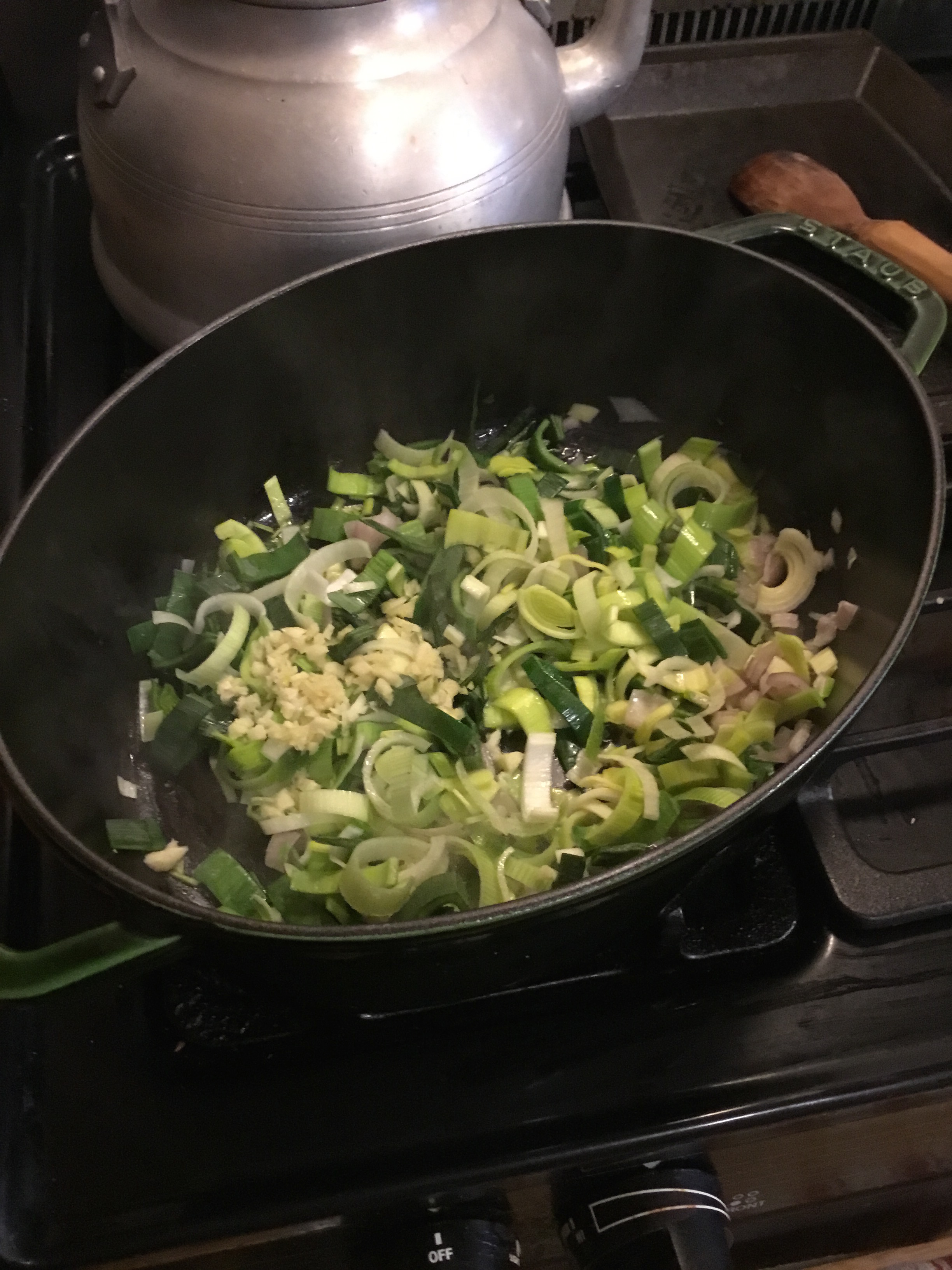
Split, carefully wash, and chop the leeks, including the green parts. Saute the chopped leek, onion, and garlic in butter until soft. Add the potatoes and chicken stock and simmer for forty five minutes to an hour, tasting occasionally for seasoning. Add water if needed. Cream is traditional but optional.

Now for some nomenclature. Potage is just the French word for soup: this soup served unprocessed and usually without cream is called Potage Parisien. Run through a food mill, blended, or just hit with a potato masher, it becomes Potage Parmentier (I personally am a potato masher guy). Processed with cream, and served chilled, it gets the fancy sounding name of Vichyssoise. French names allow restaurants to charge ten bucks for what is essentially a bowl of Potato Soup.

My alter ego goes by the name of “Rustico,” after a particularly bawdy character from the Italian Renaissance classic by Boccaccio, The Decameron. I’ll let you Goggle that, if you want to find out what all the naughty hermit got up to. It’s not that easy to be naughty if you’re a hermit.
Which strangely enough, brings me to the subject of my rustic outdoor kitchen, which is something of a permanent work in progress. The centerpiece, however, is fully functional. That would be the brick oven in the picture above, which was built entirely by yours truly.
The basic plan for this oven came from the excellent book, The Bread Builders, by Wing and Scott. They did not include plans for a facade or enclosure, so those ideas were mine. The arches were a nice addition.
A brick oven can reach temps of up to and past 1000 degrees F, so don’t stick your hand in there to see how hot it is, as I did–once. Fortunately, hair does grow back.
So if you want authentic pizza that cooks in ninety seconds, get out your trowel and go to work. I taught myself masonry skills building this joker. Who needs stainless steel and gas for an outdoor kitchen? Give me a load of firewood instead.

because facts really should be sacred
Or not, depending on my mood
I am just a girl who loves reading and talking about books
because I've got to tell someone.
a little lunch, a little wine, a LOT of talking!
Best Friends for Sixty Years and Counting...
Tales of quilting, gardening and cooking from the Kingdom of Chiconia
Refuge of an assumed danophile...
Serving BL since 2017
the Story within the Story
The only impossible journey in life is you never begin!! ~Tanvir Kaur
Country Living in the Southern Appalachians, USA--A little of this, a lot of that
A daily selection of the best content published on WordPress, collected for you by humans who love to read.
Country Living in the Southern Appalachians, USA--A little of this, a lot of that
Longreads : The best longform stories on the web
The latest news on WordPress.com and the WordPress community.
 Southern Fusion Cooking