“Biggest EVER bird flu outbreak means 48MILLION chickens, turkeys and ducks have now been culled across UK and Europe,” screams the headline in the UK paper Daily Mail. Expect an epidemic of hysteria as well. 10.5 million domestic fowl were culled from just two domestic US farms last spring.
Yes, the cause of bird flu is a highly contagious virus, but with the two year old like attention span of the news industry, expect zero analysis of the contributing and enabling factor–industrial factory farms. The bird flu virus did not appear from nowhere, as humans had to create the conditions for its explosive spread.
Try a simple thought experiment. Cram five million humans into a very small space, say that they are all elbow to elbow. Then leave them there for a few months, with nothing but the most basic food and water. What could possibly go wrong?
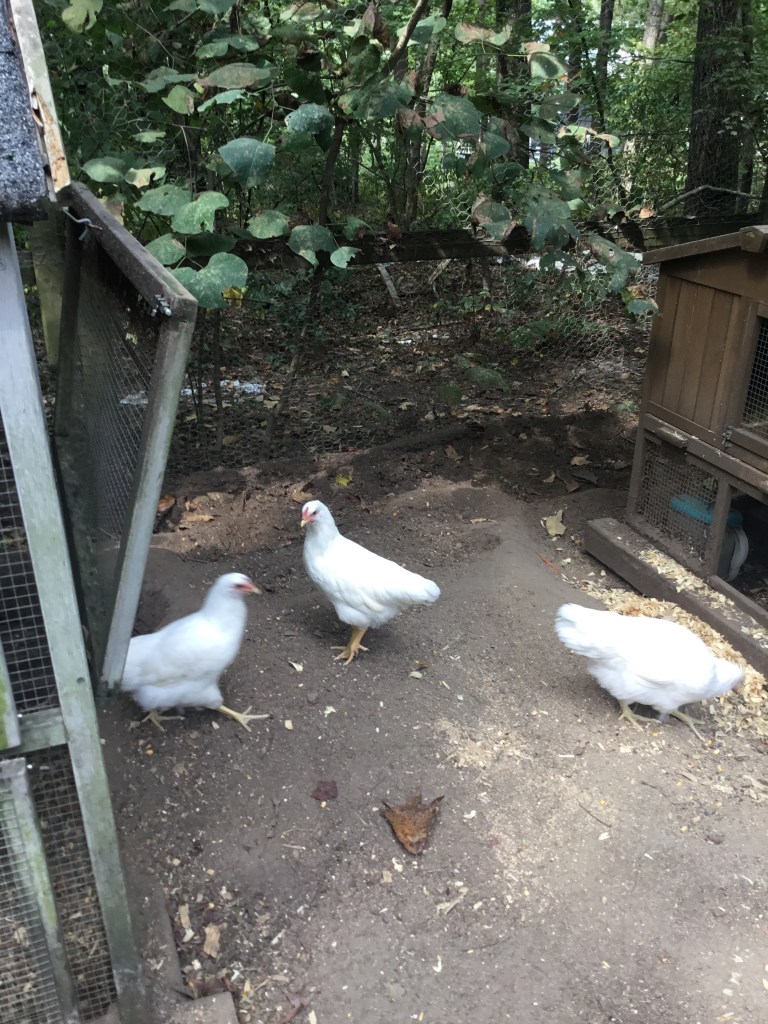
How we ended up with four Rhode Island White “Starter” chickens is the typical story of if your head is hard enough, beating it against the wall eventually works. After a few Google searches, I finally found four local sellers who hatched their own chickens. The first three I called didn’t answer, and had no voicemail. The fourth answered on the first ring, and promptly put me on a waiting list for chickens which would be ready for sale in a week. I made the cut, and drove up to the community of Battleground to pick them up.
Did he have the chickens! The first group I saw was a flock of a few hundred Rhode Island Whites, which were a special order from a hatchery. My chicks were part of an “overrun” set of hens, which were the result of an excess production of chickens, that the hatchery did not want. During my drive home, I had time to think about why chickens that look this fine are threatened as a breed. I came up with two good reasons.
The first is that correlation does not equal causation, a common mistake among our poorly educated population. Consider the following parody:
All Cats are Gray at Night
All White Chickens Look Alike
They don’t, except on a superficial level. Similarly, just because the words Rhode Island appear in Rhode Island Red chickens and Rhode Island White chickens, that the whites are only a white version of the reds. They aren’t. Whites are a well documented breed that is the result of crossing three different breeds that was introduced in 1888. Rhode Island Reds were developed by a number of breeders using a large range of different brown chicken breeds. The names are the result of geography, not merely genetics.
The larger issue is that Big Chicken, and Big Ag in general, ruins everything it touches. The myth that industrial production is more “efficient” than local food production finally took it on the nose this past summer, as even politicians are lamenting how expensive their crudité has gotten. Dudes, try shopping somewhere other than the supermarket–a farmer’s market, maybe.
At any rate, the big decline in Rhode Island White numbers in the 1960’s corresponds with the corporate takeover of food distribution that occurred at the same time. In this case, correlation can be proven to be causation as well, with independently verifiable evidence. Now that the system of Big Chicken is beginning to show its weaknesses, from Bird Flu caused by overcrowding and poor sanitation, to high prices brought on by equally greedy corporations, like Big Oil, will local production step in and fill the void? Is that flock of hundreds of Rhode Island Whites a sign or an aberration? History, in the long term, favors the sustainable, in whatever form it may take.
Strange and strangely revealing legal fights about food. I will eventually get to the billion dollar lawsuit over the word “sugar,” but will start small, and move up from there.
Every writer runs across an essay occasionally, and says, “Damn, I wish I had written that.” Let’s just say that there are probably thousands of writers who wish they had written “The Pleasures of Eating.” Brilliant and prophetic at the same time, it has to be the best takedown of the current food system dominated by big agriculture.
I’m just going to start with one of the finest sentences I’ve ever read. “Like industrial sex, industrial eating has become a degraded, poor, and paltry thing.” Industrial sex? What a comparison. Every time I drive past a fast food place like Chickin-fil-whatever, I have the same thought.
Here’s another zinger, about how oblivious people are to the garbage they are eating. “One will find this same obliviousness represented in virgin purity in the advertisements of the food industry, in which the food wears as much makeup as the actors.” I actually had a student who worked as a food “stylist” and photographer, and she sprayed her food with hair spray before she took a picture of it. Enough said.
I will end with the thesis, which is something of an odd way to end, but it is “the proposition that eating is an agricultural act.” I won’t give all of Berry’s recommendations, but a revised version of the entire essay is posted on the interwebs. Alas, it omits the industrial sex reference. Read it, and weep anyway, for the current state of our food system. Then go to your local farmer’s market, and buy some real food.
I saw Mr. Berry once, when he gave a reading at the University of Illinois. He drove up from his farm in Kentucky, and showed up wearing a pair of overalls. That’s what we call keeping it real.
Five Southern states dare defend their rights to torture animals.
Once again chicken cages are a hot political topic for Southern Attorneys General. Though Indiana is lead dog, so to speak, on this subject, brave Southern politicians are taking their stand on our rights to squeeze chickens into cages the size of tissue dispensers. Though 77% of Massachusetts voters don’t want our crap eggs and crap chicken meat sold in their fast food places, what right do they have to say no to Big Ag and their evil minions in the South? This is Alabama’s second shot at this issue–the first case against California went down in flames.



 Southern Fusion Cooking