Fire Pit/Outdoor Hearth

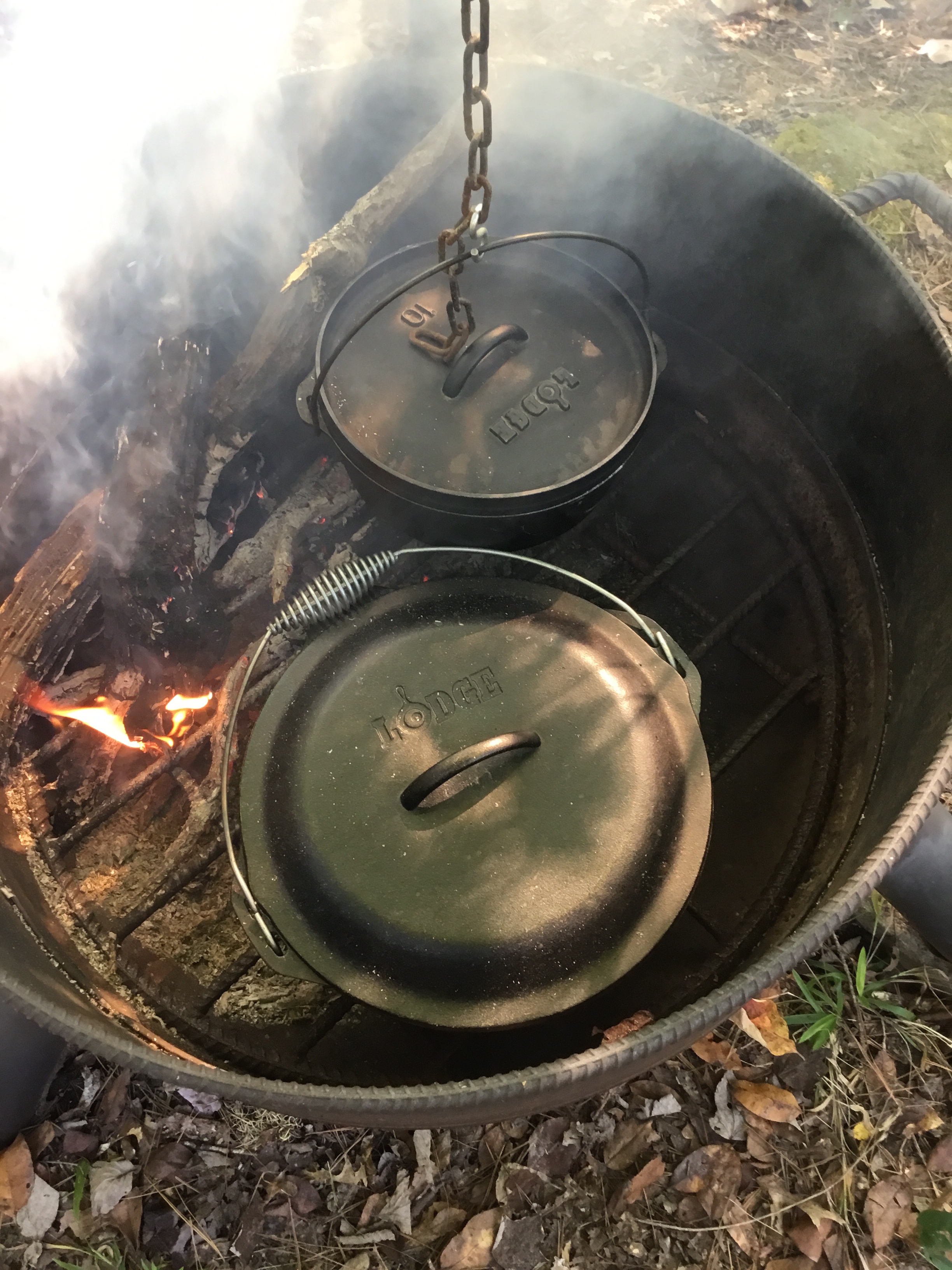
Dutch oven and “Camp” Dutch oven in the Outdoor Hearth Hybrid

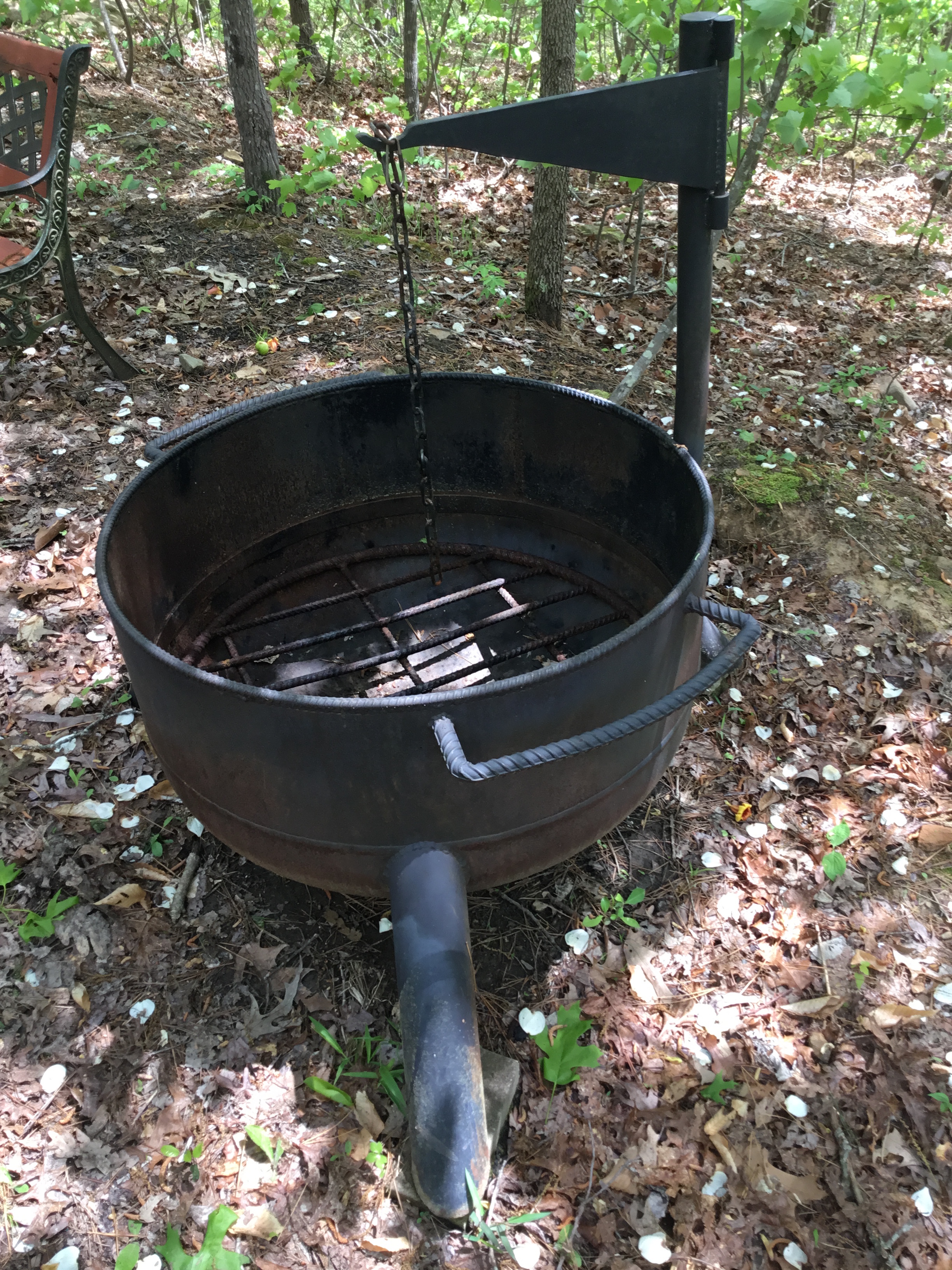
This mammoth version of a fire pit actually doubles as an outside hearth, which can be used like a similar arrangement in many colonial kitchens. The key to the set up is the crane from which that dutch oven is hanging.

A Multi-tasking Fire Pit

The crane, like those in colonial kitchen open hearth fireplaces, makes all the difference. The cook can’t immediately control the temperature of a wood fire, but they can control the amount of heat that reaches a pot, by swinging it from side to side, or raising and lowering it up and down via an s-hook. Additionally, the rebar grid at the bottom allows the cook to sit a dutch oven directly over the fire, as in the first photo.

The Holes Drilled in the Bottom are Not Visible

So there are at least three ways to cook here–on the fire, close to the fire, or swinging in the air. And if you just want to use it as a fire pit, the crane is on a hinge, and can swing completely behind the pit.

This was made from an old industrial grade propane tank, so it is recycled as well. An oak fell on it once, and I mean a big one, and it knocked the pit into the ground up to the top of the legs. The only damage was to bend the crane support slightly. We pulled it out of the ground, moved it, and I twisted the support slightly around, and put it back to work. Now that’s rustic.

Brick Oven Tools–Pizza Peels

Traditional Peel–Sort Of

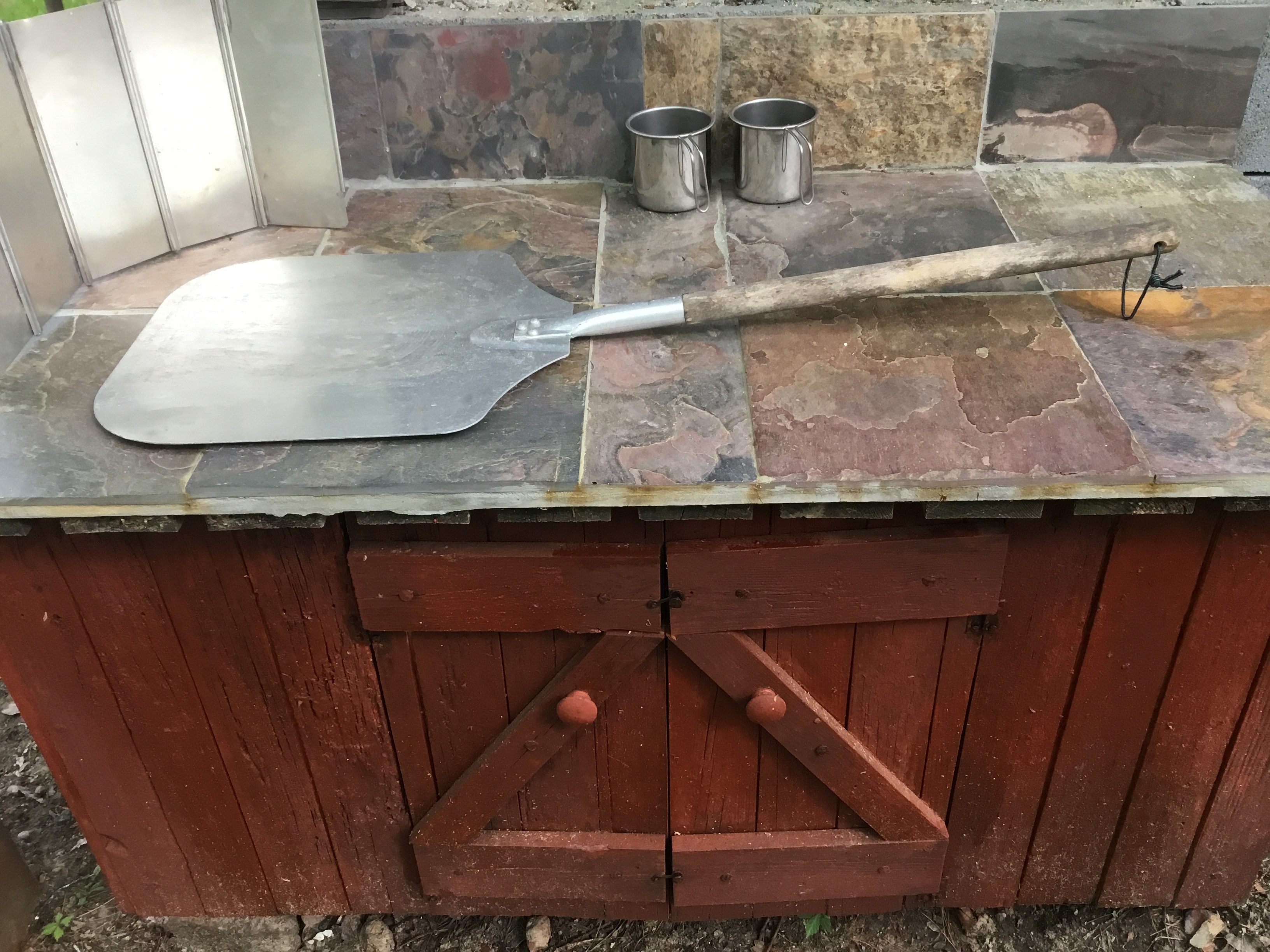
Pizza peels are handy things, if you want to keep the hair from being burned off your arms. The one above is the traditional wooden variety. It was too short, so I added a handle made from a broken hickory axe handle, making this possibly the sturdiest peel in the world.

Metal Peel

These aluminum peels are popular in the pizza industry, and they are light, thin, and durable. Not as long as my wooden one, but can live outside at the brick oven. Note the straight, not curved, front, which makes it easier to scoop up a pie.

Round Peel

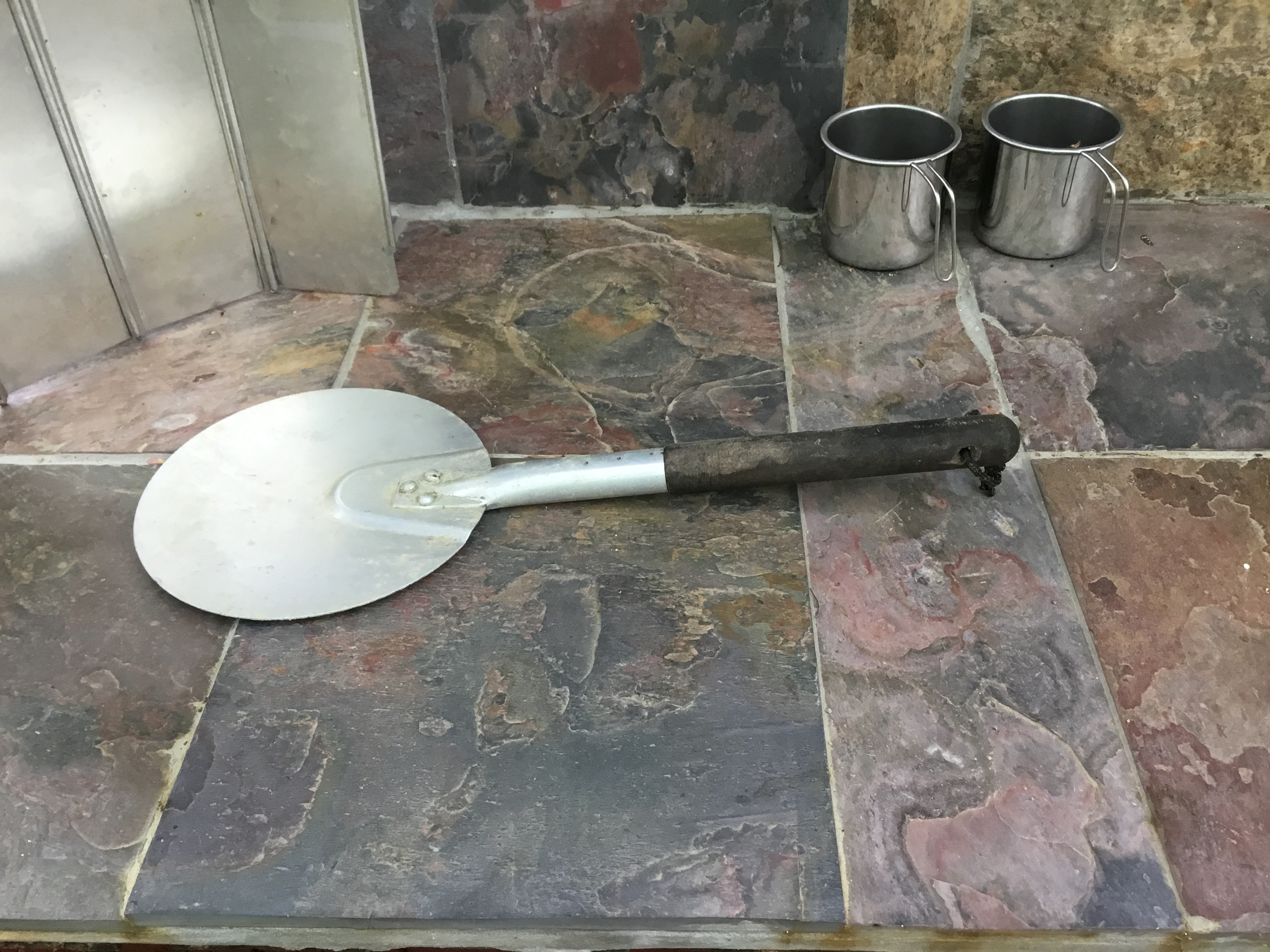
These little round peels are surprisingly useful. I use mine to move pizzas around inside the brick oven, though a welding glove is a good idea if you go that route.

Peels are also good inside the house, especially if you have a pizza brick of some kind. I use one of those giant Lodge cast iron pizza pans as a hearth, and turn up my oven as far as I dare. Wait a few minutes for it to reach temperature, then use a peel to throw a pizza on it. The results are surprisingly good. And, of course, bakers use these for sourdough loaves, and other concoctions.

Apple-Pecan Galette

Simple, rustic, and delicious

Galletes, or simple French country pies, have become something of a phenomenon in the South. In fact, there are no fewer than fifteen different galette recipes on the website of Southern Living magazine alone. This pie plateless recipe is more southern than most.

Apple-Pecan Galette

Ingredients:

1 Creole style all butter Pie Crust

For the Filling:

3 or 4 Granny Smith or other pie Apples

2 tablespoon Brown Sugar

2 tablespoons Honey

1 tablespoon organic Butter

1/4 cup Pecan Halves (or more)

Cinnamon

For the Glaze:

1/2 cup Apricot Preserves

2 tablespoons Brandy

Roll out the pie dough into either a circle or a rectangle–both are fine. Transfer the dough to a baking sheet via the rolling pin method. (I really like the Lodge Rectangular Griddle that is in the picture above.) Place the peeled and sliced apples into the center of the crust, leaving at least an inch of overlapping crust available around the edges. Add the sugar and honey, break the butter into small pieces over the filling, and top with pecan halves. Finally, dust the filling with cinnamon. Fold the edges of the crust over the filling, making sure there are no gaps in the crust. Otherwise, all the good juicy stuff in the filling will run out onto the baking sheet. Bake for an hour at 400 degrees F.

While the pie is baking and the smell is driving you crazy, calm your senses by making a glaze from fruit preserves. I was going to make one from my homemade fig preserves and bourbon, but I was low on figs and someone had drunk most of my bourbon. Simmer the preserves/alcohol mixture for at least five minutes–add more booze or water if it becomes too thick. When the galette is cooked but still hot, brush on the glaze with a pastry brush. Try a slice with some vanilla ice cream, and you may never make another regular apple pie again.

Chicken Sauté a la Créole

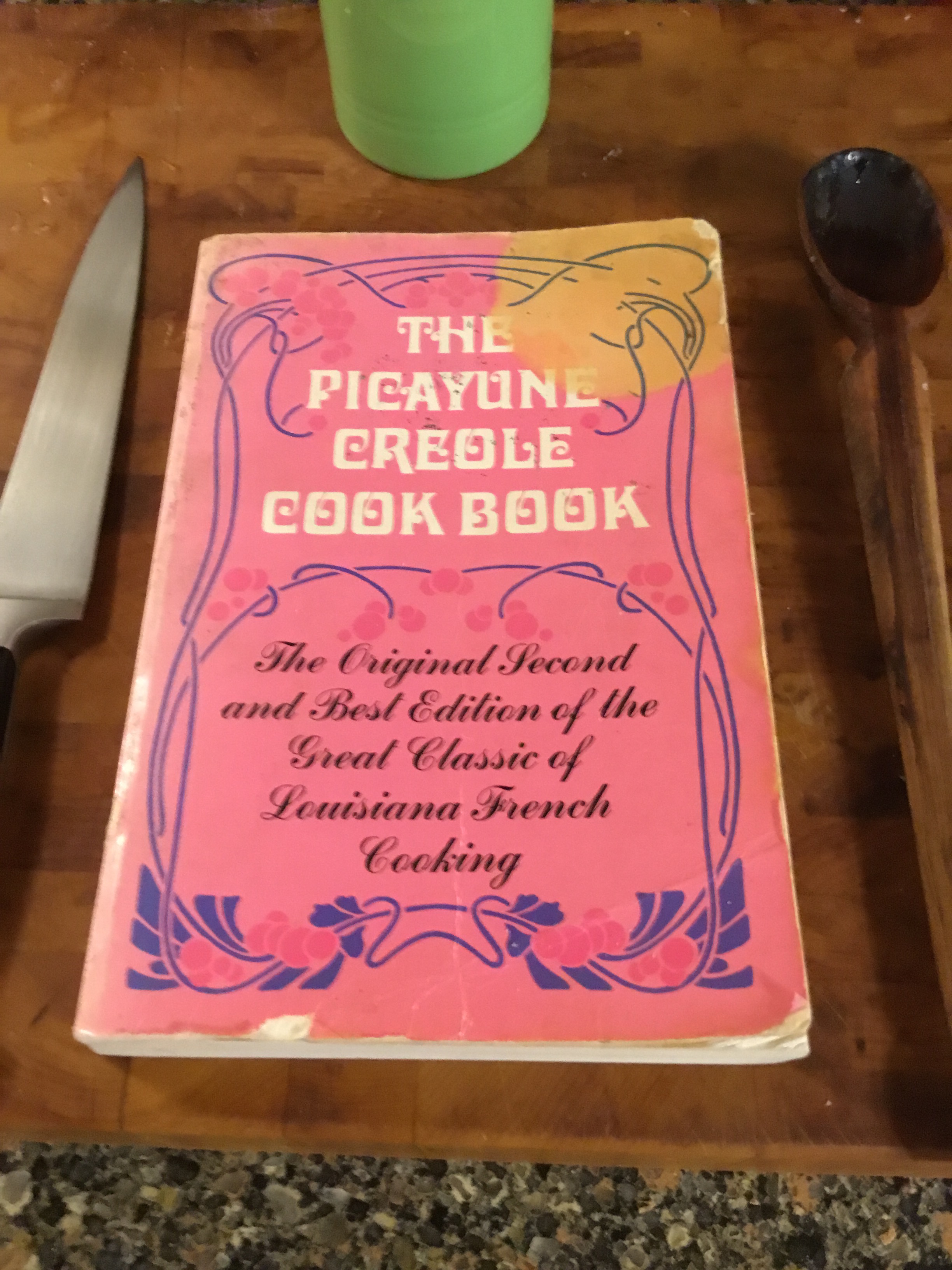
Great cookbook, or greatest cookbook? The latest reprint is available from Amazon.

I have made the following recipe from this cookbook literally more than a hundred times. Here’s what the Times Picayune had to say about it, when it is made properly:

You will then have a dish for which any old Creole would go on foot from Carrollton to the Barracks, a distance of fifteen miles, merely to get a taste of.

And now this is the modern version, that doesn’t require two whole chickens or two large onions. It’s for two people.

1 Chicken Breast

1/2 Onion

1/2 Sweet Pepper

1 Clove Garlic

1 Tablespoon Peanut Oil

1 Tablespoon Flour

1 Pint of Tomatoes

White Wine for de-glazing

Salt and Pepper

Thyme and Oregano

Heat the oil in a thick cast iron skillet, and add the flour. It’s time to make a roux! That’s what thickens the Creole sauce. I’m channeling Marcelle Bienvenu, who wrote another great cookbook, Who’s Your Mama, Are You Catholic, and Can You Make a Roux?

A “blonde” roux is preferable for this dish, so stir the flour until it browns only slightly. Add the chicken and let it brown nicely. A bone in, skin on, breast is preferred

When the chicken is browned, add the onions and pepper, which should be finely diced. When they are softened, add the garlic. Then de-glaze the pan with white wine.

Now it’s time for a little technique: milling tomatoes, using the finest insert that comes with the food mill. 

Moulinex #1 Food Mill

Truthfully, this step is optional, but the end result is a seed free sauce of superior texture and taste. It doesn’t hurt to have some home canned, locally grown, tomatoes to mill, as pictured. Just crank the tomatoes right over the skillet. I’ll do a deep dive into food mills eventually–they are a French invention, and the best ones are still made there.

Once the tomatoes are milled, season with salt, pepper, and herbs. Once the sauce is simmering, put a lid on the skillet and turn it down to the lowest setting possible, the lower, the better. Just add water or stock as it cooks down. In forty minutes or so, you have a dish worth walking fifteen miles for. And that is just to taste it.

Corn Meal Bread (1824)

Corn Meal breadI only took one small bite. I swear.

This is Mary Livingston’s original recipe from the 1824 classic The Virginia HousewifeHere’s the original recipe:

Corn Meal Bread

Rub a piece of butter the size of an egg, into a pint of corn meal–Make it a batter with two eggs, and some new milk–add a spoonful of yeast, set it by the fire an hour to rise, butter little pans, and bake it.

Using yeast as a leavening agent makes for a slightly finer texture than with baking powder cornbread, as I discovered when I made this. Here’s the recipe I used:

1 cup stone-ground cornmeal

1 tablespoon melted butter

1 egg

1/2 cup milk

Salt (not enough)

1 teaspoon yeast, dissolved in 1 tablespoon of water

Butter the pan, or do what I did, and lube up the pan with lard.

Salt and a little water were my only additions to the original recipe. Keeping it old school, I cooked it over hot coals. Temp was uneven, but cast iron cooks better than almost anything.

FireThe corn meal bread is in the #10 dutch oven, which was a little too large. A chicken and vegetables are in the larger pot. Man cannot live on corn meal bread alone.

The result? Would have been a grand slam with more salt. Still, this is a superior recipe. More people should try cornbread made with yeast. I’ll make it again for Thanksgiving.

Cornbread and Cornbread Dressing

Recipes

A cornbread and a cornbread dressing recipe here.

Bama Cornbread

1 cup fine McEwen cornmeal (or other finely ground cornmeal)

3/4 cup milk

1 egg

1 teaspoon baking powder

1/4 teaspoon baking soda

1/2 teaspoon salt

Mix this up with dry ingredients first, and then the milk and egg. Pour it into a roasting hot, oiled cast iron skillet, into a 425 degree oven. The quality of the cornmeal is the key here. Double the recipe for a family meal.

Bama Cornbread Dressing

One double recipe of Bama Cornbread, crumbled (see above)

2 cups croutons

2 cups onions and celery, cooked

Handful of rehydrated dried Porcini mushrooms, cooked in butter, chopped

1/2 stick of melted butter

2 eggs

Chicken stock (at least one cup)

Salt and Pepper to taste

Sage, sage, and more sage

Cook at 350 degrees. This is a seat of the pants recipe. I like lots and lots of sage and mushrooms. Recycle into turkey or chicken and dressing after the first meal. That’s a layer of leftover meat, topped with a layer of dressing. Add extra stock to the dressing when making the recycled dish.

Do I Need That? Does My Skillet Handle Need a Cover?

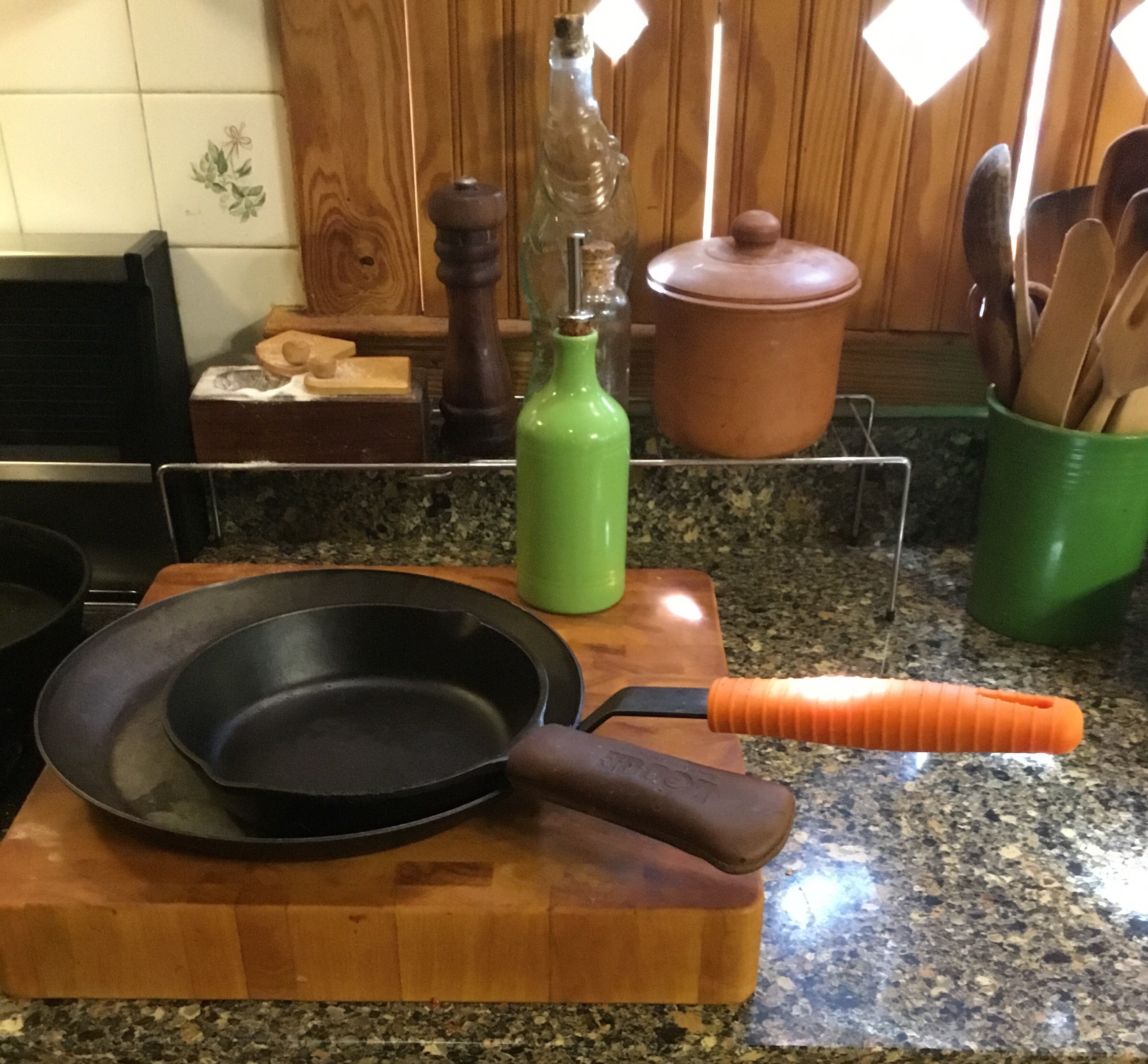
SkilletsYou could call these skillet condoms, but that would be rude. Just say yes to prophylactics, unless you want baby skillets.

Lodge Manufacturing, in South Pittsburg, Tennessee, is without a doubt the world’s greatest manufacturer of cookware. Sorry, Frenchys. Not being satisfied with that, they have branched out into a new field entirely: skillet condoms. Check that, they are handle covers for skillets, in different shapes and forms. Here are my two favorites.

Silicone Handle Holders for Carbon Steel

This is designed for the Lodge Carbon Steel skillets, but also fits Frenchified brands like Bourgeat. (I apologize to Lodge for not being completely faithful to them. You know what they say about the French.) Speaking of unfaithful, that little orange ribbed rubber thing is made in China.

Nokona Leather Hot Handle Holder

This one was my favorite cookware purchase of the last year. USA baseball glove maker Nokona makes these for Lodge, and they are fantastic. Don’t tell anyone, but they also fit those Frenchy Staub cast iron skillets. USA made, so my transgressions with the French must be forgiven.

Buy these guys at your favorite supplier. Lodge gave me the silicone one gratis, as I bought a buggy full of cast iron from their factory store in South Pittsburg. I think the giant carbon steel skillet cost something like ten bucks there.


Cast Iron Cookware-Materials and Methods for Seasoning

cast ironHere’s a touchy subject if ever there was one, a place where only angels-and fools-dare to tread. However, the above picture of our wall of cast iron will have to serve as evidence that I know whereof I speak. That’s one heavy batterie de cuisine. By the way, the small skillet hanging on the upper left is almost forty years old, but could pass as about a year old.

However, I am going to avoid absolute pronouncements and merely discuss the merits of various materials and methods. Think of seasoning cast iron as analogous to painting a wall. Unless you’re Jackson Pollack, you want to apply thin, even, layers of finish. Here are the top four choices for oils (fats) to use.

Materials

  • Traditionalist’s Choice: Animal Fat.  I’m fairly old school, so I personally use lard, BUT lard that I have slowly rendered myself from locally grown pigs. A section from the Purdue University Pork Industry Handbook , “Pork and Pork Quality” (PIH 128), notes that pork fat is a good source of linoleic acid, a main component of the “drying oils” (aka, oils that transform into a polymer), that will be discussed below. Without wandering off into the forests of chemistry, that is an acid that allows lard to form a polymeric surface (the molecules link together), when exposed to a combination of heat and oxygen. It’s the same way traditional oil paint dries. A. D. Livingston, in his Cast Iron Cooking, is a strong proponent of animal fat, noting that pioneers even used such things as bear fat for seasoning. If you have some extra bear fat in the fridge, go for it.
  • Expert’s Choice: Flaxseed/Linseed oil. Essentially the two are the same thing, but Flaxseed is usually a raw oil marketed for culinary purposes, while Linseed oil comes in various forms, and is intended for wood finishing, or for making oil paints. It is the most famous of the drying oils. In oil painting, this is the oil of choice, as it provides a smoother finish (See Painting Materials, a scholarly text for artists from 1942. We’re in some seriously nerdy territory now). Flaxseed oil is the best for cast iron, raw linseed second, and polymerized linseed oil, which has been heated so that it will dry faster, would be a third choice. I use a food grade “Danish Oil” (polymerized linseed oil) for wooden spoon and bowl finishes, and the brand I use (Tried and True) is also approved for cutting boards. Never ever use boiled linseed oil, which contains as many toxic chemicals as an EPA Superfund site.
  • Two Other Drying Oils: Safflower and Walnut Oils. I have not used these on cast iron, but they are highly rated as drying oils. Safflower has the benefit of being inexpensive and widely available. I have used Walnut oil as a wood finish, and unlike linseed oil, the smell is wonderful. The finish is fantastic as well. Walnut oil has almost twice the oil content of any other non-synthetic oil, so a little goes a long way. Allegedly, it was Leonardo da Vinci’s secret weapon when it came to making oil paints. If you have any left over, make salad dressing with it, or start forging a copy of the Mona Lisa.

Soybean oil and poppyseed oil are also drying oils, but try and find some non-GMO soybean oil at the same price as safflower oil. After you have put an almost invisibly thin coat of oil on some cast iron, what are you going to do? Cook it. Here’s three methods.

Methods

  • Top of the Stove, Bro. This one requires the most attention, but it is the method of choice for seasoning carbon steel pans, and will work with cast iron as well. Disconnect the smoke detector, apply the material thinly, heat it right up to smoking point, take the pan off the heat, wipe it down, and let it cool off. Repeat until you have the finish you want. By the way, don’t disconnect the smoke detector.
  • Bake it. By far the most common method, and recommended by manufacturers such as Lodge, in South Pittsburg, Tennessee. Apply the material, place the pan upside down in the oven, and bake at a high temp for an hour. I’d go with 500 degrees F. Repeat, and apply another coat of oil, if the finish is not sticky to the touch. If it is, bake it for another hour, without additional oil. If it’s sticky after that, scour the pan and begin all over. You’ve been a Jackson Pollock with your oil, which is not a good thing.
  • Burn it. “Like any other Primitive would,” to quote Neil Young from a different context. As with most things, there is a right way and a wrong way to do this. I have seen videos of people throwing a cold skillet into a fire, straight onto a bed of glowing hot coals, which is the cooking equivalent of What Not to Wear. Thermal shock is one of the few things that will ruin cast iron. I prefer to put my cast iron in my brick oven as my fire is just beginning to burn. Eventually, I will push it up into the coals, as the fire begins to burn down. Then I let it cool for hours, or even overnight. If it’s an older piece of cookware, this method serves the double purpose of seasoning, and burning the grunge off of the exterior.

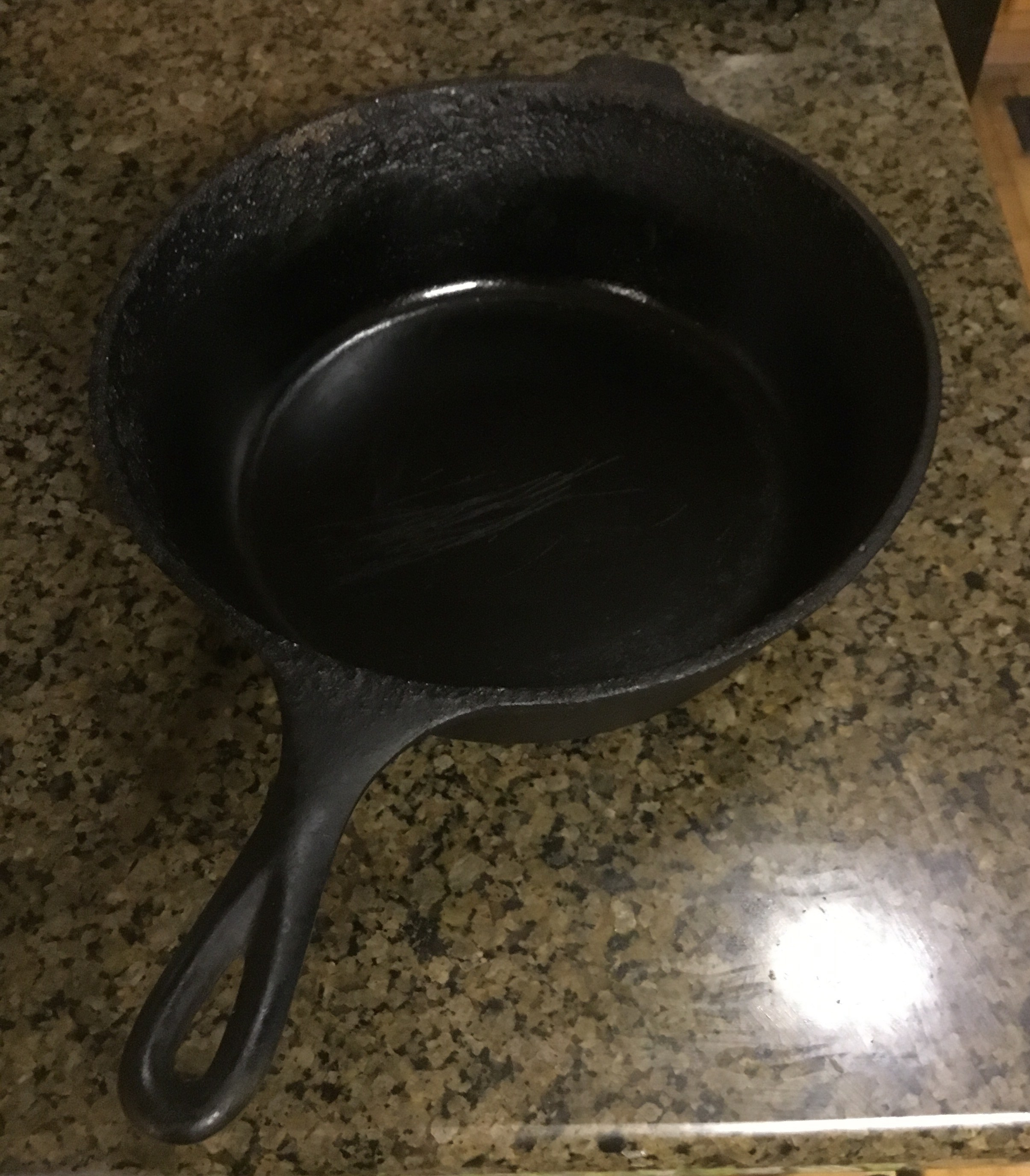
So choose the combination that you like, and be patient. If you pay attention, and take care of your cookware, eventually you will achieve this finish:
Chicken Fryer

A couple of decades of frying chicken has left a little grunge at the top of this fryer, but the business part of this piece is a pure slick polymer. The scratch is the result of an unfortunate use of a metal utensil years ago, and so I now use only wooden ones I have made myself. (Not that I would brag or anything, but I have one featured in the book A Gathering of Spoons: The Design Gallery of the World’s Most Stunning Wooden Art Spoonsby Norman D. Stevens.)

Let’s finish with a couple of often disputed topics. The first is cooking acidic foods, like tomatoes, in cast iron. Of course you can. You’re cooking on a polymerized surface, not bare cast iron. The dish will taste metallic if cooked in an unseasoned pan, but no one should be cooking in an unseasoned pan anyway. I have cooked literally hundreds of dishes of Chicken Creole and Chicken Piquant in my favorite skillet, and both have tomatoes, and the second additionally has white wine and olives. I’ve made both in some of my wife’s fancy copper pans, and the result wasn’t nearly as tasty. Go figure.

The last question is of great import, which is how to clean and maintain cast iron cookware once it is seasoned. A. D. Livingston became an absolutist when working at the nuclear lab in Oak Ridge, Tennessee, after hearing of a skillet that had not been washed in over a hundred years–only wiped clean. He allows rinsing with hot running water is acceptable, but that is it. Others say a drop of dish washing liquid is fine. My experience is that properly seasoned cast iron can withstand anything but steel wool, or one of those copper scrubbing thingys. Even food that might have stuck on comes off easily, unless allowed to dry out on to the pan. Even then a few minutes of soaking will do the job, and if you are impatient, try A. D.’s method of boiling off the offensive bits of food.

In short, chose whatever method serves you best. Back in the day, people just went with what they had. Things appear to have turned out alright.

OffGuardian

because facts really should be sacred

Ruth Blogs Here

Or not, depending on my mood

A Haven for Book Lovers

I am just a girl who loves reading and talking about books

what sandra thinks

because I've got to tell someone.

LadiesWhoLunchReviews,etc

a little lunch, a little wine, a LOT of talking!

Margaret and Helen

Best Friends for Sixty Years and Counting...

talltalesfromchiconia

Tales of quilting, gardening and cooking from the Kingdom of Chiconia

Cyranny's Cove

Refuge of an assumed danophile...

Exiled Rebels

Serving BL since 2017

this is... The Neighborhood

the Story within the Story

Beauty lies within yourself

The only impossible journey in life is you never begin!! ~Tanvir Kaur

Southern Fusion Cooking

Country Living in the Southern Appalachians, USA--A little of this, a lot of that

Discover WordPress

A daily selection of the best content published on WordPress, collected for you by humans who love to read.

The Atavist Magazine

Country Living in the Southern Appalachians, USA--A little of this, a lot of that

Longreads

Longreads : The best longform stories on the web

WordPress.com News

The latest news on WordPress.com and the WordPress community.