Soft Scrambled Eggs

A DIY Scrambled Egg Kit

Seriously, a post about how to scramble eggs? I would have thought the same thing a few years ago, before the great English food writer Elizabeth David caught my eye. Jane Grigson, an equally talented writer, gave me my first account of David, in what has become one of my all time favorite books, published under various titles, but now sold as Charcuterie and French Pork Cookery. There, Grigson discusses several of David’s recipes from her book French Country Cooking. I immediately bought a three books in one collection of her work, published by the appropriately named Biscuit Books. I now own four of her books, each better than the last.

David hated overly complex and pretentious food, and instead focused on the real thing, such as perfectly scrambled eggs. Her method is superb, taken from a French country cook. The secret is to cook the eggs at the lowest temperature possible, which is something of an antithesis to the more common get your stove as hot as a flamethrower approach. Here’s my paraphrase. This is a two person version.

Ingredients

2 Eggs, Beaten

Salt and Pepper

Heat up a skillet coated with olive oil–I like these Lodge carbon steel ones. Turn the stove down to minimum temp, and let the skillet cool off for a bit. Then pour in the seasoned eggs, and do nothing. Wait until the egg begins to set, and s-l-o-w-l-y stir the eggs with a fork. I always prefer wood utensils, so I made my own.

The eggs should cook slowly, so it is much simpler to serve it at the soft, creamy stage that is the goal of using this method. After a couple of tries, cooking this way will become second nature. It doesn’t hurt any to begin with quality pasture raised eggs, either.

Mesclun

Live Long and Prosper

Mesclun season is about gone here now, but the fall season is just around the corner. The idea of having a real mixture of baby greens came from the beautiful French province of Provence, where mesclun is a fixture in farmer’s markets.

This mixture of lettuces are the result of a 99 cent purchase of seeds from Ebay. In the adjacent bed there is also Mizuna, Bak Choi, and Broccoli Raab. It’s a virtual UN of salad greens.

A planter is all anyone needs to grow Mesclun, which is a note to poor sods who live in cities. I always serve mine with some jumped up remoulade sauce–with honey and hot sauce added.

An International Pot Lid Competition

It’s the USA versus France in the World Cup of Pot Lids

Pot lids are the most underutilized kitchen tools. They save energy, and can also improve greatly the quality of a dish. If you want the pot to boil faster, put a lid on it.

Here we have two distinct styles of lids, the left American and cast iron, and the right copper and French. The American is made by Lodge, the French by Bourgeat. They will be judged by aesthetics, construction, and versatility.

Aesthetics

There’s nothing more attractive in the kitchen than a French copper pot with a riveted copper lid. The French are off to a fast start. I once sat next to a fabulously dressed woman at a French movie during an International conference at the University of Illinois. Her three friends were equally well attired, and they spoke only French. I saw her again the next day, heading one of the conference sessions. Turns out she was the French Minster for Culture under President Mitterrand. France 1, US 0.

Construction

The US turns this period into a rout. Cast iron lids can make a pan into a semi-pressure cooker, especially those on Dutch ovens. As a student of mine said, who was a professional cook, “Nothing lasts forever, but cast iron lasts forever.” France 1, US 1. Into extra time.

Versatility

This extra time is going to be a beast. The French lid is like the AK-47 of lids- it fits our pots and theirs. But then off the bench comes the best US all rounder–the cast iron skillet lid.

Soup to Nuts

Is it a skillet or a lid? False choice–it’s both. Too bad it’s not a striker, as it’s shot bounces off the post with a few seconds to go in extra. Could this be decided on penalty kicks?

Not if I have anything to do with it. As Jon Stewart famously said after an actual World Cup was decided on penalty kicks, that was like deciding the NBA championship “with a game of horse.” Buy some of each, and like Scarlett O’Hara, you’ll never go lid-less again. I think that’s what she said.

Salad Dressing Maison

“Here We are in Our Summer Years, Living on Ice Cream and Chocolate Kisses”– Billy Bragg

I’m always amazed that people actually buy salad dressing, as it takes less than a minute to make a really good one. Here’s my latest creation. By the way, all that title means is “House Salad Dressing.” Once again, everything sounds better in French.

Ingredients

1 tablespoon Dijon Mustard (Most of the mustard seed actually comes from Canada)

2 tablespoons Catsup

2 tablespoons Mayonnaise

1 tablespoon Sweet Pickle Relish

Salt

Honey to taste

Chipotle Hot Sauce to taste.

The last two are the kickers. This stuff is delicious. Some Romaine lettuce, Cucumbers, and Tomatoes are going to disappear tonight.

Macs and Cheese–Old School

Put in a casserole, and warm in the oven

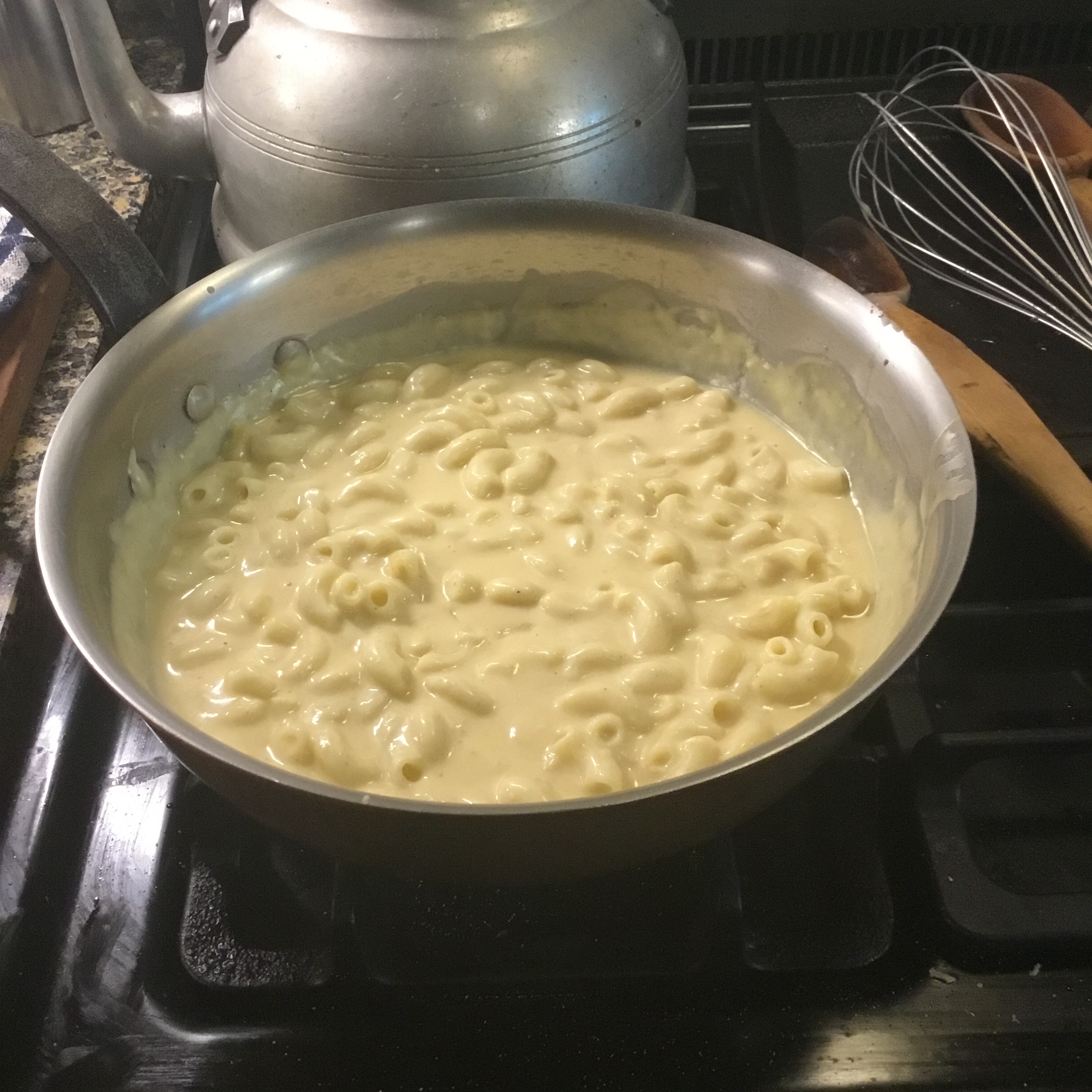
As the talented James Hemings and the fastidious Thomas Jefferson brought this dish from France to the brand new USA, I make this Frenchified Macs and Cheese regularly. It’s especially good with Easter Ham, or any other ham. Or anything else.

The plan here is to start with a béchamel sauce, turn it into a variety of mornay sauce, and then add the cooked macaroni, which in Jefferson’s day was just a generic term for pasta. Then it can all sit until it’s time to warm it in the oven.

Ingredients

For the Béchamel Sauce

2 tablespoons Organic Butter

2 tablespoons Flour

Organic Milk

Salt and Pepper

For the Mornay Sauce

1/3 cup each of grated Colby and Cheddar Cheese

1/3 cup finely grated Parmesan Cheese

For the Finishing Touch

1 cup Macaroni, cooked in salted water

Melt the butter in a large sauce pan. Add the flour, and cook while stirring for a minute or two. This is a blonde roux, so don’t let it darken. Add enough milk to make a fairly thin sauce, as the cheese is the main thickener. A thorough whisking will be required to remove all the lumps. Season, and taste.

The next step is crucial. Add the cheese, and heat to the point of melting. DO NOT let the sauce boil at this point. The cheese will separate into its various components if exposed to an excessive temperature. After the cheese has melted, add the strained macs. I use one of those Chinese spider strainer thingys to scoop them out of the pot. All that’s left to do at this point is to put the macs in a casserole, and heat them in the oven at suppertime, or any time.

Mr. Jefferson was often derided for being “more French than American” by his political enemies, despite the fact that he wrote The Declaration of Independence. The farmers knew better. Not long after his inauguration, a group of dairy farmers began making him what was billed as “A Mammoth Cheese.” The finished wheel of cheese was engraved with the words, “Rebellion to tyrants is obedience to God.” The cheese weighed 1230 pounds when it reached Washington. How many servings of macs and cheese this made is not recorded.

Ham Quiche with Fresh Greens and Herbs

Almost Green Eggs and Ham

Having scored a pillow sized bag of greens and some fresh pasture-raised eggs from our local farmer’s market, at the Festhalle, we decided it was quiche time again. We had our own fresh herbs to add to the mix. This is my old recipe, with a fresh local twist.

Ingredients

1 Creole Pie Crust

8 ounces Swiss Cheese, cubed

1/2 cup Ham, cubed

One handful of Greens, shredded (We bought Collards)

4 organic Eggs

Heavy Cream (Enough to fill the Crust)

Fresh Herbs, chopped (We had Chervil and Parsley)

Salt and Pepper

Nutmeg

Again, crank your oven up to 400 degrees F, as this pie crust goes in uncooked. Add the chopped pieces of the cheese into the uncooked pie shell, and then the ham. Saute the greens in butter until soft (my wife prefers collards to be boiled, but I was cooking). Mix the cream and egg mixture together, with the sauteed greens and chopped herbs, and season. Pour that over the filling in the pie shell, season with nutmeg, and bake. Ours cooked for 65 minutes. The result is as close to edible green eggs and ham as you will ever get, and will even make you feel good about eating all that cheese and cream.

Asparagus Quiche

Spargelzeit!

Pi Day is gone, but Pie Days are here. One of the best meals I have ever eaten was at the French House at the University of Alabama, where we students of French were offered four different kinds of quiche–not surprisingly, I ate some of each one. My favorite was Asparagus Quiche. Here’s one with an all butter Creole Pie Crust.

Ingredients

1 Creole Pie Crust

8 ounces Swiss Cheese, cubed

6 large Asparagus Stalks

4 organic Eggs

Heavy Cream (Enough to fill the crust)

Salt and Pepper

Nutmeg

Crank your oven up to 400 degrees F, as this pie crust goes in uncooked. Break the asparagus at the point where it becomes tough (just try this once, and you’ll get the hang of it). Peel the lower half and cut into half inch pieces. Add the chopped pieces with the cheese into the uncooked pie shell. Mix the cream and egg mixture together, and season. Pour that over the filling in the pie shell, season with nutmeg, and arrange the asparagus spears into whatever Leonardo-esque shape you prefer.

Strange but Edible

Ok. so there’s some chopped up cooked bacon in there as well. What’s a meal without bacon? Bake at 400 degrees F for at least forty five minutes, until the quiche filling browns. Let the cooked pie rest, and then it’s time to chow down on some springtime.

Leek and Potato Soup (Potage Parmentier)

A certain Monsieur Parmentier helped popularize the potato in France, and there was no trick that he wouldn’t use to do so. He had potato themed dinners with famous guests, like Ben Franklin and Thomas Jefferson. His best trick was to convince people that his potatoes were so valuable that they needed to be guarded by French troops. Then all the troops would leave at night, and he let peasants steal the potatoes. This famous soup is named in honor of the particularly clever Frenchman, and this is my version.

Ingredients

Butter

2 medium Leeks, trimmed

1 Shallot or Onion

1 clove Garlic

2 medium Potatoes, diced

2 cups Chicken Stock

Salt and Pepper

Cream (optional)

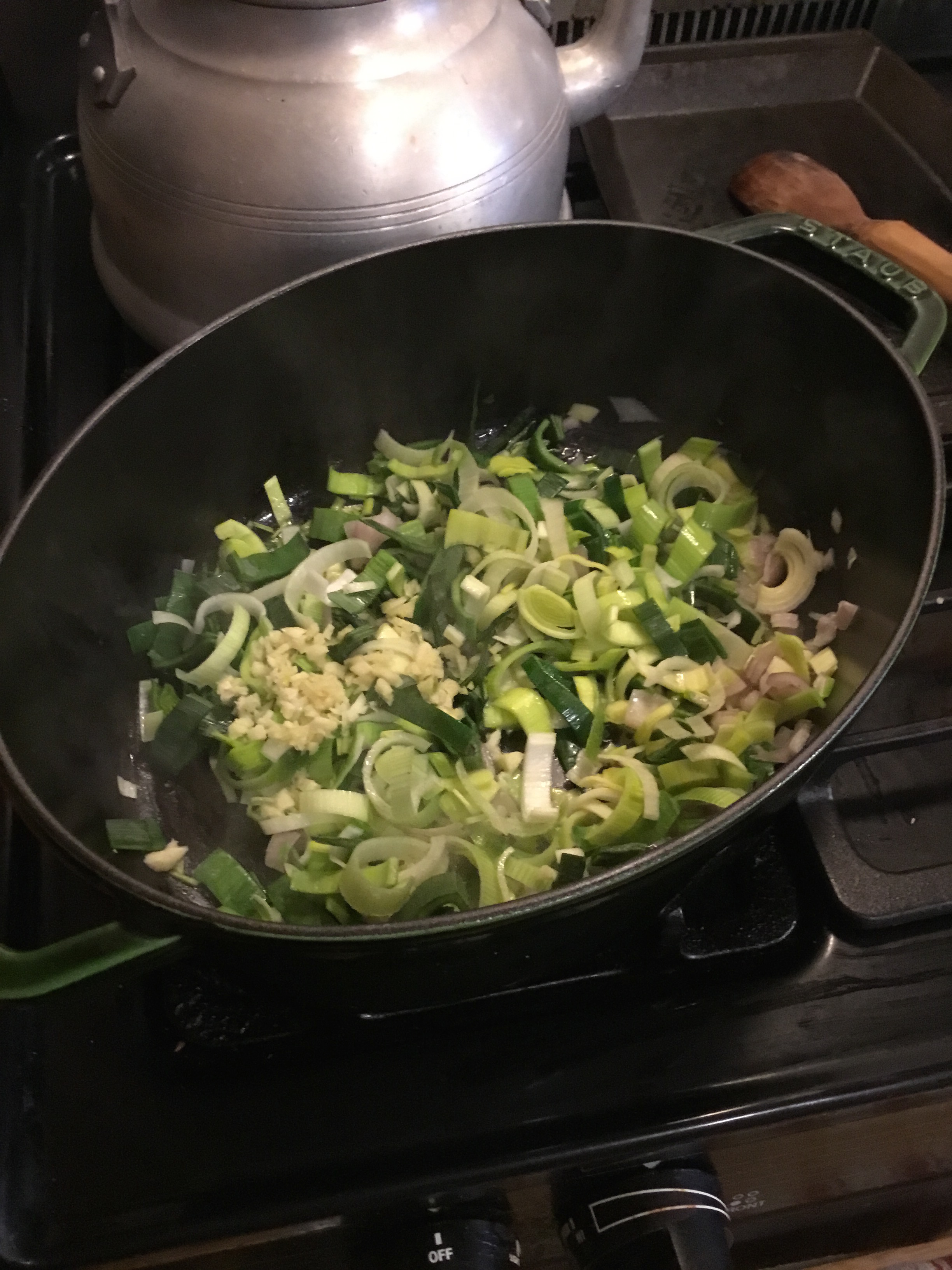
Using the green parts of the leek keeps your soup from looking like toothpaste

Split, carefully wash, and chop the leeks, including the green parts. Saute the chopped leek, onion, and garlic in butter until soft. Add the potatoes and chicken stock and simmer for forty five minutes to an hour, tasting occasionally for seasoning. Add water if needed. Cream is traditional but optional.

Soup simmering

Now for some nomenclature. Potage is just the French word for soup: this soup served unprocessed and usually without cream is called Potage Parisien. Run through a food mill, blended, or just hit with a potato masher, it becomes Potage Parmentier (I personally am a potato masher guy). Processed with cream, and served chilled, it gets the fancy sounding name of Vichyssoise. French names allow restaurants to charge ten bucks for what is essentially a bowl of Potato Soup.

Asparagus with Sour Cream/Mustard Sauce

An Old School French Asparagus Steamer

Whether you like it steamed, sauteed, boiled, roasted, or grilled, my favorite vegetable, asparagus, is about to be in season. It’s almost Spargelzeit, or Asparagus time, as it’s called in Germany, so break out the steamer or grill. Skip the lemon butter and try something different this time–a sour cream mustard sauce. This is as easy to make as any salad dressing.

Ingredients

1/2 cup Sour Cream

1 teaspoon Honey

2 tablespoons Dijon Mustard

1 tablespoon Apple Cider Vinegar

Dill Weed

Salt

Mix these together, and chow down. Vary the proportions according to your whims. Sometimes I want more honey, sometimes vinegar, and almost always, more mustard. Someone has to support the mustard farmers of Burgundy, though I hear more mustard comes from Canada these days, instead of France. This also makes a great dipping sauce for almost any raw vegetable, or crudité, since we have gotten all French all of a sudden.

Apple-Pecan Galette

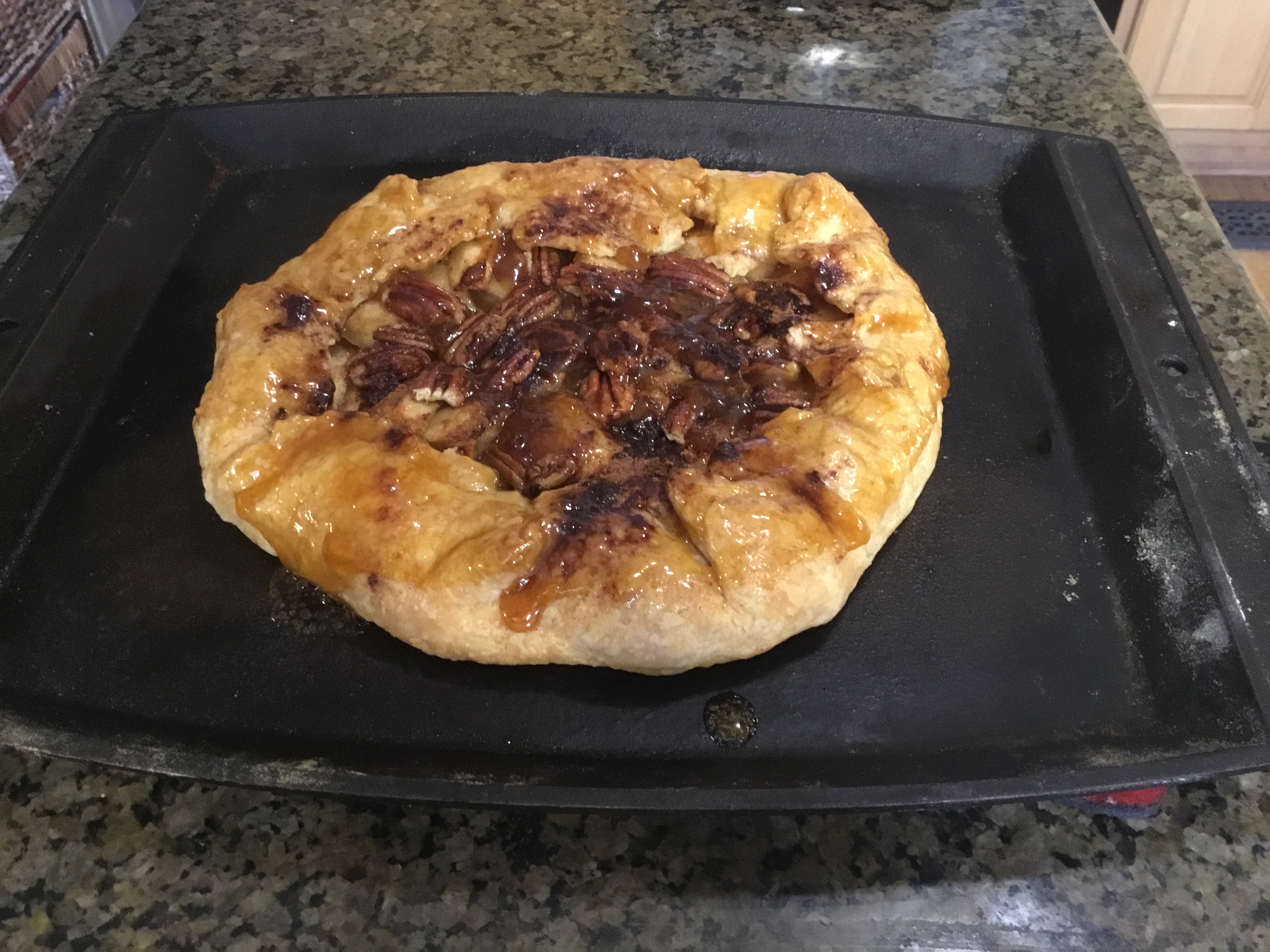
Simple, rustic, and delicious

Galletes, or simple French country pies, have become something of a phenomenon in the South. In fact, there are no fewer than fifteen different galette recipes on the website of Southern Living magazine alone. This pie plateless recipe is more southern than most.

Apple-Pecan Galette

Ingredients:

1 Creole style all butter Pie Crust

For the Filling:

3 or 4 Granny Smith or other pie Apples

2 tablespoon Brown Sugar

2 tablespoons Honey

1 tablespoon organic Butter

1/4 cup Pecan Halves (or more)

Cinnamon

For the Glaze:

1/2 cup Apricot Preserves

2 tablespoons Brandy

Roll out the pie dough into either a circle or a rectangle–both are fine. Transfer the dough to a baking sheet via the rolling pin method. (I really like the Lodge Rectangular Griddle that is in the picture above.) Place the peeled and sliced apples into the center of the crust, leaving at least an inch of overlapping crust available around the edges. Add the sugar and honey, break the butter into small pieces over the filling, and top with pecan halves. Finally, dust the filling with cinnamon. Fold the edges of the crust over the filling, making sure there are no gaps in the crust. Otherwise, all the good juicy stuff in the filling will run out onto the baking sheet. Bake for an hour at 400 degrees F.

While the pie is baking and the smell is driving you crazy, calm your senses by making a glaze from fruit preserves. I was going to make one from my homemade fig preserves and bourbon, but I was low on figs and someone had drunk most of my bourbon. Simmer the preserves/alcohol mixture for at least five minutes–add more booze or water if it becomes too thick. When the galette is cooked but still hot, brush on the glaze with a pastry brush. Try a slice with some vanilla ice cream, and you may never make another regular apple pie again.

OffGuardian

because facts really should be sacred

Ruth Blogs Here

Or not, depending on my mood

A Haven for Book Lovers

I am just a girl who loves reading and talking about books

what sandra thinks

because I've got to tell someone.

LadiesWhoLunchReviews,etc

a little lunch, a little wine, a LOT of talking!

Margaret and Helen

Best Friends for Sixty Years and Counting...

talltalesfromchiconia

Tales of quilting, gardening and cooking from the Kingdom of Chiconia

Cyranny's Cove

Refuge of an assumed danophile...

Exiled Rebels

Serving BL since 2017

this is... The Neighborhood

the Story within the Story

Beauty lies within yourself

The only impossible journey in life is you never begin!! ~Tanvir Kaur

Southern Fusion Cooking

Country Living in the Southern Appalachians, USA--A little of this, a lot of that

Discover WordPress

A daily selection of the best content published on WordPress, collected for you by humans who love to read.

The Atavist Magazine

Country Living in the Southern Appalachians, USA--A little of this, a lot of that

Longreads

Longreads : The best longform stories on the web

WordPress.com News

The latest news on WordPress.com and the WordPress community.