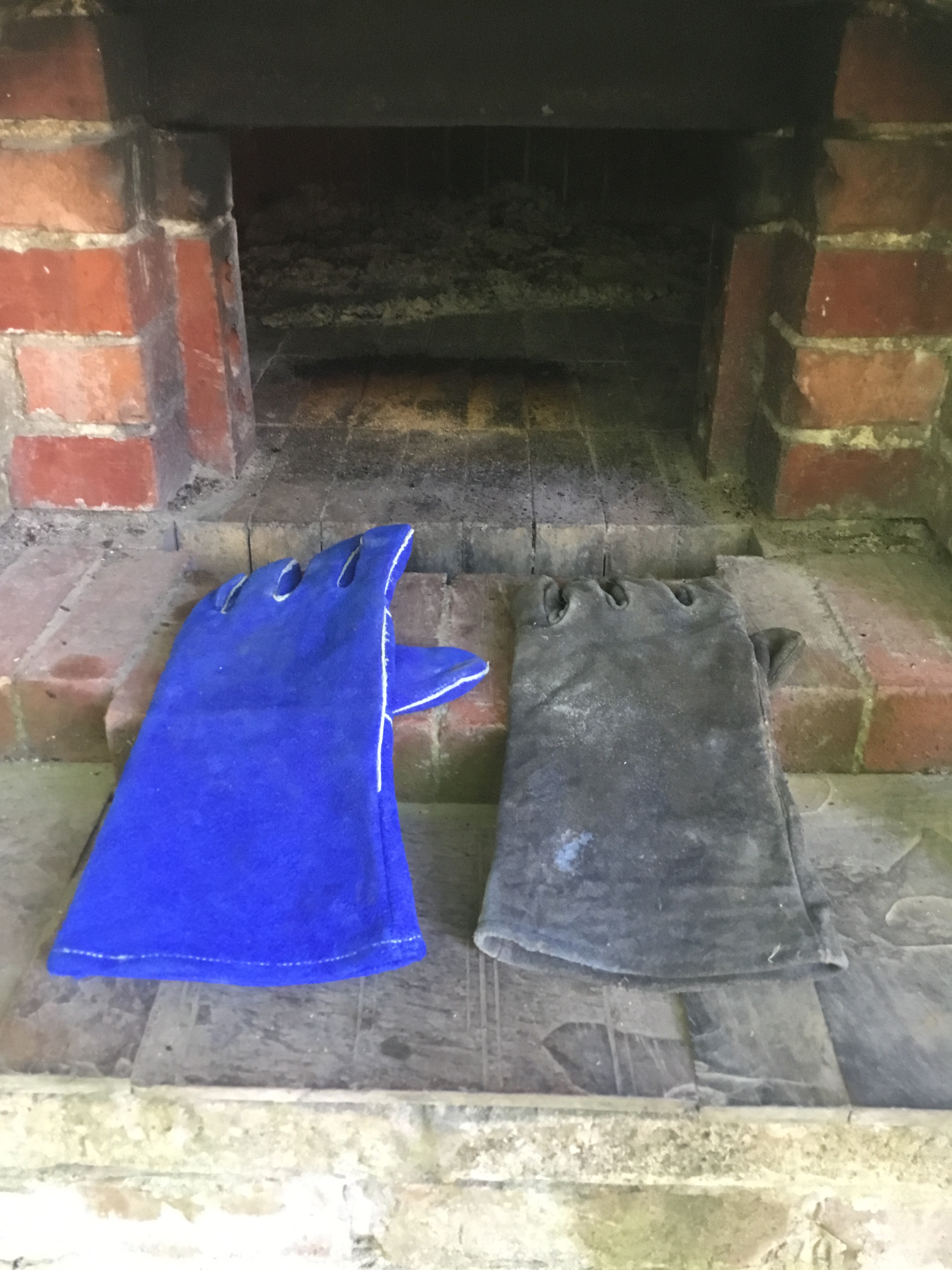
Brick Oven Tools–Welding Gloves

Out with the Old, in with the New

When I first bought my copy of The Bread Builders, from which I took the design for my brick oven, I loved the cover. It was a picture of a hippy looking dude with tattoos all over his arms, taking a round loaf out of a bread oven. Only most of his arms were covered up by a whacking big pair of welding gloves. Why welding gloves?

Check out the Associazione Verace Pizza Napoletana, the official group that lays out the rules for traditional pizza. First, it can only be cooked in a wood burning oven. Second, it has to be cooked in a temperature range of between 806-896 degrees F. 900 degrees F is also a common metric. That’s hot enough to burn the soot off of the interior of the bread oven. And in fact, it does. Hence the need for welding gloves.

My new pair of gloves are identical to what my original pair looked like, though they are still blue (they won’t stay that way long). I left my old pair outside on the oven one night, and a varmint, probably a raccoon, absconded with the right one. The bad news is that I am right handed.

So it was time for Amazon once again. Fifteen years later, they were still the same price. Our corporate overlord Bezos comes through again.

Sigg Bottles

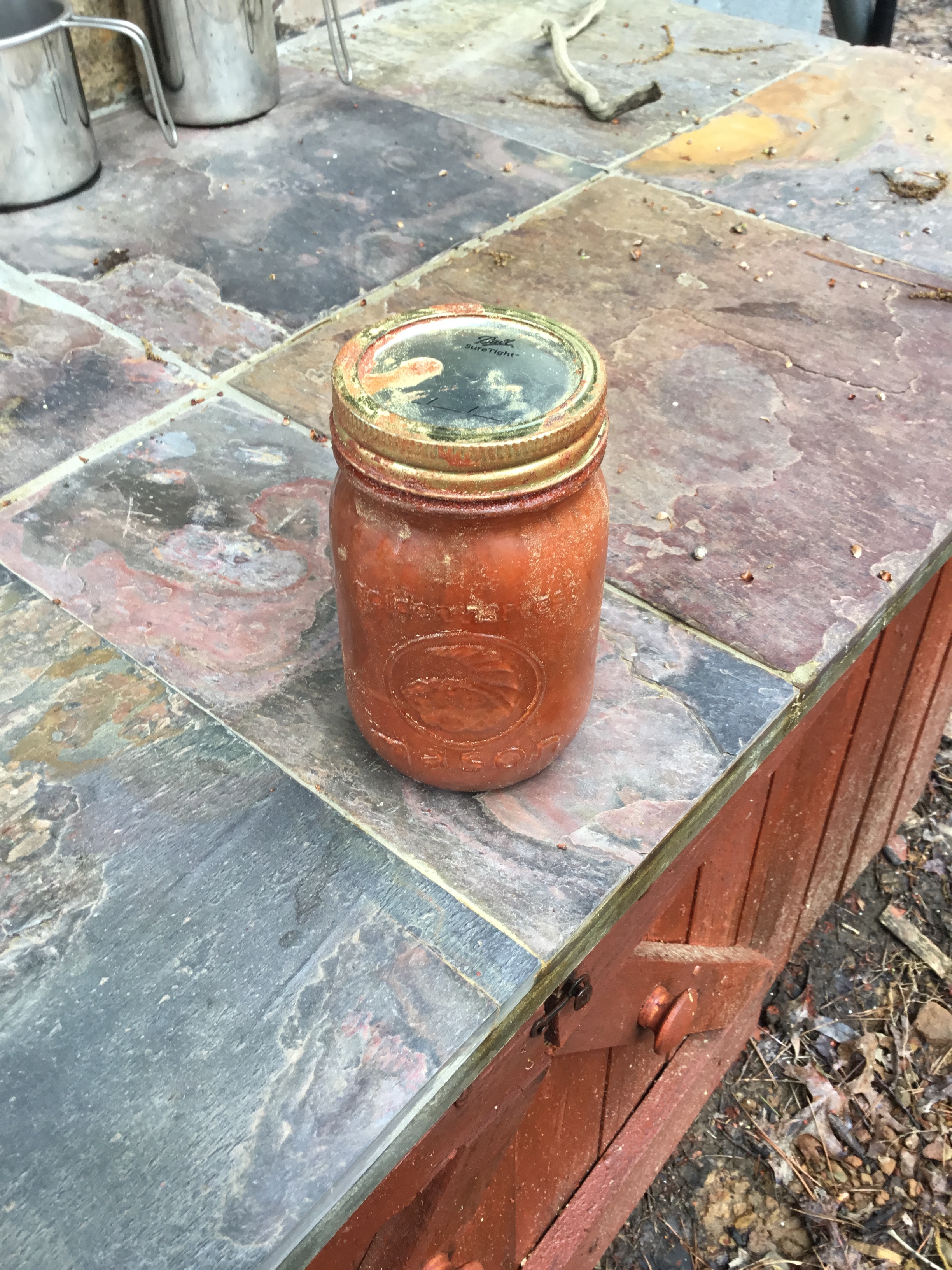
Sigg Test Bottle, been through the Wars with Me

If you want a metal bottle, buy a Swiss made Sigg. I was a bottle tester for Sigg once, and I beat the ever loving hell out of the test bottle. All I could do was dent it a little.

The story: When I was in the outdoor recreation industry, our rep for the North Face picked up Sigg as a new product line. I was already on the pro staff for US made Ross Reels (a fly reel company), so he wanted me to try them out. I didn’t tell him I had had a Sigg bike bottle for years.

Rep: “Would you like a free Sigg bottle to test?”

Swag city.

Me: “Sure, but you should know that I can tear up an anvil.”

Rep: “You will love these. They are as close to bombproof as they come.”

Was he ever right. I still have the test bottle in the picture, and have worn some paint off it, but it will probably last longer than I will. At least it will keep me from being thirsty for many years to come.

A New Picnic Table

Thank You, Mr. Jefferson, for that Declaration

Just in time for the Fourth of Julie, I made a new picnic table! This stylish but economical design is made from nothing but PT 2x4s, some of which are reclaimed. When this green wood dries out some, it will be painted with red flour paint. It’s a great addition to our outdoor kitchen.

This design has been on the interwebs for awhile, but I simplified it, and made in smaller. I also made it more consistent. The 62″ width should probably be 64″. The length is over 4′, which is the most economical use of 8′ 2x4s. Unless it’s roasting hot, my wife and I can hardly keep ourselves from sitting at it.

Besides painting it, I need to level it, as we live on an Appalachian mountainside. That would be Ann Johnson Mountain, to be precise. Not many people can say they live on a mountain named after a woman.

Where are the Burgers?

Barbecue Without the Smoke

Does Slow Cooked mean Barbecue?

I really can’t get excited about smoking some pork for hours over hickory coals, when one the best pit barbecue joints around is a few miles away from me (the Top Hat in Blount Springs, AL), and they sell the stuff expertly cooked by the pound. This may be sacrilege, as I live in the state with the most barbecue joints per capita in the country, and we have manifold styles of barbecue, but I make mine without smoke.

How can that be done? I stole a method from the great chef Rick Bayless, who in turn stole it from some cooks in Mexico. I believe composer Igor Stravinsky said, “Good composers imitate; great composers steal.” Same thing with cooks.

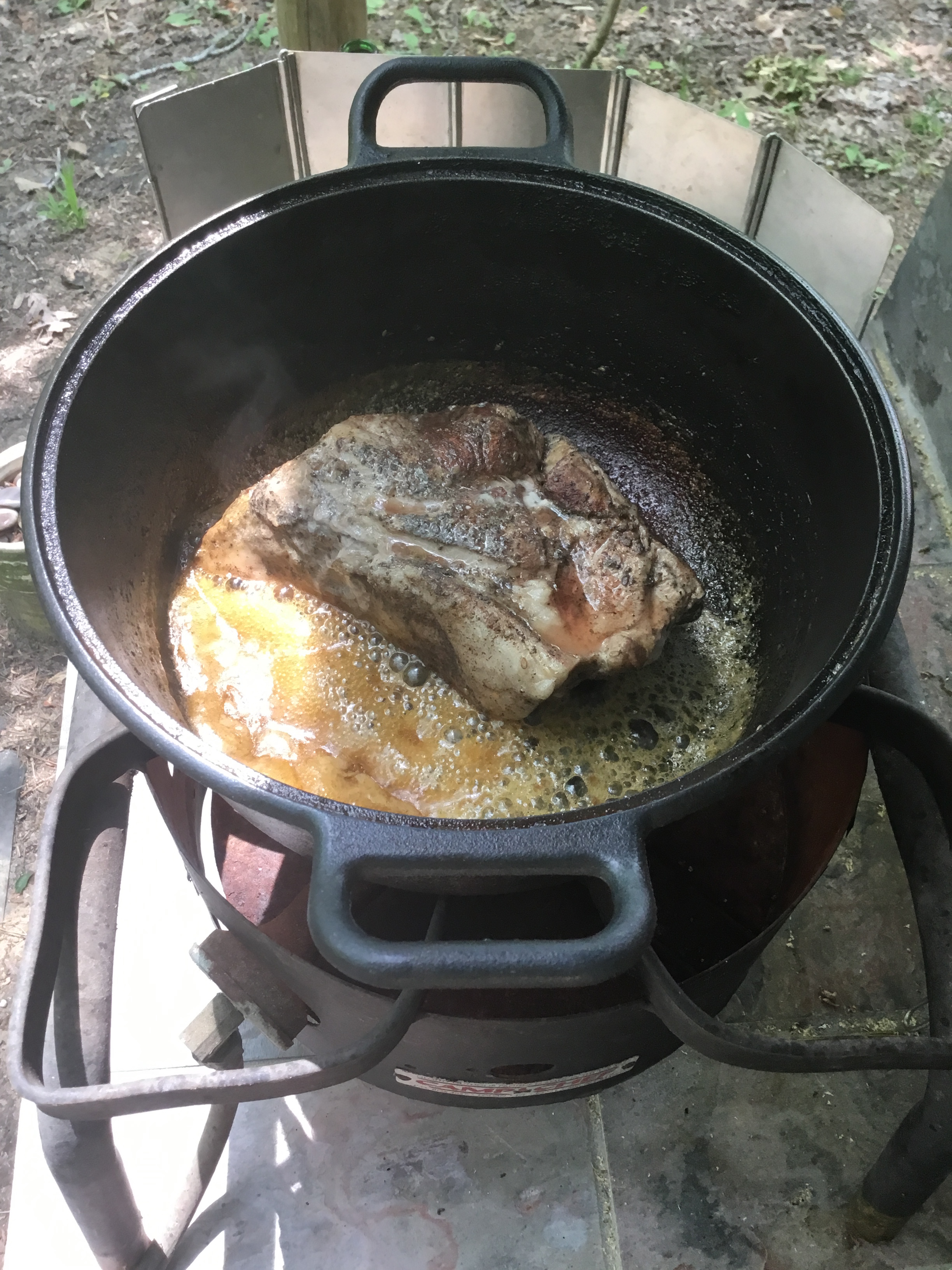
The technique is essentially to boil dry a big piece of pork two or three times, and to let it fry in its own fat the same number of times. Fill up your pot with water up to the top of the piece of pork, and just let it bubble. It takes anywhere from two to four hours to do this, so this is really slow cooking. The result is some fabulously tender meat. Just don’t forget the salt. Maybe it should be called Neo-barbecue.

Tuscan Style Grill

A Work in Progress, but another Rustico Design

This is an idea that came about from my sudden interest in Tuscan outdoor cooking, where a fire is built on a hard surface, and then a grill is placed above. I thought, why not make it as flexible as possible? Also, I had a number of leftover bricks to do something with. So Rustico decided to make a multi level open hearth grill.

How Firm a Foundation

The foundation may not look like much, but that is one hundred pounds of concrete. The grill is behind my wood burning oven, and next to my rustic cabinet. No worries, there will be a brick wall between the fire and the cabinet.

Grill in Progress

Eventually the inside will be lined with slate, as soon as I find an adhesive that can take the heat. I’ll probably go with thinset mortar mixed with fireclay, and buy a couple of grates to go along with my Lodge ones. Then it’s off to a dream project–Stew Stoves like the ones in the kitchen at Monticello. Old school is the best school.

Fire Pit/Outdoor Hearth

Dutch oven and “Camp” Dutch oven in the Outdoor Hearth Hybrid

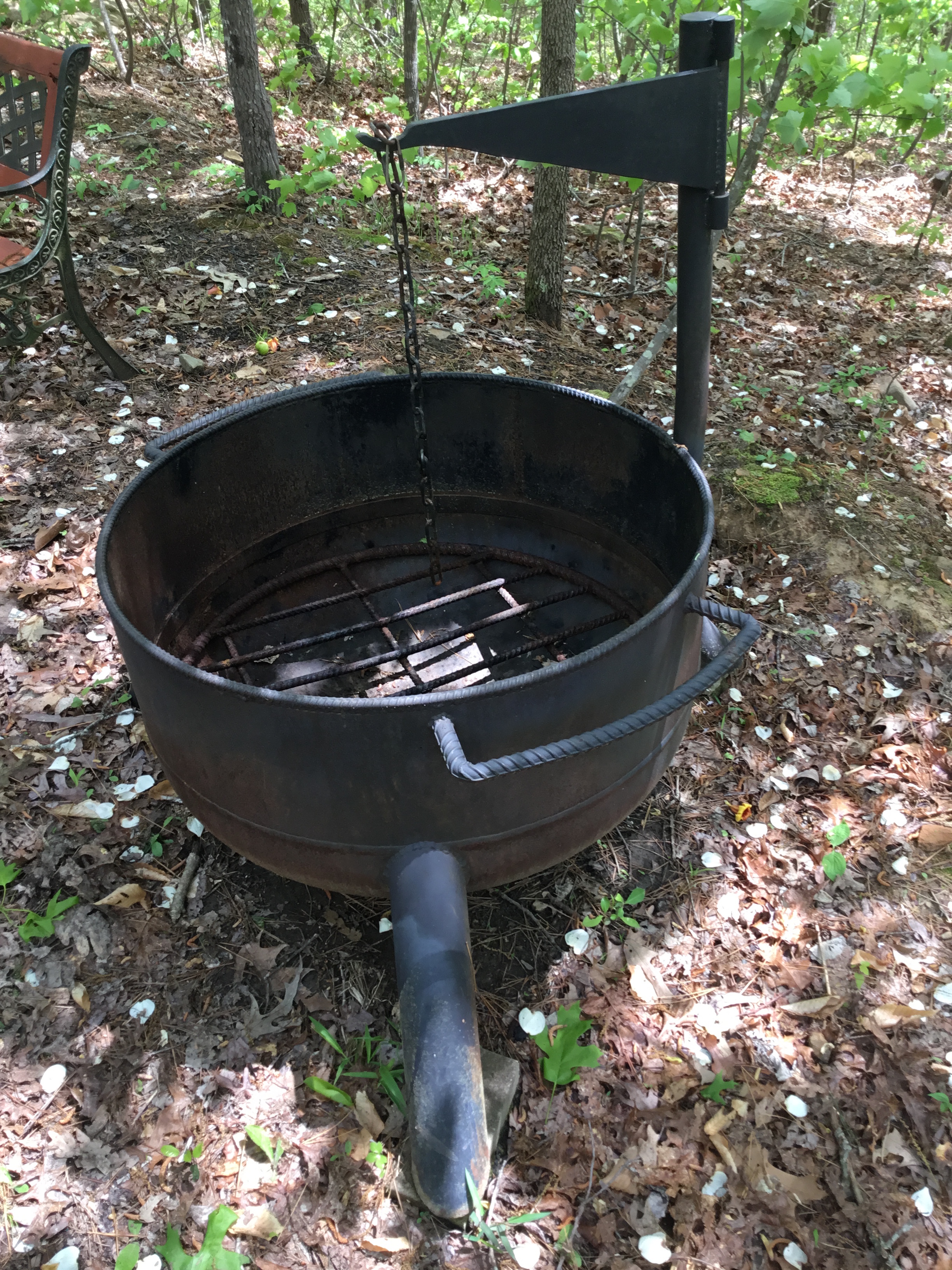
This mammoth version of a fire pit actually doubles as an outside hearth, which can be used like a similar arrangement in many colonial kitchens. The key to the set up is the crane from which that dutch oven is hanging.

A Multi-tasking Fire Pit

The crane, like those in colonial kitchen open hearth fireplaces, makes all the difference. The cook can’t immediately control the temperature of a wood fire, but they can control the amount of heat that reaches a pot, by swinging it from side to side, or raising and lowering it up and down via an s-hook. Additionally, the rebar grid at the bottom allows the cook to sit a dutch oven directly over the fire, as in the first photo.

The Holes Drilled in the Bottom are Not Visible

So there are at least three ways to cook here–on the fire, close to the fire, or swinging in the air. And if you just want to use it as a fire pit, the crane is on a hinge, and can swing completely behind the pit.

This was made from an old industrial grade propane tank, so it is recycled as well. An oak fell on it once, and I mean a big one, and it knocked the pit into the ground up to the top of the legs. The only damage was to bend the crane support slightly. We pulled it out of the ground, moved it, and I twisted the support slightly around, and put it back to work. Now that’s rustic.

Brick Oven Tools–Pizza Peels

Traditional Peel–Sort Of

Pizza peels are handy things, if you want to keep the hair from being burned off your arms. The one above is the traditional wooden variety. It was too short, so I added a handle made from a broken hickory axe handle, making this possibly the sturdiest peel in the world.

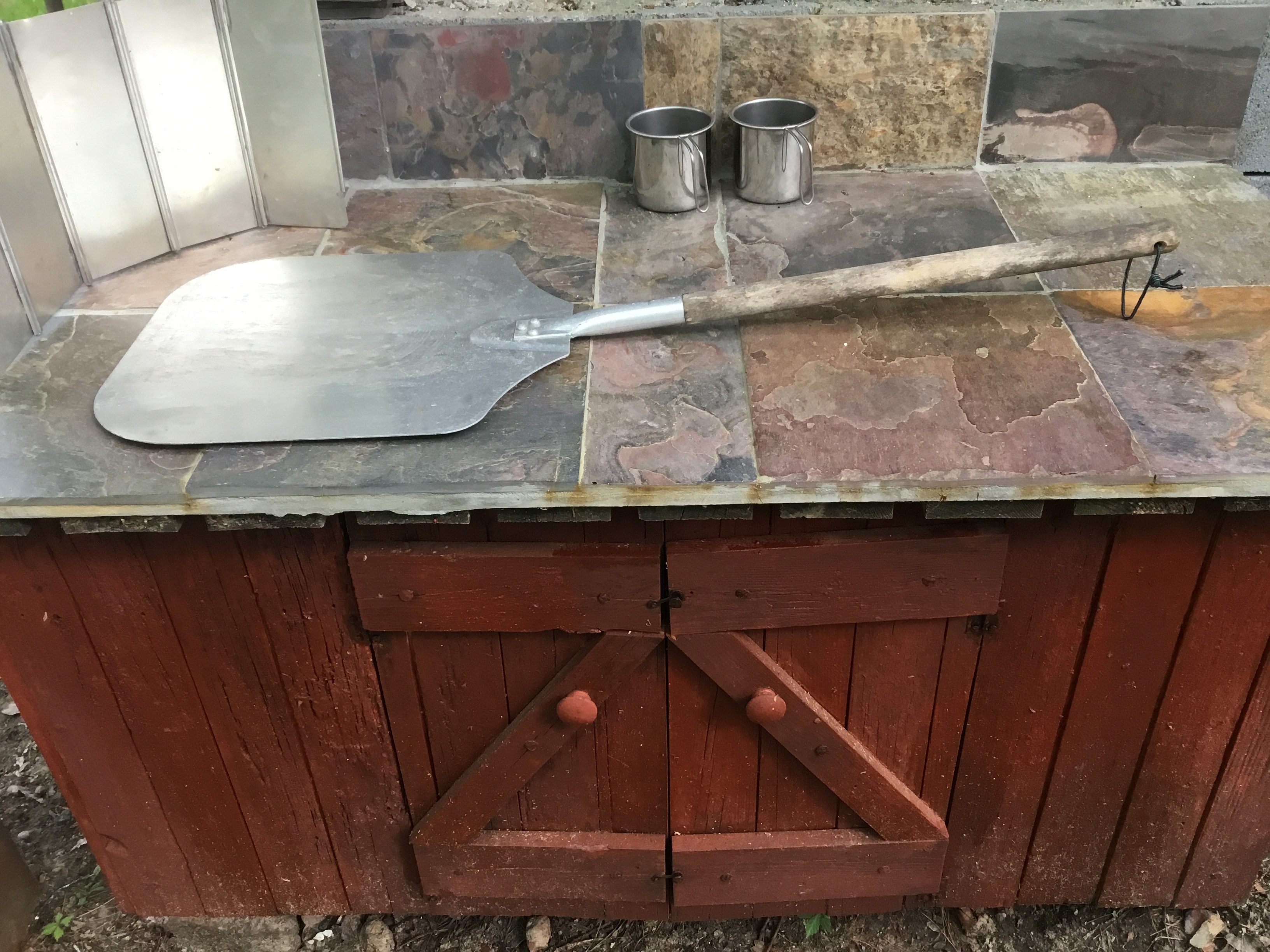
Metal Peel

These aluminum peels are popular in the pizza industry, and they are light, thin, and durable. Not as long as my wooden one, but can live outside at the brick oven. Note the straight, not curved, front, which makes it easier to scoop up a pie.

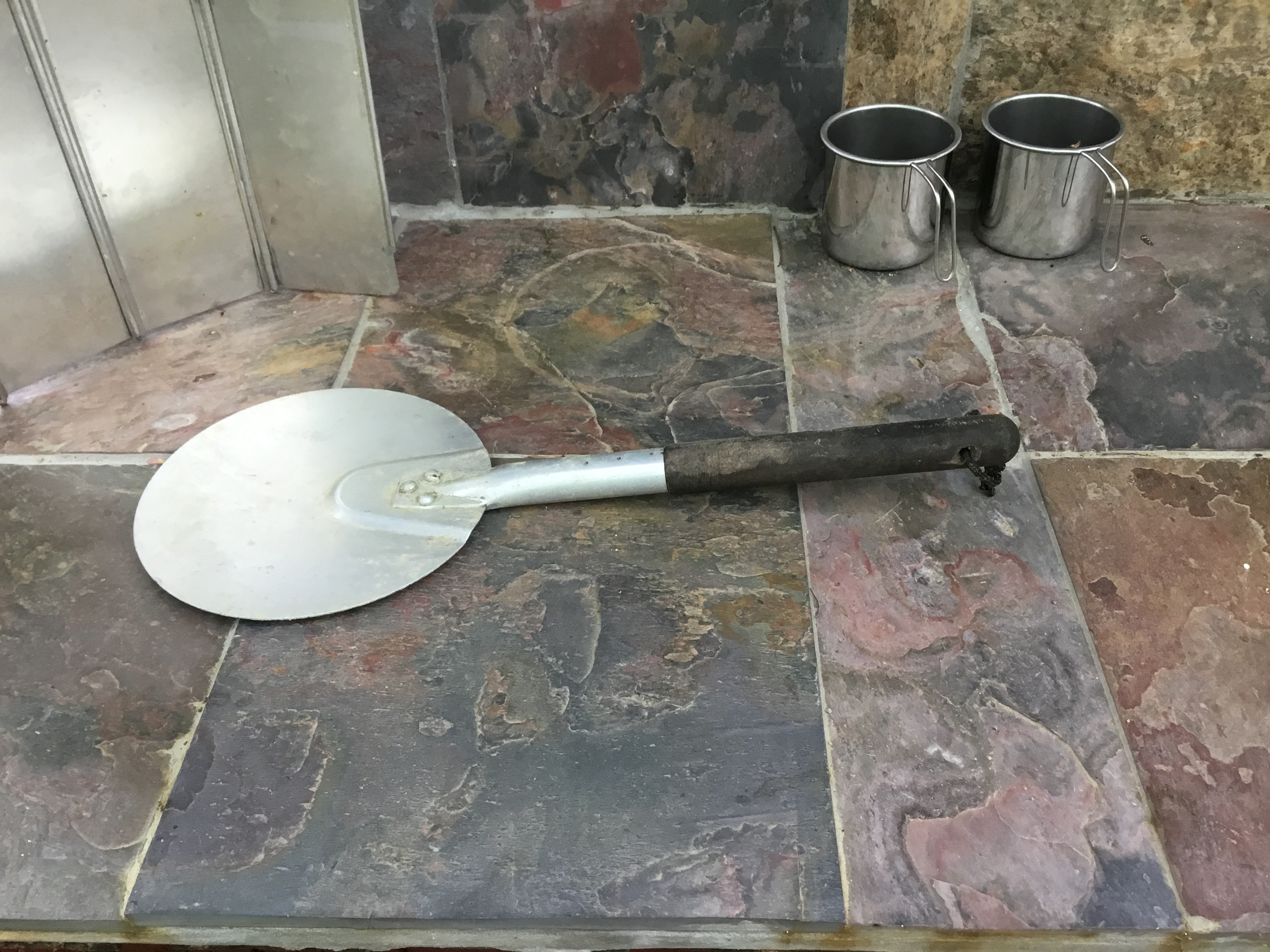
Round Peel

These little round peels are surprisingly useful. I use mine to move pizzas around inside the brick oven, though a welding glove is a good idea if you go that route.

Peels are also good inside the house, especially if you have a pizza brick of some kind. I use one of those giant Lodge cast iron pizza pans as a hearth, and turn up my oven as far as I dare. Wait a few minutes for it to reach temperature, then use a peel to throw a pizza on it. The results are surprisingly good. And, of course, bakers use these for sourdough loaves, and other concoctions.

Red Flour Paint

Red Flour Paint on Top of a Red Cabinet

Cook some paint! Or not, as this really doesn’t have to be cooked. Cooking changes the consistency of the starch used, so do some chemistry experiments, or just throw the ingredients into a jar and shake.

Ingredients

Flour (Rye or Wheat)

Water

Red Iron Oxide

Linseed Oil

I left off proportions, because everyone wants a different consistency with paint. Rye is the traditional choice for flour, but wheat is less expensive. Cook those with the water, then add the pigment–there are tons of natural pigments to choose from, and a very little goes a long ways. My advice is to stick with the mineral ones, as they are fade proof. I use food grade linseed oil for interior paint, and nasty boiled linseed oil for exterior paint. It just dries faster.

Once you get into the natural paint deal, you may never buy prepared paint again. To steal a comparison from Wendell Berry, it’s like the difference between real food and industrial food, industrial food being like industrial sex.

Trangia 25–A Sustainable Outdoor Stove

Swedish Ingenuity

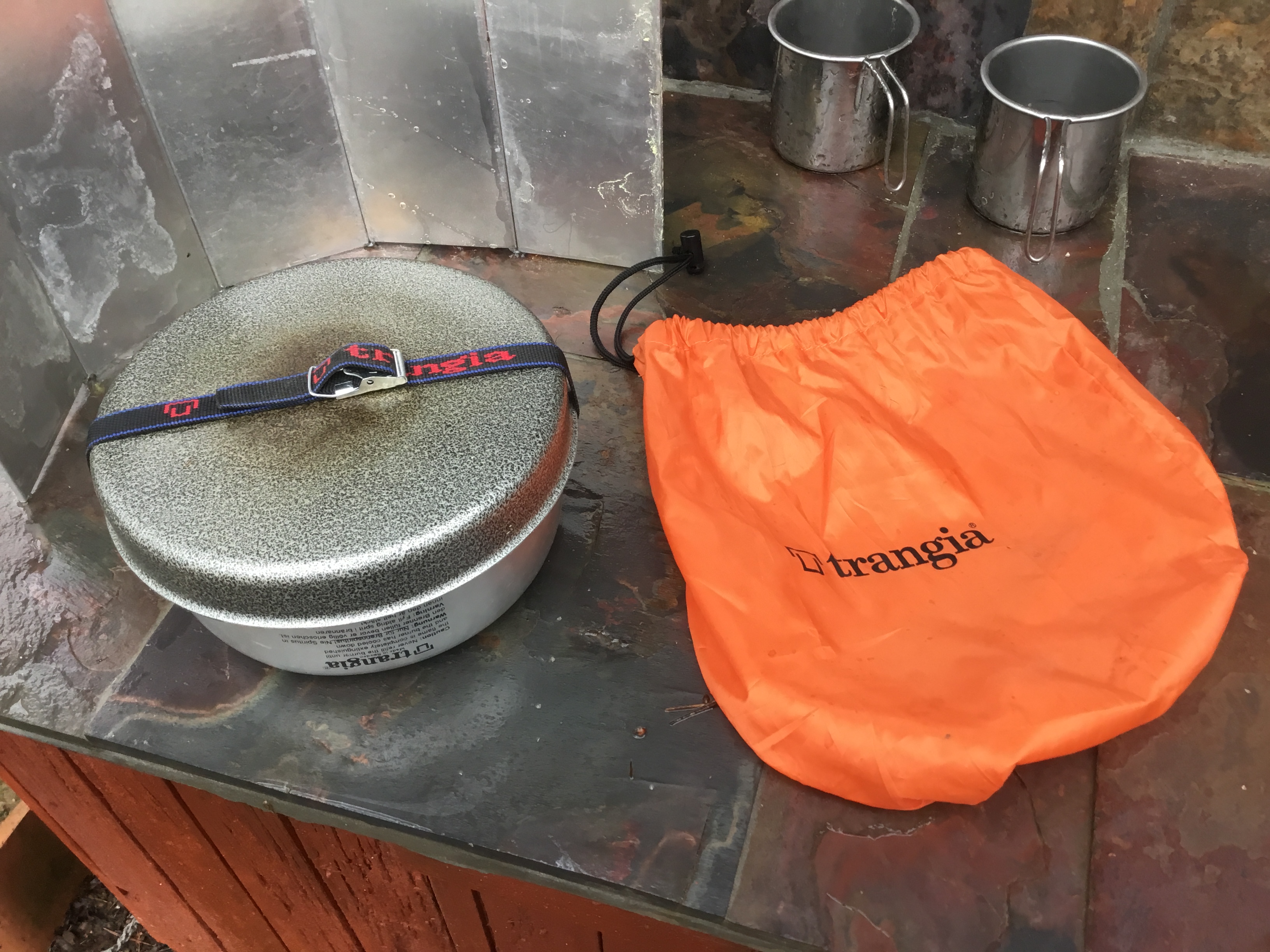
In my never ending quest for sustainable whatever, this one just about takes the prize. The Trangia “spirit” burner, which is the little brass thingy in the middle, will burn anything from denatured alcohol to Everclear. In short the fuel is completely renewable, especially as long as the world is populated by drinkers of bourbon.

A Kitchen in a Bag

And then it just disappears! Yes, all that stuff is in that little package. It may not be the hottest stove out there, but they are inexpensive enough to buy a couple or three, and they are still made in Sweden. Confession time–I own five Swedish made outdoor stoves.

I actually met the chief designer for the Optimus stove company, back when it was still Swedish owned, in Salt Lake City, of all places, at an outdoor trade show (I was in the industry). The young man asked me what stoves I used, and I told him I had three Optimus, and two Trangia. He was most impressed by the two Trangia, and took off on a typically European rant about Americans all being gear heads.

Stove Designer: “Every boy and girl scout in Sweden uses Trangia stoves. Here you give kids gas stoves that can explode. It makes no sense whatsoever.”

Technically, he was probably correct. If you can light a match, this stove is perfectly safe. Just don’t drink too much of the fuel.

Rustic Cabinet

Another Rustico Original

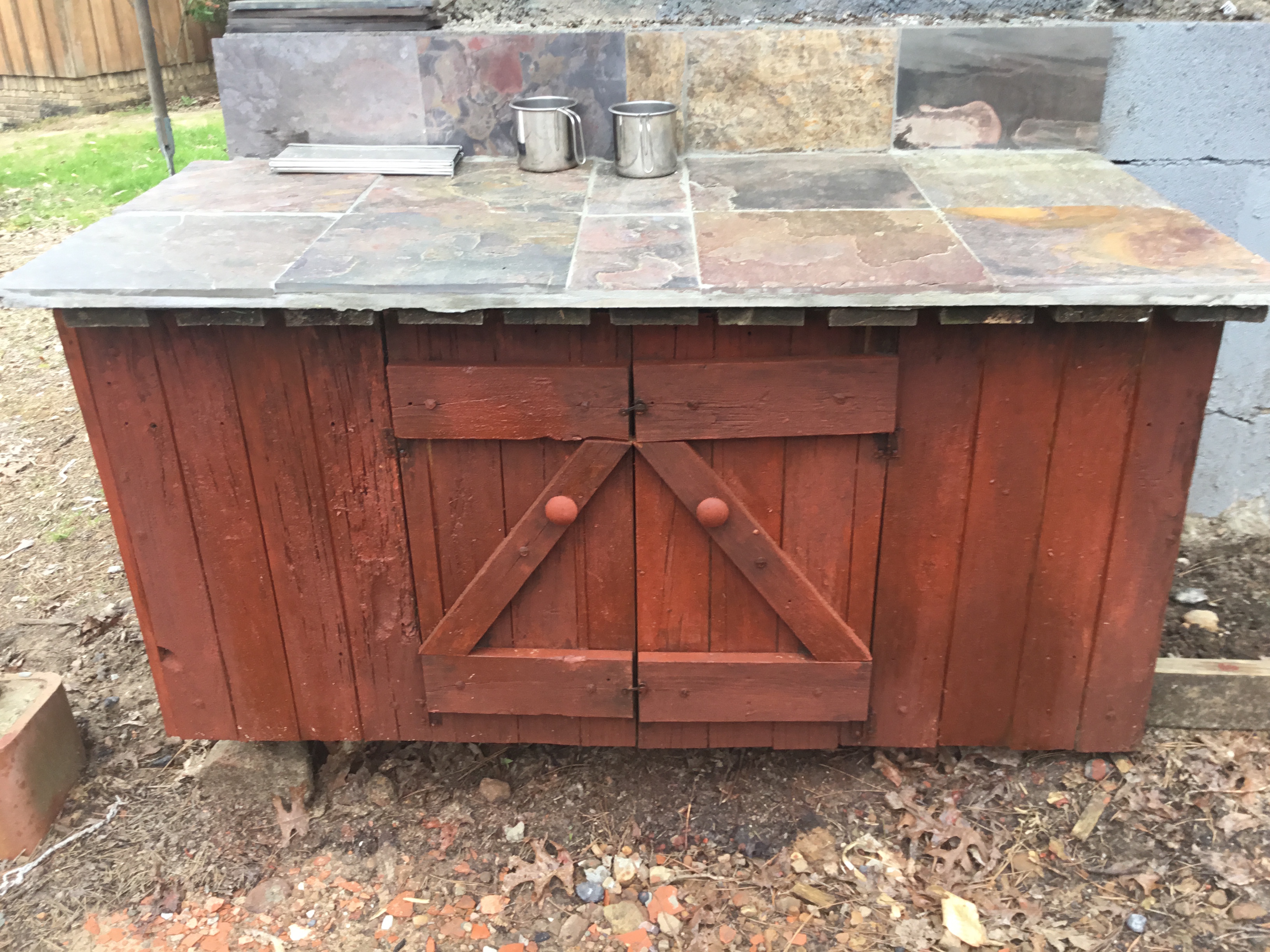
This cabinet is attached to the back of my brick oven, as there is never enough room to store the gear that accumulates over the years. It’s actually only an old greenhouse bench which I clad in old PT boards into which I cut tongue and groove joints. I also made the paint, which I will discuss later, as some people actually cook this paint, and the top is–drumroll–fireproof! That’s cement board topped with un-gauged slate. The next project is a “Tuscan” grill to be built next to it.

OffGuardian

because facts really should be sacred

Ruth Blogs Here

Or not, depending on my mood

A Haven for Book Lovers

I am just a girl who loves reading and talking about books

what sandra thinks

because I've got to tell someone.

LadiesWhoLunchReviews,etc

a little lunch, a little wine, a LOT of talking!

Margaret and Helen

Best Friends for Sixty Years and Counting...

talltalesfromchiconia

Tales of quilting, gardening and cooking from the Kingdom of Chiconia

Cyranny's Cove

Refuge of an assumed danophile...

Exiled Rebels

Serving BL since 2017

this is... The Neighborhood

the Story within the Story

Beauty lies within yourself

The only impossible journey in life is you never begin!! ~Tanvir Kaur

Southern Fusion Cooking

Country Living in the Southern Appalachians, USA--A little of this, a lot of that

Discover WordPress

A daily selection of the best content published on WordPress, collected for you by humans who love to read.

The Atavist Magazine

Country Living in the Southern Appalachians, USA--A little of this, a lot of that

Longreads

Longreads : The best longform stories on the web

WordPress.com News

The latest news on WordPress.com and the WordPress community.