Great Food Poetry, Part II–“After Apple Picking”

We picked blueberries in the 85 degree F heat today for about thirty minutes, until we finally said, Fornicate It, the birds can have as many as they want. Then my favorite food poem came to mind, written by the magnificently wicked Robert Frost. Here it is, courtesy of the Poetry Foundation:

After Apple-Picking

BY ROBERT FROST

My long two-pointed ladder’s sticking through a tree
Toward heaven still,
And there’s a barrel that I didn’t fill
Beside it, and there may be two or three
Apples I didn’t pick upon some bough.
But I am done with apple-picking now.
Essence of winter sleep is on the night,
The scent of apples: I am drowsing off.
I cannot rub the strangeness from my sight
I got from looking through a pane of glass
I skimmed this morning from the drinking trough
And held against the world of hoary grass.
It melted, and I let it fall and break.
But I was well
Upon my way to sleep before it fell,
And I could tell
What form my dreaming was about to take.
Magnified apples appear and disappear,
Stem end and blossom end,
And every fleck of russet showing clear.
My instep arch not only keeps the ache,
It keeps the pressure of a ladder-round.
I feel the ladder sway as the boughs bend.
And I keep hearing from the cellar bin
The rumbling sound
Of load on load of apples coming in.
For I have had too much
Of apple-picking: I am overtired
Of the great harvest I myself desired.
There were ten thousand thousand fruit to touch,
Cherish in hand, lift down, and not let fall.
For all
That struck the earth,
No matter if not bruised or spiked with stubble,
Went surely to the cider-apple heap
As of no worth.
One can see what will trouble
This sleep of mine, whatever sleep it is.
Were he not gone,
The woodchuck could say whether it’s like his
Long sleep, as I describe its coming on,
Or just some human sleep.

The bad news is we will have more blueberries in a few days.

Mallet, Part I–Dogwood Root Club

Seriously Hard and Dangerous

At the University of Alabama, I lived at the Men’s Honors Dorm, a somewhat notorious institution called the Mallet Assembly. It was home for everything from high minded intellectuals to infamous perverts. I prefer to think that I was in the former category.

So now I have undertaken several projects of making mallets. My first is every traditional woodworker’s dream, a splitting club ( aka, a maul), made from unbelievably hard dogwood root. The club is used to strike the back of a froe (pictured), which is a wood splitting tool. Mine happened to be made by the Amish.

One of our many thunderstorms this year blew over one of our big dogwood trees, and actually uprooted it. All I had to do was cut the root off with my old double bitted axe, and shape it right there on my shaving horse (also pictured), with a drawknife and a spokeshave. This club is full of heavyosity.

The first trial run was that piece of walnut, which it split with only four whacks. The second run was on some hornbeam, which is impossible to split. I did it anyway–after cutting through ninety five percent of the hornbeam log.

Mailing It In

Egg Tsunami is Here

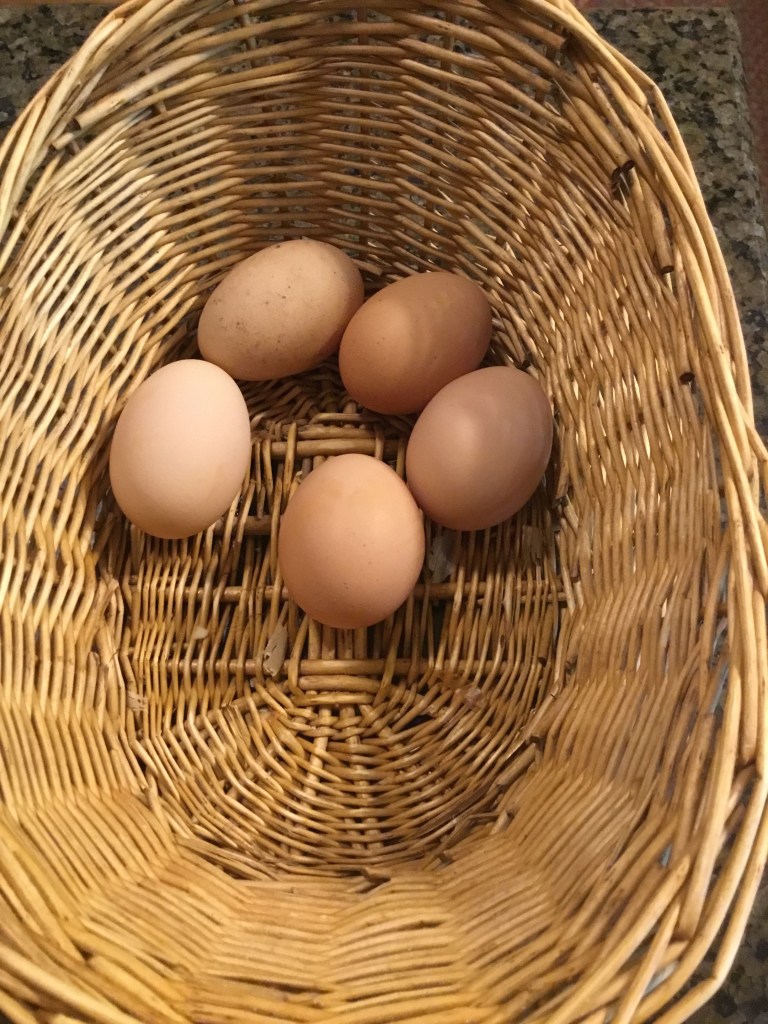
The two eggs on the left are from ISA Browns, the other three are from Barred Rocks. The Browns lay slightly longer eggs that are a little lighter, whereas the Rocks lay the slightly darker shorter eggs.

We had three eggs by nine this morning, and one was the first to be laid in the mailbox nest. The Browns are only beginning to lay, and according to the interwebs, they are egg layers supreme.

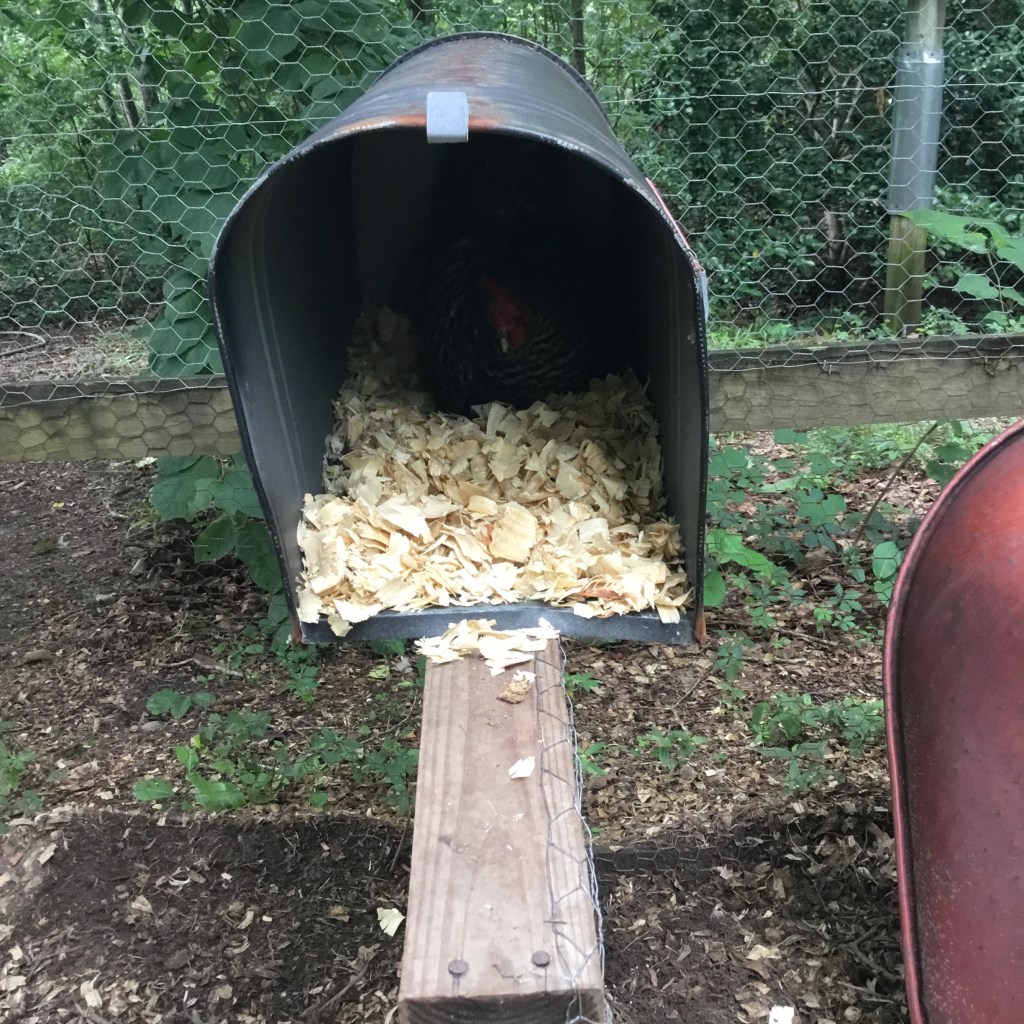
Here’s the mailbox again, for all the people who have worn out old farm stuff lying around. The size is XL.

Chickens like junk just as much as the flock of sheep in Shaun the Sheep.

The Chicken’s New Address

So Much Depends on a Mailbox and a Red Wheelbarrow

To go along with our Shaun the Sheep themed chicken pen, we have added another addition to the junkyard. MJ had the genius idea of turning our old defunct mailbox into a chicken nesting box. One Bosch drill, and three deck screws later, and it was a reality.

No Envelope for this Bird

I just added some pine shavings, and five minutes later, the Barred Rock chicken we have named Broody Bird was in there. She got comfy in a hurry.

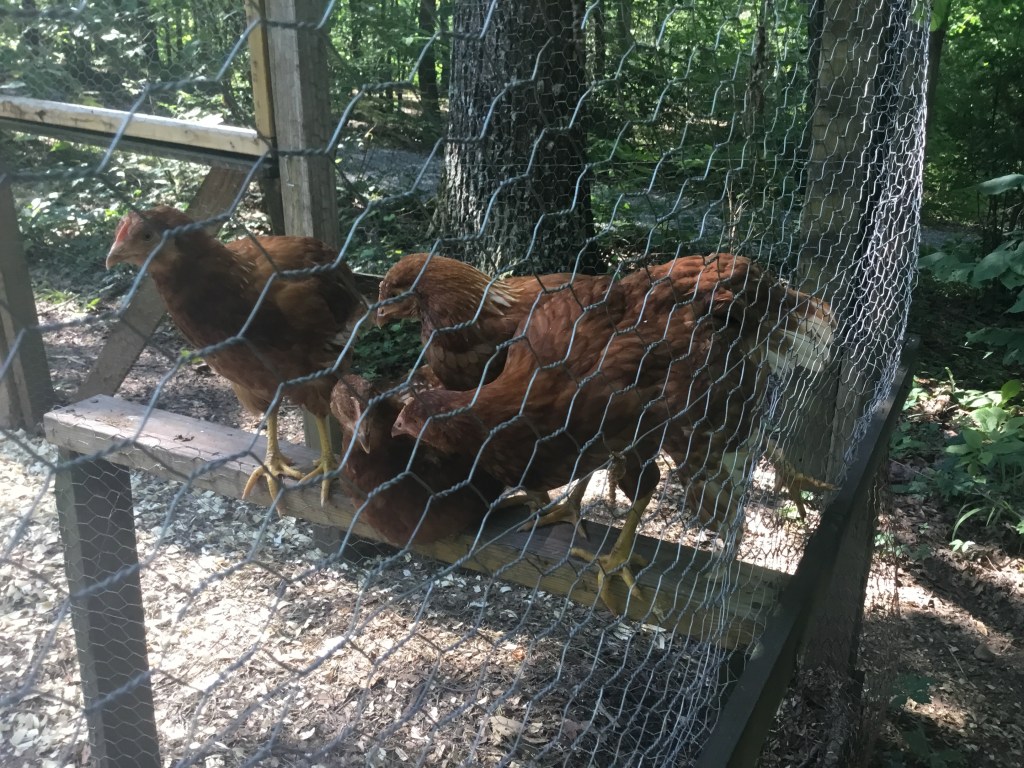
Our flock of eight has five nest boxes now, and I suspect at least one of the young ISA Browns has begun laying. We’re not going to have an egg avalanche–it will be more like an egg tsunami. I need to get them to raise the red flag when they lay an egg.

Citrus in Bloom

“The Murmuring of Innumerable Bees”

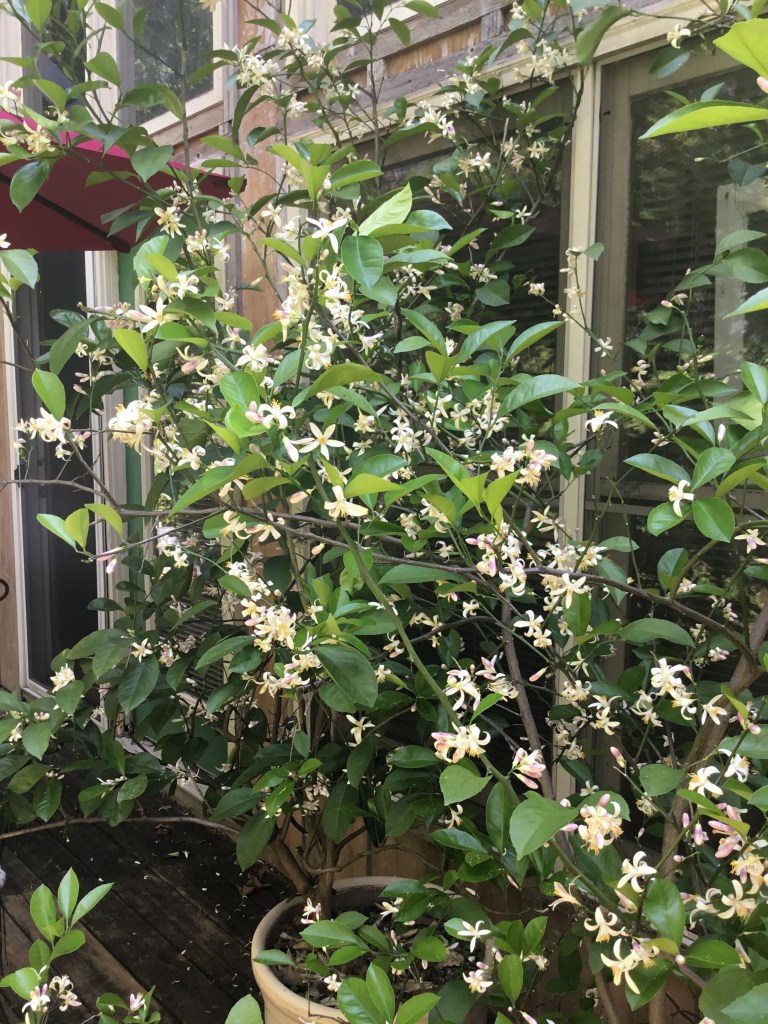
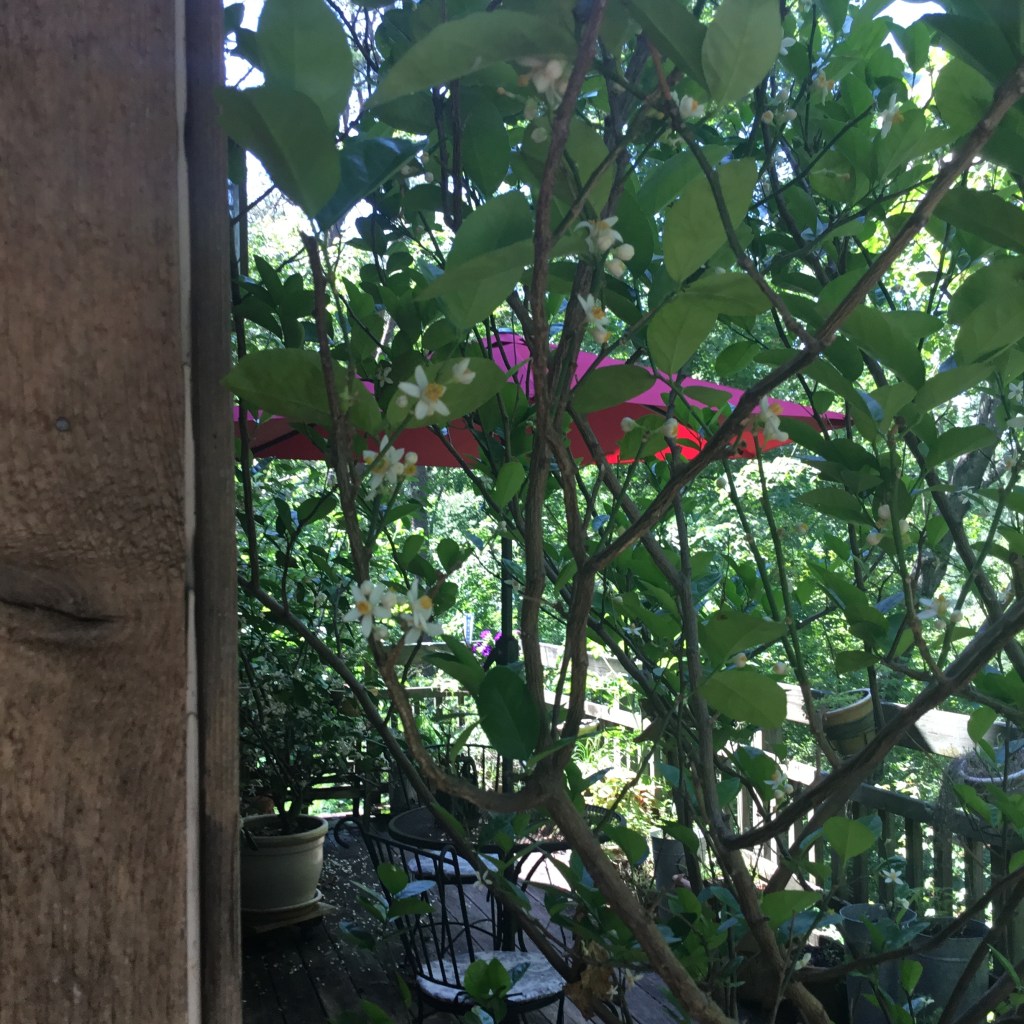
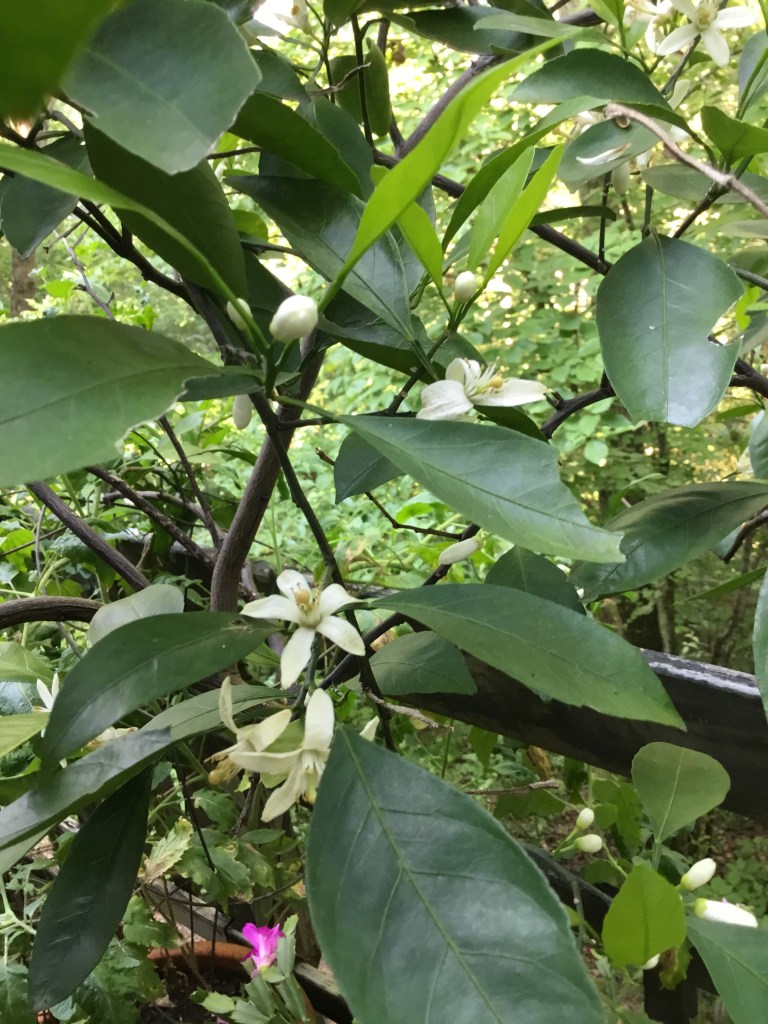
MJ’s mastery of citrus continues, as we have two Meyer lemons that are completely covered in blooms, at least three hundred to five hundred blooms or so. People don’t associate the Appalachians with citrus, but just bring them indoors in containers in the winter (Goethe wrote that they did the same thing in Germany, and that was over two hundred years ago). We’ll end up with only a few lemons, but we usually have enough to last us most of one year, until the next crop comes in. We freeze the surplus.

Key Lime Pie Waiting to Happen

The Key Lime is our most reliable producer of fruit, and we have had over 150 limes in one year, from just his one plant. We still have a bag full of these in the freezer. Beer with lime, anyone?

Orange Blossom Special

The Satsuma Mandarin Orange is the least productive of the plants, but the smell of the blooms is spectacular. This is grown widely on the Gulf Coast, as it is quite hardy for a citrus. There is even a town called Satsuma in south AL. The best Satsumas come from Plaquemines Parish in LA, which is just south of New Orleans. They even have their own Orange Festival.

Finally, MJ has some cuttings of Meyer Lemon started, and she doles those out to her family. All I can say is that growing citrus from cuttings is not for people with short attention spans. MJ has a waiting list of more than one year.

First New Taters, Precious

Butter, Anyone?

Tater digging time has arrived down here, and there will be lots of them. The first few plants yielded four different taters.

There are two yellow varieties in the bucket, and they are Gold Rush, and the standby Yukon Gold. The reds are Norland Red, which is quite attractive, so much so that I think I will eat them. The classic Russet rounds out this group.

I did very little for these roots except treat them with soil sulphur, to keep them from rotting, and a handful of organic fertilizer. With that little effort, we will be in taters for the rest of the summer. That’s taters, not tatters, though I do a really great Mick Jagger imitation, singing “Shattered.”

ISA Browns at Three Months

Prima Ballerinas

I knew that ISA Brown chickens grew fast, but these have gotten so big in such a short time that it’s almost scary. As stated before, this variety was the brain child of the French Minister of Agriculture in 1975. It is now apparent that he was bent on world chicken domination by the French (think of Volaille de Bresse, the famous blue legged meat chicken from Bresse, which a few years ago sold for forty dollars a bird in London).

So the French wanted the best eggs, to go along with the finest chicken meat, and they wanted mass quantities. Though the heritage of these birds is considered a corporate secret, it is apparent that a large part of the genetic line is the Rhode Island Red chicken. Apparently the Rhode Island White is also involved, as the roosters of these birds are always white.

And talk about hyper! The big fat Barred Rocks we have don’t even try to chase them anymore, as they can lap those big birds in one circuit around the big coop. They are also great at thieving the food out of the Rock’s giant feeder. Today’s project is making them a feeder of comparable size, out of PVC pipe. Film at eleven.

Hummingbird’s Nest

Mini Me

Here on the river, we have seen otters, a dog sized raccoon staring in our window, a red tailed hawk that opened up a gallon of fish fertilizer, and then wallowed in it, and a king snake that crawled between my feet to catch a toad, and swallow it whole. Wait, I left out the flying squirrels who like to nest in our bird houses. However, this is the first hummingbird nest we have ever seen.

It was lying in our front yard when we found it, under a white oak tree. The little hummers were obviously gone from it, and according to research, these birds will nest up to three more times this year. That’s a lot of ruby-throated hummingbirds.

This is a marvel of architecture. According to the interwebs, it’s woven together using spider’s web, and the outside is covered in lichen, as camouflage. Pretty clever for a bird that size. That, and they get free food from our two hummer feeders. Lucky them–this is too small for the flying squirrels to nest in.

Native Rhododendrons, Part V–Rhododendron arborescens

Sweet Azalea

This plant really is sweet. Like the parent that finally has to confess to having a favorite child, this is my favorite native azalea. It blooms late, has spectacular blooms and foliage, and smells like honeysuckle. We also rescued this specimen from our own waterfront.

Happy Shrub

The entire riverbank this was growing on washed away in two floods, though we still have one plant down there, up the hillside. We managed to salvage two in total.

They do need a good bit of water, but they will get as tall as twenty feet. Hence the translation of the Latin name: “tree azalea.” The one in the picture is probably more than twenty years old. We water it in dry weather, but have never fertilized it.

These bloom about a week later than my other favorite native shrub, Mountain Laurel, which is one tough cookie. Ours almost died out three years ago during a two month drought, the longest in recorded state history, and then all re-sprouted from the ground, or miraculously grew leaves from what appeared to be dead limbs.

Almost Done

Our many, many, wild plants are at the end of the blooming cycle, and will make thousands of tiny seeds. I’m looking for a forest full of laurel. It’s also a fine carving wood, if it weren’t too pretty to cut down.

Walnut!

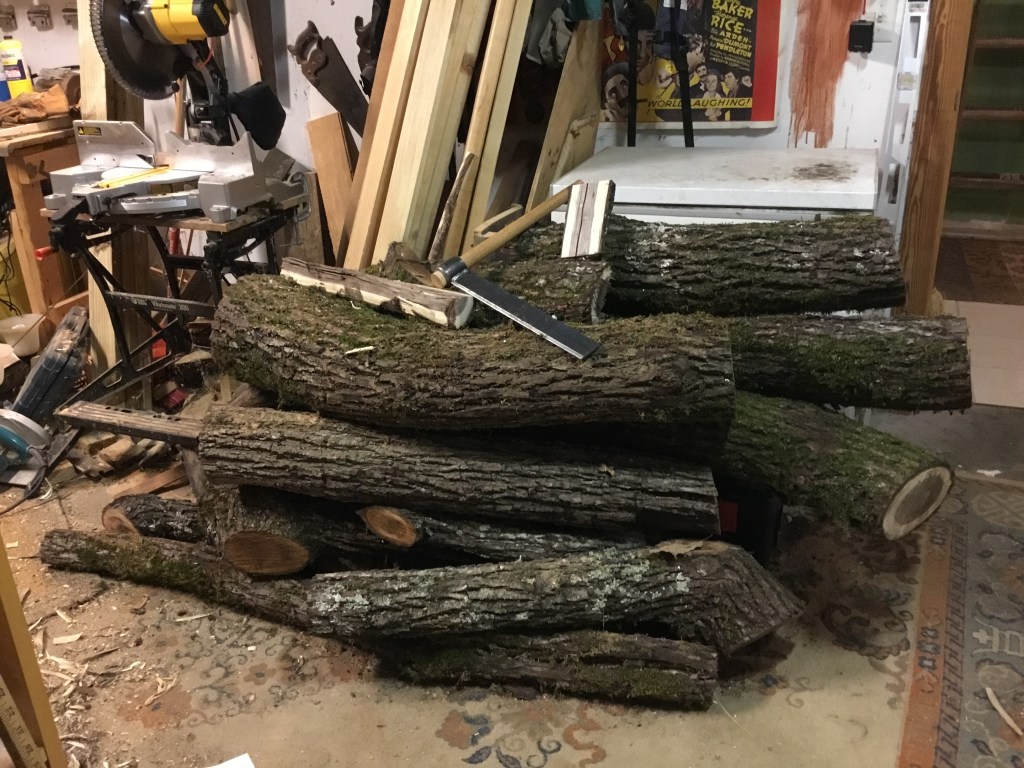
The Marx Brothers overseeing My Workshop Log Pile

Finding good Black Walnut wood can get really expensive. Eighteen trees once sold for $80,000.01, and a single tree sold for $17,000. That’s some pricey wood.

Then my niece inherited her grandmother’s house, and the reno required the removal of one Walnut tree. My brother-in-law offered me a deal on it. Anything involving Walnut is an offer you can’t refuse.

It’s a barter deal: I get the wood, but have to make goodies for my niece’s upcoming wedding, a minimum of ten spoons from Walnut, and three Walnut bowls. Since I have until June, I began with a couple of other projects.

French Style Rolling Pin

This rolling pin is for my sister-in-law, as a down payment for that pile of logs. It was made on my quite primitive foot powered reciprocating lathe. My tool rest is an old broken axe handle. My workshop is also our laundry room.

Scoop with Sap Wood Edge

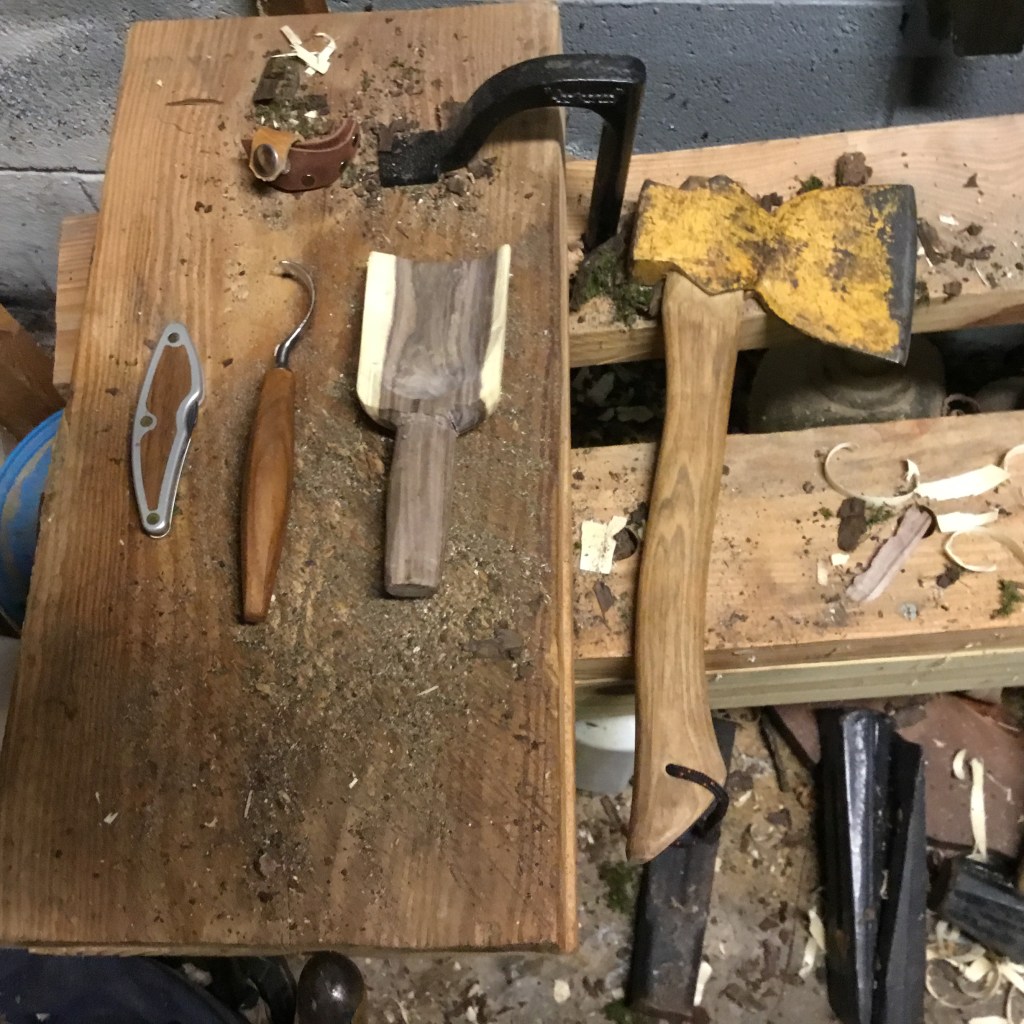
This scoop is for us, for our half gallon mason jar full of Louisiana rice. It’s only roughed out at this point, but it was made mostly with just those three tools. A true expert will recognize the hook knife as one made by Hans Karlsson, the great Swedish smith. The wood carving knife is Flexcut, made in the US. The broad hatchet is a flea market find. Good tools make life easier, so just buy the best you can afford.

Now it’s time to make my way back down to the spoon mines. Wood shavings will fly, and and all I have to do, is remove everything that doesn’t look like a spoon.

OffGuardian

because facts really should be sacred

Ruth Blogs Here

Or not, depending on my mood

A Haven for Book Lovers

I am just a girl who loves reading and talking about books

what sandra thinks

because I've got to tell someone.

LadiesWhoLunchReviews,etc

a little lunch, a little wine, a LOT of talking!

Margaret and Helen

Best Friends for Sixty Years and Counting...

talltalesfromchiconia

Tales of quilting, gardening and cooking from the Kingdom of Chiconia

Cyranny's Cove

Refuge of an assumed danophile...

Exiled Rebels

Serving BL since 2017

this is... The Neighborhood

the Story within the Story

Beauty lies within yourself

The only impossible journey in life is you never begin!! ~Tanvir Kaur

Southern Fusion Cooking

Country Living in the Southern Appalachians, USA--A little of this, a lot of that

Discover WordPress

A daily selection of the best content published on WordPress, collected for you by humans who love to read.

The Atavist Magazine

Country Living in the Southern Appalachians, USA--A little of this, a lot of that

Longreads

Longreads : The best longform stories on the web

WordPress.com News

The latest news on WordPress.com and the WordPress community.