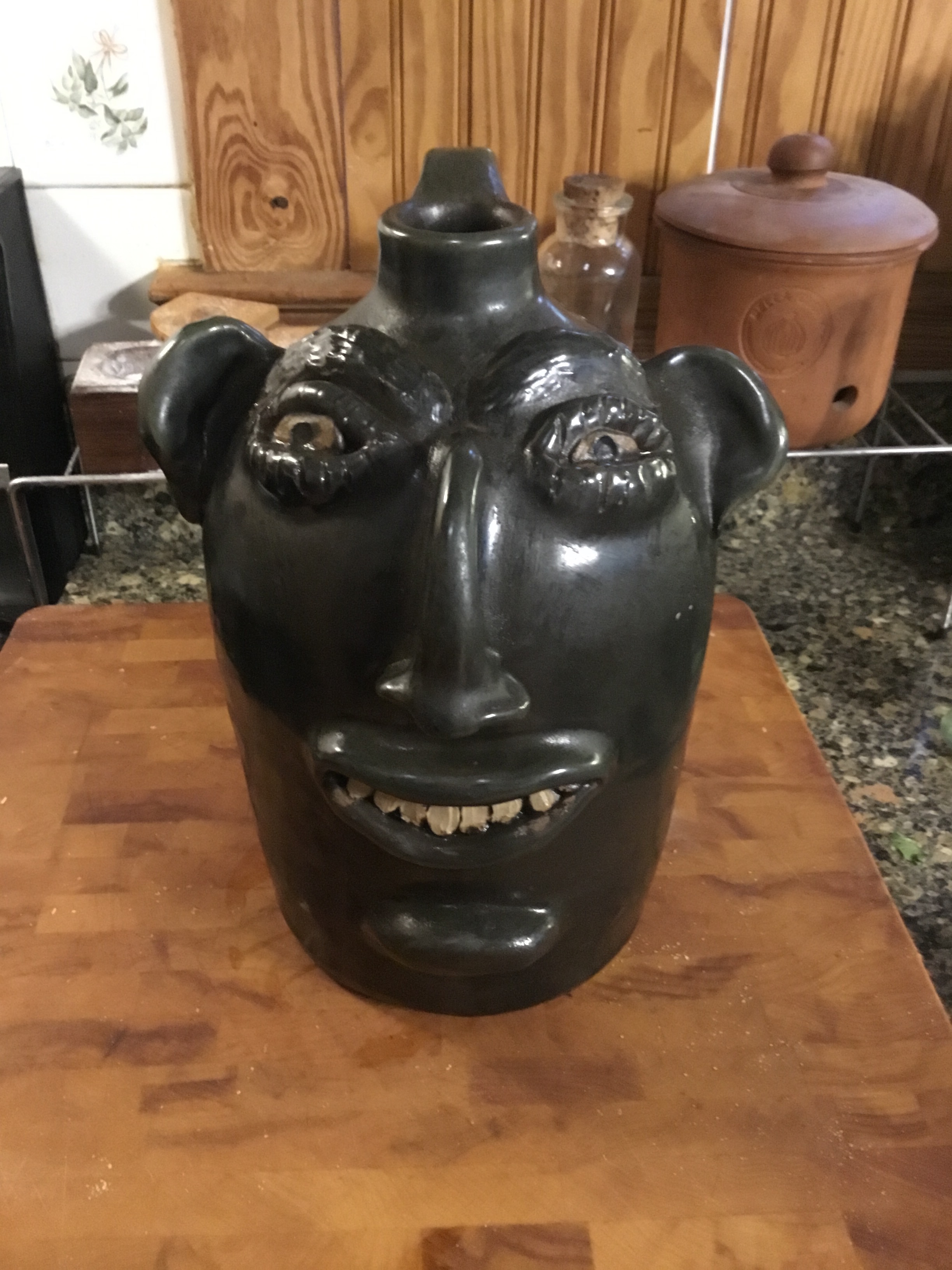
 You talkin’ to me? You talkin’ to me?
Jerry Dolyn Brown, whose shop is located in Hamilton, Alabama, was one prolific potter. For decades he was also recognized as the most traditional potter in the US. He dug his own clay, ground it in a mule driven mill, and fired his pieces in a traditional southern “groundhog” kiln. His work was featured at the Smithsonian, he was named a National Heritage Fellow by the National Endowment for the Arts in 1992, and he was Alabama’s Folk Artist of the Year for 2001. The remarkable fact about these various recognitions is that his work was always primarily utilitarian, and he made everything for a kitchen except the pots and pans.
The handsome fellow in the above picture is a face jug, which is, shockingly, a jug with a face on it. There are more theories about the origin of this form than there are about JFK’s assassination, so pick out a favorite, and insist that you have the correct one. Besides being decorative, it also makes a perfectly usable jug, with the advantage that most people won’t mess with it. Hence a good place to hide some hooch.
Bowls
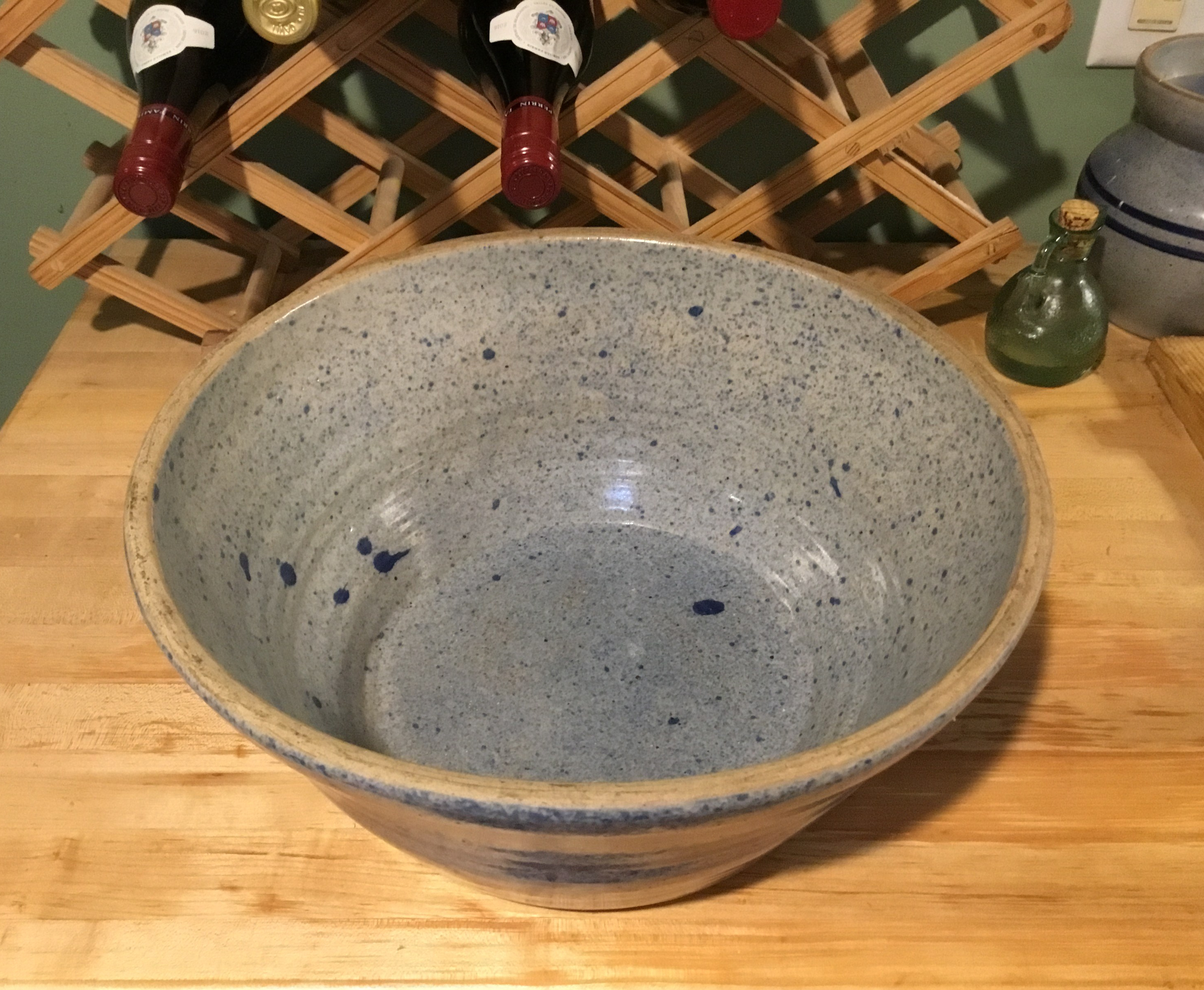 This seriously big mixing bowl is a full 14″ across the top. Notice the finger indentations in the surface where the bowl was thrown. Decorated using Brown’s celebrated “splatter” technique.
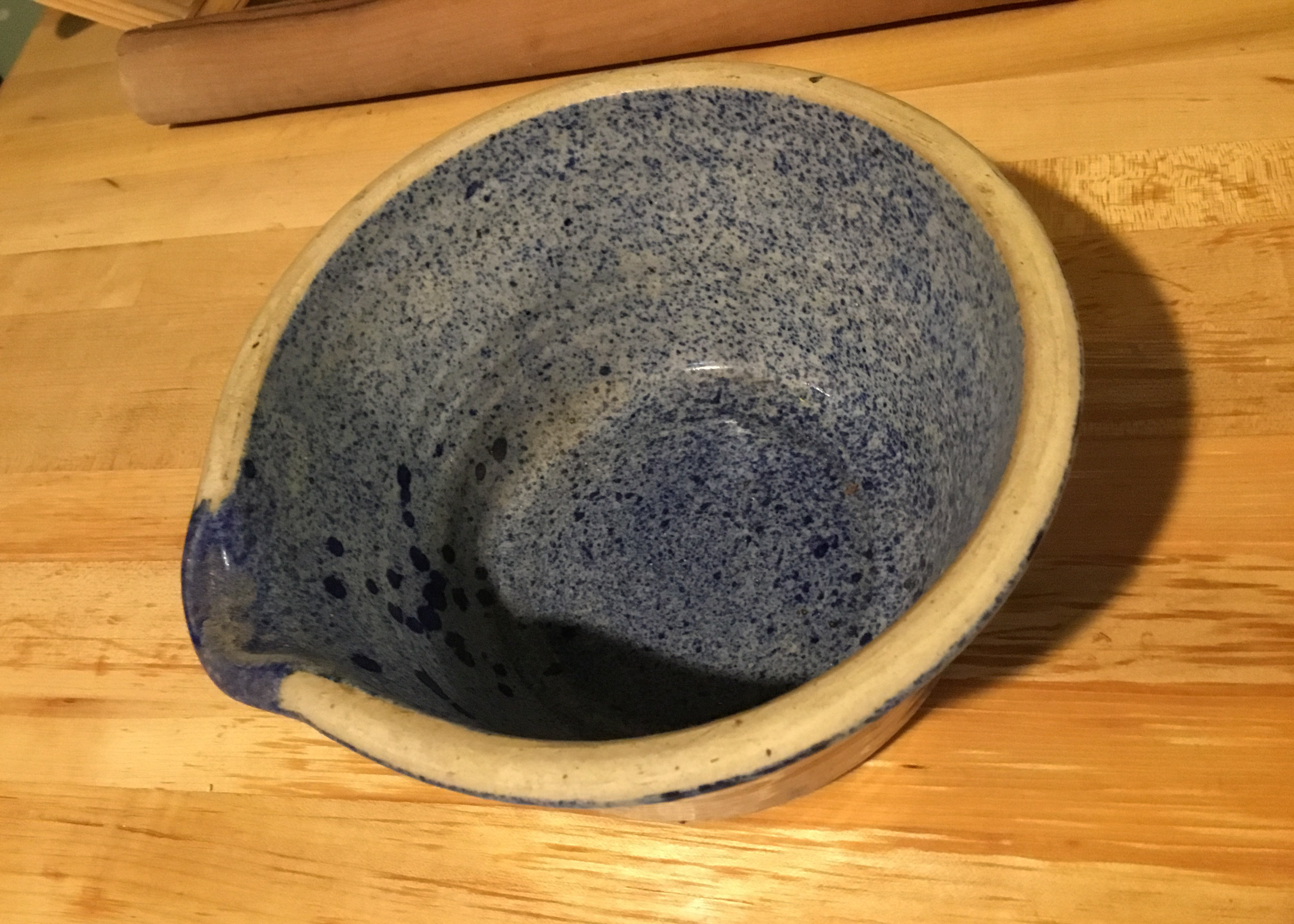 Smaller mixing bowls came with spouts, and with or without handles.
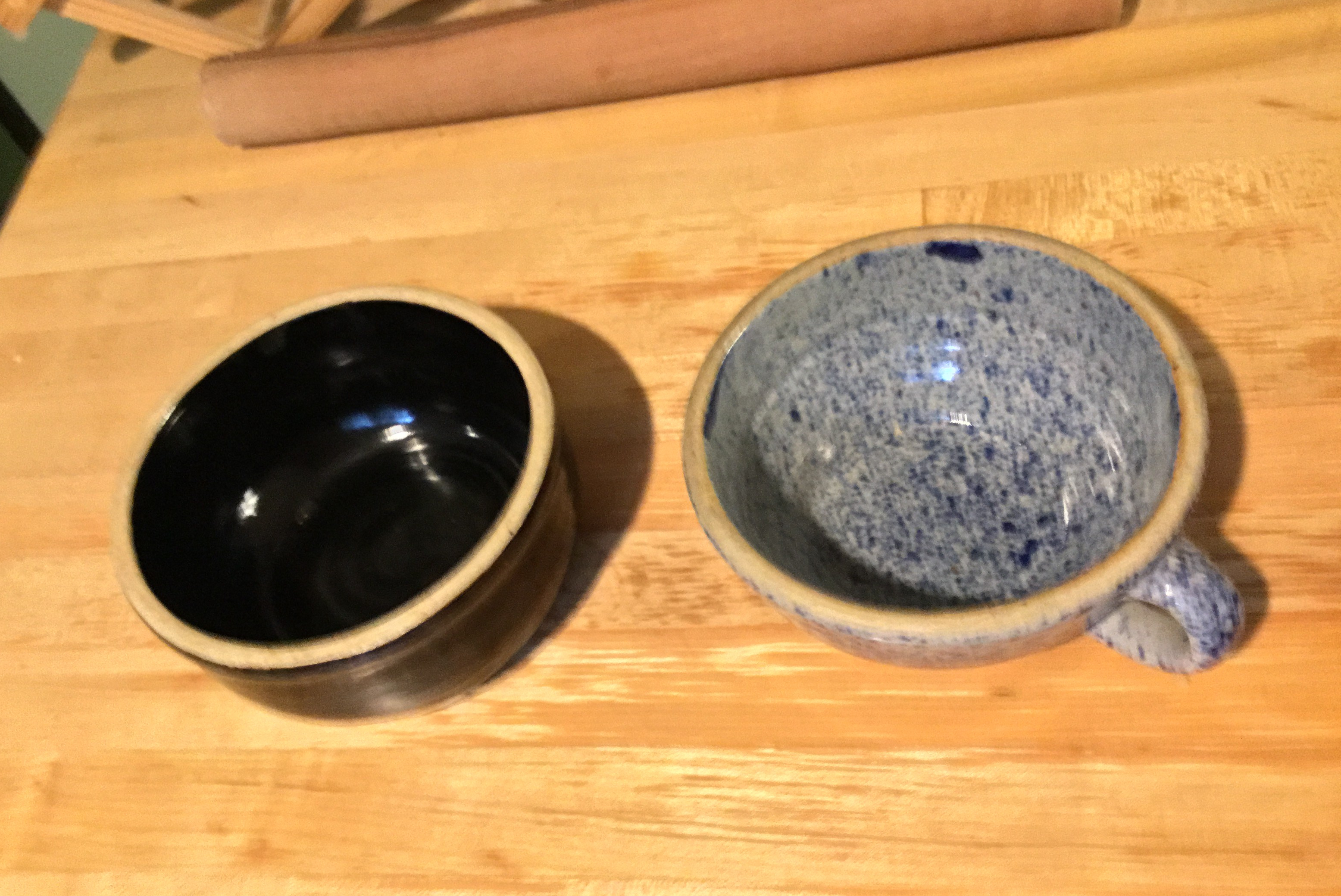 Soup Bowls! With or without handles, these can take on a seriously hot broiler. We never use anything but these for our Creole onion soup. I love the black glaze on the one without the handle.
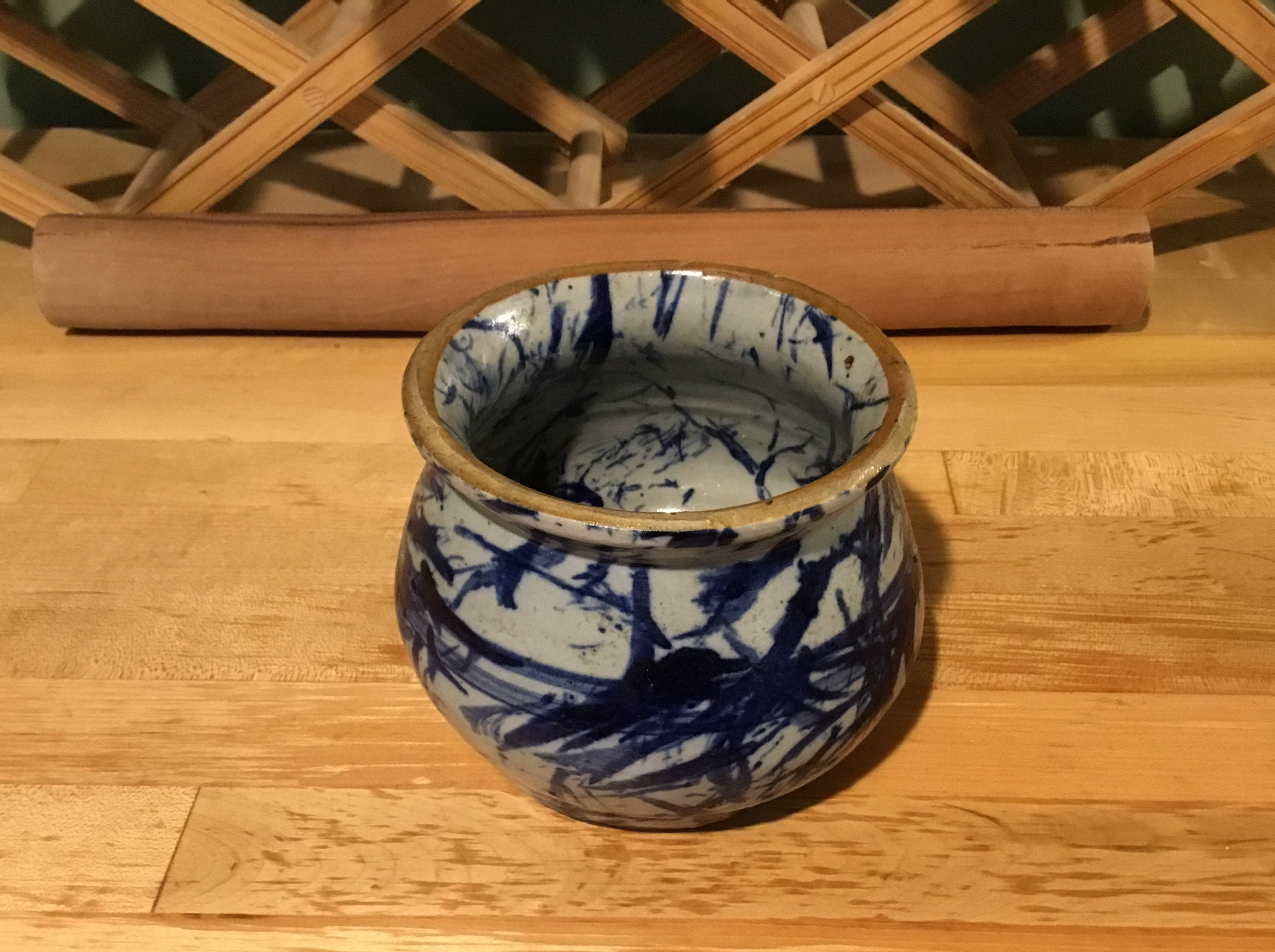 This small very decorative bowl was striped with cobalt glaze using a chicken feather, which was another favorite technique of Brown’s.
Pie Plate
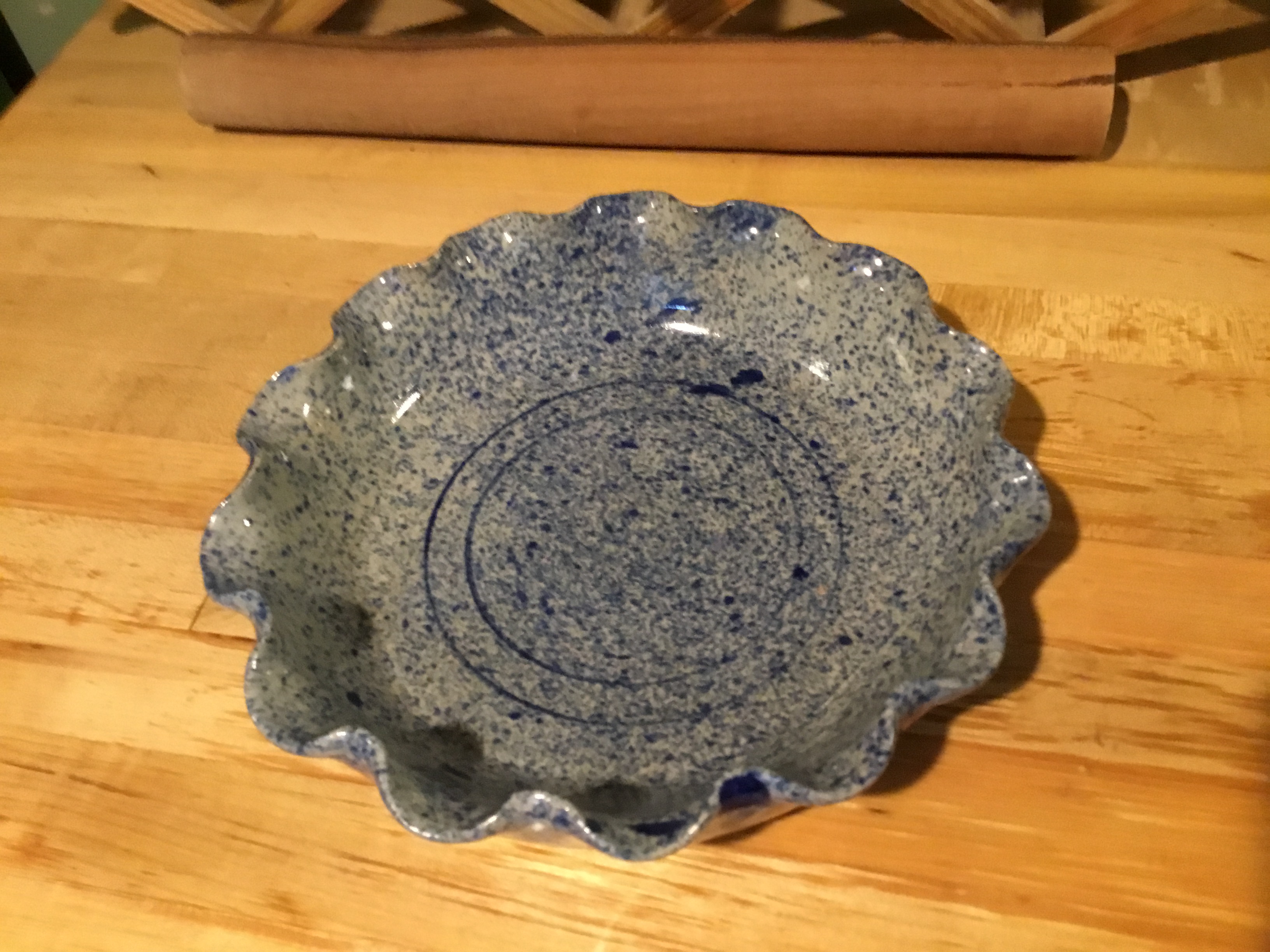 Now, on to the subject of bakeware. This one is almost too pretty to use, but that was what it was made for.
Pitcher
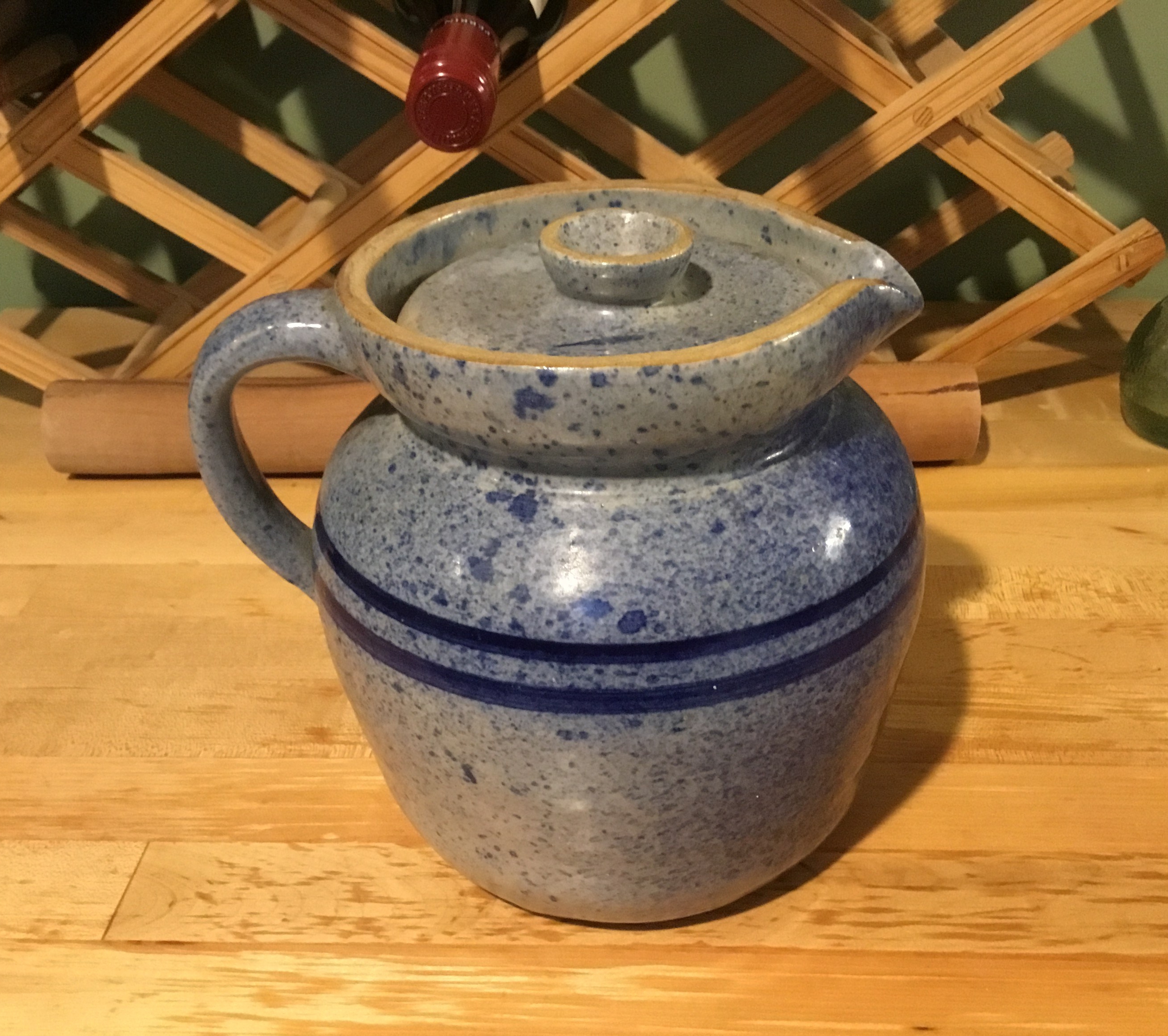 For years I thought this was a pitcher for iced tea, as that is what we used it for. Imagine my surprise when I saw a very old, very similar piece at The Museum of Appalachia, which was described as a “milk pitcher.” The lid would keep the flies out.
Cookie Jar
 A fat version of the pitcher, with two handles and no lip. “Stop, move away from the cookie jar.” That’s from the BBC version of The Office, where they had a talking cookie jar.
Canisters
 Essentially smaller versions of the cookie jar, but without handles. Brown made other forms of canisters as well.
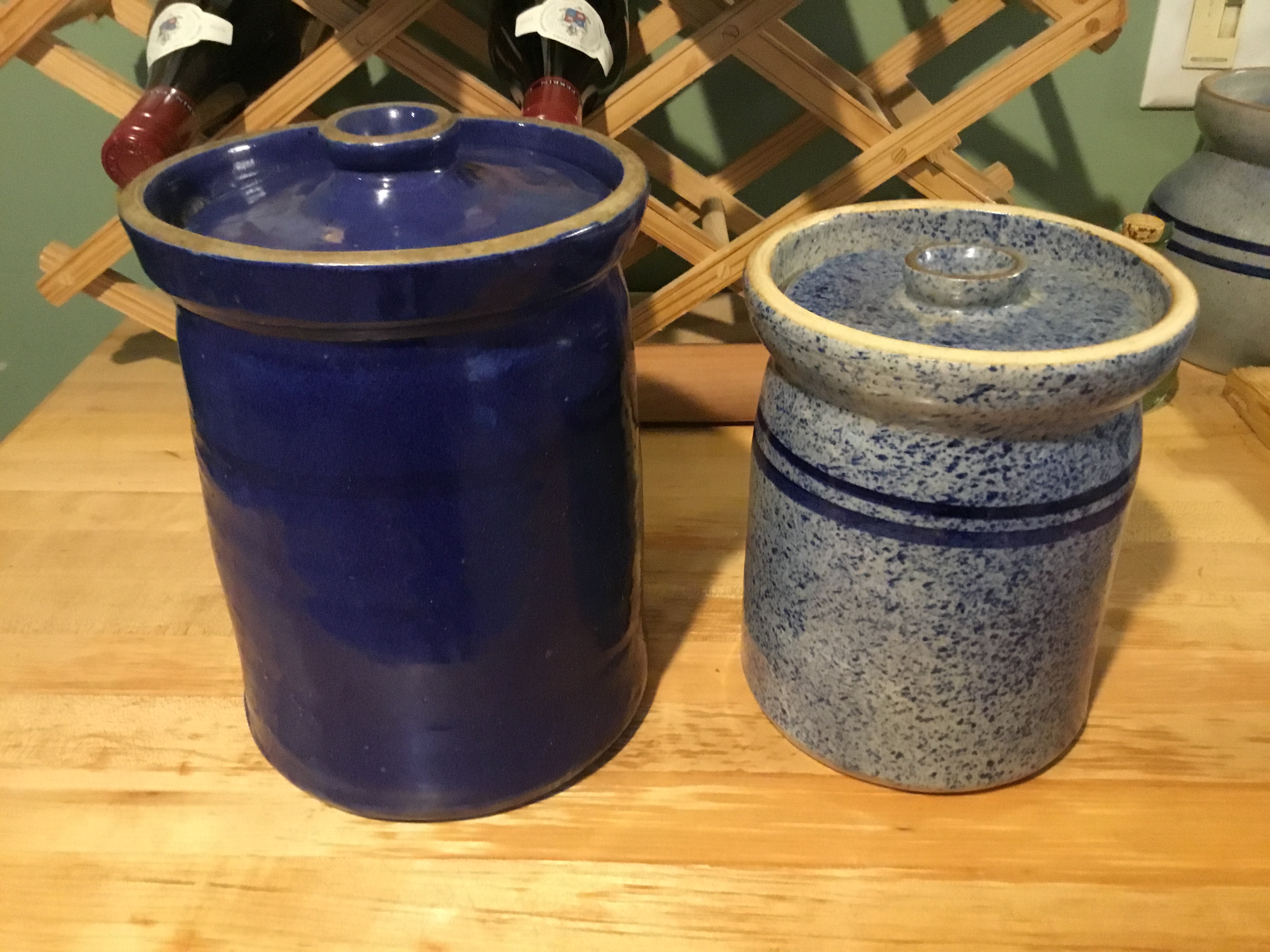 A more modern style of canister, but with the same great glazes.
Churns
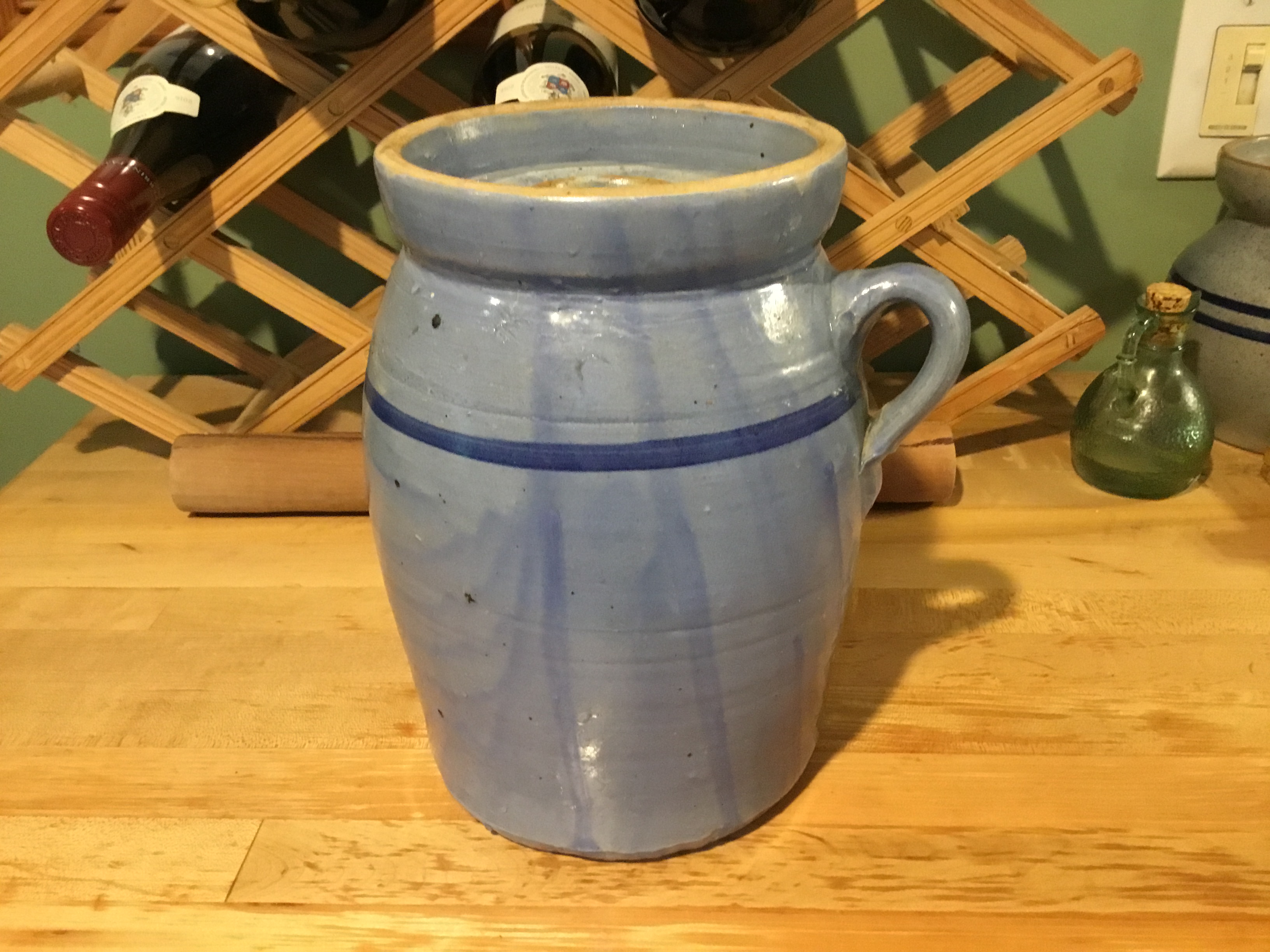 A small churn, for someone who has a very small cow, perhaps. My guess is people buy these for the country look.
 There’s a more realistic size churn for a real farm. Now I can make up stories about Grandma and her favorite cow.
Face Mug
 This guy looks like he’s had one cup of coffee too many. Believe it or not, you could actually drink from this mug, if you can stand the stare. At least it should wake you up.
I had to end with that one, to show that the Brown family designs continue to evolve. Though Jerry Brown died in 2016, the pottery continues on with another generation. Jerry’s stepson, Jeff Wilburn, now serves as principle potter. If you missed the link to their store at the beginning, here it is again: Jerry Brown Pottery. You can also visit the Jerry Brown Arts Festival, which is held each spring. It also helps to keep our traditions alive.


 Southern Fusion Cooking