“I have lived temperately, eating little animal food, & that, not as an aliment so much as a condiment for the vegetables, which constitute my principal diet.”–Thomas Jefferson
“I have lived temperately, eating little animal food, & that, not as an aliment so much as a condiment for the vegetables, which constitute my principal diet.”–Thomas Jefferson
“Homegrown is the Way it Should Be.”–Neil Young

Our favorite chicken recipes, cooked with a Southern accent.

Lima Beans, known as butterbeans in the South, are one of our most prized fresh summertime vegetables, partly because they are less common than other goodies, like really fresh ripe tomatoes. They are less productive and more labor intensive than many other legumes, even though it is yet another crop native to the Americas.
Imagine our surprise, then, when we were roaming the Festhalle Farmer’s Market yesterday morning, to see market baskets full of butterbeans being sold by one of our favorite farmers. Note: a standard farmer’s market basket is four quarts, or roughly 1/10 of a peck. We swooped in like a chicken on a June bug, only to be told these were a special speckled variety of butterbean. Naturally, that made them more expensive. Nevertheless, we paid up, and bought a basket.
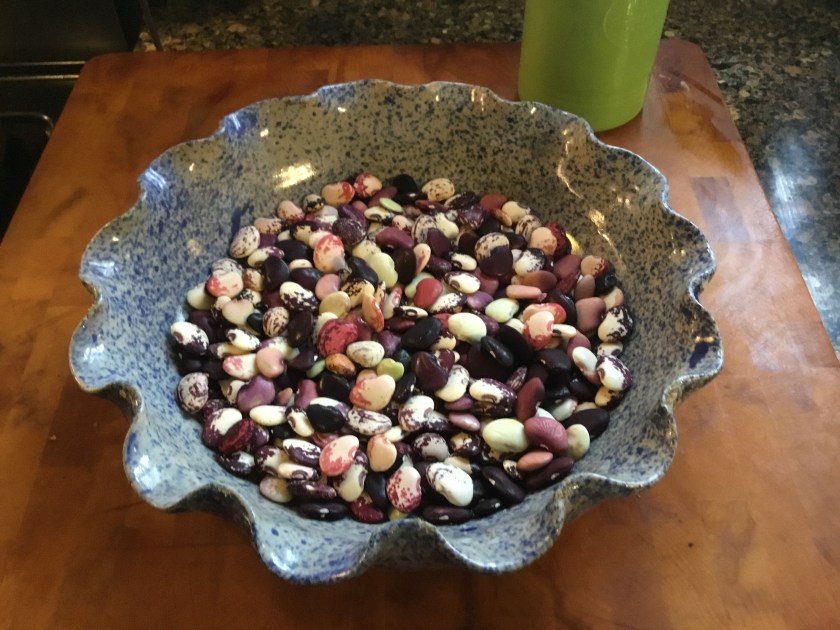
They turned out to not only be a wild range of different psychedelic speckled colors, but also included some funky solid colored beans. They are butterbeans tripping on LSD, and almost too pretty to eat, but eat them we will. Here’s the recipe:
Ingredients
2 cups fresh Butterbeans–any variety. (Frozen will do if fresh are not available)
Water
Seasoning Meat (in order of preference–Tasso, Smoked Ham Hock, Smoked Bacon, Country Ham)
Salt and Pepper
Tasso, in the South, is a Cajun/Creole invention made of heavily spiced strips of pork shoulder, which are then hot smoked, which means smoked and cooked at the same time. It’s easy enough to make yourself. Tasso adds more flavor than other kinds of smoked pork.
The cooking process is simple enough: simmer the beans until they are tender. Removing the seasoning meat when serving is optional. I like my butterbeans to fly solo. These will work great that way, especially considering that they are already on a trip.

Pot lids are the most underutilized kitchen tools. They save energy, and can also improve greatly the quality of a dish. If you want the pot to boil faster, put a lid on it.
Here we have two distinct styles of lids, the left American and cast iron, and the right copper and French. The American is made by Lodge, the French by Bourgeat. They will be judged by aesthetics, construction, and versatility.
Aesthetics
There’s nothing more attractive in the kitchen than a French copper pot with a riveted copper lid. The French are off to a fast start. I once sat next to a fabulously dressed woman at a French movie during an International conference at the University of Illinois. Her three friends were equally well attired, and they spoke only French. I saw her again the next day, heading one of the conference sessions. Turns out she was the French Minster for Culture under President Mitterrand. France 1, US 0.
Construction
The US turns this period into a rout. Cast iron lids can make a pan into a semi-pressure cooker, especially those on Dutch ovens. As a student of mine said, who was a professional cook, “Nothing lasts forever, but cast iron lasts forever.” France 1, US 1. Into extra time.
Versatility
This extra time is going to be a beast. The French lid is like the AK-47 of lids- it fits our pots and theirs. But then off the bench comes the best US all rounder–the cast iron skillet lid.

Is it a skillet or a lid? False choice–it’s both. Too bad it’s not a striker, as it’s shot bounces off the post with a few seconds to go in extra. Could this be decided on penalty kicks?
Not if I have anything to do with it. As Jon Stewart famously said after an actual World Cup was decided on penalty kicks, that was like deciding the NBA championship “with a game of horse.” Buy some of each, and like Scarlett O’Hara, you’ll never go lid-less again. I think that’s what she said.
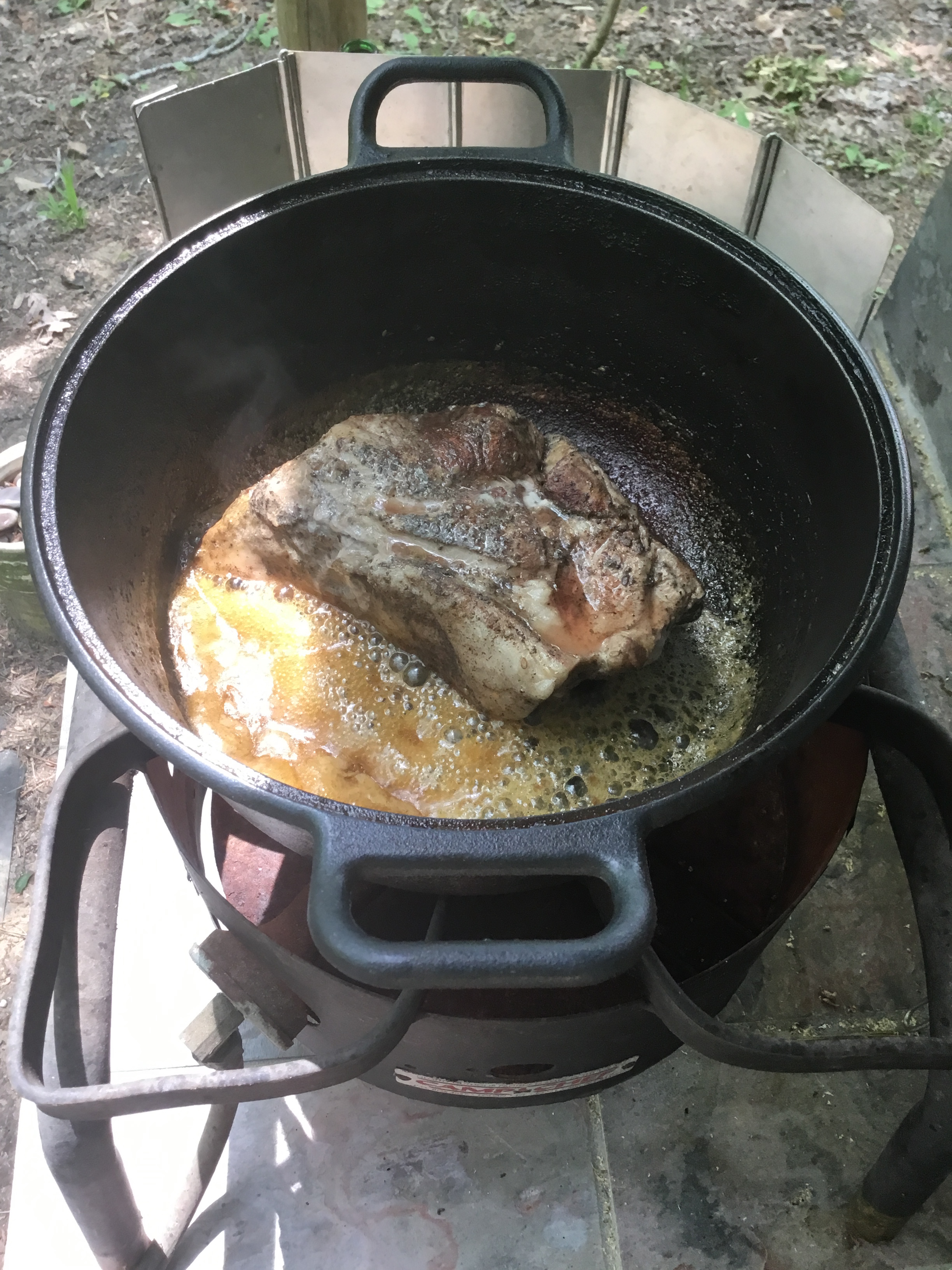
I really can’t get excited about smoking some pork for hours over hickory coals, when one the best pit barbecue joints around is a few miles away from me (the Top Hat in Blount Springs, AL), and they sell the stuff expertly cooked by the pound. This may be sacrilege, as I live in the state with the most barbecue joints per capita in the country, and we have manifold styles of barbecue, but I make mine without smoke.
How can that be done? I stole a method from the great chef Rick Bayless, who in turn stole it from some cooks in Mexico. I believe composer Igor Stravinsky said, “Good composers imitate; great composers steal.” Same thing with cooks.
The technique is essentially to boil dry a big piece of pork two or three times, and to let it fry in its own fat the same number of times. Fill up your pot with water up to the top of the piece of pork, and just let it bubble. It takes anywhere from two to four hours to do this, so this is really slow cooking. The result is some fabulously tender meat. Just don’t forget the salt. Maybe it should be called Neo-barbecue.

Every writer runs across an essay occasionally, and says, “Damn, I wish I had written that.” Let’s just say that there are probably thousands of writers who wish they had written “The Pleasures of Eating.” Brilliant and prophetic at the same time, it has to be the best takedown of the current food system dominated by big agriculture.
I’m just going to start with one of the finest sentences I’ve ever read. “Like industrial sex, industrial eating has become a degraded, poor, and paltry thing.” Industrial sex? What a comparison. Every time I drive past a fast food place like Chickin-fil-whatever, I have the same thought.
Here’s another zinger, about how oblivious people are to the garbage they are eating. “One will find this same obliviousness represented in virgin purity in the advertisements of the food industry, in which the food wears as much makeup as the actors.” I actually had a student who worked as a food “stylist” and photographer, and she sprayed her food with hair spray before she took a picture of it. Enough said.
I will end with the thesis, which is something of an odd way to end, but it is “the proposition that eating is an agricultural act.” I won’t give all of Berry’s recommendations, but a revised version of the entire essay is posted on the interwebs. Alas, it omits the industrial sex reference. Read it, and weep anyway, for the current state of our food system. Then go to your local farmer’s market, and buy some real food.
I saw Mr. Berry once, when he gave a reading at the University of Illinois. He drove up from his farm in Kentucky, and showed up wearing a pair of overalls. That’s what we call keeping it real.
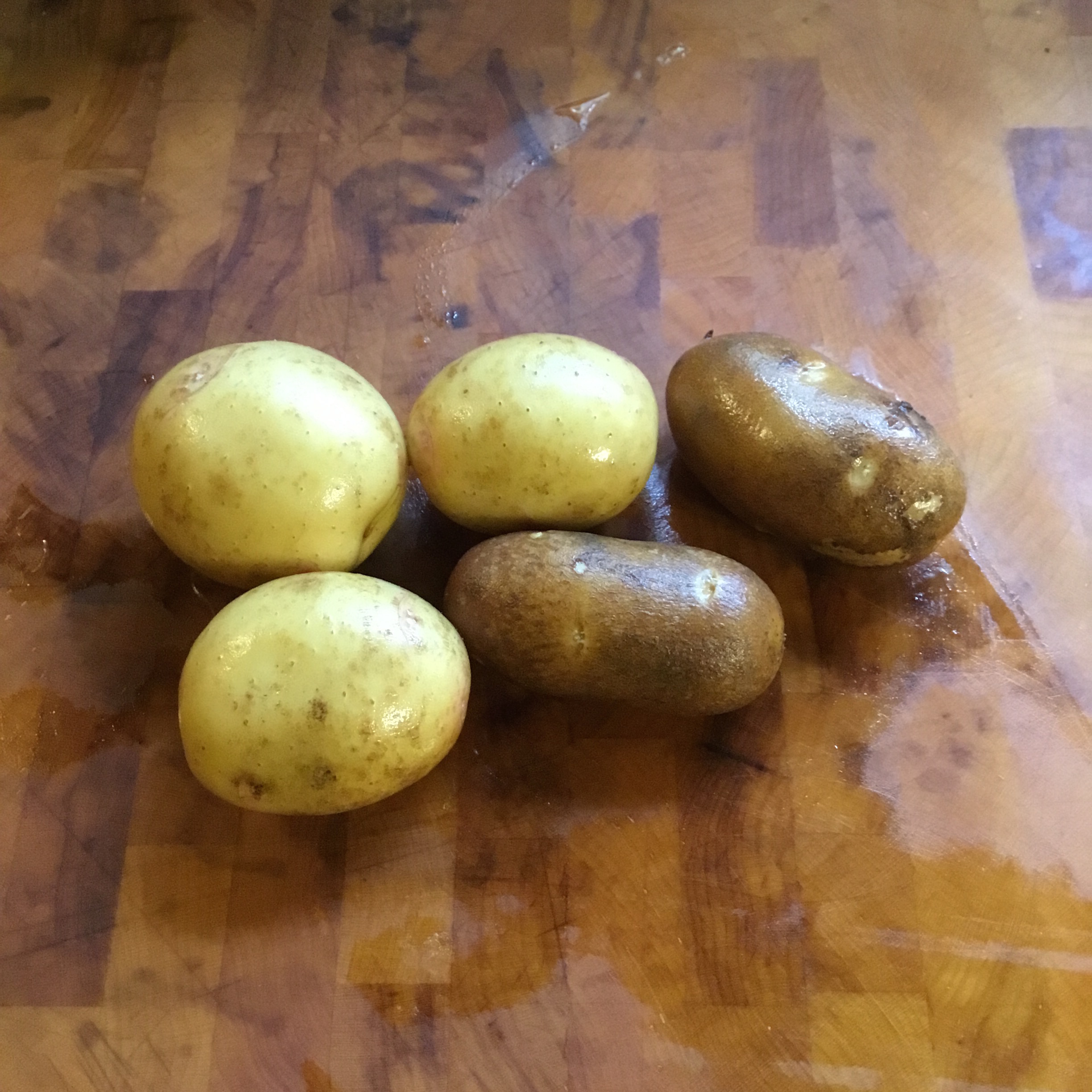
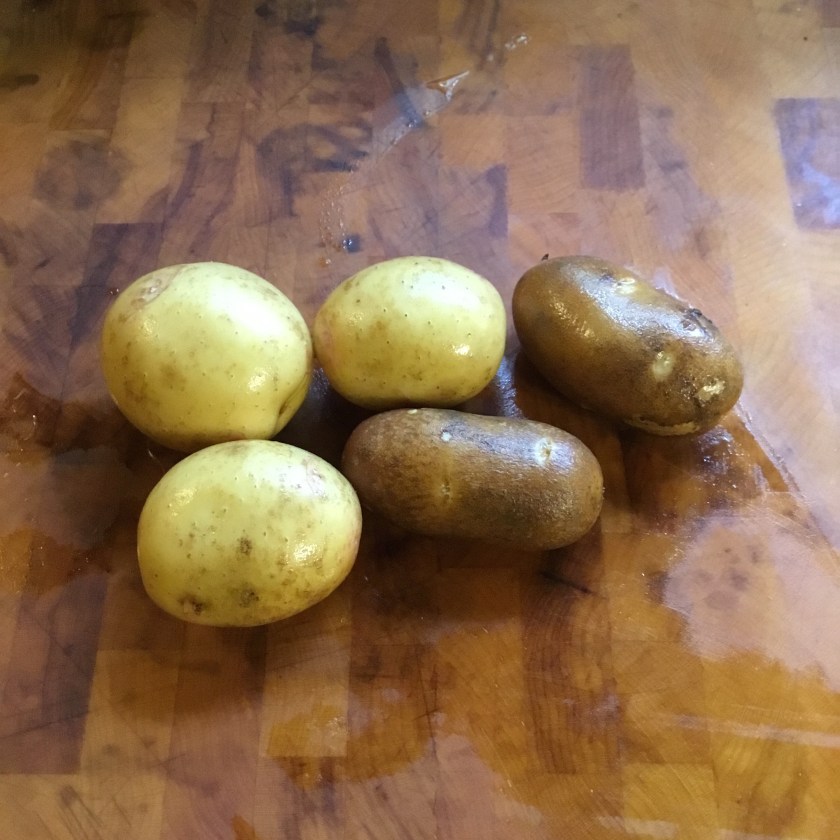
I now have a couple of months worth of new potatoes, because I grew these myself. Those in the picture are Yukon Gold and Russet potatoes. It’s next to impossible to buy potatoes of this quality. You have to grow them yourself.
With that said, hereby hangs a tale, as Shakespeare might have written. I come from a line of many generations of potato farmers, and my grandfather Earnie claimed to have started the sweet potato industry in Alabama. Here’s the story.
During the 1920’s, farmers from the South would travel to Northern industrial cities to work during the winter. Folks from Cullman would go to Cincinnati to be among their fellow German descended folks. Factory work paid better than sitting on your butt all winter.
Factory owners caught on to this migration, and instituted a rule that no one who quit to work at a higher paying factory could be re-hired by another one. Before the days of Social Security numbers and other ID, my grandfather just used a different name, every time he moved from factory to factory.
He would also look for markets for anything he grew. One day he ran across a grocery wholesaler who was really interested. Here’s how he would describe the conversation:
Wholesaler: “So what do you grow down there in Alabama?”
Earnie: “Our main crop is strawberries.”
Wholesaler: “Too perishable. They’d be rotten by the time they got up here.”
Earnie: “We also grow lots of sweet potatoes.”
Wholesaler: “Sweet potatoes! Oy vey! I can never get enough sweet potatoes. I’ll take three carloads.”
Earnie: “I’ll get three guys to bring up three carloads.”
Wholesaler: “No, I want three train carloads. That will just be the start.”
And thusly every sweet potato in the county was sold, and an industry born. The first time I walked into our first Whole Foods store, I saw a big sign that said “Local Sweet Potatoes,” next to the picture of a farmer I went to high school with. Taters run deep.

We have bought new potatoes three weeks in a row at the Festhalle, our local Farmer’s market, and they really don’t resemble supermarket potatoes in taste, even expensive organic ones. So don’t cook them like supermarket potatoes. Those in the picture are regular Red and Yukon golds.
My favorite cooking method for these: frying. Shocking to hear that from a Southerner. Cut into small cubes is best. These are especially good in the classic Farmer’s Omelet.
Next in line is the classic boiled new potatoes, served in a giant pool of butter and salt. For god’s sake don’t peel these–cook them as is.
In another week or two, I may turn into Mr. Potato Head.
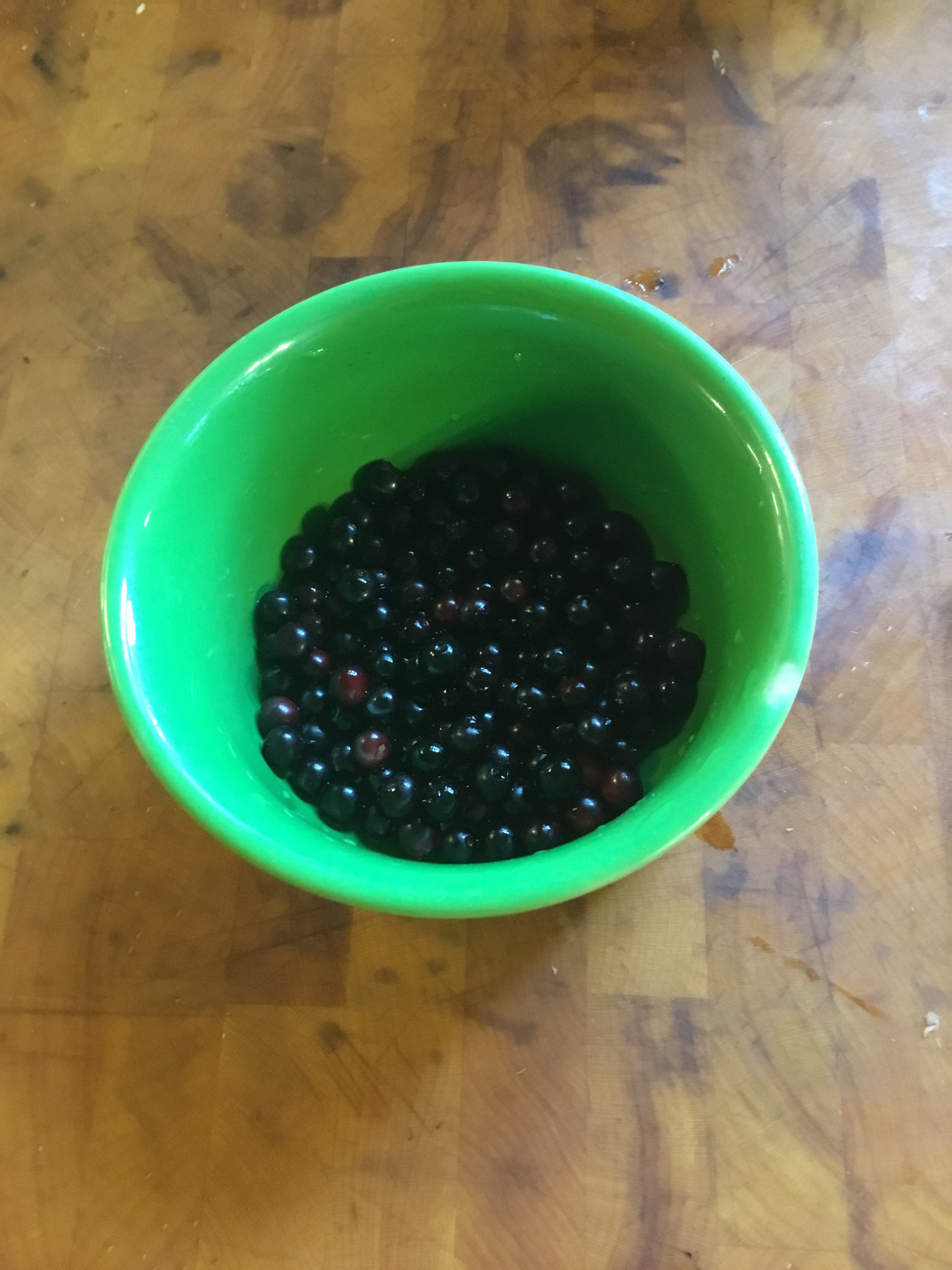
The first wild blueberries are ripe here, which is the cause for some serious noshing (see the next post). These tiny buckshot sized berries have a mind blowing sharpness of taste.
Every other year I will spend an hour or so picking enough of these little devils to make one of my favorite sauces. Here it is: Wild Blueberry Sauce. Serve it on crepes or any pastry.
Ingredients
1 tablespoon Butter
1 cup of Wild Blueberries
2 tablespoons of Honey
Juice of 1 Key Lime
2 drinks of Brandy (One for the dish, one for the cook)
Cook the blueberries in the butter, and then add the other ingredients. More or less honey may be needed depending on the tartness of the berries. Lemon juice can be substituted for the limes, but I always use what I have (my wife grows Key Limes and Meyer Lemons). A crepe is really just a thin pancake, but once again, everything sounds better in French. You could use cognac instead of brandy, but they’re just different priced versions of the same thing.
because facts really should be sacred
Or not, depending on my mood
I am just a girl who loves reading and talking about books
because I've got to tell someone.
a little lunch, a little wine, a LOT of talking!
Best Friends for Sixty Years and Counting...
Tales of quilting, gardening and cooking from the Kingdom of Chiconia
Refuge of an assumed danophile...
Serving BL since 2017
the Story within the Story
The only impossible journey in life is you never begin!! ~Tanvir Kaur
Country Living in the Southern Appalachians, USA--A little of this, a lot of that
A daily selection of the best content published on WordPress, collected for you by humans who love to read.
Country Living in the Southern Appalachians, USA--A little of this, a lot of that
Longreads : The best longform stories on the web
The latest news on WordPress.com and the WordPress community.
 Southern Fusion Cooking