The Gumbo Gala began with a disaster and ended up as a celebration. Some families who lost houses during Hurricane Katrina arrived in Birmingham looking for shelter, and ended up at the worthy non-profit Episcopal House. The resulting synergy led to the creation of the Gumbo Gala, a combination cooking-Cajun Music party. It’s now the largest Gumbo cooking competition in the Southeast.
Held at historic Sloss Furnaces, the competition will have almost forty teams competing this year.
Schedule–Saturday, May 4, 2019
11:00 AM-2:00 PM
This is a fundraiser for the Episcopal House, so show some love. Tickets are $20 a head for adults, but kids are admitted free.
Thanks to our corporate overlord, Jeff Bezos, and his minions at Whole Foods, we actually had a decent ham for Easter. Still staring at a freezer full of blueberries, we decided to make a new and different glaze for the spiral sliced ham (pre-cooked. Thanks, Mr. Bezos).
The Glaze
Honey to taste
1 tablespoon Sorghum Molasses
The Juice of four cups of Blueberries
Juice of one Lemon
Mix these together, and boil until the glaze thickens slightly. Stud the ham with cloves, glaze, and cook until the ham is warmed through, and the glaze is shiny.
Don’t have a couple of cups of blueberry juice handy? Then whip out your Enterprise #34 cast iron juicer.
Juicer, Old School
Weighing in at a mere 14 pounds, this thing has never met a berry it couldn’t juice. These are readily available on eBay. A food processor and a strainer will work as well, but don’t really make a statement like this beast does.
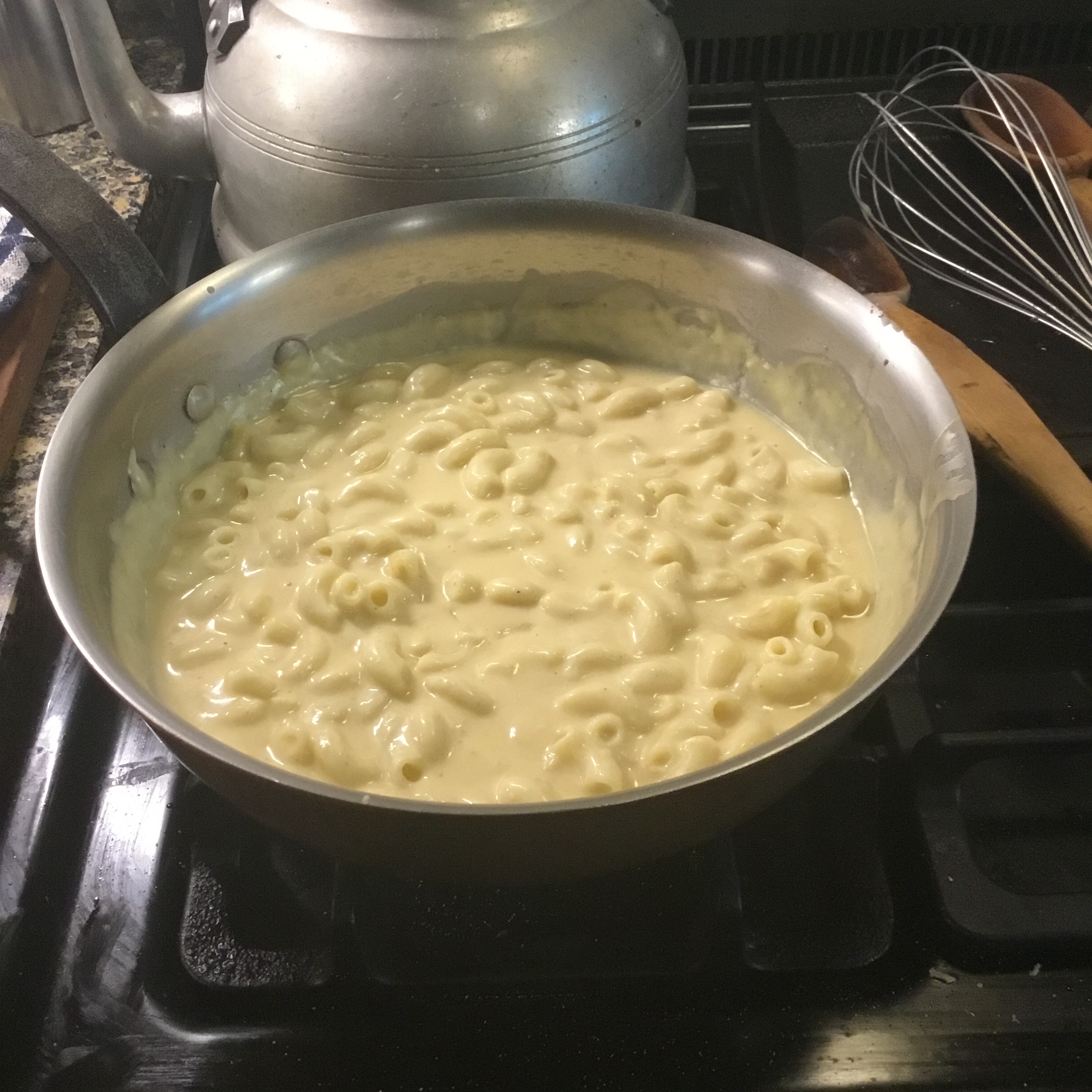
As the talented James Hemings and the fastidious Thomas Jefferson brought this dish from France to the brand new USA, I make this Frenchified Macs and Cheese regularly. It’s especially good with Easter Ham, or any other ham. Or anything else.
The plan here is to start with a béchamel sauce, turn it into a variety of mornay sauce, and then add the cooked macaroni, which in Jefferson’s day was just a generic term for pasta. Then it can all sit until it’s time to warm it in the oven.
Ingredients
For the Béchamel Sauce
2 tablespoons Organic Butter
2 tablespoons Flour
Organic Milk
Salt and Pepper
For the Mornay Sauce
1/3 cup each of grated Colby and Cheddar Cheese
1/3 cup finely grated Parmesan Cheese
For the Finishing Touch
1 cup Macaroni, cooked in salted water
Melt the butter in a large sauce pan. Add the flour, and cook while stirring for a minute or two. This is a blonde roux, so don’t let it darken. Add enough milk to make a fairly thin sauce, as the cheese is the main thickener. A thorough whisking will be required to remove all the lumps. Season, and taste.
The next step is crucial. Add the cheese, and heat to the point of melting. DO NOT let the sauce boil at this point. The cheese will separate into its various components if exposed to an excessive temperature. After the cheese has melted, add the strained macs. I use one of those Chinese spider strainer thingys to scoop them out of the pot. All that’s left to do at this point is to put the macs in a casserole, and heat them in the oven at suppertime, or any time.
Mr. Jefferson was often derided for being “more French than American” by his political enemies, despite the fact that he wrote The Declaration of Independence. The farmers knew better. Not long after his inauguration, a group of dairy farmers began making him what was billed as “A Mammoth Cheese.” The finished wheel of cheese was engraved with the words, “Rebellion to tyrants is obedience to God.” The cheese weighed 1230 pounds when it reached Washington. How many servings of macs and cheese this made is not recorded.
Four Feet and Climbing. If this is Dwarf, I sure don’t want to see Giant.
Dwarf Gray Sugar is the best edible podded pea for this part of the South, the lower Southern Appalachians. First introduced in 1881, this has heirloom strength combined with vigorous growth. It also has ornamental bicolor pink and purple blossoms.
Pease Blossom
Plant Details
Planting Time
Early spring or early fall. Spring is the best time for planting here, on the border between USDA hardiness zones 7 & 8. Global warming (ACD-Anthropogenic Climate Disruption) has made the timing a crap shoot, and I now bet on mid-February. A few years ago our last freeze date was February 9; this year, March 30. Roll the dice, and be ready to re-plant.
Planting Depth
1″, as with most peas.
Spacing
For reasons explained below, I don’t plant rows, but arrange the peas a couple of inches apart around my tomato cage trellis, which is tomato cages arranged in a zig zag pattern. I hang garden twine off the tops to provide more support for the vines.
Plant Height
Dwarf, you say? Here’s where I get to quote Stanley Kowalski telling off Blanche DuBois in A Streetcar Named Desire: “And do you know what I say? Ha ha! Do you hear me? Ha ha ha!” The first time I planted these I believed the “doesn’t need a trellis” bit, and they fell over at about four feet tall. I would write off this year’s growth to the 19″ of rain we’ve had since February 1, but they grow like this every year.
Pods
Still tender at 3″; also stringless.
Time to Harvest
Depending on weather, anywhere from 70 to 100 days in our climate.
There really aren’t any fertilization requirements, as peas are nitrogen setting. A fertile soil never hurts, however.
The most famous Southern pea eater was Thomas Jefferson, who participated in a pea growing competition every year in his part of Albemarle County, Virginia. The winner was the farmer who could produce the earliest crop. However, even then, Jefferson noted that green peas were being replaced by the African crop field peas, because of their heat tolerance.
For the record, our terminology is as follows: Pisum sativum varieties are known here as English peas or green peas; the more common Vigna unguiculata are known as field peas and cowpeas, though usually just peas. Most modern Southerners have probably never seen a fresh English pea.
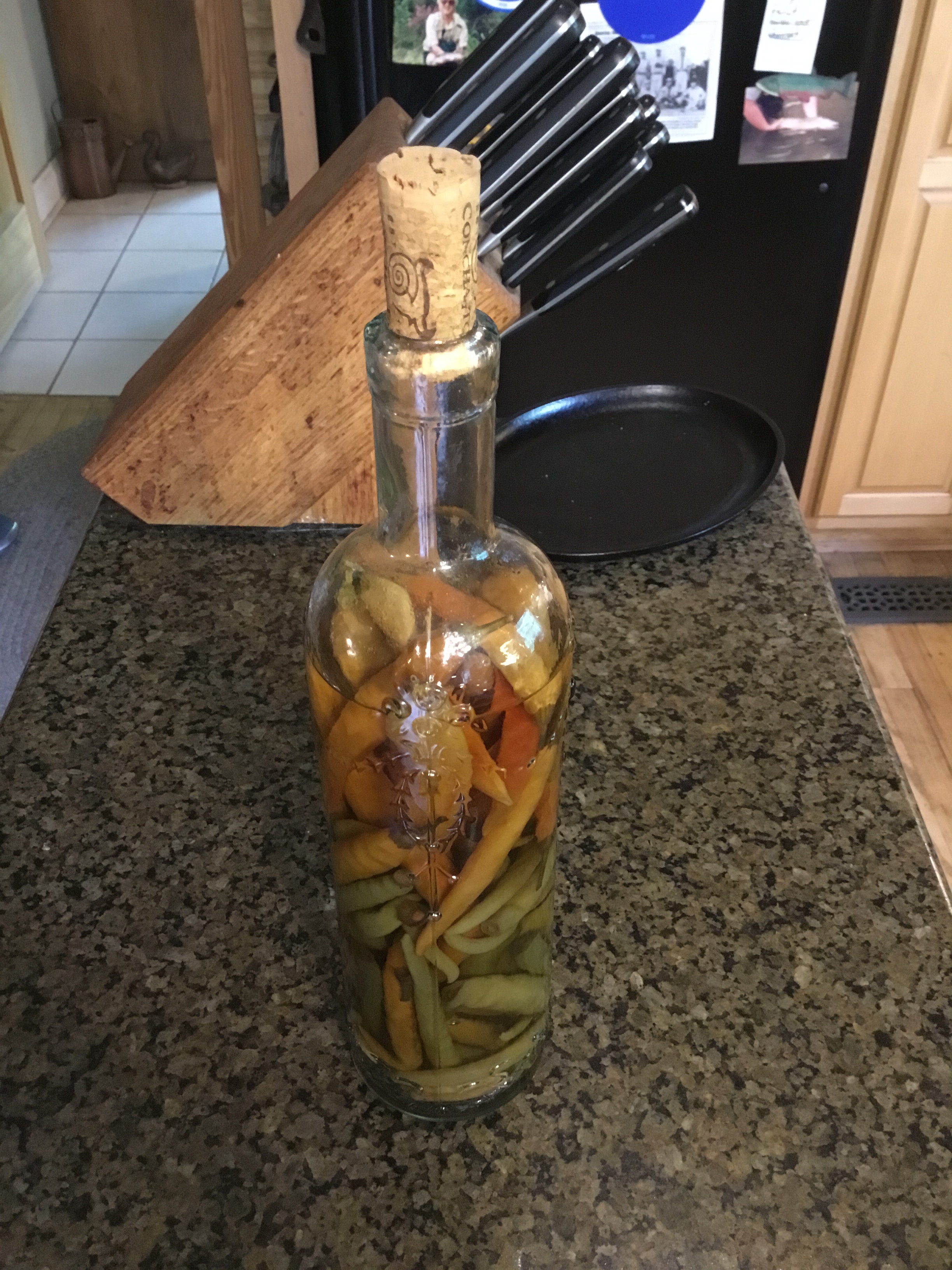
Pepper sauce is the stuff that legends are made of. I have heard and read stories of pepper sauce that is twenty five years old, and of a bottle of it that was included in a will. It is as Southern as it gets, and like all things Southern, it is complex in its simplicity.
Ingredients
Vinegar (White is traditional)
Hot Peppers (Cayenne in our area)
Time
The last ingredient is the most difficult one. Find a nice container (I especially like these decorative Italian wine/oil/limoncello bottles), and fill it with the hot pepper of your choice. Pour in some hot vinegar, cork it, and wait. And wait. And wait.
There are any number of optional ingredients, like salt and garlic, but I never mess with a good thing. As the peppers lose their capsaicin over time, remove and replace them with fresh ones. This sauce is used on just about everything edible or semi-edible, but I reserve mine for greens. This and some collards stewed with seasoning meat is just about as good as it gets.
“If chickens were rare, it would be the most expensive meat in the world.” So said one of the real estate barons in Birmingham. No dish is more Southern than chicken, but instead of fried chicken, let’s go with roasted. Marinate overnight, then roast with the vegetables, and make a gravy with the pan juices–called “drippings”in the South.
Ingredients
For the Saumure (That just means marinade, but everything sounds better in French)
Two quarts Water
Two Tablespoons Sea Salt
Spices-Cloves and Allspice
Herbs-Thyme and Bay Leaves
Boil this, let it cool, and give the bird an overnight bath in the fridge.
For the Herb Butter
Softened Organic Butter (Quantity depends on the size of the bird)
Fresh Thyme and Parsley
Vegatables
Peeled Potatoes
Scallions (I grew those)
Grab your favorite roasting pan/pot (mine is cast iron), and put the thoroughly dried chicken right in the middle. Arrange the vegetables around it. Massage the bird with the herb butter, and put it in a 375 degree F oven. Most birds will be done in an hour, or a little more. Then comes the fun part.
After testing for doneness with the old thigh prick method, set the bird on a platter to rest. If the potatoes are not done, put them on to boil. Strain the pan juices and make an old fashioned gravy with a butter and flour roux, milk, and the strained drippings. The gravy will definitely need pepper, and possibly salt as well. The potatoes can be served whole or mashed. Add a vegetable side dish or two, and become the happiest eater that you have been in a while. So much for fried chicken.
Dutch oven and “Camp” Dutch oven in the Outdoor Hearth Hybrid
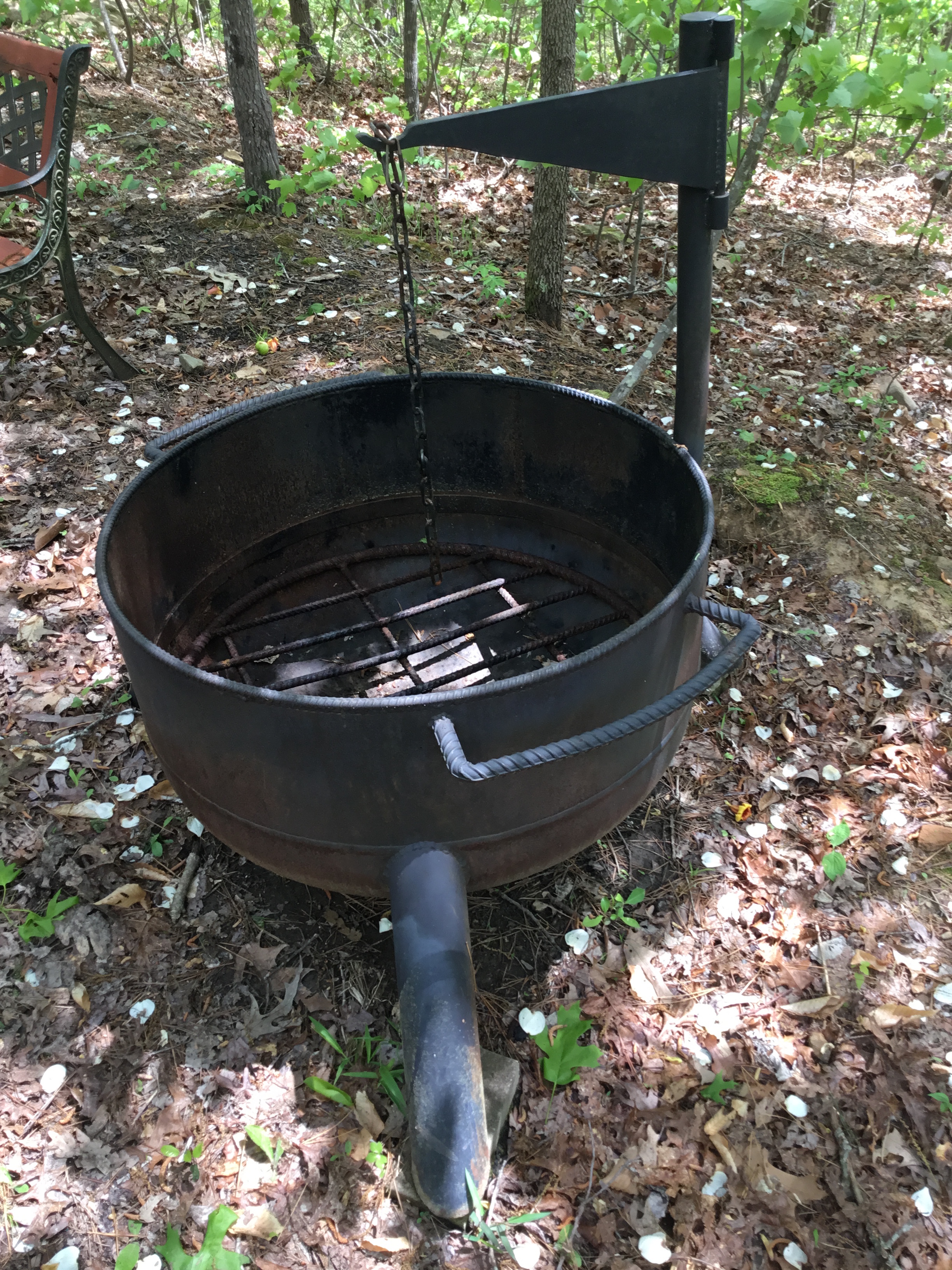
This mammoth version of a fire pit actually doubles as an outside hearth, which can be used like a similar arrangement in many colonial kitchens. The key to the set up is the crane from which that dutch oven is hanging.
A Multi-tasking Fire Pit
The crane, like those in colonial kitchen open hearth fireplaces, makes all the difference. The cook can’t immediately control the temperature of a wood fire, but they can control the amount of heat that reaches a pot, by swinging it from side to side, or raising and lowering it up and down via an s-hook. Additionally, the rebar grid at the bottom allows the cook to sit a dutch oven directly over the fire, as in the first photo.
The Holes Drilled in the Bottom are Not Visible
So there are at least three ways to cook here–on the fire, close to the fire, or swinging in the air. And if you just want to use it as a fire pit, the crane is on a hinge, and can swing completely behind the pit.
This was made from an old industrial grade propane tank, so it is recycled as well. An oak fell on it once, and I mean a big one, and it knocked the pit into the ground up to the top of the legs. The only damage was to bend the crane support slightly. We pulled it out of the ground, moved it, and I twisted the support slightly around, and put it back to work. Now that’s rustic.
My 6′ 7″ tall Baseball Manager Great Grandfather John W., My Grandfather Earnie, My Wife’s Grandfather Alfred, and Bill Henke, who couldn’t be bothered to look at the camera.
If it had not been for baseball, the New York Yankees, and good times down on the farm in Cullman, Alabama, Edna Henke, Bill Henke’s sister, would have not had her yard destroyed by my grandfather’s flock of Cotton Patch (weeder) geese. Strawberries, a raging bull, and German obscenities also have a role to play in this story of woman versus bull and bird.
So this whole thing started about a hundred years ago, when the New York Yankees tried to sign my shortstop playing grandfather to a major league baseball contract. It was a laughingly small offer, and my grandfather said no thanks–this is at the same time some Chicago White Sox players threw the World Series because they were so poorly paid–though my grandfather later would always say, “I could never play for a team called Yankees.”
My grandfather then became a hugely successful farmer, who grew two main crops–strawberries and sweet potatoes. Sweet potatoes practically grow by themselves. Strawberries need tons of labor, because they are small perennial plants that are easily crowded out by weeds. Hiring little old German ladies in the neighborhood to weed his strawberries became his main expense. That’s when he decided to replace his human labor with geese.
Edna Henke just happened to be one of those little old German ladies, and she wasn’t too pleased with the decision. She was even less pleased when my grandfather’s new flock of geese flew across the road from his strawberry field into her yard, ate every blade of grass in it, and then left her piles of souvenir droppings. She immediately decided to sue for damages.
There was one problem–she had no way of going to town to the lawyer’s office, as she had no vehicle. She put on her best “I’m going to town to sue somebody” dress anyway, and called my grandfather (he also owned the local phone company). She asked for a ride with him into Cullman, as she said she had some business to transact. My grandfather said, “Sure, why not. I’m going to town anyway.”
Edna high tailed it over toward my grandfather’s house, and took a short cut through his cow pasture. His prize bull didn’t much like that, and started chasing Edna. She escaped by climbing an oak tree that was in the middle of the pasture.
By now, Edna was sorely pissed off. Her yard had been eaten and crapped on by geese, and she had been chased and treed by a bull. My grandfather said he looked out his door, and saw her shaking her fist at the bull, and cursing a blue streak in German. My guess would be she said something like “Heilige fliegende kinderscheisse.” The polite translation of that would be, “Holy flying baby poop.”
After my grandfather fished her out of the tree, and they left for town, he asked Edna where she wanted to go.
Earnie: “Where do you want to go, Edna?”
Edna: “Lawyer’s.”
Earnie: “Why do you need to see the lawyer?”
Edna: “Sue you.”
My grandfather, silver tongued as usual, talked her out of it before they got close to the lawyers. He had her yard fixed, and sold most of the geese. A few of the worst offenders ended up in the pot. My guess would be that Edna got one or two for herself. Then he had to re-hire all his old workers, but eventually dumped strawberries in favor of growing watermelons, another low maintenance crop.








 Southern Fusion Cooking