Food Mills

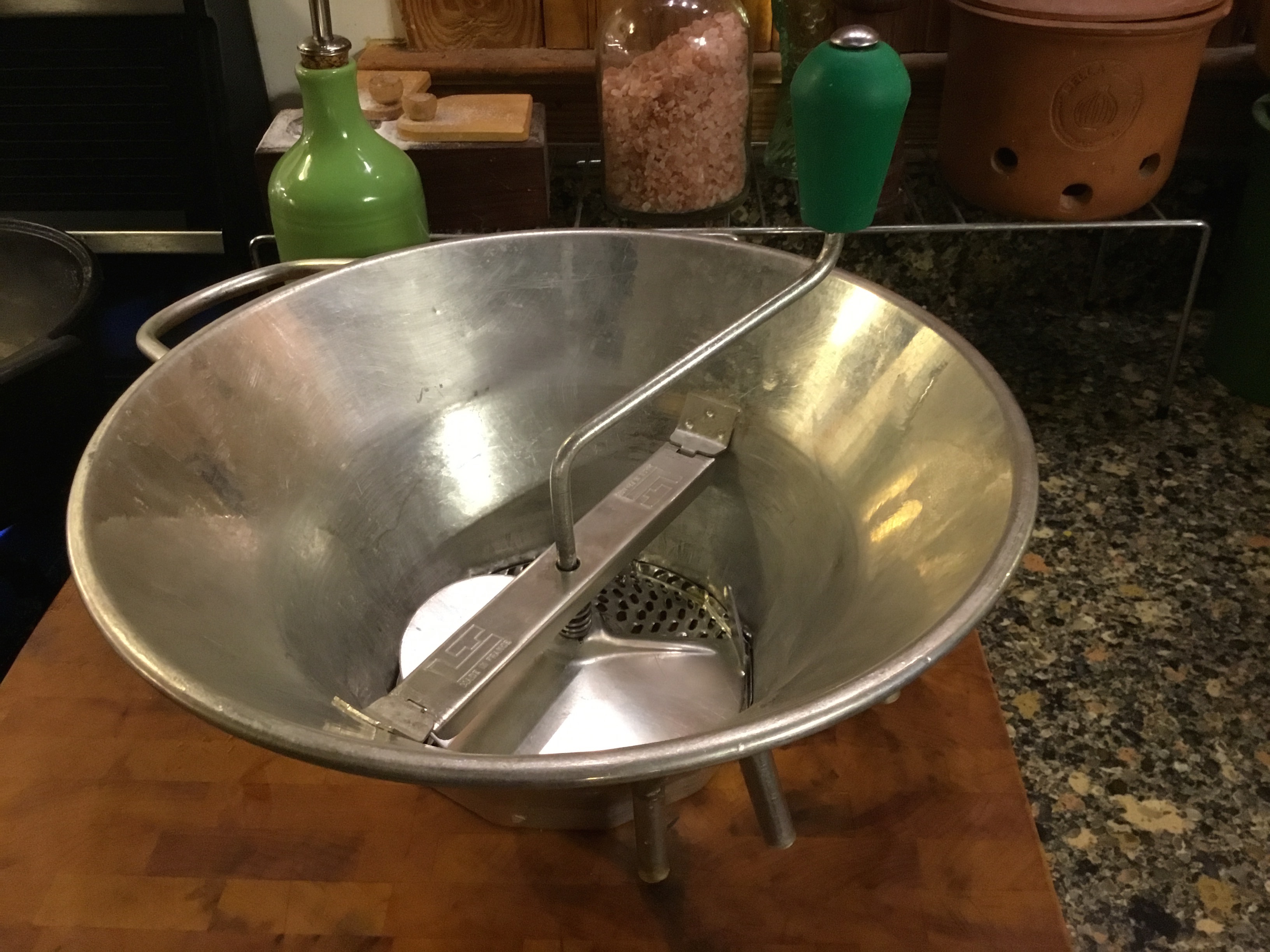
Tellier Food Mill

In 1947 Frenchman Louis Tellier invented the commercial food mill, and it changed the world of cooking. Hours of labor were changed into a few cranks of a handle–I should add that he also invented the french fry cutter that many people use. If you’re like me, and hate cleaning all the little fiddly parts of a food processor, the manual food mill is an excellent alternative or addition. 

Why this is something of an exotic tool in US kitchens is a mystery, as even the French made food mills are inexpensive and incredibly simple. Put the appropriate milling disk in, pop in the hand cranked milling masher thingy, and go at it. That’s it. Three parts that lead to great food, from mashed or riced potatoes to pie fillings to any puree that you can imagine.

Milling Plates for a Tellier Food Mill

There are things a food mill can’t do that a food processor can, like making bread crumbs, but try getting the seeds out of a tomato or other fruit with a food processor. It also isn’t necessary to go the full commercial route: Moulinex makes an excellent stainless small sized food mill in France. 

Moulinex Food Mill

Food mills are not just for making baby food. Buying one will change the way you cook, and look at food.

Chicken Sauté a la Créole

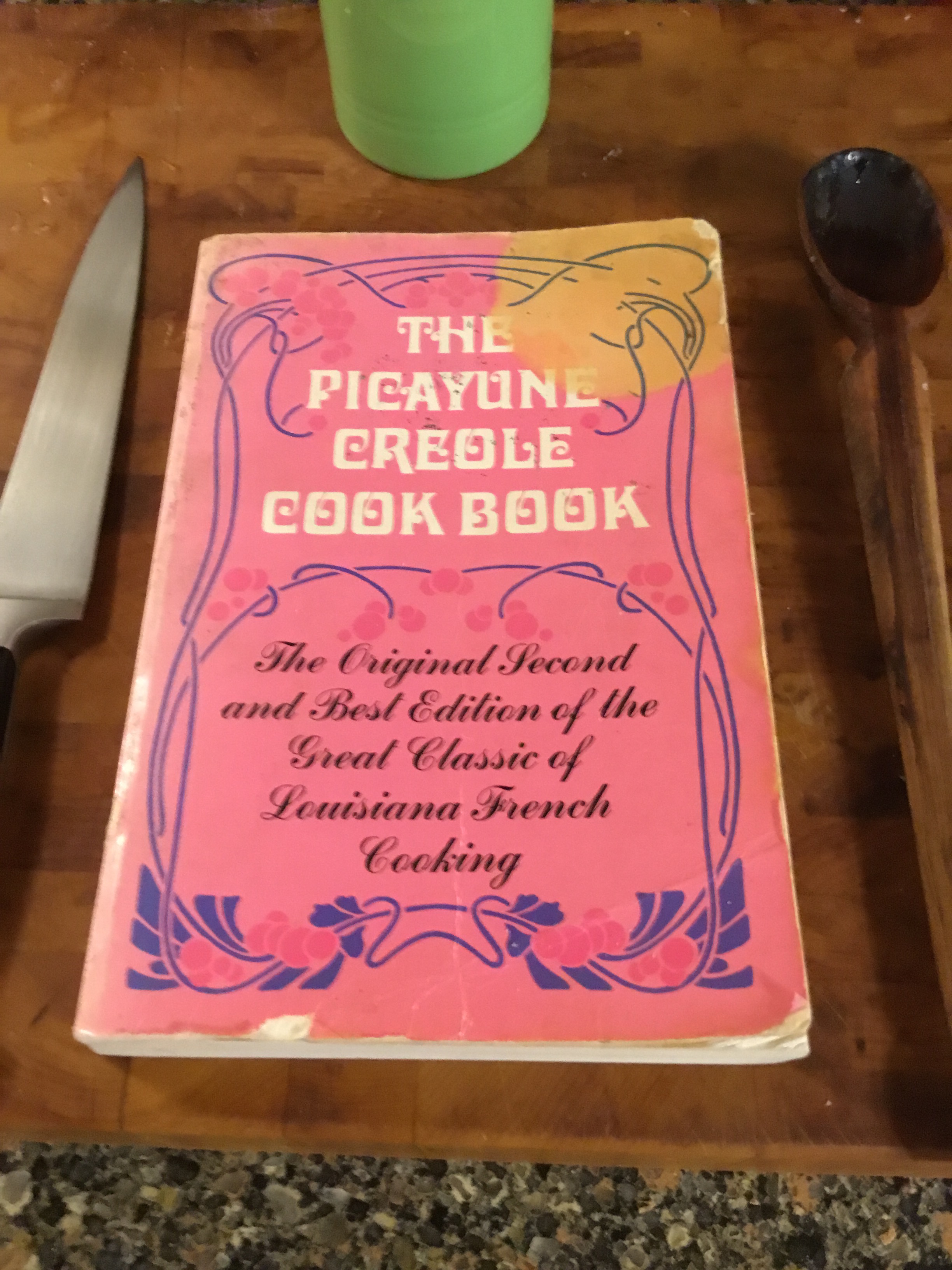
Great cookbook, or greatest cookbook? The latest reprint is available from Amazon.

I have made the following recipe from this cookbook literally more than a hundred times. Here’s what the Times Picayune had to say about it, when it is made properly:

You will then have a dish for which any old Creole would go on foot from Carrollton to the Barracks, a distance of fifteen miles, merely to get a taste of.

And now this is the modern version, that doesn’t require two whole chickens or two large onions. It’s for two people.

1 Chicken Breast

1/2 Onion

1/2 Sweet Pepper

1 Clove Garlic

1 Tablespoon Peanut Oil

1 Tablespoon Flour

1 Pint of Tomatoes

White Wine for de-glazing

Salt and Pepper

Thyme and Oregano

Heat the oil in a thick cast iron skillet, and add the flour. It’s time to make a roux! That’s what thickens the Creole sauce. I’m channeling Marcelle Bienvenu, who wrote another great cookbook, Who’s Your Mama, Are You Catholic, and Can You Make a Roux?

A “blonde” roux is preferable for this dish, so stir the flour until it browns only slightly. Add the chicken and let it brown nicely. A bone in, skin on, breast is preferred

When the chicken is browned, add the onions and pepper, which should be finely diced. When they are softened, add the garlic. Then de-glaze the pan with white wine.

Now it’s time for a little technique: milling tomatoes, using the finest insert that comes with the food mill. 

Moulinex #1 Food Mill

Truthfully, this step is optional, but the end result is a seed free sauce of superior texture and taste. It doesn’t hurt to have some home canned, locally grown, tomatoes to mill, as pictured. Just crank the tomatoes right over the skillet. I’ll do a deep dive into food mills eventually–they are a French invention, and the best ones are still made there.

Once the tomatoes are milled, season with salt, pepper, and herbs. Once the sauce is simmering, put a lid on the skillet and turn it down to the lowest setting possible, the lower, the better. Just add water or stock as it cooks down. In forty minutes or so, you have a dish worth walking fifteen miles for. And that is just to taste it.

Growing Citrus in the Central South

Key Limes

Key Lime and Meyer Lemon, grown north of Birmingham, Alabama.

Our latitude here may be more or less the same as northern Morocco and Libya, but it still gets nice and cold. The hardiest citrus plants would still survive outside during the winter, but the problem is that the fruit would not. Who wants that? The answer is growing in pots, aka containers.

The advice here is simple: buy the largest size container you can handle, and then get a plant trolley/buggy to wheel them around with. I made my own out of pressure treated pine. We wheel our plants in in November and put them outside in April. The honeybees love the blooms, and can locate them within minutes of putting the plants outside. It’s almost scary.

Our favorite varieties are the Key Lime pictured, Satsuma Mandarin Oranges, and Meyer Lemon. Year in and out the Meyer is the best, though it is really a hybrid between lemons and oranges. Even in a container it has enormous fruit.

You can also underplant your citrus with something like Christmas Cactus, to make it more decorative.

Supermarket Dumpster Diving

WH VaseSometimes you have to do what you have to do.

I was coming out of our Whole Foods in Mountain Brook, Alabama, when  I saw something unusual: a woman being held by her ankles, rummaging upside down through a giant dumpster in the parking lot. Actually, only her top half was upside down: she was bent over the top edge of the dumpster, and was digging like crazy. If her male companion had let her go, she would have literally dived head first into the dumpster.

Fortunately, I was parked right next to the dumpster, and would have a close up seat to this enterprise, never having seen a well dressed woman dumpster diving before. I paused to savor the sight, when a Whole Foods employee passed me with buggy load of galvanized pots, headed toward the dumpster. They were throwing those away? I had to know.

Me: Are you throwing those away?

WFE (Whole Foods Employee, a young woman): Yes, we’re getting all new displays for the floral department.

Me: You don’t mind that woman dumpster diving out there?

WFE: It’s that, or the landfill.

Hmmm. I thanked her for the info, and headed to my wife’s Prius Eco to unload my goodies. Then I had a brain infarction: I could use those flower displays she was throwing away as growing containers for my favorite fruit, the pomme d’amour, the love apple, aka, the tomato. Wild Galapagos, Wild Cherry, Cherokee Purple, and my favorite, the deliciously ugly Purple Calabash, was all I could think about. By the time I had finished my mental catalog of what I could grow, the lady dumpster diver had hauled off a carload of really nice galvanized pots. Now it was my turn to become a dumpster diver.

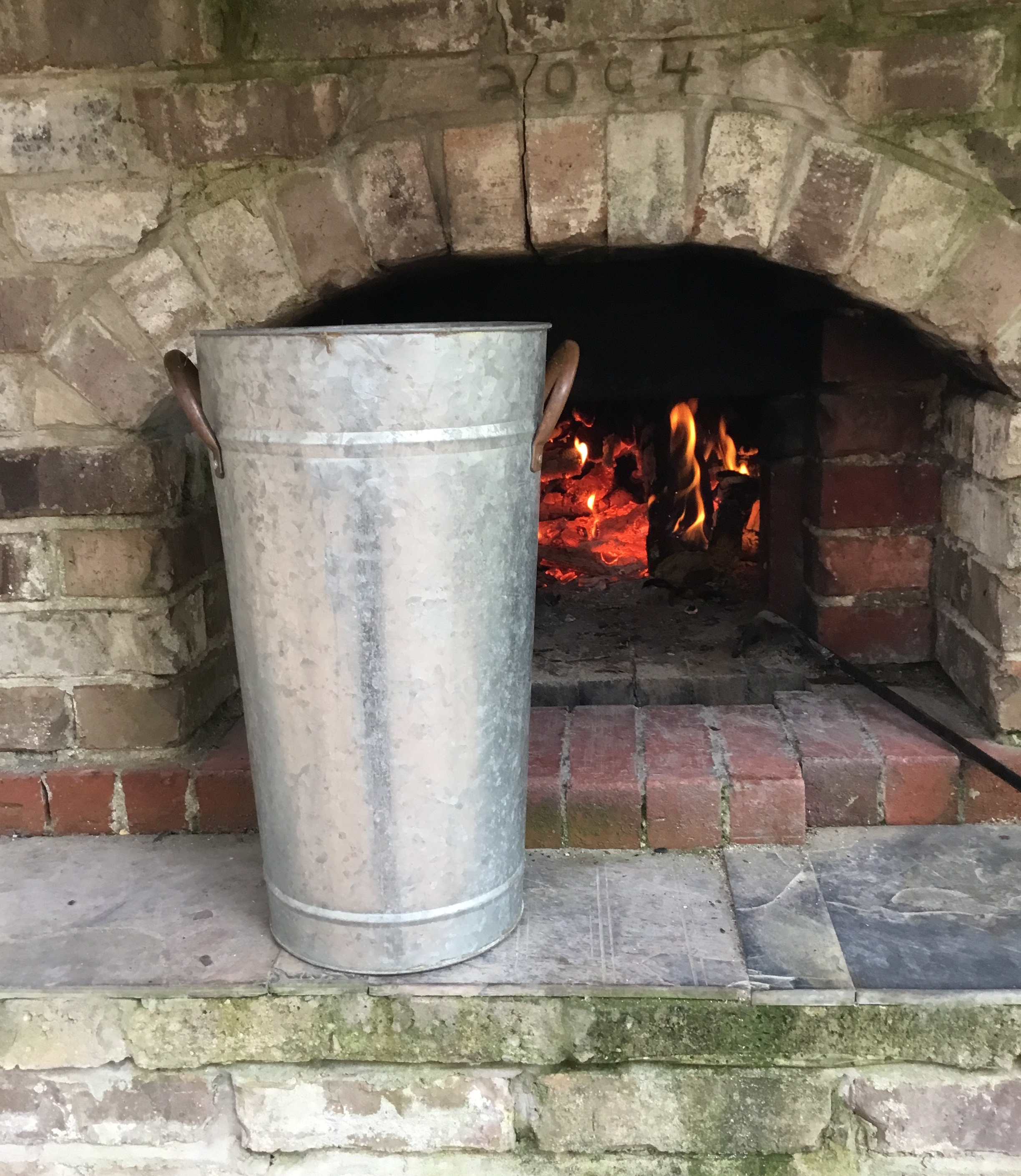
I had no one to hold me by my ankles, so I took a more cautious approach. Looking over the edge of the dumpster, I saw a big stack of practically pristine galvanized flower holders, with copper handles, perfect for growing tomatoes. Bingo, that’s a goody, as Bear Bryant used to say. I grabbed nine of them, and loaded them into the Prius. My first dumpster dive was a complete success.

One corporation’s trash is another man’s . . . 

A Chance Encounter at Whole Foods

BeefVegans, don’t read this. An animal was killed and eaten as part of this story.

You know that the following narrative is true, because no one could possibly make up something as crazy as this. I also doubted the following quote from Joel Salatin, aka “the world’s most famous farmer,” but now I have incontrovertible evidence that it is true:

The indigenous knowledge base surrounding food is largely gone. When “scratch” cooking means actually opening a can, and when church and family reunion potlucks include buckets of Kentucky Fried Chicken, you know our culture has suffered a culinary information implosion.

Hyperbole? Here’s what happened during my last weekly trip to the Whole Foods Market in Mountain Brook, Alabama.

Thrifty person that I am, I play every angle imaginable when shopping, as long as there is no compromise on quality. I rarely buy any meat other than chicken at Whole Foods, as our local butcher, Brickyard Meats, regularly has local grass fed beef and local pork. They were mostly wiped out on my last trip, and all I scored was some slices of fresh ham, which I marry-nated in a Saumure Anglais, which I believe means something like “English brine” or “English pickle.” So if I wanted decent beef, it was Whole Foods or bust. I was headed to the wealthiest zip code in Alabama, and one of the wealthiest in the South.

Apparently I exuded a false air of respectability, as I was picking out a good chunk of beef from the Amazon Prime specials display, because a young woman with a small child trailing behind her, decided she wanted to know what I was buying.

MBH (Mountain Brook Housewife): “What is that?” She was wearing a Patagonia down vest, zipped up to her neck, even though it was sixty degrees outside.

ME: “It’s a chuck roast.” I pointed at the label while I answered her.

MBH: “How much is it?”

ME: “This is the regular price, and this is the Prime price.” I pointed at the two signs that displayed the prices in large numbers.

MBH: “Could I make beef stew out of that?”

ME: “It would make excellent beef stew or a roast. I’m making a roast.” That answer was a mistake.

MBH: “Could I cut it up?”

ME: “Yes.” I was mentally debating whether or not I should make a run for it.

MBH: “Will they cut it up for me here?” Apparently she had a knife-less kitchen.

ME: “Probably, if you ask the people down at the meat counter.” Those poor suckers.

She made a bee line down to the meat counter, and as I walked by, a tall woman with a butcher’s apron was explaining to her that they had stew meat already cut up in the meat display. I decided it was a good time to head to the restroom. Later, I peeked at her cart while she was checking out, from a safe distance away. There was no stew meat in it. In fact, it appeared that she had nothing but prepared, processed food in there. I had to feel sorry for the poor kid.

MBH had just confirmed one of the most notorious jokes about a Mountain Brook housewife. What is the best thing they make? Reservations.

Corn Meal Bread (1824)

Corn Meal breadI only took one small bite. I swear.

This is Mary Livingston’s original recipe from the 1824 classic The Virginia HousewifeHere’s the original recipe:

Corn Meal Bread

Rub a piece of butter the size of an egg, into a pint of corn meal–Make it a batter with two eggs, and some new milk–add a spoonful of yeast, set it by the fire an hour to rise, butter little pans, and bake it.

Using yeast as a leavening agent makes for a slightly finer texture than with baking powder cornbread, as I discovered when I made this. Here’s the recipe I used:

1 cup stone-ground cornmeal

1 tablespoon melted butter

1 egg

1/2 cup milk

Salt (not enough)

1 teaspoon yeast, dissolved in 1 tablespoon of water

Butter the pan, or do what I did, and lube up the pan with lard.

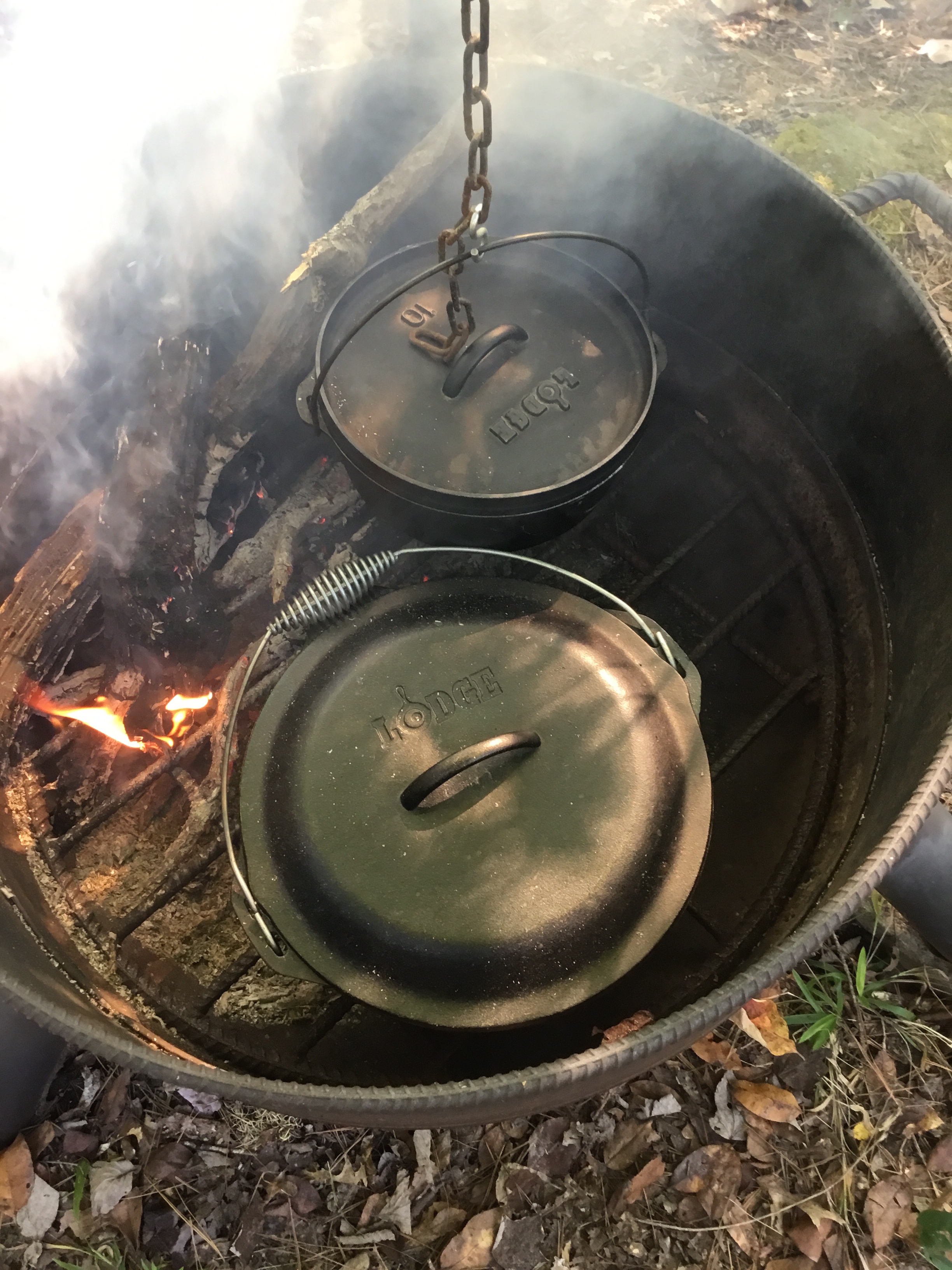
Salt and a little water were my only additions to the original recipe. Keeping it old school, I cooked it over hot coals. Temp was uneven, but cast iron cooks better than almost anything.

FireThe corn meal bread is in the #10 dutch oven, which was a little too large. A chicken and vegetables are in the larger pot. Man cannot live on corn meal bread alone.

The result? Would have been a grand slam with more salt. Still, this is a superior recipe. More people should try cornbread made with yeast. I’ll make it again for Thanksgiving.

Stone-Ground Grits

Don’t waste your time on anything but stone-ground grits, which are superior in every way, from taste to nutrition.

Recipe

This is a basic recipe for a couple of people, to which many things can be added, the most common being grated cheese.

1/2 cup stone-ground grits

2 cups milk

1/2 teaspoon salt

1 tablespoon butter

Pepper to taste.

Heat the milk and salt, and add grits gradually. Stir regularly for 25-30 minutes, until the grits soften and gain a smooth texture. DO NOT LET THIS BURN, or you may be buying a new pan. Add more liquid as needed. When done, add the butter or other fat (apparently the native Americans of Virginia used bear fat), and pepper if desired. Serve hot.

As a whole grain, stone-ground grits last longer if refrigerated, or even kept in the freezer. Our local brand, McEwen and Sons, is excellent, but just about anyone has access to stone-ground grits these days.

Uses for leftovers are manifold, one of the most common being “Grit Cakes.” If you really get addicted, buy the book Glorious Gritswhich was written by Susan McEwen McIntosh.

Grits–Better Know a Southern Staple

I grits

Instant grits? Really?

My alcoholic writing Professor at the University of Alabama would often repeat the following: “College is like a grit factory. You all come in looking different, and then you all leave looking exactly the same: bland and lily white.” There is some truth to that, as my Alma Mater has now devolved into a country club with a football team. But that’s a subject for a different kind of blog.

The Prof had one thing right: grits back then were pretty horrible. Multiple James Beard award winning chef Frank Stitt says, “the life had been processed out of them.” There were none worse than those served at UA cafeterias. Mine would be so hard that they needed to be cut with a knife, and were topped with a pat of margarine, that would bleed across the top like a yellow oil slick. If the settlers at Jamestown had been given those, they would have jumped back on the boat, and headed back to England.

But that is where grits came from. It is a certifiable, documentable, dish that came directly from the Native Americans of Virginia. The English in 1607 couldn’t handle the native name “rockahominie,” so the dish became “hominy grits,” a term which a real old school type will still use. Now they are just grits, and we are living in something of a grits renaissance.

Before I get to that, let’s have a quick rundown of modern grits.

Instant Grits

These jokers come in a little paper bag for the culinarily impaired. I risk it all with this comment: there is hardly a better backpacking/camping food. It’s inexpensive, goes with anything, conserves fuel and weight, and can be eaten with any meal. Also packs some serious carbs. Also does not have the sodium punch that something like ramen noodles have. With that said, I will not eat these at home.

Quick Grits

More flavor than the instant ones, but still highly processed. Cooks in around five minutes.

Grits

High speed ground corn that takes a while to cook. Buy a bag of these, throw the grits into the compost, and use the bag for something else.

Stone Ground Grits

Here’s the ticket. There are both national and local brands available now, and the quality varies from excellent to superb. I go with the organic ones to make sure there are no weird genes in my grits, as in GMO. Our local brand, McEwen & Sons, is served at everything from breakfast joints to some of the best fine dining restaurants in the country, including the James Beard most Outstanding Restaurant in the US in 2018, Highlands Bar and Grill in Birmingham.

GritsWhite, but not bland.

Recipe

This is a basic recipe for a couple of people, to which many things can be added, the most common being grated cheese.

1/2 cup stone-ground grits

2 cups milk

1/2 teaspoon salt

1 tablespoon butter

Pepper to taste.

Heat the milk and salt, and add grits gradually. Stir regularly for 25-30 minutes, until the grits soften and gain a smooth texture. DO NOT LET THIS BURN, or you may be buying a new pan. Add more liquid as needed. When done, add the butter or other fat (apparently the natives of Virginia used bear fat), and pepper if desired. Serve hot.

Uses for leftovers are manifold, one of the most common being “Grit Cakes.” If you really get addicted, buy the book Glorious Gritswhich was written by Susan McEwen McIntosh.


Cage Match! Alabama, Arkansas, Louisiana, South Carolina, and Texas, Sue Massachusetts over Chicken Cages!

Chickens

Five Southern states dare defend their rights to torture animals.

Once again chicken cages are a hot political topic for Southern Attorneys General. Though Indiana is lead dog, so to speak, on this subject, brave Southern politicians are taking their stand on our rights to squeeze chickens into cages the size of tissue dispensers. Though 77% of Massachusetts voters don’t want our crap eggs and crap chicken meat sold in their fast food places, what right do they have to say no to Big Ag and their evil minions in the South?  This is Alabama’s second shot at this issue–the first case against California went down in flames.

So where is Mississippi on all this?

Cornbread and Cornbread Dressing

Recipes

A cornbread and a cornbread dressing recipe here.

Bama Cornbread

1 cup fine McEwen cornmeal (or other finely ground cornmeal)

3/4 cup milk

1 egg

1 teaspoon baking powder

1/4 teaspoon baking soda

1/2 teaspoon salt

Mix this up with dry ingredients first, and then the milk and egg. Pour it into a roasting hot, oiled cast iron skillet, into a 425 degree oven. The quality of the cornmeal is the key here. Double the recipe for a family meal.

Bama Cornbread Dressing

One double recipe of Bama Cornbread, crumbled (see above)

2 cups croutons

2 cups onions and celery, cooked

Handful of rehydrated dried Porcini mushrooms, cooked in butter, chopped

1/2 stick of melted butter

2 eggs

Chicken stock (at least one cup)

Salt and Pepper to taste

Sage, sage, and more sage

Cook at 350 degrees. This is a seat of the pants recipe. I like lots and lots of sage and mushrooms. Recycle into turkey or chicken and dressing after the first meal. That’s a layer of leftover meat, topped with a layer of dressing. Add extra stock to the dressing when making the recycled dish.

OffGuardian

because facts really should be sacred

Ruth Blogs Here

Or not, depending on my mood

A Haven for Book Lovers

I am just a girl who loves reading and talking about books

what sandra thinks

because I've got to tell someone.

LadiesWhoLunchReviews,etc

a little lunch, a little wine, a LOT of talking!

Margaret and Helen

Best Friends for Sixty Years and Counting...

talltalesfromchiconia

Tales of quilting, gardening and cooking from the Kingdom of Chiconia

Cyranny's Cove

Refuge of an assumed danophile...

Exiled Rebels

Serving BL since 2017

this is... The Neighborhood

the Story within the Story

Beauty lies within yourself

The only impossible journey in life is you never begin!! ~Tanvir Kaur

Southern Fusion Cooking

Country Living in the Southern Appalachians, USA--A little of this, a lot of that

Discover WordPress

A daily selection of the best content published on WordPress, collected for you by humans who love to read.

The Atavist Magazine

Country Living in the Southern Appalachians, USA--A little of this, a lot of that

Longreads

Longreads : The best longform stories on the web

WordPress.com News

The latest news on WordPress.com and the WordPress community.