
At least it looks edible.
After a little less than two months working at our local fast food fried chicken joint in Cullman, Alabama, I had had enough. Two things led to a quick and final middle finger to the whole establishment.
The first was being told, nay ordered, to cook forty pounds of rotten chicken. One day right before the split, I grabbed my usual forty pound box of “fresh” chicken out of our walk-in cooler, and prepared to marry-nate it. However, when I opened the box, the entire kitchen was filled with the unmistakeable aroma of rotten chicken. In a cost cutting move, our owner, a Yankee carpetbagger who went by the name of “King” Kohl, had hired a patient from a local drug rehab center (at a reduced wage, naturally), to do such chores as rotate the stock in the cooler. The recovering addict was apparently still in recovery mode from a suicide attempt, when he had drunk an entire bottle of Drano, and had forgotten about that one little detail of his job.
This one was a job for the Manager. I tracked her down in her office, and said, “Manager manager manager, we have forty pounds of rotten chicken out here.”
She said, “Let me show you how to take care of this. We can still cook it, because we can’t afford to waste forty pounds of chicken.”
After every time I tell this story, some moralist will object, and say that I should have walked out right then. Au contraire. No one is dumb enough to actually eat rotten chicken. And I could not wait to see our manager have to deal with the first consumer who found out that they had actually paid for rotten meat. I was already into schadenfreude back then.
The manager first coated each piece of chicken in a thick coat of baking soda, and then rinsed them in borderline scalding hot water. Sure enough, the stink was gone from the exterior of the chicken. The manager was proud of herself, and said, “Cook it!” This was Frankenstein’s chicken.
The fundamental problem with the reanimation of rotten chicken is that chicken does not rot in layers. A chicken is not an onion, and an onion is not a chicken. On our farm, over the years, I had seen literally dozens of dead chickens. Not a single one was ever rotten on just the surface.
I fried the chicken and put it in our drawer warmer. It was a slow afternoon, and it took awhile to get down to the level of the rotten chicken. Then, there it was–nothing left but forty pounds of rotten chicken. Who would be the first victim?
A guy in a Buick pulled up to our door a few minutes later. Fate or chance was staring at him. He walked in the door, and was greeted by our cashier.
Cashier: “Kin I hep yu?” (Can I help you?)
Potential Victim: “I would like a bucket of chicken, please.” He didn’t sound like someone who would fall for a marketing trick, like renaming something greasy and fried as “Crispy.”
Cashier: “Woold you like the crees-pee, or tha oorigeenul res-a-pee?” (Would you like the crispy, or the original recipe?)
Potential Victim thought for a moment, and then said. “I’ll take a bucket of the Crispy this time.” Now he was upgraded to Future Victim.
I hid behind a wall in the kitchen, and did a fist pump. This guy was sure to rake our manager over the coals. I looked at my watch as he walked out the door, and made a mental bet with myself as to when he would be back.
Fifteen minutes later I heard squealing tires in the parking lot. Victim was back, and he did not look happy. He marched in the door with a single drumstick in his hand, which had one bite taken out of it. He stuck it in our cashier’s face and said, “SMELL THIS.”
“PEE-YOU,” she said, and waved a fake finger-nailed hand in front of her face. “Thy-at smells bi-add. I’m gonna git the man-a-jur fur yu.” (Phew, that smells bad. I’m going to get the manager for you.)
She went to the office, practically grabbed the manager, hauled her to the front, and hid behind her. Victim stuck said chicken in the manager’s face, and said, “SMELL THIS.”
“That smells like it’s off,” the manager said. “Would you like another bucket of chicken?” Not the right thing to say.
Victim screamed in her face. “I DON’T WANT ANYMORE OF YOUR STINKING CHICKEN.”
“Would you like a refund?” The manager asked. This was before the days when people sued about things like too hot coffee.
“YES, I WANT MY MONEY BACK,” Victim said.
The manager gave him some cash, and Victim burned rubber leaving the parking lot. The manager walked back into the kitchen, and wanted to talk to me. She said, “Please tell me if you ever find any bad chicken. We can’t let people think we serve bad chicken here. Do you understand?”
I understood perfectly. I said, “Yes, I think I understand.” It was corporate America showing it’s enormous backside. If anything bad happened, it was my fault–especially if it was something I was ordered to do. The rest of the rotten chicken ended up in the dumpster. The one across the street.
As this is a Revenge Farce, I was determined to get more than just even. It only took a couple of days.
I had been working seven days a week for most weeks, but never made it to a full forty hours once. It was always two hours here, six hours there. For my cooperation, I had been guaranteed time off on the Fourth of July. On the third of July, the manager cornered me in the kitchen, and said, ” I have some bad news. Tomorrow is the busiest day of our year. We’re going to need you all day. We start at seven A.M., running the fryers nonstop. You’ll need to stay until the usual 9:30 at night. And you won’t have time for a lunch break.”
Karma really is an unusual thing. With a completely straight face, I looked her in the eye, and said, “I’ll be here bright and early.”
The next morning at eight, I was eating breakfast back at the farm when the phone rang. I answered it, and it was the manager. She said, “Where are you?”
“Here on the phone. I’m running a little late.”
“Get up here as fast as you can,” she said, and hung up. I ate some more biscuit with margarine on it.
Another hour later, as I was getting ready to go to a cookout in Huntsville, the phone rang again. The manager was unhappy this time. She asked, “Why aren’t you here?”
“I must have forgotten to tell you that I quit.”
“You can quit tomorrow. We already have a line of customers. We’re going to be really busy all day. This is the busiest day of the year.”
“I guess you’ll have to cook instead of me. I have a cookout to go to. Bye.” I hung up, and never heard from the wench again. I had declared my independence.
Strangely enough, that third of July, when I was nineteen, was my last day of employment with corporate America. I have had many interviews with technical and scientific firms, subsequently, but zero job offers. I have also freelanced for many publishers, but that’s just freelancing. However, the worst of corporate America has to be the corporations involved in the industrial food business. Greasy isn’t crispy, corn syrup is not sugar, a couple of square feet of space is not free range, up is not down, and most of all, rotten is not fresh. There is a difference between peddlers of addictive foods laced with salt, sugar, and fat, and drug dealers–drug dealers go to jail. Corporate leaders rarely do. Or managers.


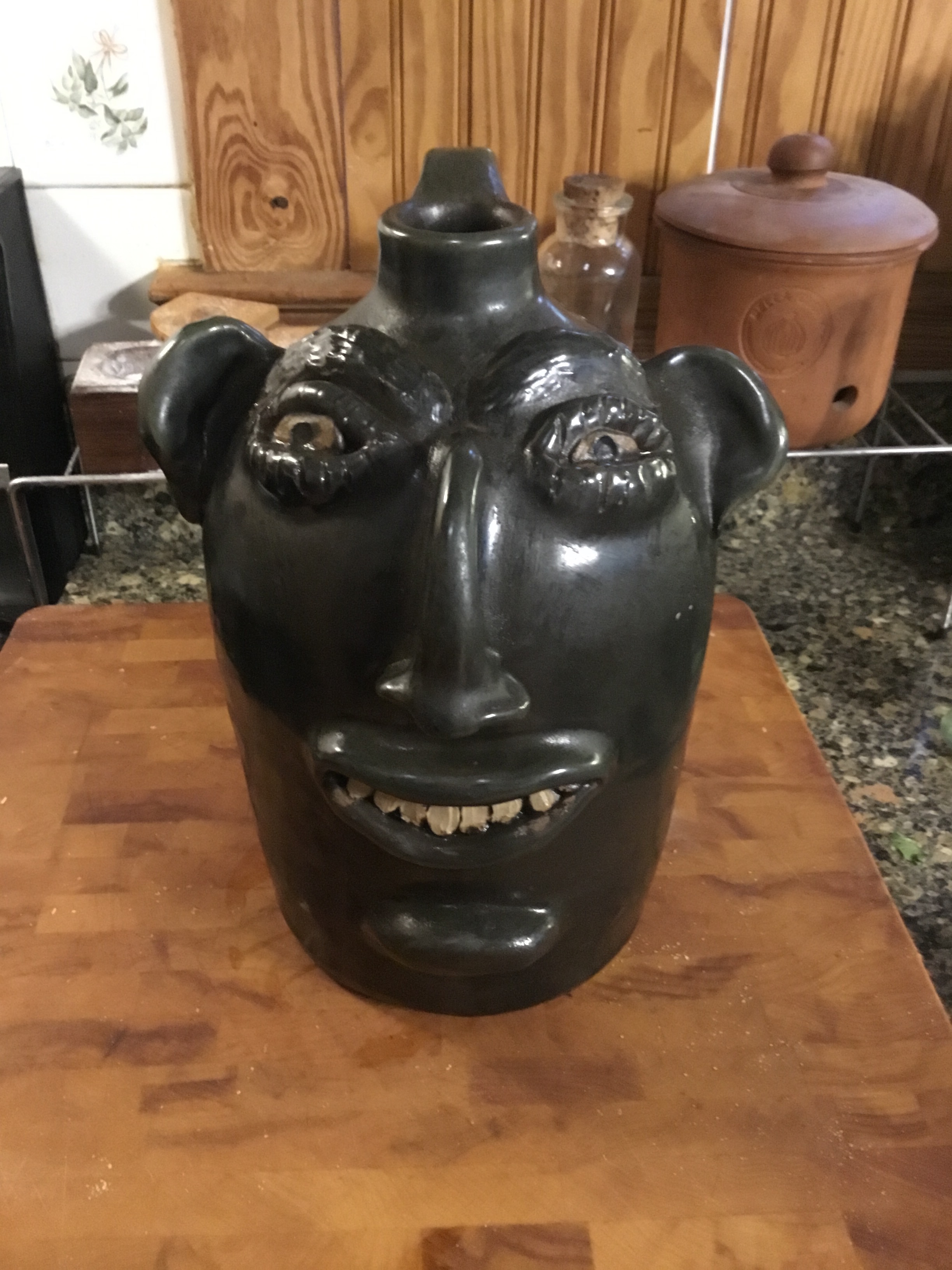 You talkin’ to me? You talkin’ to me?
 This seriously big mixing bowl is a full 14″ across the top. Notice the finger indentations in the surface where the bowl was thrown. Decorated using Brown’s celebrated “splatter” technique.
 Smaller mixing bowls came with spouts, and with or without handles.
 Soup Bowls! With or without handles, these can take on a seriously hot broiler. We never use anything but these for our Creole onion soup. I love the black glaze on the one without the handle.
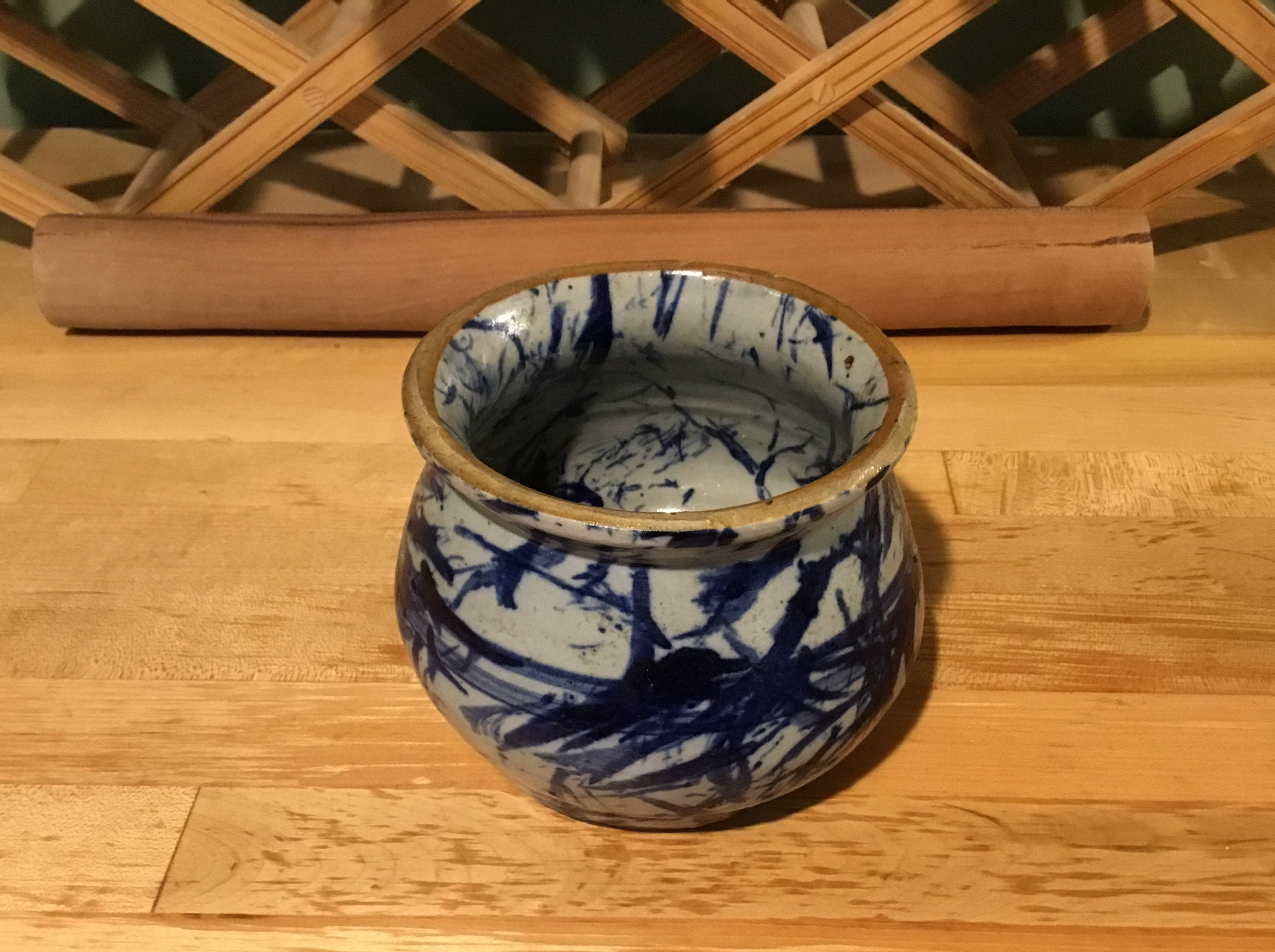 This small very decorative bowl was striped with cobalt glaze using a chicken feather, which was another favorite technique of Brown’s.
 Now, on to the subject of bakeware. This one is almost too pretty to use, but that was what it was made for.
 For years I thought this was a pitcher for iced tea, as that is what we used it for. Imagine my surprise when I saw a very old, very similar piece at
  A fat version of the pitcher, with two handles and no lip. “Stop, move away from the cookie jar.” That’s from the BBC version of The Office, where they had a talking cookie jar.
 Essentially smaller versions of the cookie jar, but without handles. Brown made other forms of canisters as well.
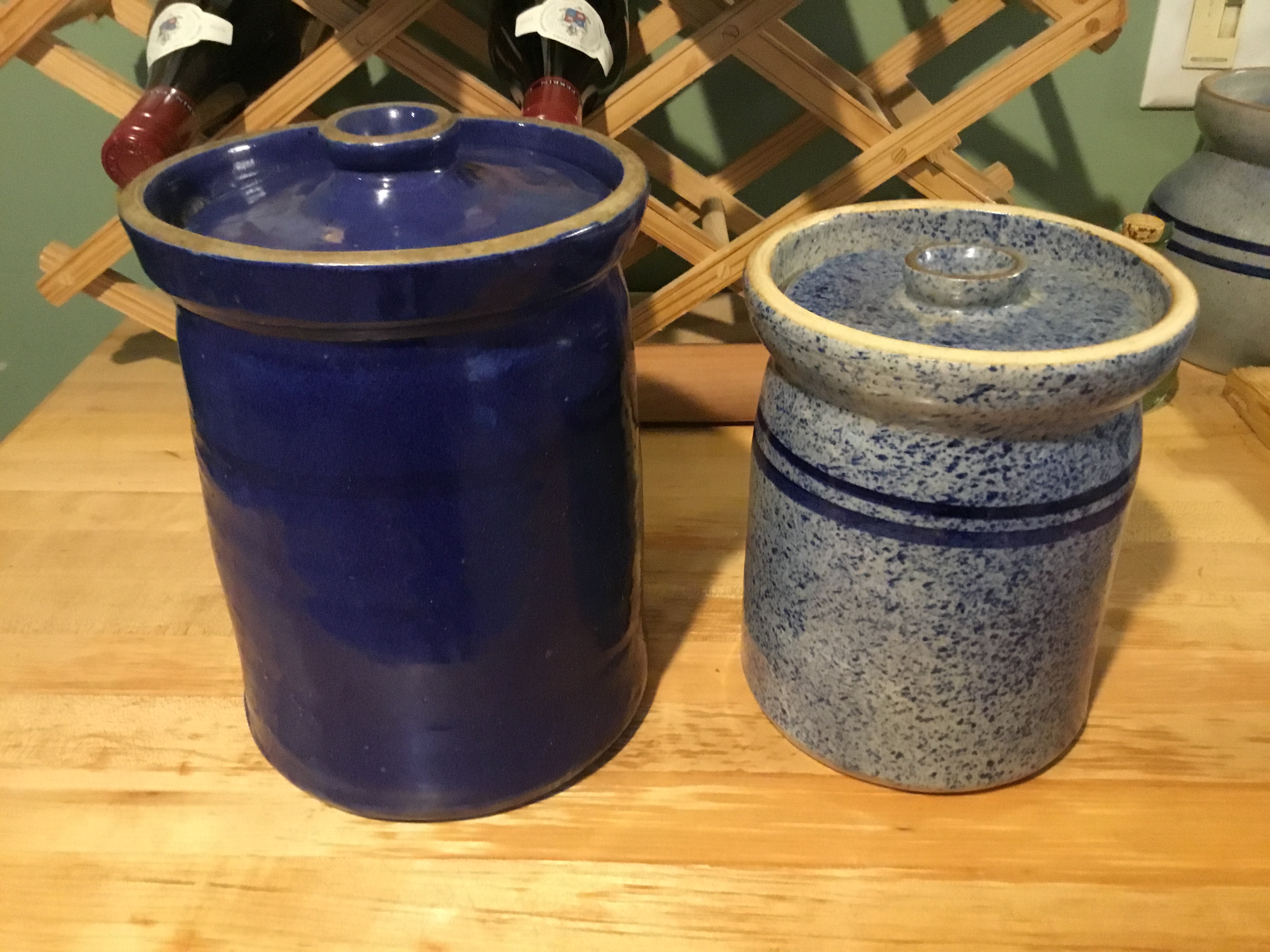 A more modern style of canister, but with the same great glazes.
 A small churn, for someone who has a very small cow, perhaps. My guess is people buy these for the country look.
 There’s a more realistic size churn for a real farm. Now I can make up stories about Grandma and her favorite cow.
 This guy looks like he’s had one cup of coffee too many. Believe it or not, you could actually drink from this mug, if you can stand the stare. At least it should wake you up.
 Why not begin with the best?
 This is an actual native American original ingredient. And these are the remains of an archaic native American corn grinder, which came from just a few miles downriver from my house.
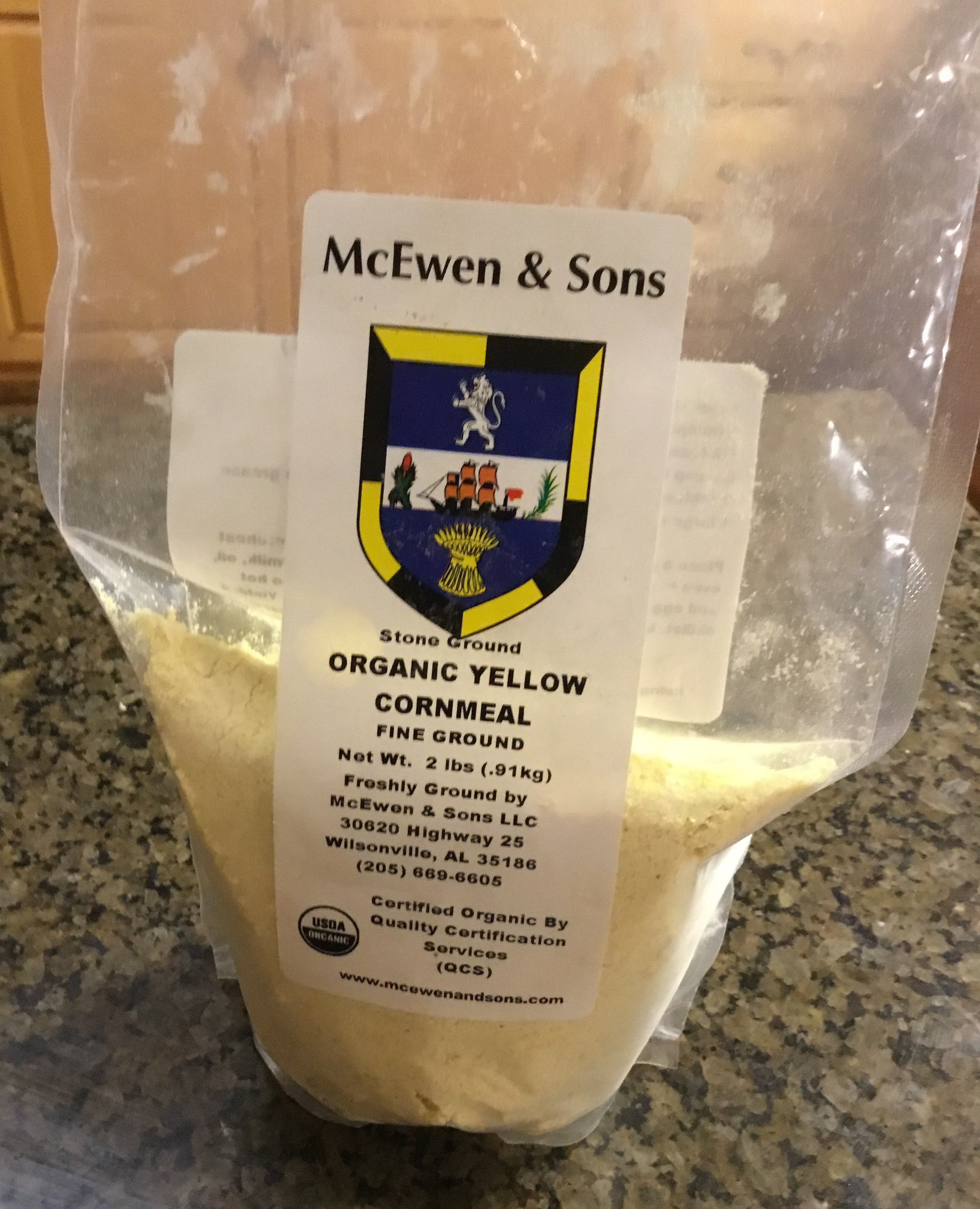 Unlike many people, this is my go to grind. Most people add wheat flour to their cornbread, but not me. This powder fine grind is easily the best I’ve ever seen. It’s made by a great family company as well.
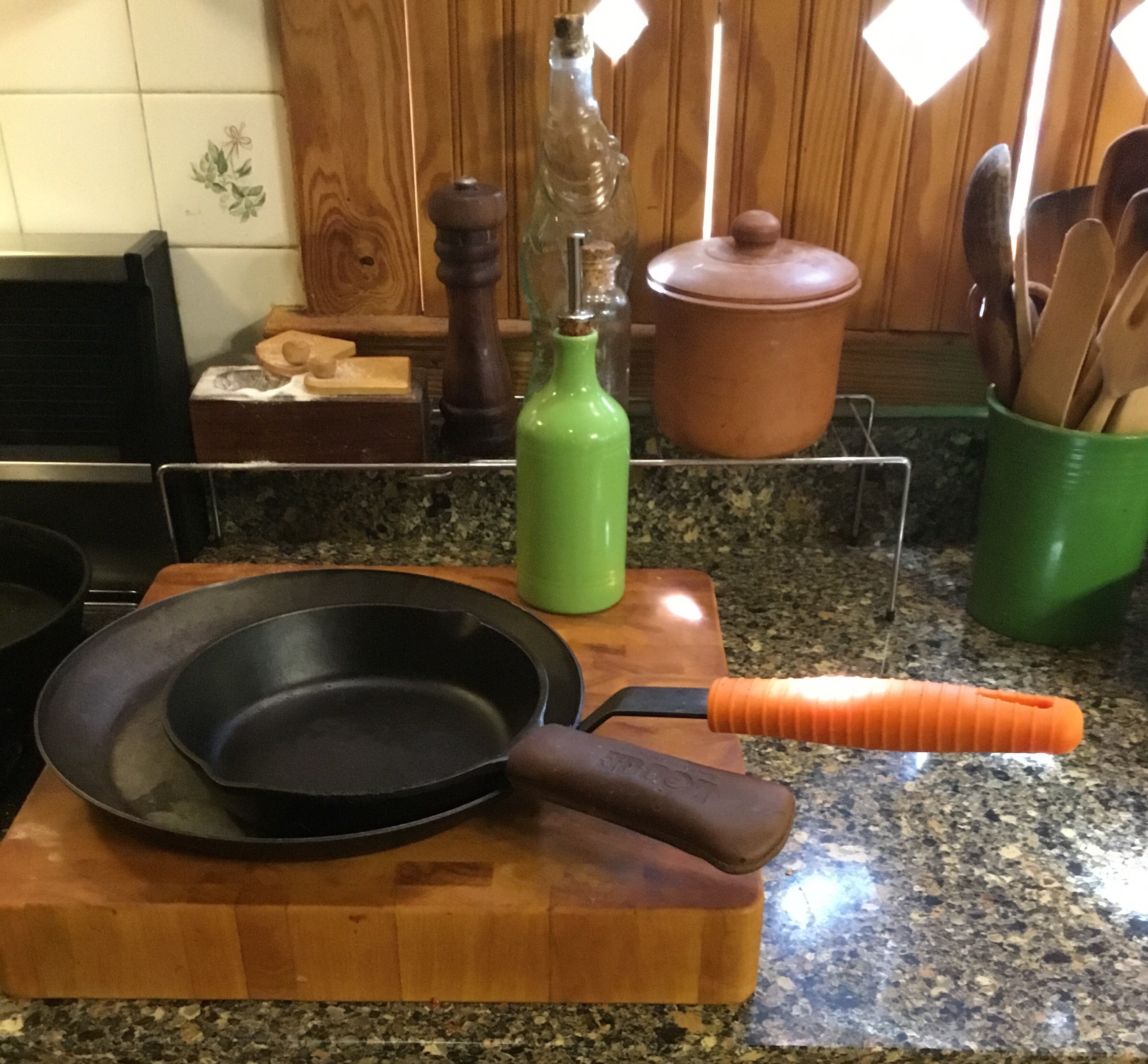 You could call these skillet condoms, but that would be rude. Just say yes to prophylactics, unless you want baby skillets.
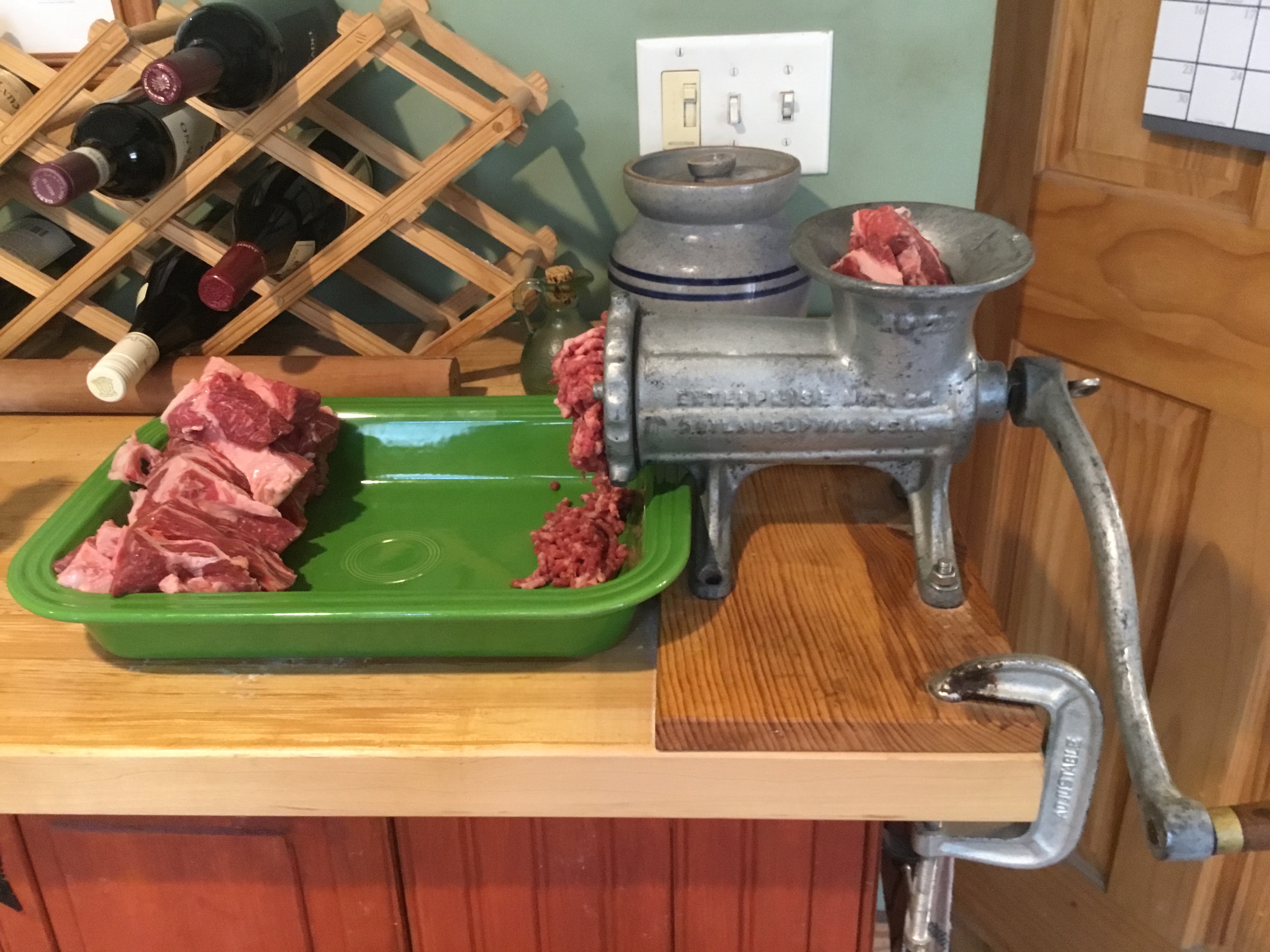 Hamburger meat is on the way. The grinder just needs a few more cranks.
 Southern Fusion Cooking