Sad news from Deutsche Welle, the Voice of Germany. The German cow who won more cow beauty pageants than any other, is dead at the age of thirteen. She actually won more than twenty bovine beauty contests, and was named “Lady Gaga.” I wish I could make this up.
Worse than that, this Holstein was born in France.
Here’s what you do with that pumpkin pie spice that’s been in the spice cabinet for two years, other than poisoning a good cup of coffee with it. Cranberries make a formidable opponent for any seasoning mix, but it turns out to be a fair and delicious fight. Above is how it starts.
Ingredients
12 ounces fresh Cranberries
1 cup Water
Juice and pulp of one Lemon (we use Meyer lemons)
1 cup organic Sugar
Pumpkin Pie Spice
There’s not much to cooking this other than not letting it burn. Boil for 10-15 minutes, depending on how thick you want the sauce. After ten, it will look like this:
Moderately Thick
I wait until mine jells. Here’s the final result.
Be careful with the spice, as it becomes stronger after the sauce chills in the fridge. As a point of reference, cranberries actually grow in the South, in West Virginia, in the famous Cranberry Glades botanical area. Unfortunately, most of those berries are eaten by bears. I’ve been within ten feet of one there.
Achtung! There’s a schnitzel crisis in Germany, according to the authoritative website Deutsche Welle (that’s Voice of Germany). EU exports to China have caused a tripling of pork prices on the continent.
The cause–Swine Fever, which is killing pigs in China faster than an abacus can count. DW also reports that China plans to import three million tons of pork, much of it from the EU. And I have always loved sweet and sour pork.
So keep an eye on your pigs. Globalization is also a pig problem, and not just with Kapitalistenschwein (that’s capitalist pigs). According to the head of Germany’s Meat Association, “Sausage will definitely be more expensive next year.”
It’s time to invest in pork belly futures again.
Update! Denmark is considering building a wall along their border with Germany, to keep out the notorious wild German pigs, who may or may not be carrying Swine Fever–currently, there are no confirmed cases. The Germans have nicknamed it the “Boar-der Wall.” Now that is droll.
What with the fall cabbage harvest coming in, it’s time to turn that surplus into a German, and German-American, specialty. Namely, fermented sliced cabbage, better known as Sauerkraut.
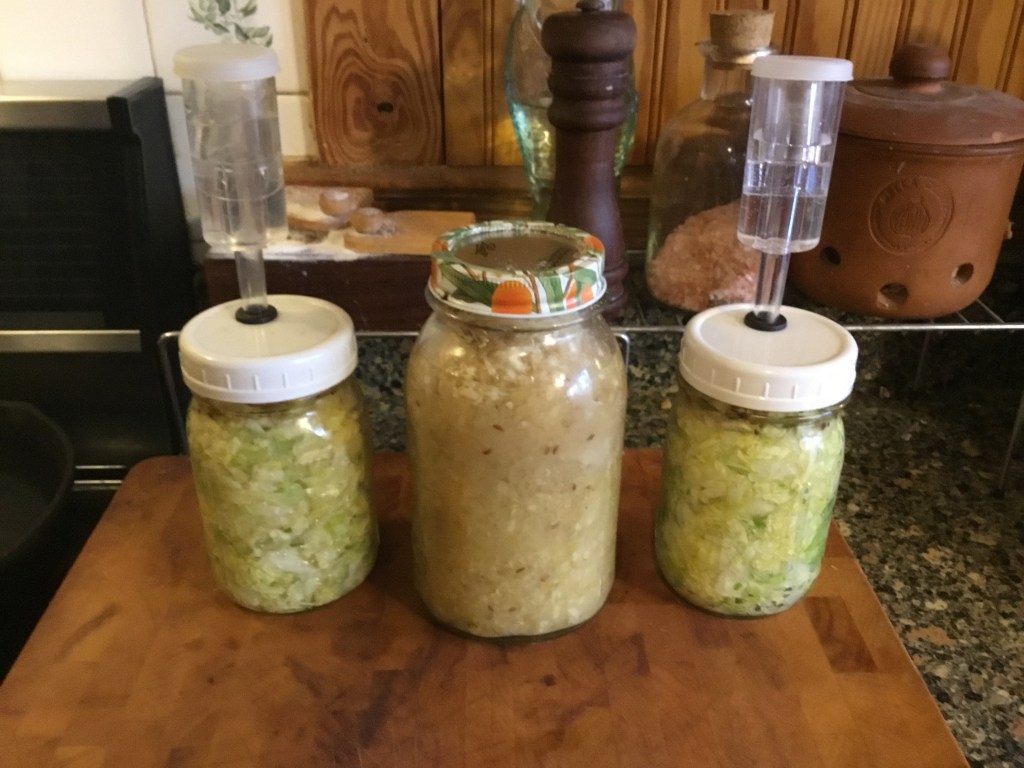
Pictured above is a first day ferment, complete with fermentation lids, made by yours truly for next to nothing, and a nice quart I made last spring. My mother in law Agnes Olga would fiddle around with giant crocks full of cabbage, but not me. Give me a lid and an airlock any day.
Ingredients
One medium Cabbage, sliced
Salt
Caraway Seeds
Apple Wine (substitute any white wine)
This not exactly traditional recipe is kicked up by the addition of the wine. Among other things, it insures the fermenting cabbage will not be exposed to the air. Also, a bludgeoning tool is most efficacious when it comes to stomping down some fresh cabbage.
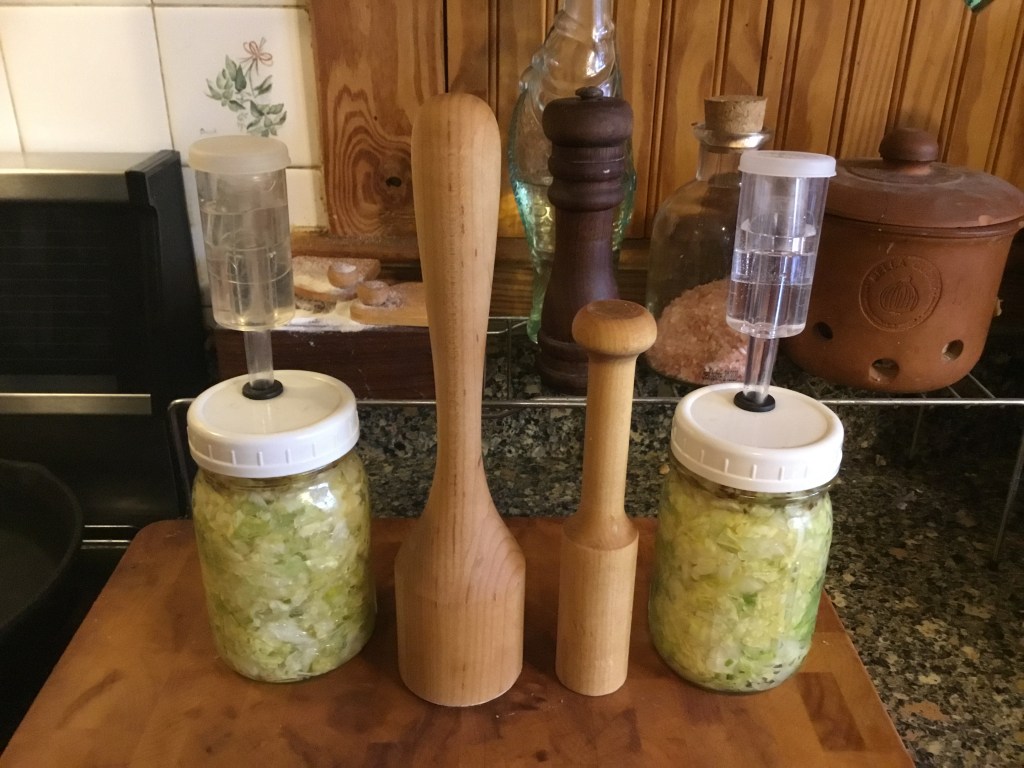
Stompers
The sliced cabbage needs to be crushed to release the water contained in the leaves. The big one does that, and the small one is used to pack the jars. A medium cabbage only makes two pints of kraut, if they are properly stomped on. Ferment for three to six weeks, depending on how sauer you like your kraut.
This is a great first fermentation project. That, and the final product tastes great on a good bratwurst.
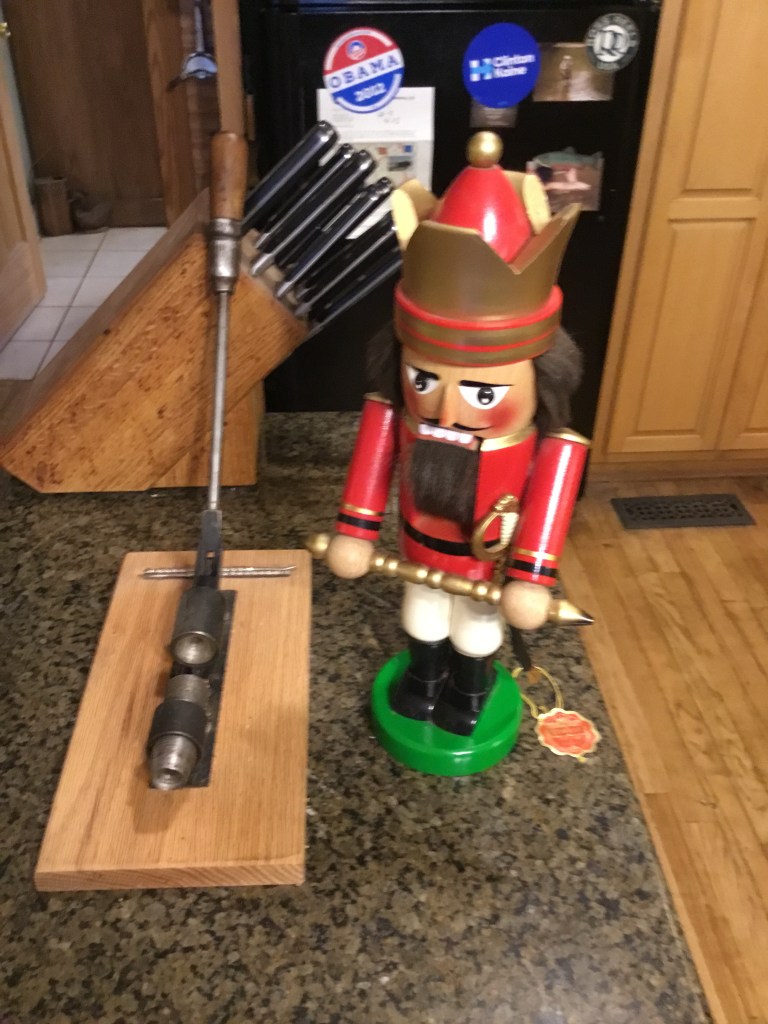
Here are two classic nutcrackers. One dances every Christmas, and fights the Mouse King. The other one only cracks nuts, and doesn’t dance at all.
The military looking fellow did come from the Erzgebirge (Ore Mountains) in Deutschland, but he is mainly decoration, who could crack some hazelnuts, maybe, but not much more. That hundred year old fellow is another story. Archimedes himself would have loved this design. “Give me a place to stand, and a lever long enough, and I will move the world.” Or crack some nuts.
A Pecan was Harmed AND Eaten
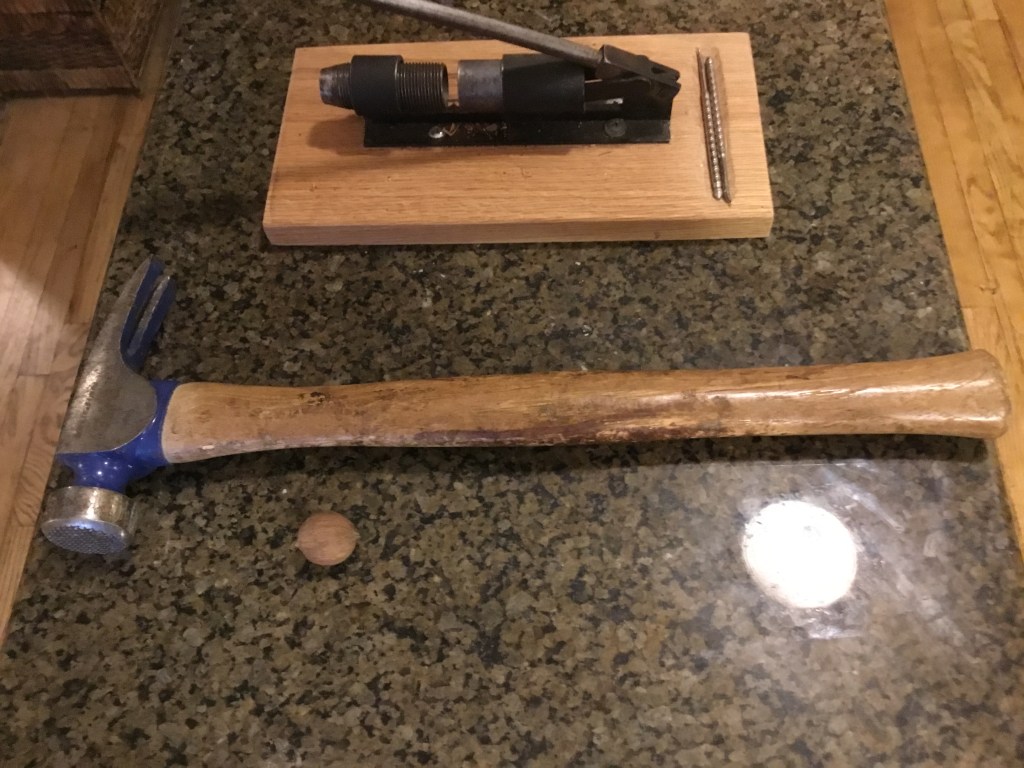
I put the old fellow on a nice piece of oak, and made a spot for the pickers, as pecans are bad about sticking in the shells. And then there is the thing to bust open the pecan’s relative, the notorious hickory nut.
Hammer Down
Yes, that is a California made Vaughn 23 ounce framing hammer, and be ready to swing it to bust open a hickory nut, or a black walnut. Cooking can be a lot like work. Just don’t break hickory nuts on a nice countertop.
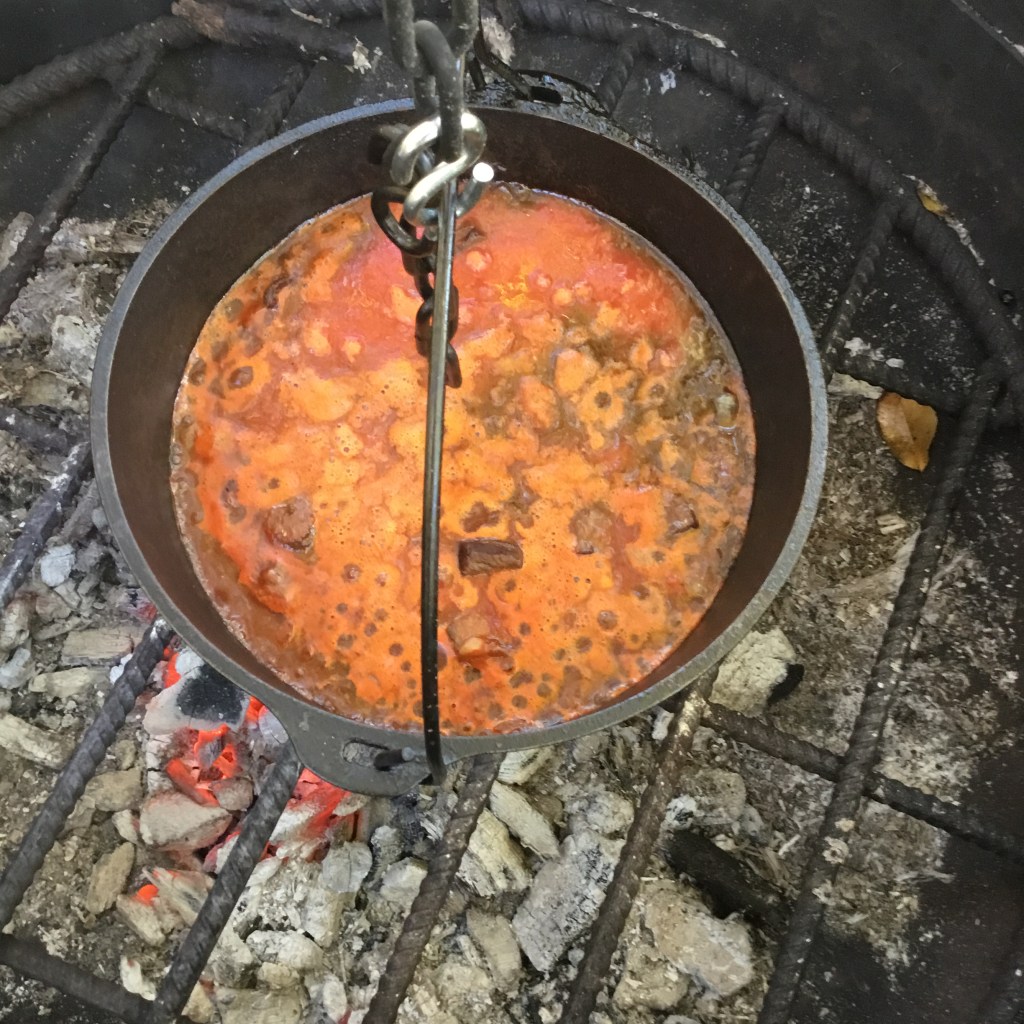
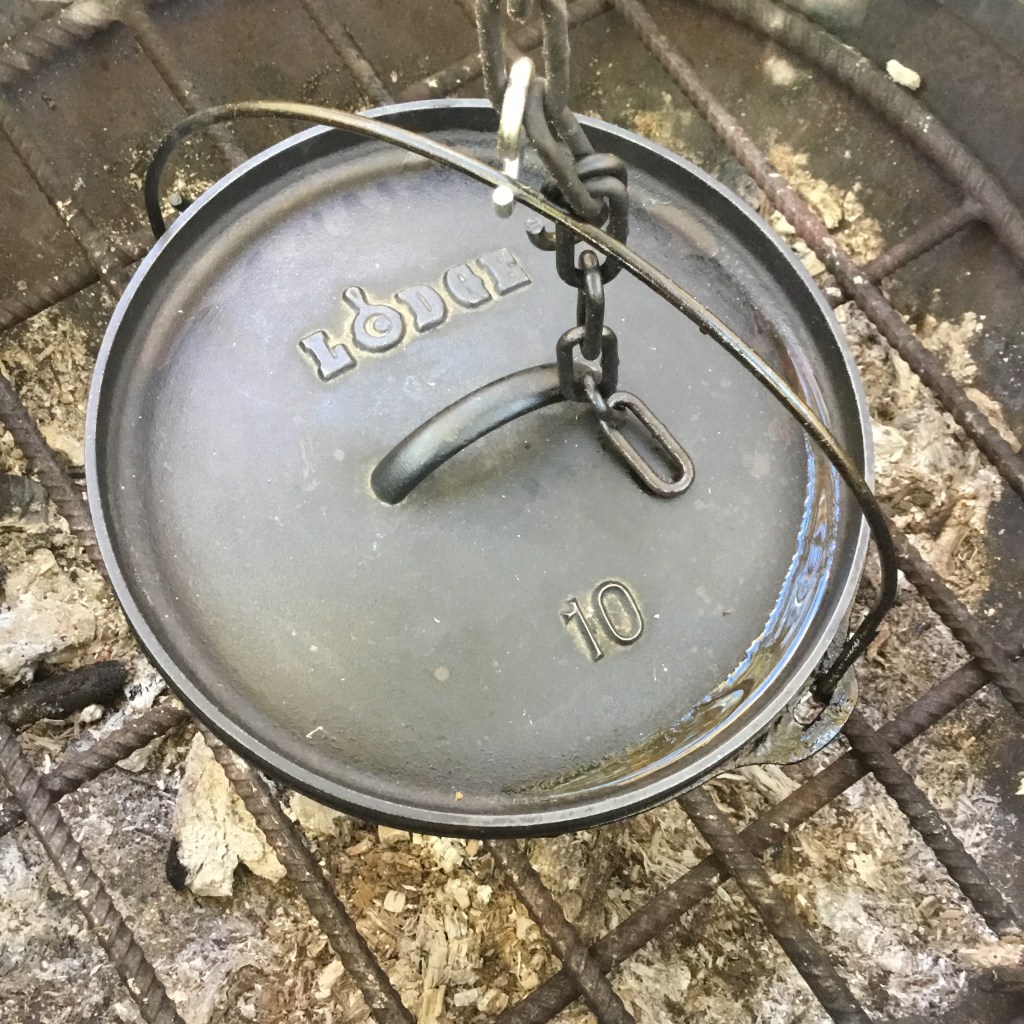
This is nothing but a simple beef stew, but it was cooked in a cast iron camping Dutch Oven over an open fire, which always makes everything taste better. I will disclose the small wrinkles which add layers and layers to the dish. First, marry-nate some cubed up chuck roast, in red wine, salt, and pepper. I left mine in the fridge overnight, and then browned it in some home rendered lard, over some blazing heat.
The One Spoon
It helped that I had the One Spoon to cook with, which I got from a small fellow with furry feet. He told me it was the one spoon to rule them all, and in the darkness bind them. Actually, I made that monstrosity out of some Carolina Buckthorn, a weed tree if there ever was one. It’s almost as long as my Amish made fireplace poker. It does keep your hands away from the fire.
Deglaze
I threw in a whole chopped onion, cooked it, and deglazed the whole thing with some apple wine that was mysteriously sitting next to my fire pit, and the red wine marinade. Who would have guessed?
Milled Tomatoes
The next step is to add milled tomatoes, and cook for an hour or two. Throw a lid on that thing, to conserve heat.
This is Merely Medium Sized
I’ve always thought of Dutch Ovens as something like primitive pressure cookers, because it takes some serious steam to leak through that massive lid. The last ingredients are salt, pepper, carrots, and naturally, taters, precious.
Ready to Stew
It would take another good hour to finish this, so I just went back to work on my great American novel, which is closing to a finish. If only it was as good as this stew turned out to be.
Thomas Jefferson loved pasta. He and his chef James Hemings are said to have introduced macs and cheese–or at very least, popularized it– to North America, and for years he and his family imported pounds and pounds of pasta every year from Italy. Undoubtedly, the first American recipe for macs and cheese was in one of his relative’s cookbooks, Mary Randolph’s 1824 book, The Virginia Housewife.
Jefferson also owned a pasta machine, which was purchased in Naples. His description of it is as follows:
The best maccaroni in Italy is made with a particular sort of flour called Semola, in Naples: but in almost every shop a different sort of flour is commonly used; for, provided the flour be of a good quality, and not ground extremely fine, it will always do very well. A paste is made with flour, water and less yeast than is used for making bread. This paste is then put, by little at a time, viz. about 5. or 6. lb. each time into a round iron box ABC, the under part of which is perforated with holes, through which the paste, when pressed by the screw DEF, comes out, and forms the Maccaroni g.g.g. which, when sufficiently long, are cut and spread to dry. The screw is turned by a lever inserted into the hole K, of which there are 4. or 6. It is evident that on turning the screw one way, the cylindrical part F. which fits the iron box or mortar perfectly well, must press upon the paste and must force it out of the holes. LLM. is a strong wooden frame, properly fastened to the wall, floor and cieling of the room.
N.O. is a figure, on a larger scale, of some of the holes in the iron plate, where all the black is solid, and the rest open. The real plate has a great many holes, and is screwed to the box or mortar: or rather there is a set of plates which may be changed at will, with holes of different shapes and sizes for the different sorts of Maccaroni.
Papers of Thomas Jefferson
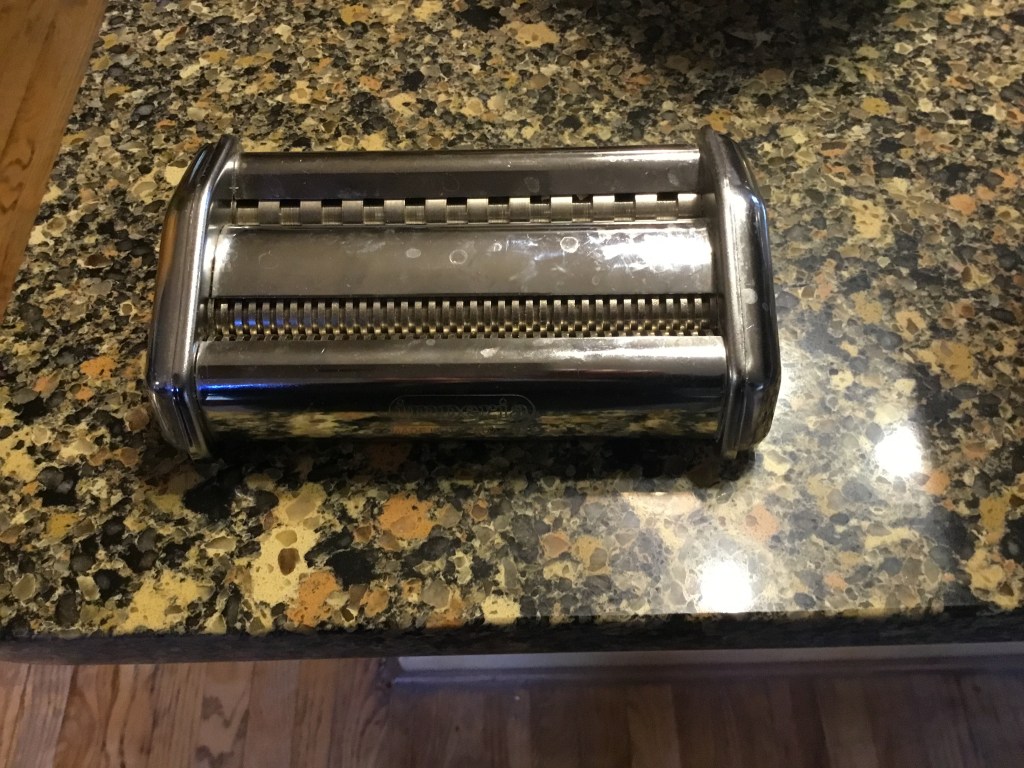
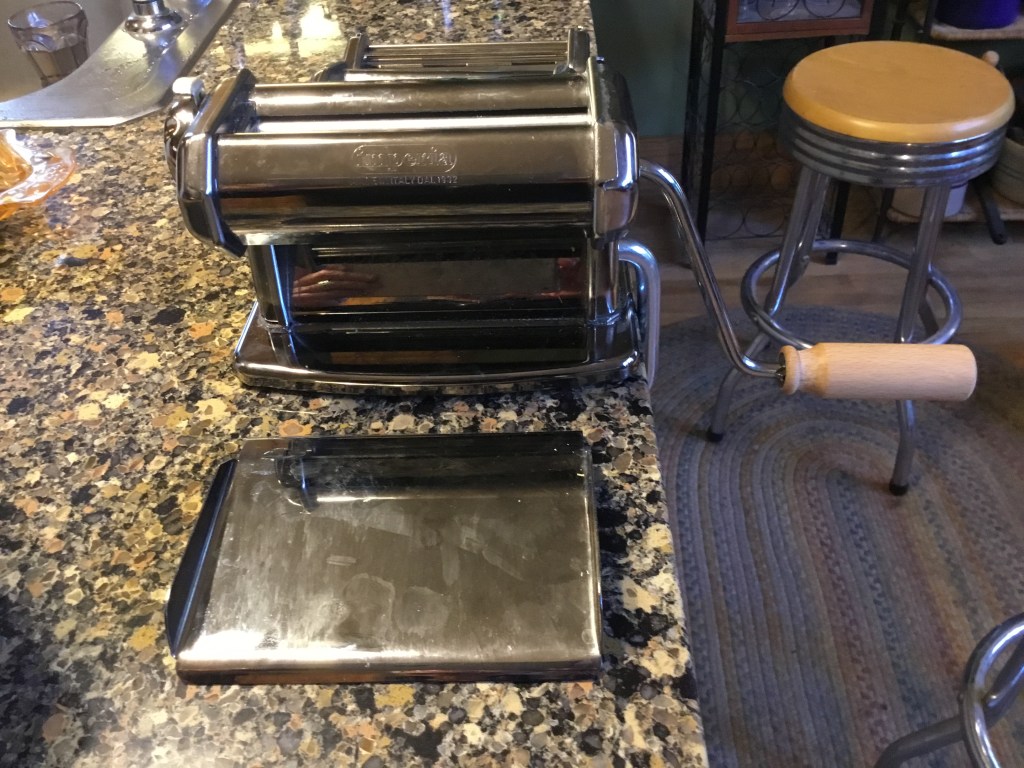
So even back in the day there were machines for making pasta, and the Greeks said that the god Hephaestus/Vulcan himself made the first one. I’ll stick with this Italian made Imperia machine.
Double Cutter
The double cutters are particularly handy, and this one makes both spaghetti and linguini. A large number of single cutters are available also.
Single Cutter
This cutter makes pappardelle, a nice thick pasta for equally thick sauces. The machine itself can make sheet pasta in six different thicknesses.
Parts and Pieces
The machine did not come with an instruction manual (naturally), so I had to jimmy with it to see the options. The dough tray clips to the front, which is the side the sheet pasta comes out of. The front will also hold a single cutter. The back side works best with the double cutter. Or, you could just leave all that stuff off, and make sheet pasta at the thinnest setting, or even dumplings, at the thickest setting.
Lasagna Sheet
Bill Buford wrote that the Italian introduction of the egg into pasta making was their greatest contribution. I nominate this machine for second place.
While the farmer’s market season is technically over for the year at the Festhalle in Cullman, Alabama, the authorities at Parks and Rec have been convinced to let farmer’s still sell after the official end of the season–for free. The strange thing about this early closure is that anyone who has ever grown any greens, knows this is the prime season for them in this area. Cool weather and abundant moisture make for the best greens, especially collards.
Case in point. This past Saturday was both cold and windy, but our favorite seller was there early in the morning with an assortment of greens. It had been so warm up to this point that he even had tomatoes! Best of all he had what is said to be the largest timber framed structure in the Southeast all to himself.
We loaded up on tomatoes, as we have greens left over from the week before. Then, right behind us, was the brand new tribute to our German roots. A Weihnachtspyramide, and a big one at that.
That’s a Christmas Pyramid
Not satisfied with having the largest timber framed building around, the Mayor and Parks and Rec went straight to the Erzgebirge (Ore Mountains) in Deutschland, and commissioned this gigantic ornament. It even has a carved replica of Colonel Cullman on the second level from the top. Not only does it dwarf the gazebo behind it, it is documented to be the largest Christmas Pyramid in the US.
Three big guys actually came over from the Erzgebirge to assemble this thing, although while I was reading a version of this story in German, Google translate kicked in, and said there were “woodpeckers” coming over to assemble it. If the woodpeckers looked across the parking lot, this is what they saw on the side of the office for the Festhalle.
Use the ATM so Farmer’s can Get Cash
Judging by the size of them, I would say that they agreed with this sentiment.
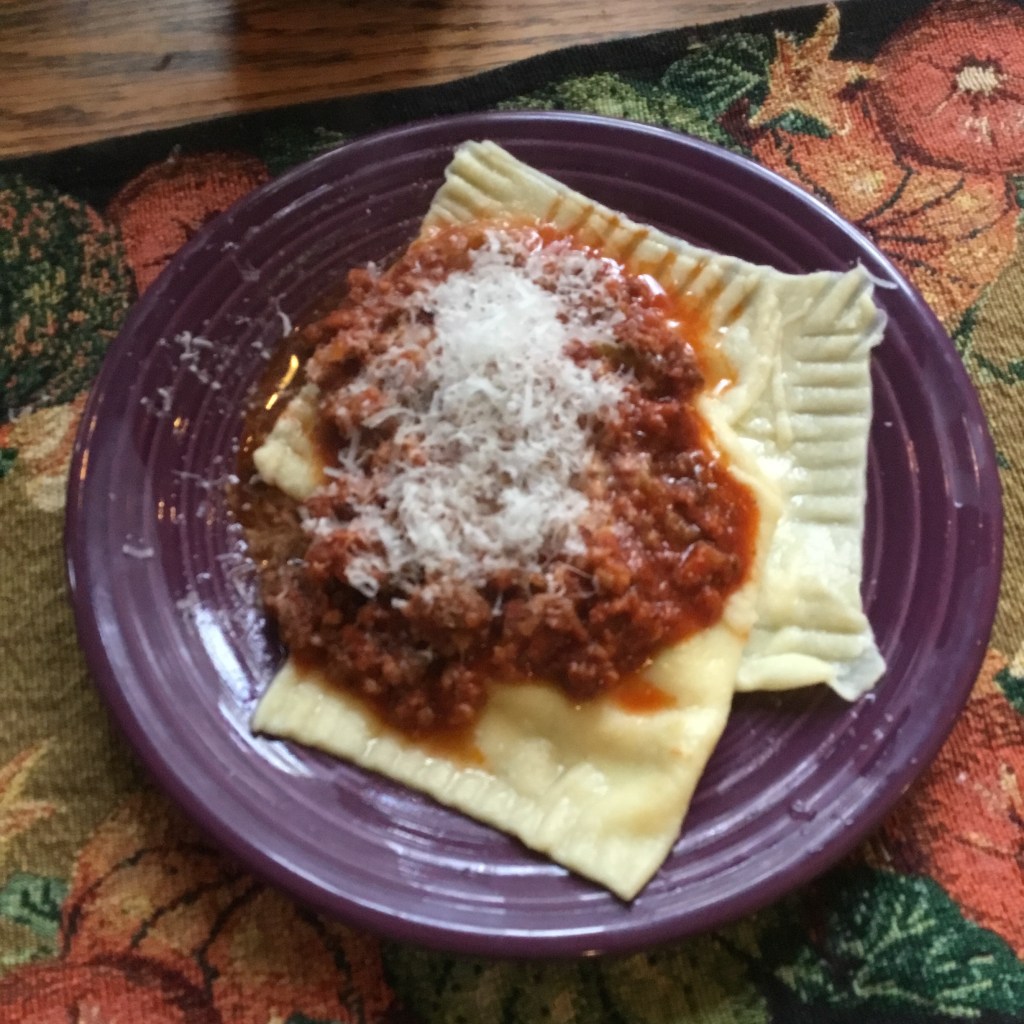
Having become fascinated with the parallels between Tuscan and Southern cooking, I decided to make a dish that has entire food festivals dedicated to it–tortelli, or tordelli. They are made in a bewildering number of fashions, and with many local fillings, so I ad libbed and made my own version, with some honking big tortelli, with a sauce approximating a Tuscan meat sauce. The result is incredibly rich and tasty.
Meat Sauce with Fresh Tomatoes
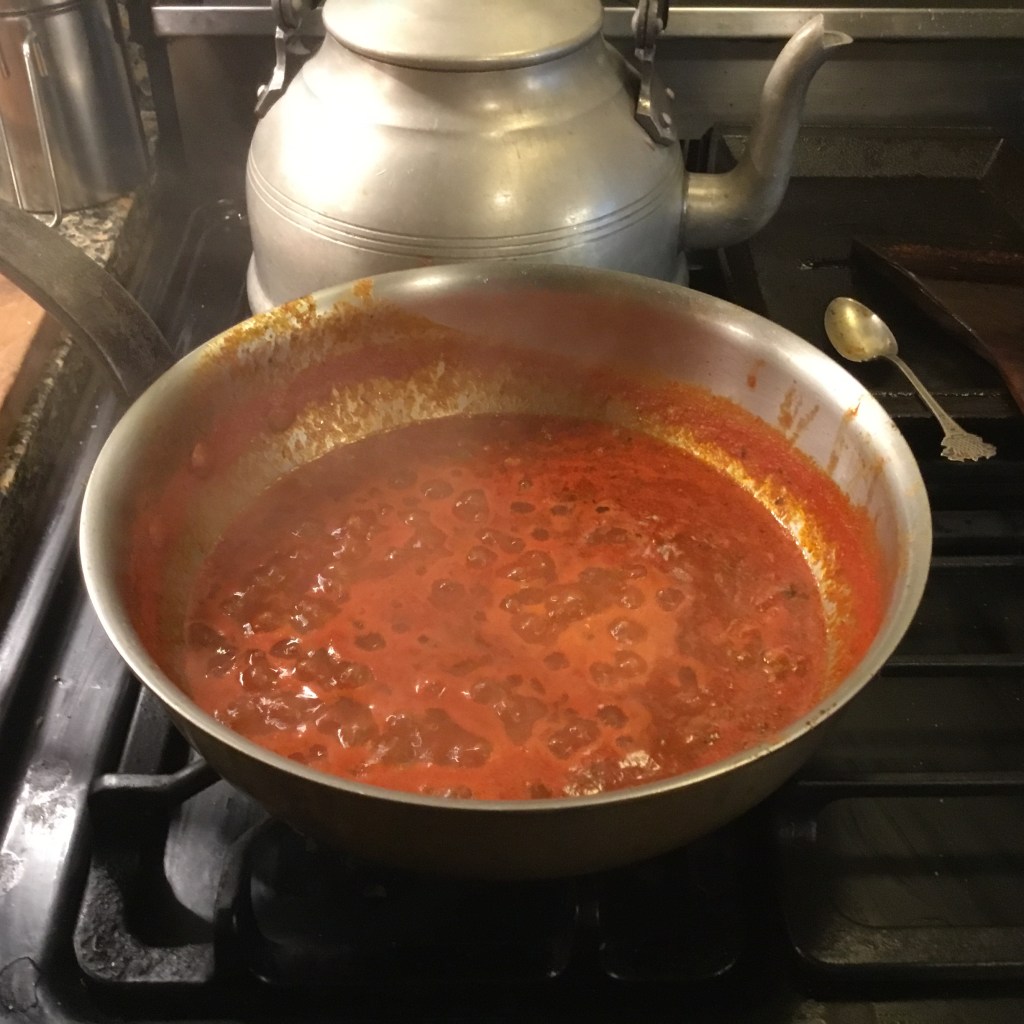
This is a typical meat sauce, and the quantities are determined by how many tortelli you need to sauce. I only had four, so I used fewer tomatoes, and piled on the meat. Saute some onion and pepper in olive oil, and then add the fresh tomatoes (I milled mine in a food mill, so they were peeled and seeded at the same time). The Tuscans would use chopped meat in a sauce like this, but I had homemade Italian Sausage, and some hamburger I ground myself, so I browned those in a skillet, and added those to the sauce. My customizing was to add some oregano, and two actual Italian ingredients, both of which come in tubes like toothpaste tubes, which are tomato paste and garlic paste. Naturally, there is also salt and pepper in it.
Fall Greens
The filling for the tortlli is as simple as you want to make it, but I used the traditional greens and ricotta combo. The Tuscans use everything from spinach to thistle, but we had fresh kale at the Festhalle farmer’s market, so I went with that. I wilted it in olive oil, shredded it, and added it to some homemade ricotta.
Lots of Filling
The judgement call comes when you decide how big to make the tortelli, and in what shape. I went by the Tuscan saying that tortelli should have a “wide footprint,” so I made mine big enough that just two would cover a plate. I also used a technique that I had never seen before, that was on an Italian website. I started with homemade sheet pasta.
DIY Tortelli
I cut fairly wide strips of this pasta, about twice as long as wide. The next trick is to put a spoon full of filling on one side, and then fold the pasta over itself. This eliminates the fiddly business of cutting the pasta into squares, making the tortelli, and then trimming them yet again with ravioli cutter. I just put water around the bottom edge, and used the back of a fork to form a waterproof seal. Tortelli should be boiled in water as salty as the sea for ten to twelve minutes, strained, plated and topped with sauce. Add some grated parmesan, and have your own festival. We did.
Anyone who has spent much time in the South has come in contact with our insect scourge, the imported Fire Ant. After sneaking in on a banana boat, literally, in Mobile, they have spread from here to California. Their bite is bad enough that it can literally leave a scar. I have plenty.
Worst of all, their preferred habitats are lawns and veg gardens. People spend millions of dollars on chemicals to kill them. My solution is the Occam’s Razor of pest control. I just pour boiling water on them. It is both environmentally friendly, and emotionally satisfying.
You could run across your lawn with a kettle of boiling water, or you could do what I do, which is to take the fire to the ants (pun warning). My favorite setup is above, all Swedish, an Optimus stove and a Trangia kettle. Maybe I should get a dragon tattoo.
Killing fire ants, and playing with matches. How appropriate.













 Southern Fusion Cooking