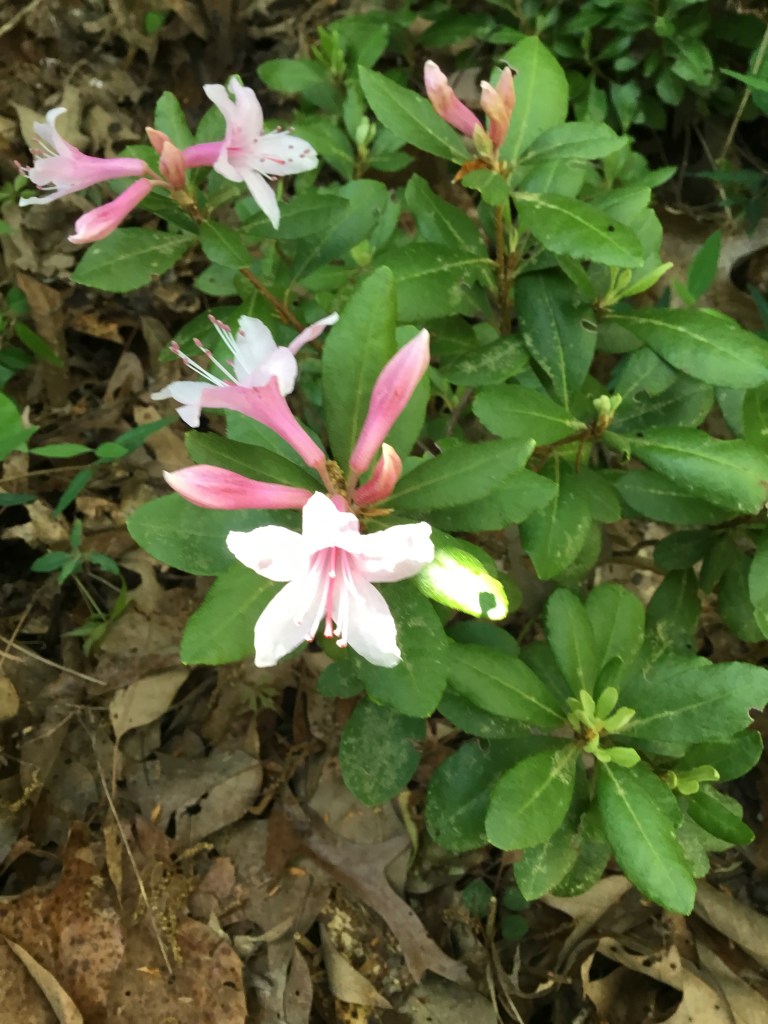
When people think of Florida, it’s either about beaches, or the trailer parks where Florida Man and Florida Woman live, although I also think about possums who drink cognac. They certainly don’t think of evergreen Rhododendrons. However, right there in the panhandle is the rarest of the rare, Rhododendron chapmanii.
Endemic to just around six counties in Florida, this plant is still sometimes listed as a variety of Rhododendron minus, the other deep South rhody. I have both, but the resemblance between the two is slight. Chapmanii is both state and federally endangered, and unfortunately lives exclusively on private timber comany property. In short, the long term survival of the species is in no way assured.
Fortunately, I was able to purchase two nursery propagated plants for my ark of a garden, and these guys are tough. My first plant is about to cross twenty years of growing out in the woodlands of Oak and Hickory. It has also made it through two of the worst droughts in memory.
The Survivor
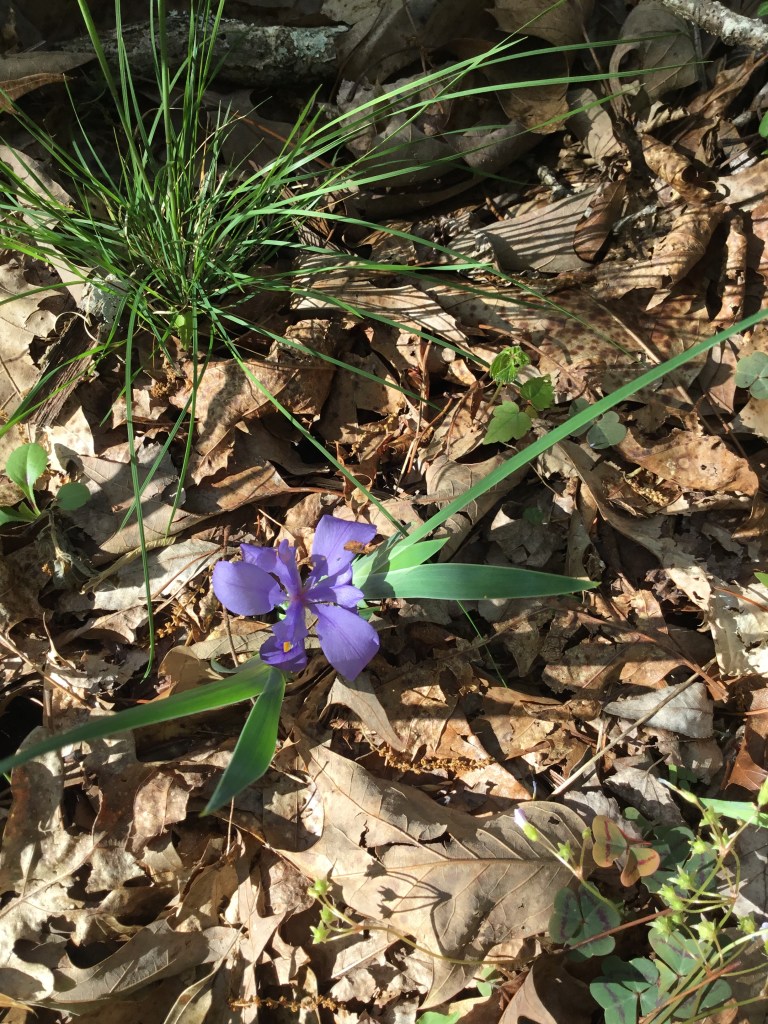
Once again, for those in other hardiness zones, this species blooms at the same time as Vernal Iris (Iris verna). This one happens to be between my two plants.
Iris
Like the Ark of Taste, we need an Ark of Plants as well. Your local friendly bees will thank you with pollination.
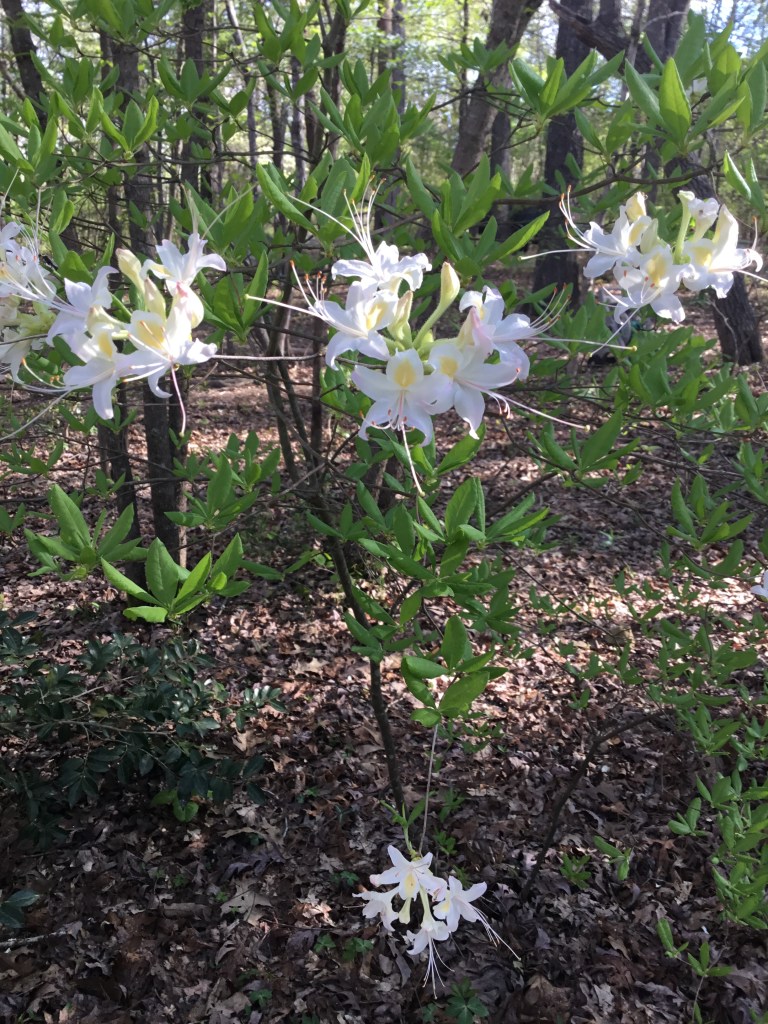
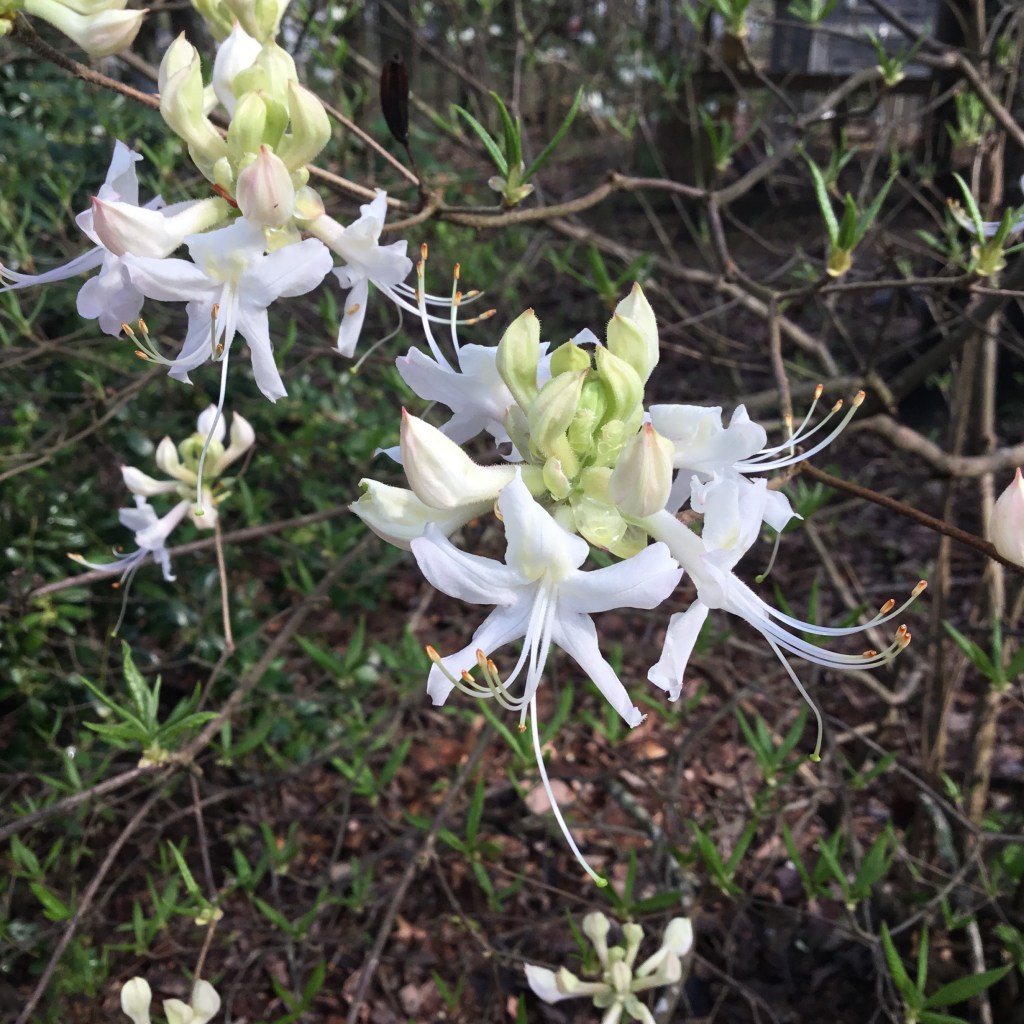
We are officially in the mid-season of the native’s bloom cycle, and the color of the day is white. Rhododendron alabamense is the showiest of these, with that prominent yellow blotch on one petal. Though said to be a small plant, I have one at 6.5′, and another at 7′.
Clouds of White and Yellow
This species was first described by the famous botanist Dr. Charles Mohr from the University of Alabama. Furthermore, he first found it in my home county of Cullman, and naturally, he mistakenly placed it as a variant of a different species. It was not until 1921 that it was recognized as a distinct species by the scientific community.
Not every plant has as dark a yellow dot. This one is faint enough that it is not visible on a photo.
A more sedate species is Rhododendron atlanticum, a native of the east coast, from Georgia to Pennsylvania. Also known as Dwarf Azalea, this is one that really is small, usually no more than 2 or 3′. It makes up for it by spreading underground, and forming colonies. It also has small flowers.
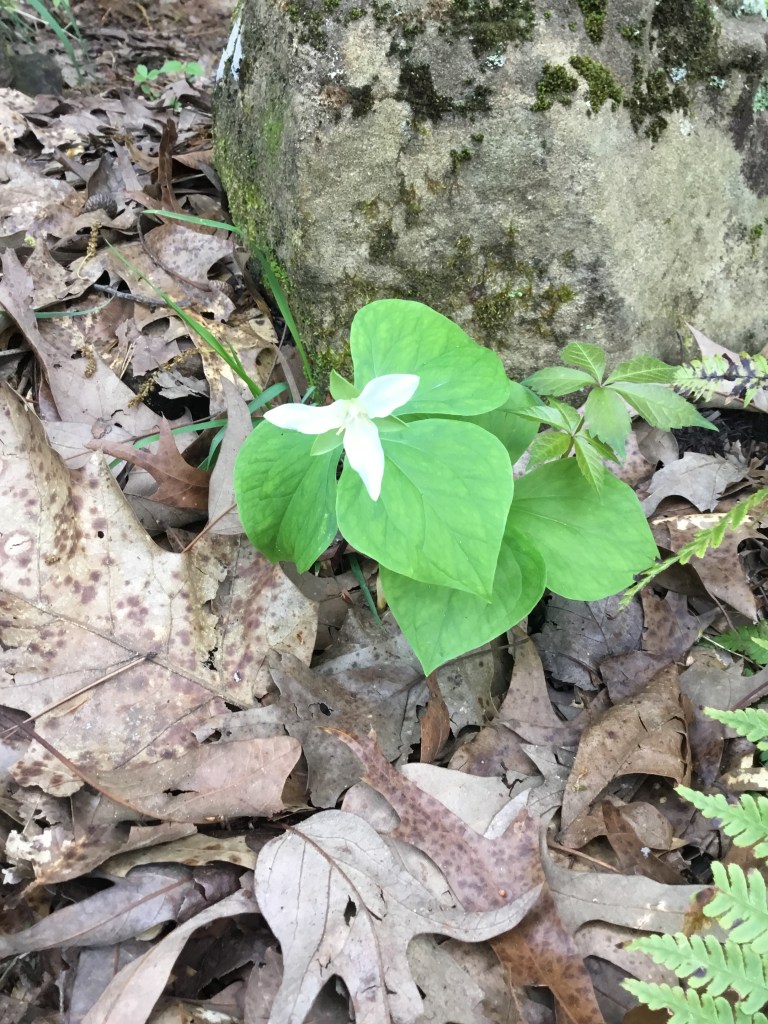
For people in different hardiness zones, these plants bloom at the same time as Trillium grandiflorum. Here’s one blooming now in my rock garden.
I went to my local chicken purveyor with the intent of buying four Rhode Island Red chicks to add to my flock. They had a grand total of one Rhode Island Red chick. Therefore, I went with a descendant of theirs, the hybrid ISA Brown. Et Mon Dieu, the chicken turned out to have been developed in la belle France.
Technically, all chickens are hybrids anyway, though many breeds have been established for many years, and one generation looks much like the previous one. Apparently that is not true with these birds, though that could easily be just Monsanto like agit-prop disseminated by the company that owns the patent on this bird. Considering that it has been around since 1978, someone has obviously bred some of these fowl, and it would be interesting to find some stories based on first hand experience.
At any rate, the story began in 1975 with the French Ministry of Agriculture, the head of which was determined to produce a first rate bird for commercial Big Chicken. The project was headed by the firm Institut de Sélection Animale, which is where the name ISA comes from. Three years later, these birds were the result, a hybrid of many varieties, though which ones are considered a trade secret; but the most notable one is the Rhode Island Red.
As a bird designed for Big Chicken, these chicks mature quickly and lay eggs at a fast and furious rate. They are variously said to be short lived, or disease prone, but it is hard to believe that Big Chicken would fall in love with a sickly bird: disposable, yes, but sickly, no. A few small owners say they can live as long as eight years, if given proper care, instead of stuck in a battery cage. As it turns out, this variety has become a favorite with backyard chicken growers, though my chickens are actually in my front yard.
One of the best things about this bird is that it is a sex-link chicken, which means the sexes are different colors. Therefore, if the chick is brown, it is a hen; if it is white, it is a rooster. Thus, these four are definitely hens.
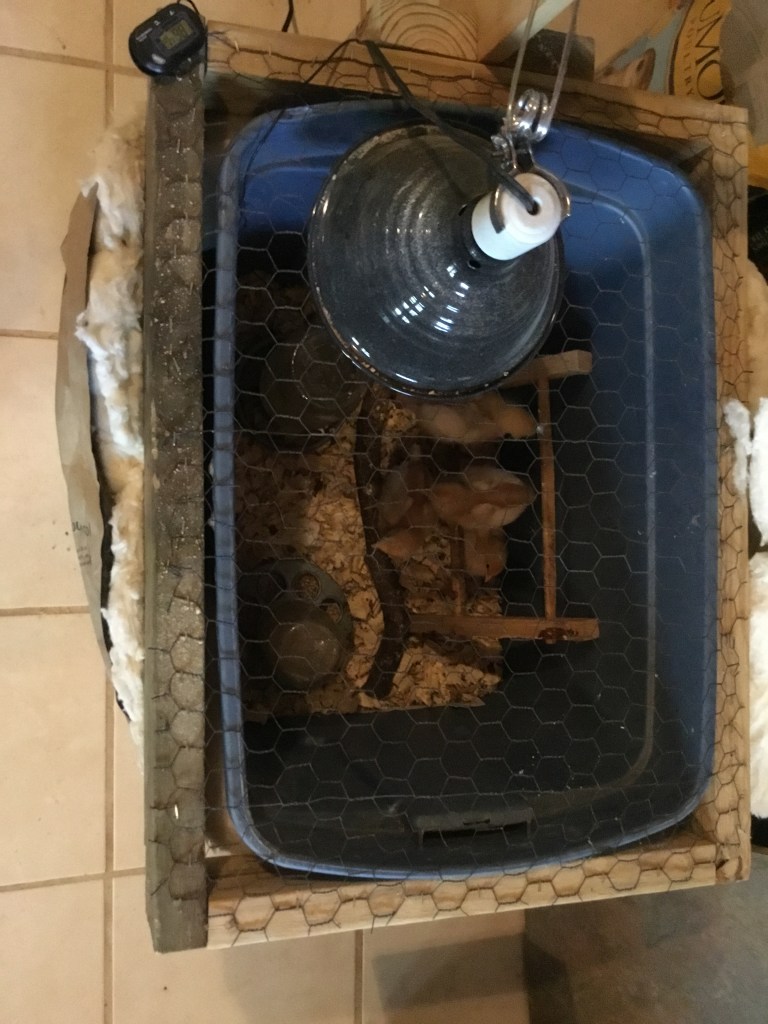
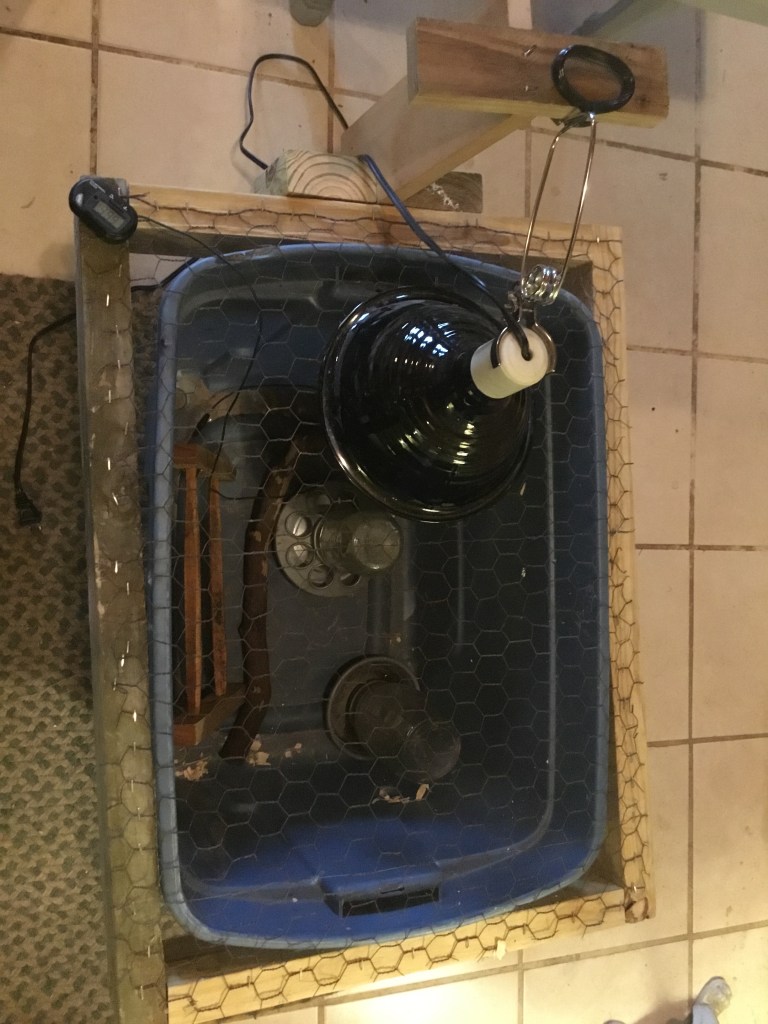
After a week here, they are already flying around the brooder, though there isn’t much runway space in that plastic container. I still put a lid on the insulated contraption to keep them from flying around our basement, or getting burned by the heat lamp.
The Heat is On
I have already found them on the top perch, or just cold chilling, sitting on top of the water or feed jars. This morning all four were practicing flying at the same time, which resulted in some spectacular crashes.
Chances are good that my in-laws are in line for some free eggs, as we already regularly have three dozen sitting around our kitchen. Eggs, that is, not in-laws.
Rhododendron austrinum can make a giant shrub, if grown in the right conditions. It has taken over a large portion of my rock garden. How big does it get? So big that I could barely fit it into the frame of my picture.
Wide and Tall
Obviously, this species will make a multi-stemmed shrub. Though the max height is usually ten feet, this one is twelve, and still growing. I have one more normal sized plant. Swallowtail butterflies love both.
Spring is Here
This is definitely not the hardiest of the natives, but it still grows like crazy here on the southern end of zone 7. I will also add, they grow equally well without any fertilizer. Neither of my two plants have ever had any.
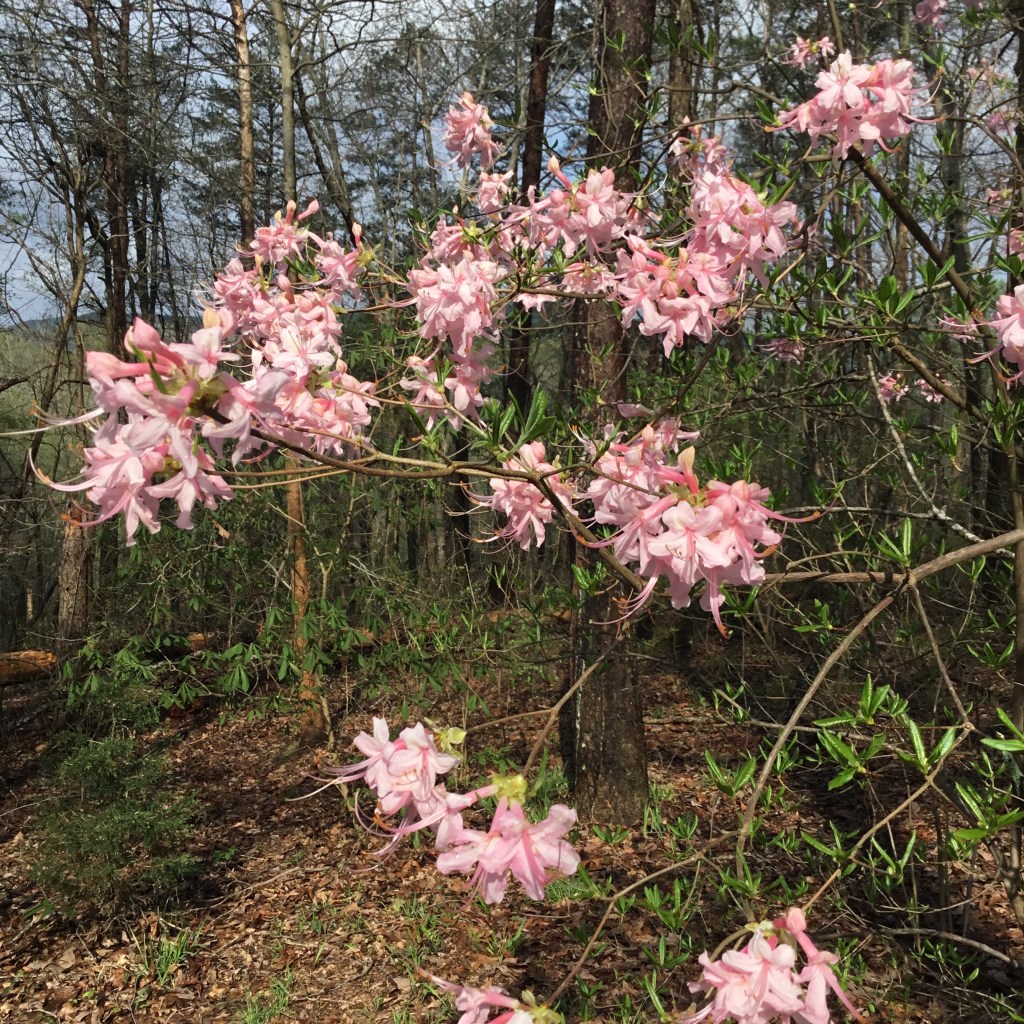
Pollinators, like bumblebees, love plants with lots of pollen and flowers, and the deciduous Rhodies fit that description perfectly. Without lots of pollinators there would be no food. Native Rhododendrons get the bugs off to a fast springtime start. And do they ever bloom like crazy. The most common one in the Southeast is Rhododendron canescens, and it grows wild throughout our property.
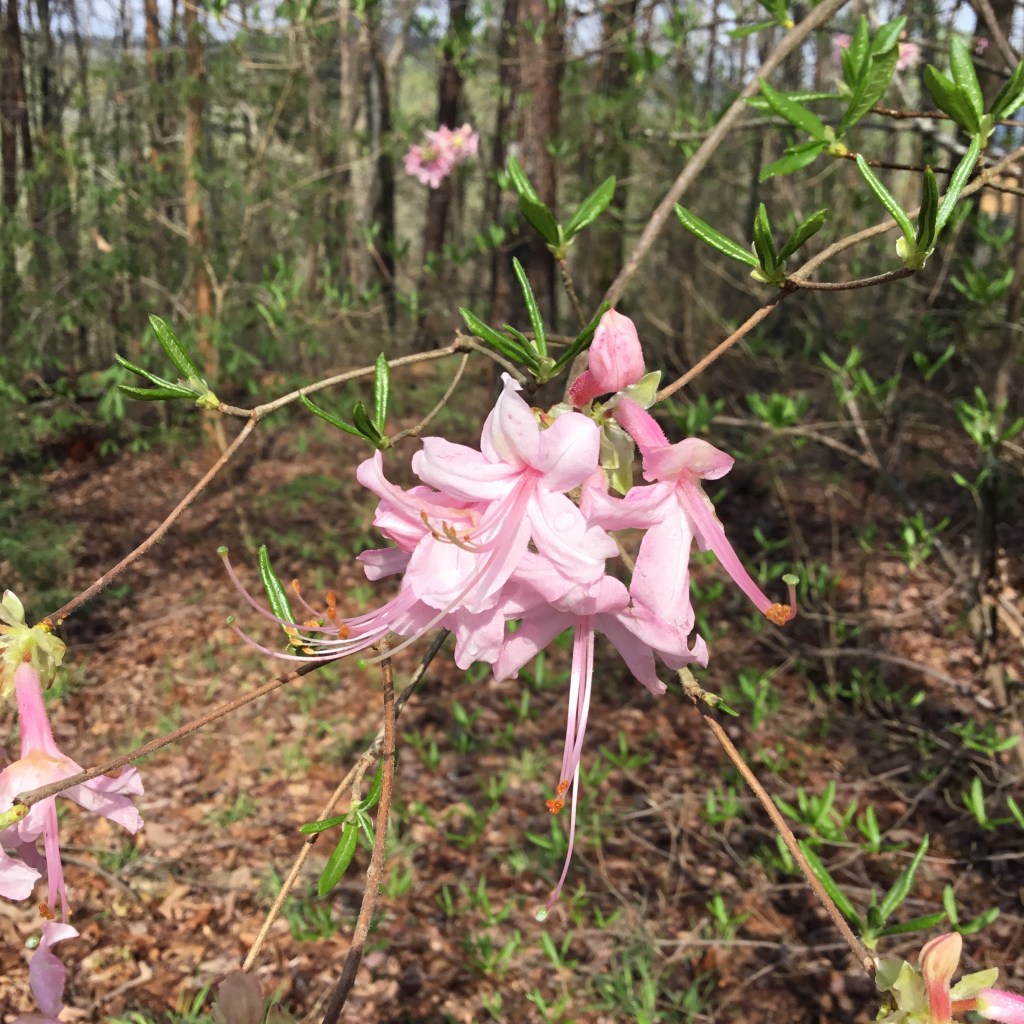
More Common Pink R. canescens
All these pictures are current, and that is one honking large shrub. The great Lady Bird Johnson Wildflower Center in Texas says R. canescens never gets more than eight feet tall–this one is 9.5 feet, and still growing.
The flower structure is fascinating, and helps to explain the common name of “Honeysuckle Bush.”
Typical Bloom Cluster
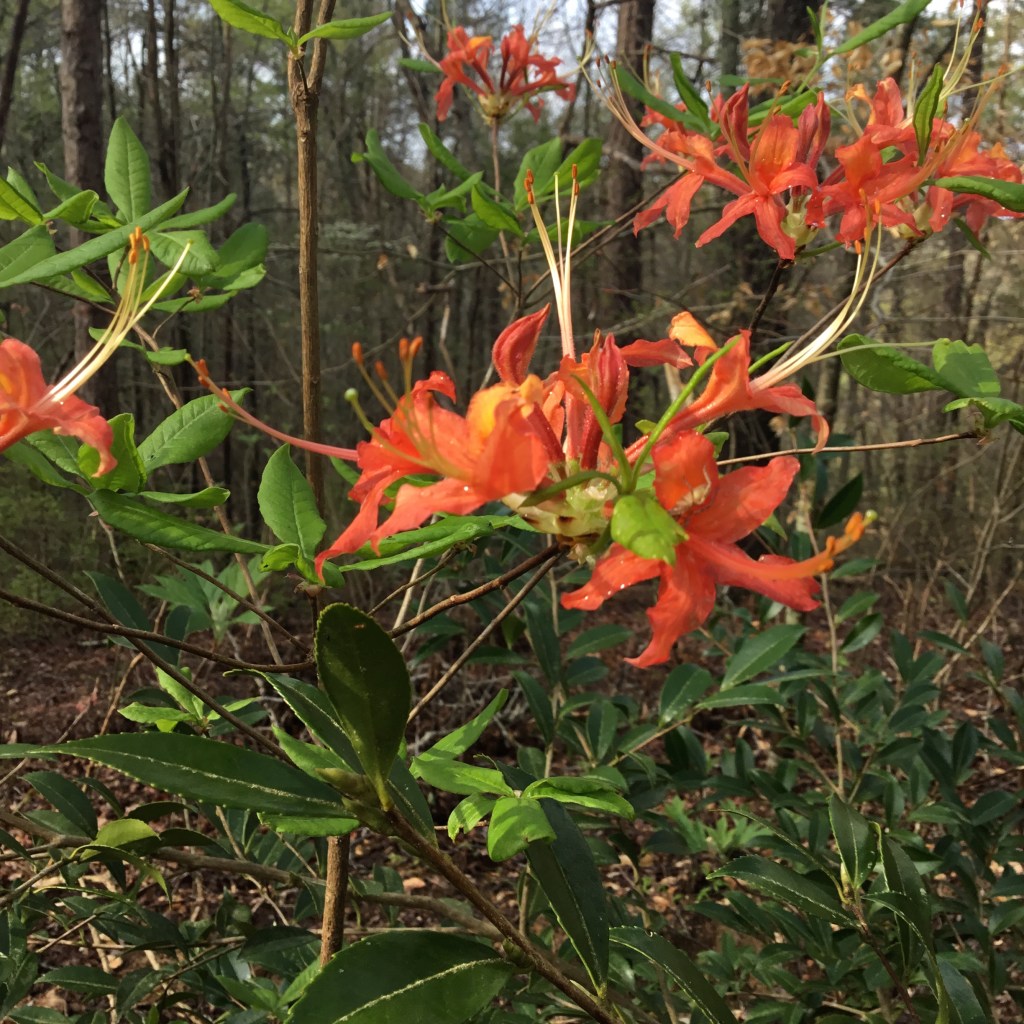
Though not native to our property, the other very early blooming Rhody is Rhododendron flammeum, also known as the Oconee Flame Azalea, as deciduous Rhodies are often called “Azaleas.” It’s an eye catcher.
R. flammeum, bordering the Outdoor Kitchen
This plant is even more attractive close up.
Exquisite Color
These require marginally more water than the R. canescens, but we never water the wild ones anyway. That’s the way they have survived for centuries on their own. Here’s the view into one of our Rhody groves. I’ve lost track of how many species we have, and I will write about the others, in the sequence of their blooming cycle.
Just the Start
The yellow one that is about to bloom is Rhododendron austrinum, and it makes a massive plant with hundreds of blooms. I’ll write about it next. We are going to have the happiest bees in the neighborhood.
This Fort Walton Beach possum allegedly stole a $30 bottle of good French Cognac from a liquor store, and drank it all. It was given fluids (?), and relocated to a wildlife refuge. Whether or not it went through rehab is not reported.
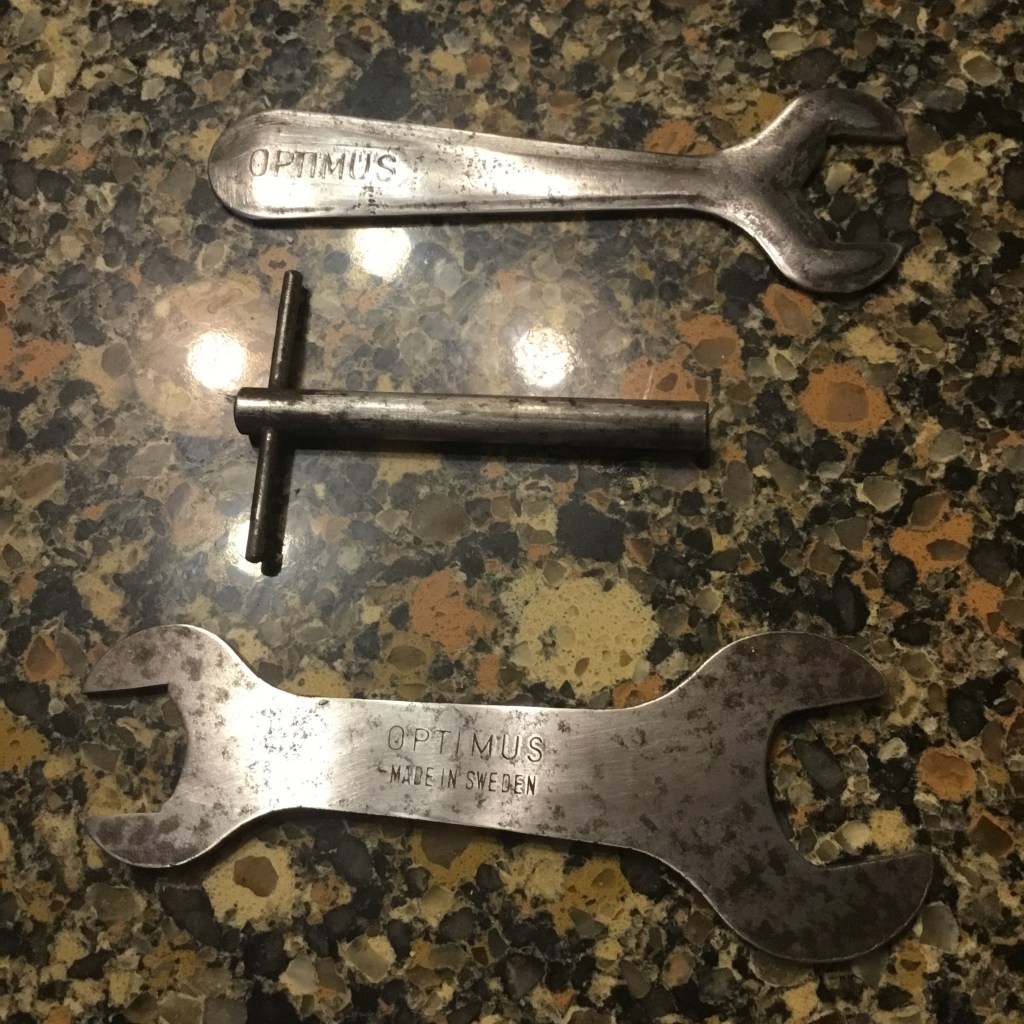
Some days you feel like Captain Jeffrey T. Spaulding (played by Groucho Marx), who claimed that one morning he shot an elephant in his pajamas. Then he wondered how an elephant got into his pajamas. I feel that way about finding these original Optimus tools on Fleabay.
The wrenches are used to remove and replace the burner assemblies, and I have two different burners, and at least one more very expensive version is available. The small tool is used to take off the burner jets, though it can only be used on one of the silent burners.
These came from across the pond, in Brexit Britain. The price was right, and the shipping was fast. Not being a collector (cough, cough), I will take off the rust and polish these. Sandpaper, a micro-abrasive, and then auto polishing paste is the sequence I use. Then these guys go to work.
They must be quite old, and I could find out by looking at all the old Optimus catalogs on the interwebs. I am altering the size of the wrenchs by a half millimeter or so, to fit the modern stove I have, though I should point out that the 1970’s constitute modern for me.
Old school is still the only school. Here’s the sort of final result of the rehab.
Being a gear head is like being an immortal deity, in that there is always something else that needs to be done. Stitch up this, repair that with duct tape, or punish the wicked. The last is my favorite–just ask some of my former students.
It Won’t be that Shiny for Long
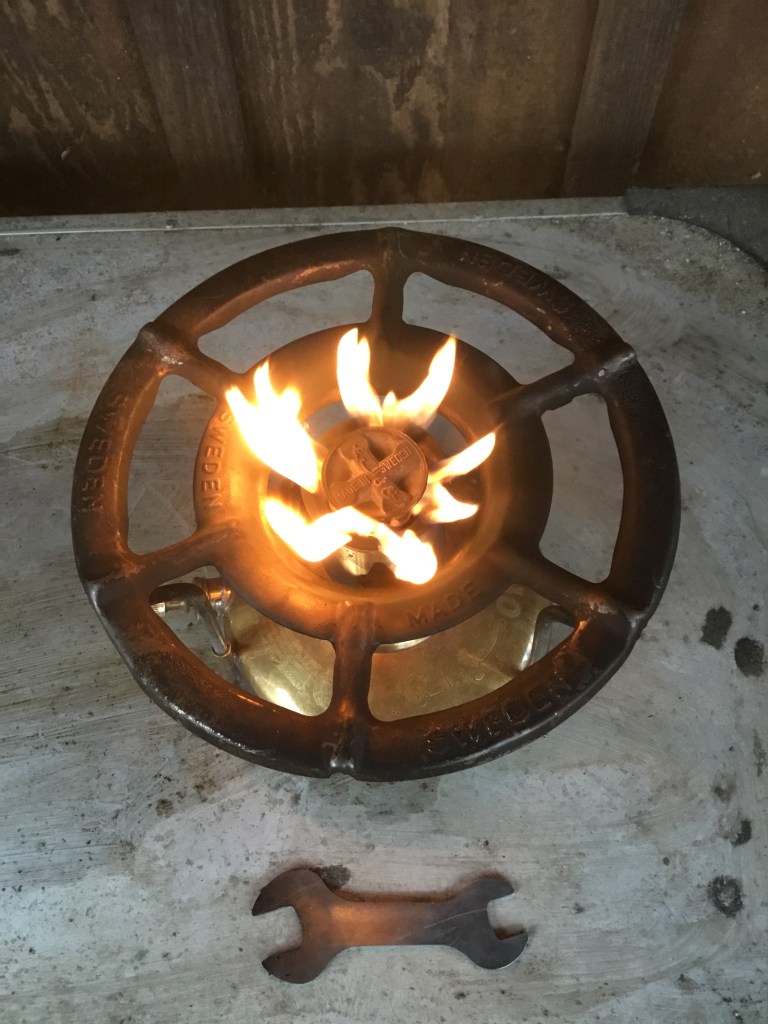
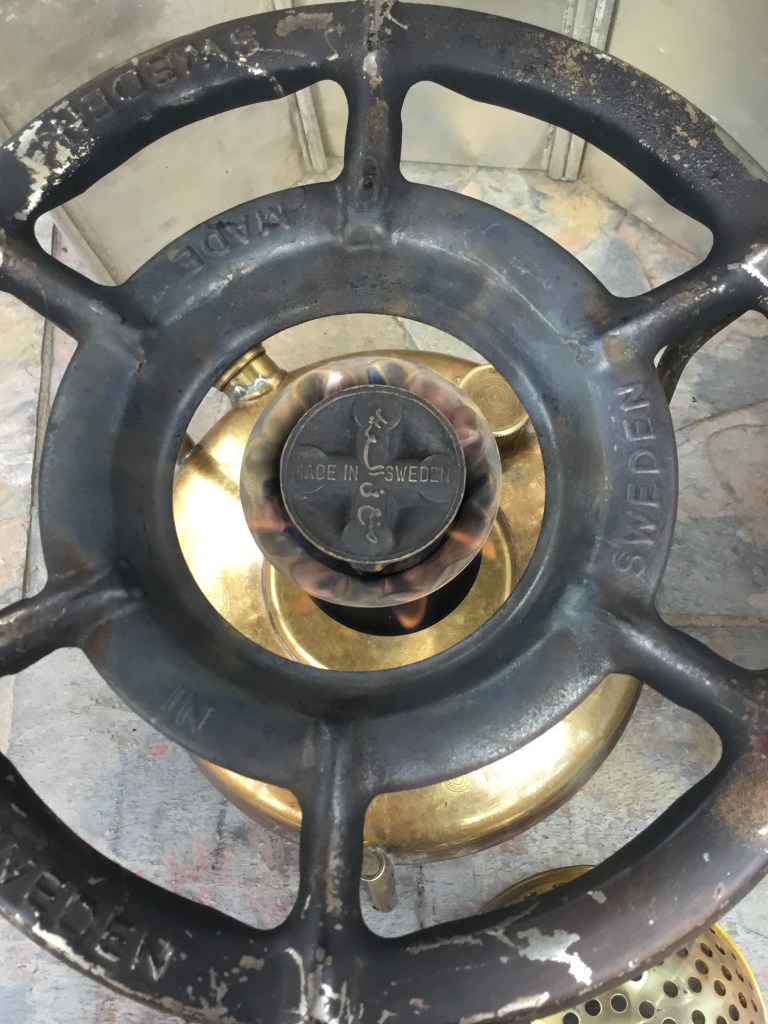
That’s the stove being primed with alcohol, though not the drinkable kind.
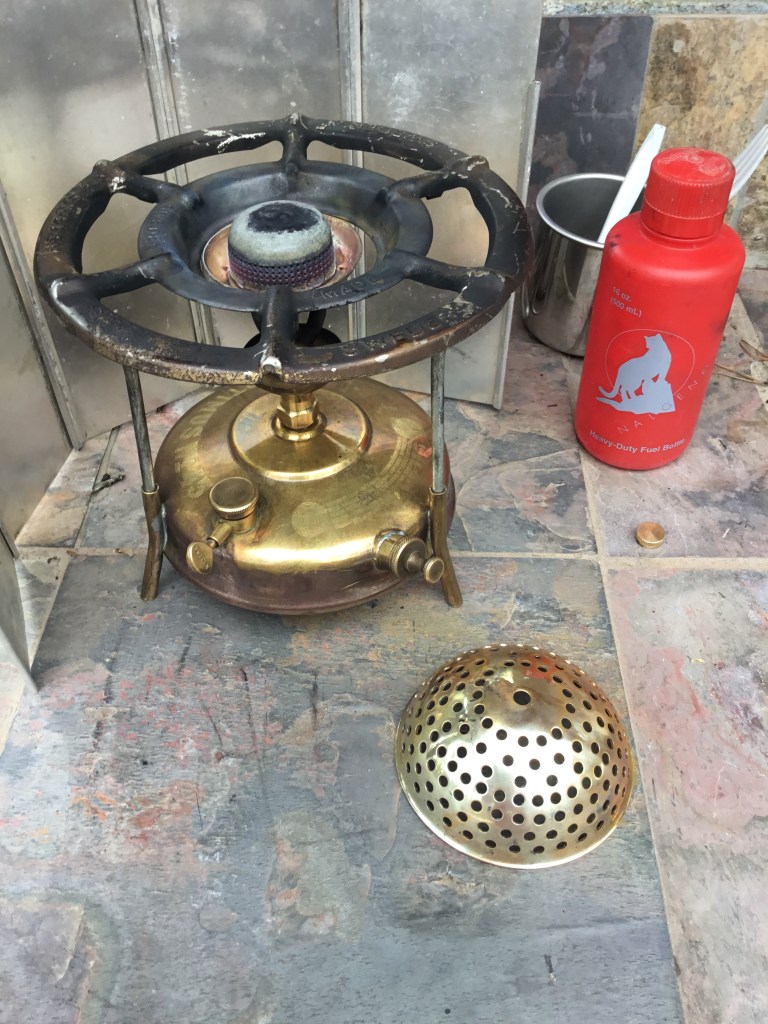
I have added the windscreen to my Optimus 45, and it didn’t quite fit the brass flame spreader. I suspect these reproductions were made by different manufacturers in either India or China/Taiwan. Looking at photos of the original Swedish ones on the interwebs, I concluded that they were meant to friction fit into one unit. A bit of filing with a round file accomplished that purpose.
Ready to Assemble, Prime, and Light
The number of add ons for this stove are staggering, down to and including rubber feet for the brass legs, which I will pass on. To keep your house from smelling of kerosene, the fuel tank has a reserve cap, which screws onto the end of the pump while the stove is in use–very clever. Put on the roarer burner, fill the round reservoir, aka spirit cup with alcohol, and slide the wind screen/flame spreader combo on top. It now fits perfectly. Then light the alcohol, and wait for the kerosene to gasify. After that, it’s time to cook.
A magnum opus is in the works by moi about how to work the various kerosene stoves properly. If it’s like some of my woodworking projects, it should be finished by the next decade, around 2030.
Even though we are down to four hens, after two of ours were killed by the neighborhood Bloodhound, we still can’t eat all the eggs they produce. At last count we had 27 eggs, and the number expands daily. So naturally, we are going to buy more baby chicks, four Rhode Island Reds, as an insurance policy against any more dog attacks. Excess is the American way.
My brooder design is the product of some research. It consists of a plastic storage container, a lid made of scrap wood and chicken wire, a couple of commercial feeder/waterer devices, some perches, and a heat lamp. Each was chosen for a reason.
After I stopped laughing at all the experts on the internet who said that plastic boxes were more of a fire hazard than cardboard boxes, I quickly decided the real fire hazard was the heat source, which is usually an infrared heat lamp bulb. I went instead with a ceramic “lizard light,” which is a standby for reptile owners. Mine has both a heat control and a digital thermometer, and it emits no light, so the chickens do not lose their ever important circadian rhythm. The ceramic socket on the lamp is also a must, as those lamps get roasting hot, and melted plastic socket is a disaster. The chicks stay plenty warm with this lamp.
Warm and Safe
The waterer and feeder are both Little Giant brand, made by Miller in the US. They are superb, and all you need are some mason jars to go with them.
The last part of the chick’s crib are the two perches. The long one is some drift wood of Mountain Laurel. The big practice one I made from scrap trim. Waste not, want not.
The bottom will be lined with newsprint, then paper towels, then pine shavings. The chicks will be able to scratch, perch, eat, and drink. Kind of like me. And then I had a McGyver moment.
Extra Insulation
If it gets really cold, I just pull out this old countertop piece to keep the heat in. Now Melanie Jane and I can sit in the basement and watch Law and Order, while the chicks grow up next to books such as History and Class Consciousness, A Southern Renaissance, and The Savage Mind. That last one was written in French, and the title is possibly the greatest pun in history. LaPensée Sauvage can mean either The Savage Mind, or Pansies for Thought.
So we will have chicks chirping behind us, while we are entertained by the semi-fictional mayhem of NYC. Another favorite book of mine is The Country and the City. I’ll take the country, and the city can remain an image on the TV.
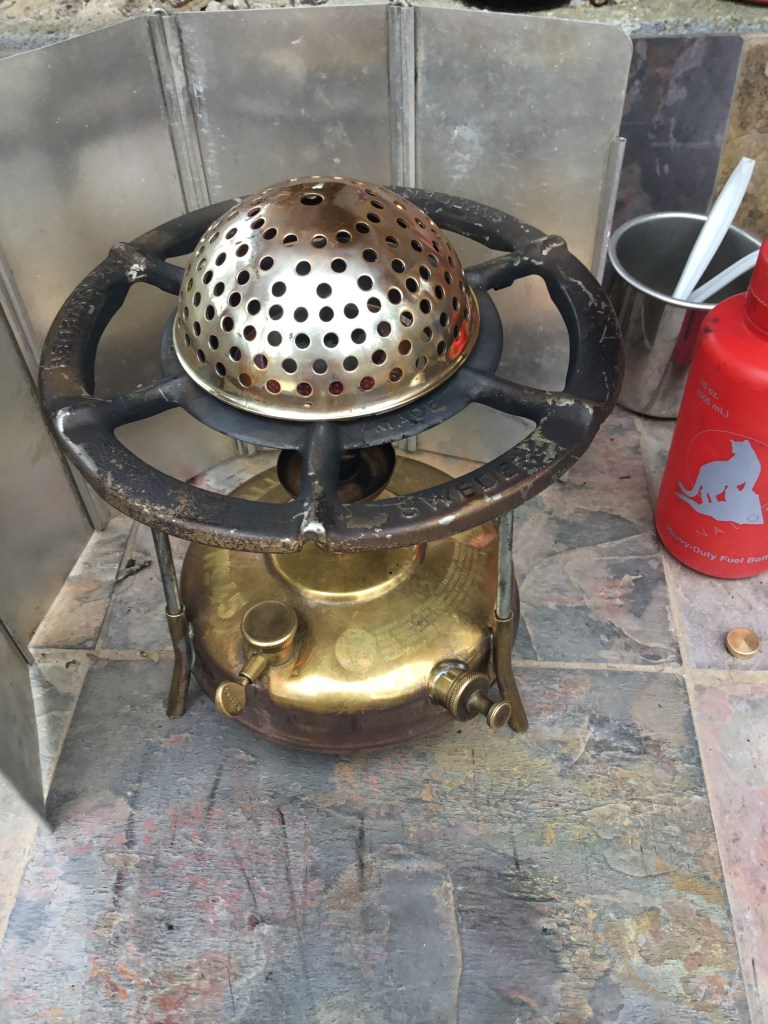
The great things about decades old designs are that they work consistently, last forever, and acquire all manner of add ons. This seventies vintage Optimus 45 kerosene stove has any number of improvements and additions. I will go from the most complex to the simplest.
Cobra Burner
The Cobra Burner, aka the Silent Burner, was originally made for the Optimus 48 stove. It didn’t take long before campers found out it also fit the 45. Though no longer made in Sweden, these burners are widely available, as they are made in at least two south Asian countries, where these wonderful stoves are often the main cooking utensils used. Allegedly, they are widely used in Himalayan base camps–by the guides. I bought my parts from Julian Shaw in the UK, via fleaBay. He knows his stuff.
This was my first choice for a Christmas present. It turned out the complete assembly was comprised of eight parts, with no instructions for assembly. I suspect this burner was made in India, which is the primary source of reproduction stoves of this variety (the other is Malaysia). There are also very high quality versions of this stove made in Japan, at an also very high quality price.
After some research, I assembled the burner in the proper sequence. The jet was clogged, and needed a thorough cleaning to even operate. Then it still roared, though less than the original burner. On the sixth trial run, the magic happened–it began burning “silently,” which is actually a very quiet hissing sound.
After a few minutes of observation, I came up with what the American philosopher Charles Sanders Pierce called an “abduction,” which was his term for the process that is used to create a hypothesis: The sound and heat level was determined by the amount of pressure in the stove tank. I tested it again, and was proven to be correct, as all it took was more pumping with the pump on the right side of the stove, to produce the classic blue flame.
Roasting Hot
Heater Dome
This simple device fits any stove with a ring, regardless of manufacturer, and produces prodigious amounts of heat. There are pictures on the internet of these glowing red. After reading Into the Wild, I am never going to use this inside a tent, which was its original purpose. It will make a great hand warmer in the outdoor kitchen during the winter.
Hot and Getting Hotter
Flame Spreader
I also upgraded the old Roarer Burner with a flame spreader. It really helps to intensify the heat from the original burner.
Red, not Blue, FlameBrass Flame Spreader
This flame spreader just sits on the top ledge of the burner. The next addition is a companion brass windscreen.
My wife Melanie Jane thinks this thing looks like a baby Dalek, after the alien villains in the BBC show Doctor Who. However, to paraphrase Gertrude Stein, a gear head is a gear head, is a gear head, is a gear head.















 Southern Fusion Cooking