Lard Squeezer and Rendering Leaf Lard

Squeezer Time

I stumbled across this design after buying a used copy of Early American Wooden Ware for $1 from an Amazon seller. It was first published in 1942, but I have the revised edition done twenty years later. This well illustrated book was written by Mary Earle Gould.

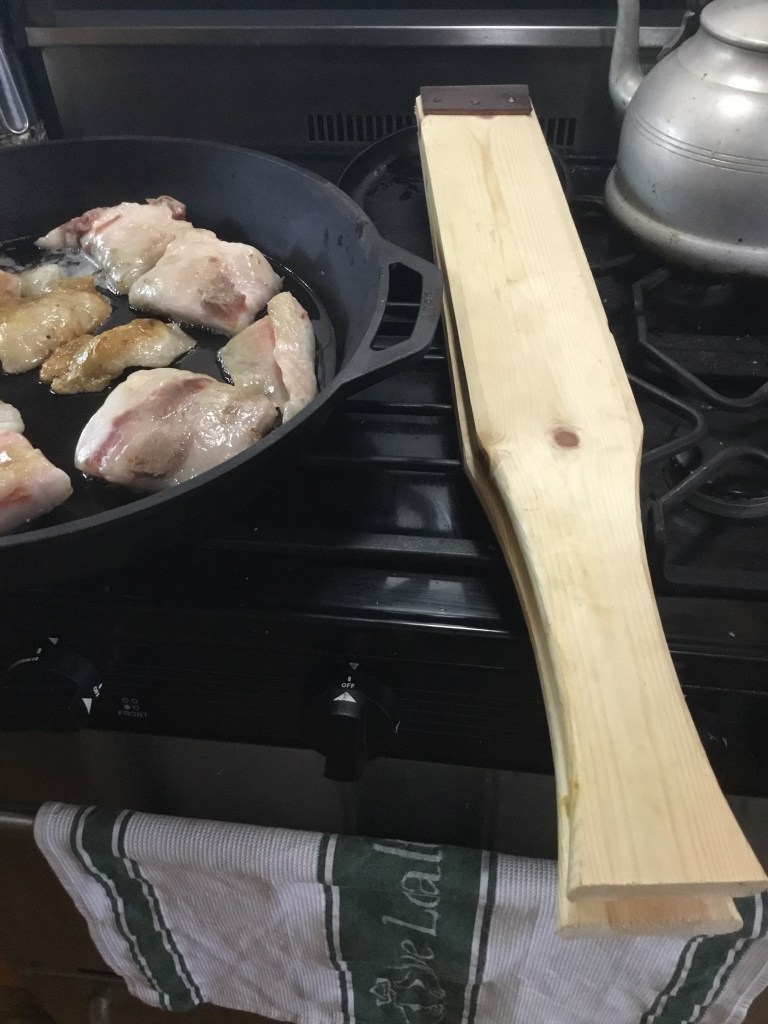
The squeezer was an industrial design from the time when lard rendering was a standard farm household affair. The hinge at the top is a scrap piece of leather, nailed to the two boards. The process is simple enough–heat the pork fat on low heat, and squeeze the fat out with the gizmo. It works inpressively well.

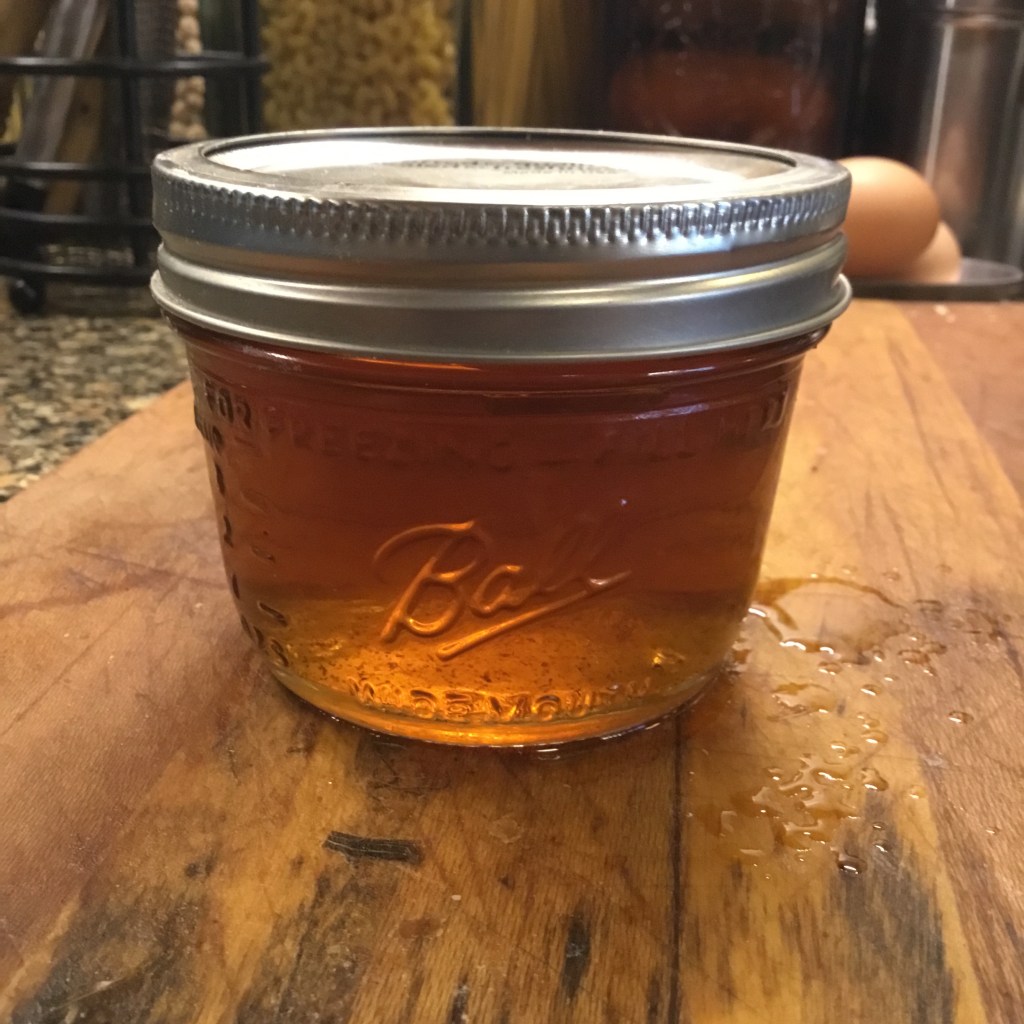
According to the French, there are five varieties of pork fat. Those include leaf lard, back fat, bacon fat, caul fat, and scraps. The finest is leaf lard, internal fat from near the kidneys. Two and a half pounds of local leaf lard yeilded three pints of lard.

I really used primarily one tool making these–a spokeshave. It is a quick and easy project, which will make you free from buying disgusting supermarket lard ever again.
The McRib Sandwich is Back! Be Very Afraid

Of all the abominations found on fast food menus, there’s the McRib sandwich, and then there is everything else. Technically a “restructured meat product,” it is literally nothing more than a pile of squashed pig organs.

Of the three main components, the pig heart is the least revolting. That makes the McRib an ideal Valentine’s Day present. Give your sweetie one of these as a present, and the chances are good that you’ll never have to buy that person another present again.

The tripe portion is probably the most nutritous of the group, though not normally associated with barbecue sauce. However, it will take a heap of sausage casings to make that sandwich.

The most exotic of the trio is the scalded pig stomach. The only possible use for this seems to be to make the ingredients as cheap as they can possibly be. The irony is that if you eat this, the same thing may possibly happen to your stomach.

So there you have it, the best example of you don’t even get what you pay for with fast food. A McRib is like a McJob or a McMansion–all image without real substance. This sandwich should run for office.

Outdoor Kitchen, Old School, Part Three–Smokin’ Smokehouse

The Smokin’ Smokehouse

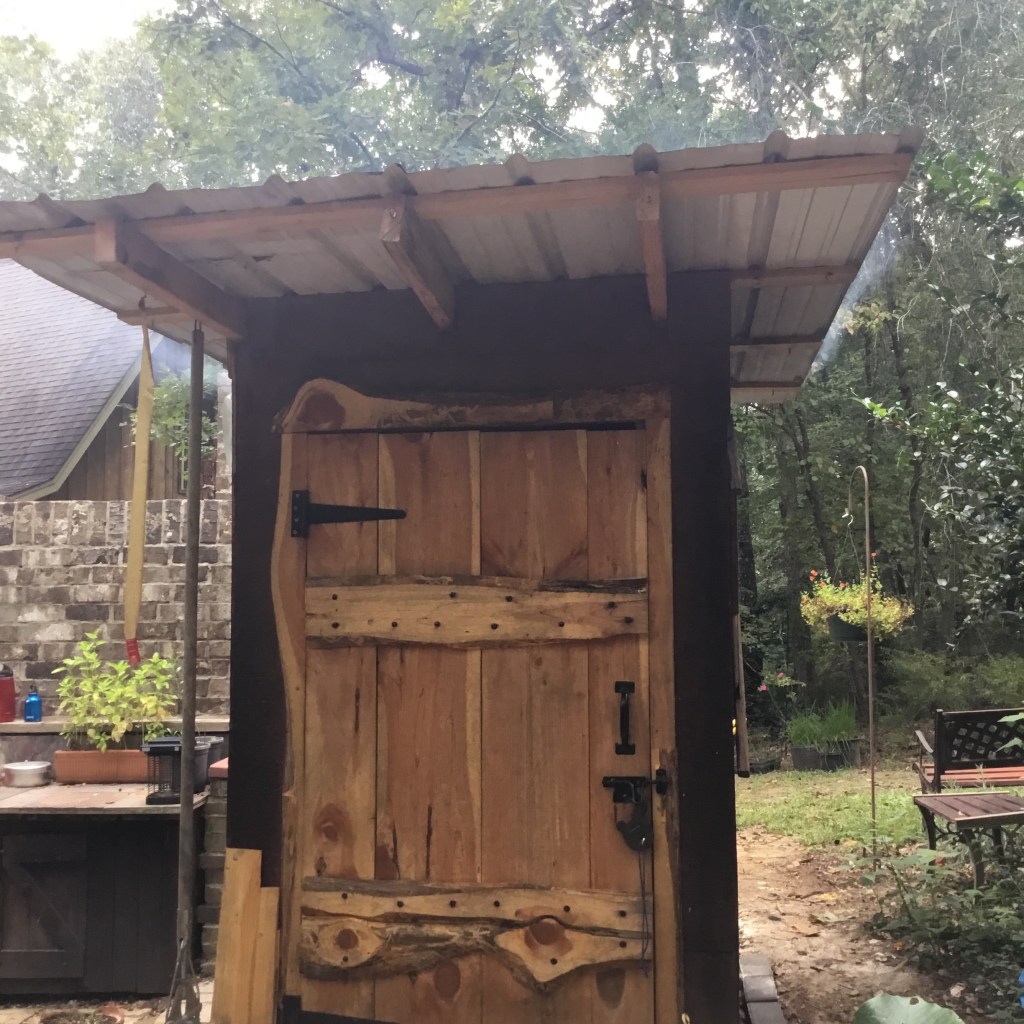
This rustic construction is a smoking fool. The few pine shingles on the left are just the beginning of what will be a fully shingled structure, eventually. When that is finished, it will be as rustic as it gets, befitting of an all wood burning old school outdoor kitchen.

Here’s another piece of wood burning equipment:

Repurposed to the Great Outdoors

This old steel wood stove had been hanging out in our basement for a good fifteen years. Now, with the connection to the smokehouse completed, it is the smoke engine supreme. It is also surrounded with an endless supply of firewood.

Now we need some meat–

Sorry, Pig

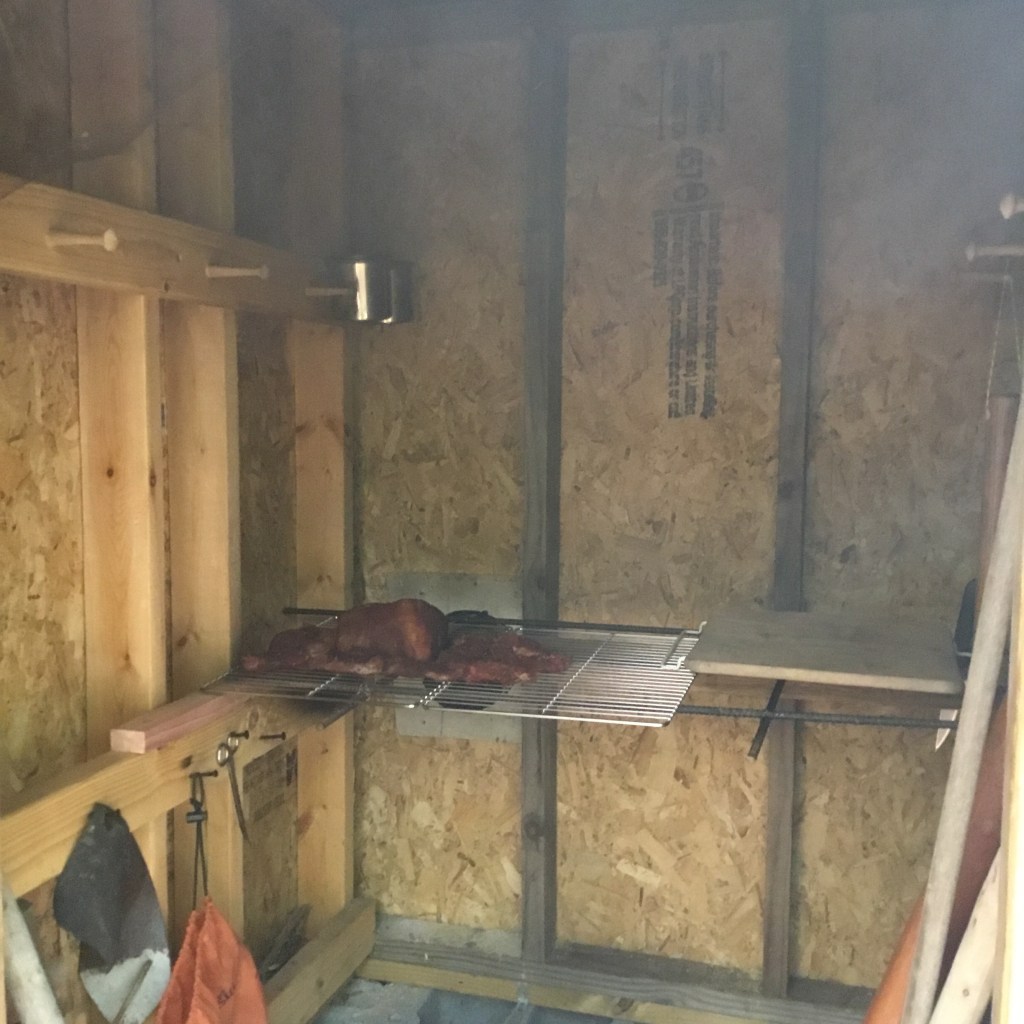
That’s all pork shoulder, some sliced into strips for Tasso ham, and the rest left for barbecue. No secret rubs for the barbecue here–we just use Galena Street mix by Penzy’s Spices, which is a great small business. Too much more smoked meat –this weekend we have pork loin ribs and a salmon fillet–and I may end up as the poster boy for the fat bear photo contest.

Making Tasso Ham

Smoking!

Tasso ham is not really ham, in the common sense of the word, as it is usually made with pork shoulder, aka Boston butt. Going back in time, this Louisiana seasoning product was made from any trimming leftover from a hog killing. The only constant is the combination of spices and smoke, that make this a red beans and rice all star.

Ingredients

Sliced Pork Shoulder Strips

Paprika

Cayenne Pepper

Cinnamon

Salt and Pepper

This constitutes the dry rub, and the amount of each spice depends on the quantity of pork strips. At this point the pork strips need to dry uncovered in the refriginator a minimum of three days. Then it’s time to crank up the smoke house.

More Smokin’

This old school smokehouse, right down to the hanging strip of fly paper, is now fully operational. The external smoke source is an old steel wood stove connected via a stove pipe. This Tasso was smoked for two and a half hours with green Maple at about 150 degrees F. The char patterns on the Tasso in the photo are from the smoke, not heat. The big piece of pork shoulder in the pic was destined to be barbecue.

After the Tasso has cooled, cut it into cubes and chunk it into a freezer bag. Like the frugal ant in the ant and grasshopper fable, we will have smokey dishes all winter, while the grasshoppers have to dine on McRib mystery meat barbecue sandwiches.

Great Southern Cookbooks, Part Three–Big Bob Gibson’s BBQ Book, by Chris Lilly

Alabama is the crossroads of BBQ. We probably ended up with the “world champion pitmaster,” because we have every style of pork barbecue imaginable, and at least one place that serves a pineapple bbq sauce. We even had one poor sod who tried to sell Texas style beef BBQ. Tried.

In short, we have more BBQ joints per capita than any other place in the States. We have one large multi-state chain of restaurants, Jim and Nick’s, which was started by two chefs of Greek extraction. Nick Pihakis, an acquaintance of mine, besides having created this pig empire, is one of the founders of “The Fatback Project,” whose aim is to return pork production to small farms with free range pigs (he even bought his own meat processing plant.) This is definitely a battle cry for those of us who have had enough of the disgusting practices of “Big Hog.”

He’s only resting and Getting a Tan. I swear.

This book is so good, just go and buy a copy. Archduke Bezos sold me this excellent used copy for three bucks, and the restaurant is only about thirty something miles from here. There is a chapter titled “Ode to Pork,”(take that, Schiller,) that quote from one of my favorite Roman poets, Ovid, who died in exile, and the recipe for “Eight-Time World Championship Pork Shoulder.” Don’t read this book while hungry.

In case you didn’t figure out that this is one smart guy who wrote this, Chris Lilly married in to the Big Bob Gibson family, after he graduated from the University of North Alabama. It just occurred to me, that I forgot to ask MJ that most important question, “Honey, does your family own a famous BBQ joint?” The Big Bob signature white sauce recipe is in there as well, though it is also widely available online. Yes, there is a mayo based BBQ sauce. Pure Alabama.

Let’s leave with a pic of Big Bob sporting his goods in 1956.

I be Big Bob

Pig out.

Lard Help Us, Part Three–Rendering Lard

Liquid Gold

We must have been particularly good last year, as we received $125 of gift cards for Christmas to our two best local meat producers, and then a real kicker, a giant cooler full of meat from cows and pigs grown by my brother and sister in law. We probably have about a six month supply of meats.

The first to go were some pork chops, which were the finest I’ve eaten since childhood. I made two into schnitzels (take that, Deutschland), and the other two are now marry-nating. And that was one fat hog, so I trimmed the chops and rendered down some lard from the fat.

Low and Slow

The key to proper rendering is to melt the fat at the lowest possible temperature, so I set my 6000 BTU burner at its bottom level. The lard is rendered when the fat turns into rinds, and stops sizzling.

A Thing of Beauty is a Joy Forever

After a night in the fridge, the lard congeals and is ready to use. Never make any beef dish without it, and never buy commercially produced lard, if possible.

Lard Help Us–Again

Everyone should read the article from the website Raw Story with the following link, about how hydrogenated cottonseed oil replaced good old lard. It’s a perfect story about the decline of American food, funded by the industrial food industry.

How Crisco toppled lard – and made Americans believers in industrial food

Great Southern Cookbooks, Part Two–Real Cajun, by Donald Link (2009)

Real Food for Real People

There is only one thing to not like about this book, and that is I wish it was ten times longer. When you keep going back to the same cookbook over and over, you know it’s good. The “home cooking” part is the key here–these are recipes to use everyday.

Link has won a James Beard award, so home cooking may sound like an odd subject for such an accomplished chef. However, that is his strong suit, in that he cooks real authentic Louisiana food. He grew up in the region where people are comically referred to as “Coonasses,” as he notes in the book, which is a regional term for Cajuns.

The recipes? My favorites are the Chicken and Rice Soup, the Hush Puppies, the Hot Pepper Jelly, and the classic Cajun sausage, the Boudin. Cajun Boudin is mostly rice with liver and pork, but it is incredibly tasty. A Cajun seven course meal is said to consist of a Boudin, and a six pack of beer.

Strangely enough, Link is not of mainly French descent, but from German and regular Southern folks. That there are Cajuns of German descent is a surprise to many people from outside the South. And yes, those are the classic Cajun spices of Paprika and Cayenne pepper in the picture.

“Schnitzel Alarm” in Germany!

Achtung! There’s a schnitzel crisis in Germany, according to the authoritative website Deutsche Welle (that’s Voice of Germany). EU exports to China have caused a tripling of pork prices on the continent.

The cause–Swine Fever, which is killing pigs in China faster than an abacus can count. DW also reports that China plans to import three million tons of pork, much of it from the EU. And I have always loved sweet and sour pork.

So keep an eye on your pigs. Globalization is also a pig problem, and not just with Kapitalistenschwein (that’s capitalist pigs). According to the head of Germany’s Meat Association, “Sausage will definitely be more expensive next year.”

It’s time to invest in pork belly futures again.

Update! Denmark is considering building a wall along their border with Germany, to keep out the notorious wild German pigs, who may or may not be carrying Swine Fever–currently, there are no confirmed cases. The Germans have nicknamed it the “Boar-der Wall.” Now that is droll.

Hoya! Fresh Bacon Turns Grey when Cooked

No Curing Salt Here

My all time favorite congress critter has to be Mo Udall of Arizona, who would give speeches with titles like, “Who Needs Enemies When We Have Friends Like the Marlboro Man?” And that was to the American Cancer Society.

I’ve told this one before, but Mo’s favorite stump speech was about the time he allegedly had a group of native Americans yell Hoya! at him, every time he made a promise. (He did deliver a groundbreaking speech in 1965 on “The American Indians and Civil Rights.”) Hoya is the stuff you don’t want to step in when you’re in the horse stable, as he later learned from the Chief of the tribe.

I’m on my second pound of local pasture raised bacon from Hardwood Hills farm in Cullman county, and is it good! No, it’s fabulous. Despite the hoya that comes from various experts, it does not turn grey when cooked. Or as Othello would say, “Be sure of it. Give me the ocular proof.” That’s it at the top. It’s only marinated in a Saumure Anglais, without the curing salt, and it doesn’t turn grey. I guess people should buy better pork. And quote both Mo and Shakespeare, at the same time.

OffGuardian

because facts really should be sacred

Ruth Blogs Here

Or not, depending on my mood

A Haven for Book Lovers

I am just a girl who loves reading and talking about books

what sandra thinks

because I've got to tell someone.

LadiesWhoLunchReviews,etc

a little lunch, a little wine, a LOT of talking!

Margaret and Helen

Best Friends for Sixty Years and Counting...

talltalesfromchiconia

Tales of quilting, gardening and cooking from the Kingdom of Chiconia

Cyranny's Cove

Refuge of an assumed danophile...

Exiled Rebels

Serving BL since 2017

this is... The Neighborhood

the Story within the Story

Beauty lies within yourself

The only impossible journey in life is you never begin!! ~Tanvir Kaur

Southern Fusion Cooking

Country Living in the Southern Appalachians, USA--A little of this, a lot of that

Discover WordPress

A daily selection of the best content published on WordPress, collected for you by humans who love to read.

The Atavist Magazine

Country Living in the Southern Appalachians, USA--A little of this, a lot of that

Longreads

Longreads : The best longform stories on the web

WordPress.com News

The latest news on WordPress.com and the WordPress community.