
Creole recipes and ingredients are scattered throughout the site (see the sections on “Chicken,” “Pie,” and “Ingredients”), but this is the home for some of the most noteworthy.

Creole recipes and ingredients are scattered throughout the site (see the sections on “Chicken,” “Pie,” and “Ingredients”), but this is the home for some of the most noteworthy.

This is something of an empty out the spice cabinet dish, and a boil can have everything from crayfish, shrimp and sausage, to artichokes and corn. Since this was for two, we stuck with the basics of shrimp, sweet corn, and new potatoes.
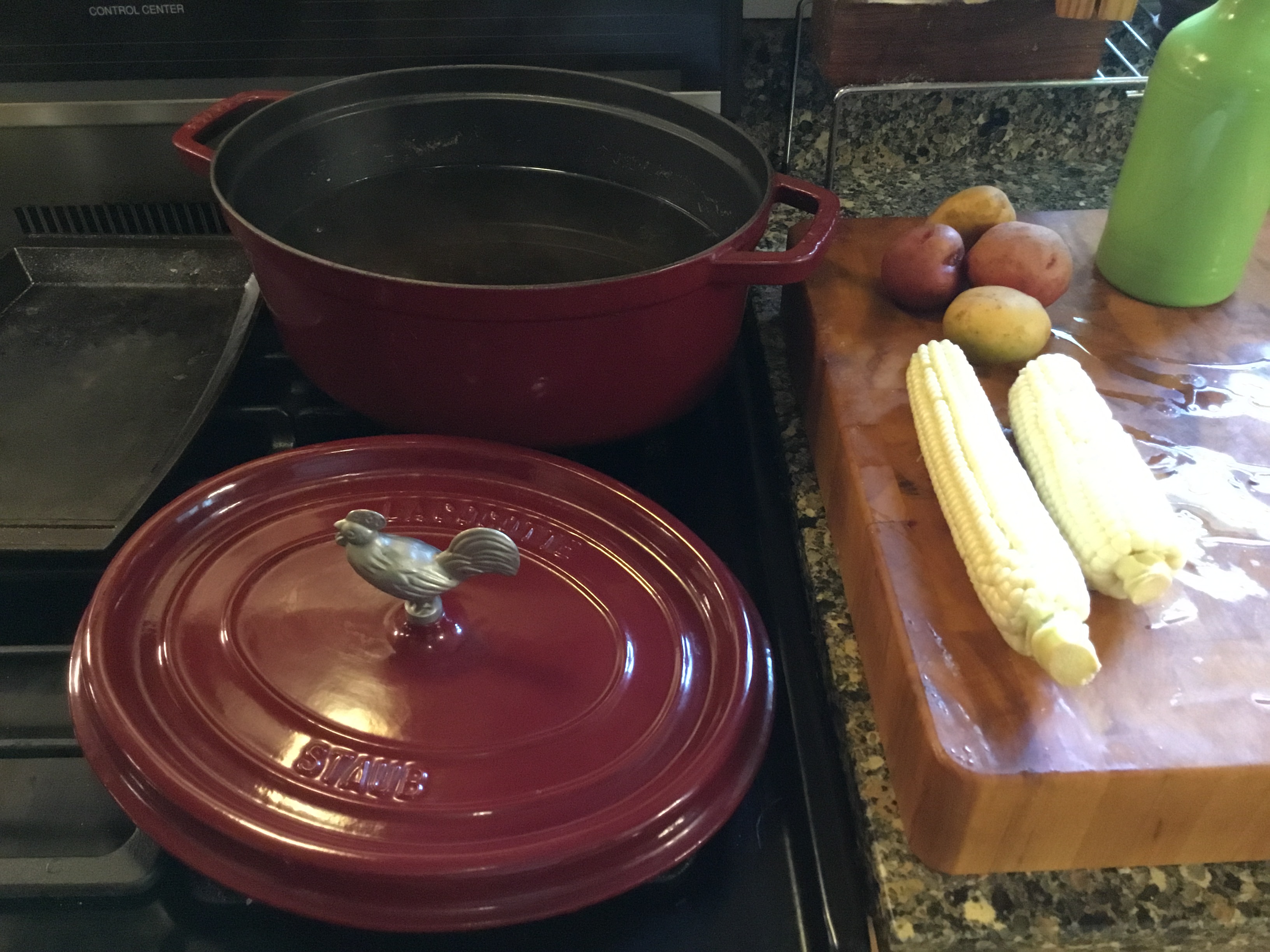
Ingredients
For the Boil:
Water to cover the Ingredients (2 Quarts here)
1 teaspoon Thyme
1 teaspoon Oregano
Cayenne Pepper Flakes to taste
2 tablespoons Salt
6 Cloves
6 Allspice
2 Bay Leaves
1 teaspoon Dill Seed
1 teaspoon Fennel Seed
And anything else you like. Cover, and bring this mixture to a rolling boil. Turn it off, and let it steep for awhile. If you have a cold, stick your face down in the vapor. If it’s well seasoned, it will clear your head out.
For the Edibles:
4 new Potatoes (we have 2 Red and 2 Yukon Gold)
2 ears Sweet Corn (these are Silver Queen)
1/2 pound+ Shrimp, deveined (we usually use Gulf shrimp, but these are Florida Keys shrimp)
Boil the potatoes for 30-35 minutes, then add the corn. Cook for 8 more, and add the shrimp. In about a minute or two, the shrimp will curl up and turn opaque, which means they are done. Strain in a colander, and serve in a bowl with a rustic paper towel lining.
Have beaucoup amounts of butter for the corn and potatoes. Our favorite condiments are cocktail sauce, tartar sauce, and Chinese hot mustard. If the boil didn’t clear out your sinuses, a combination of hot mustard and cayenne flakes surely will.

“When the going gets weird, the weird turn pro.”–Hunter S. Thompson
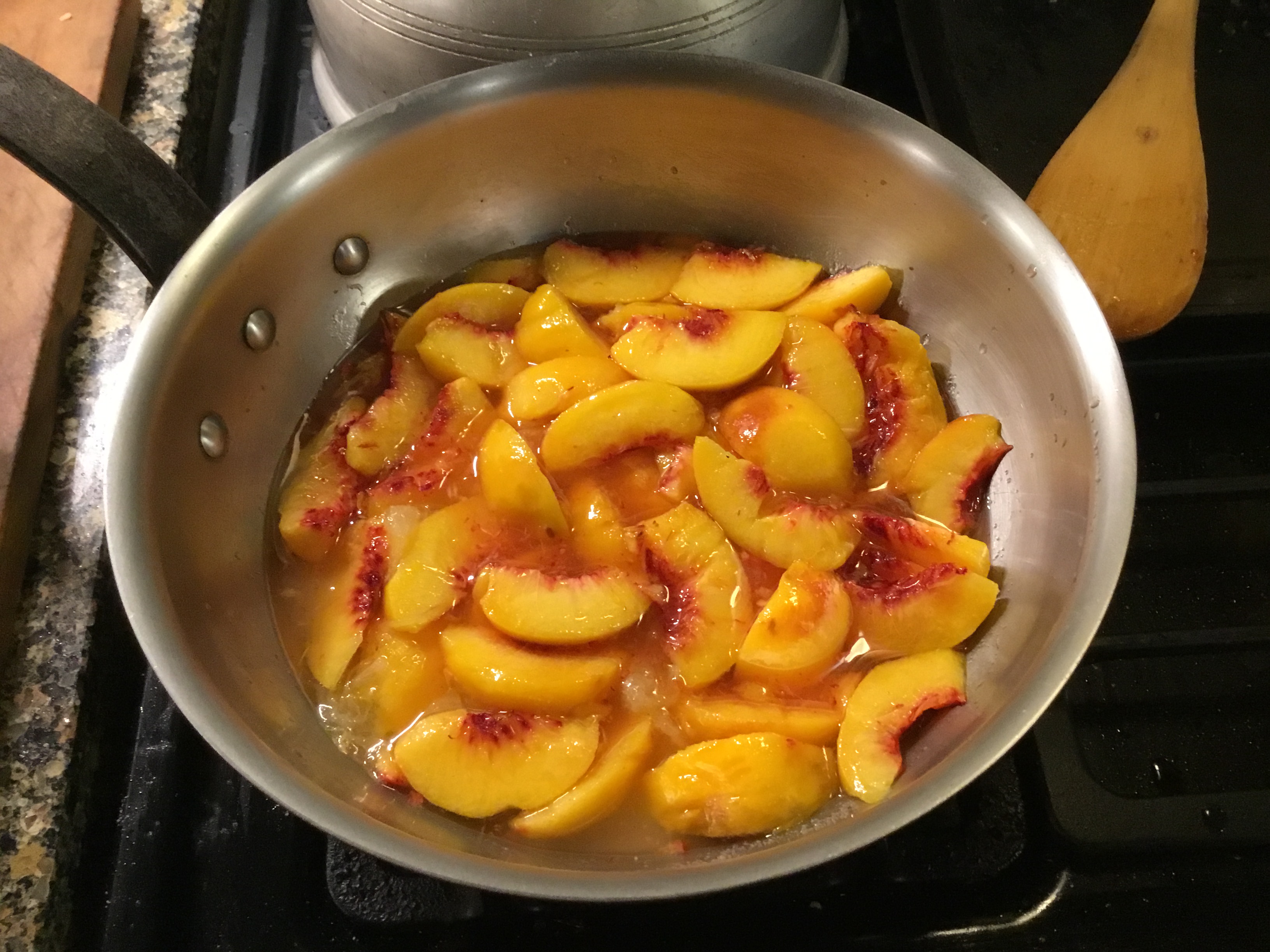
Most people in the South would call this recipe “preserves,” but the amount of lemon in it gives it some punch. I also came up with the idea of adding some lemon pulp to the mixture.
Ingredients
5-6 Fresh Peaches
1 Meyer Lemon
1 cup Sugar
Why Meyer Lemon? It’s something of a cross between a lemon and an orange. And check out the size.

My wife Melanie Jane grew the lemon, and the peaches came from an orchard a couple of mountains away from here. Time for some process.
Place the peaches in a colander or strainer in a sink, along with the jars, flats, and rings. Crank up the old teakettle and soak them all with scalding water. You’ve just done two steps at once.
Meanwhile, combine the sugar and lemon juice/pulp in a non-reactive pan. Lemons pulp easier if they are frozen first, and then thawed. Peel the peaches, and compost the peels (I fed mine to my chickens. They’re experts at composting.) Cut into eights, and add to the lemon sugar mixture. Let that marry-nate until the sugar dissolves.
Action time! Slowly bring the mixture up to a boil, and then turn it down to low. Sing the refrain from “Lady Marmalade” a few times–that’s the part that’s in French. When the peaches are soft, mash them into small cubes with a potato masher. Cook for another five minutes, at a higher temp, and then you have two options.
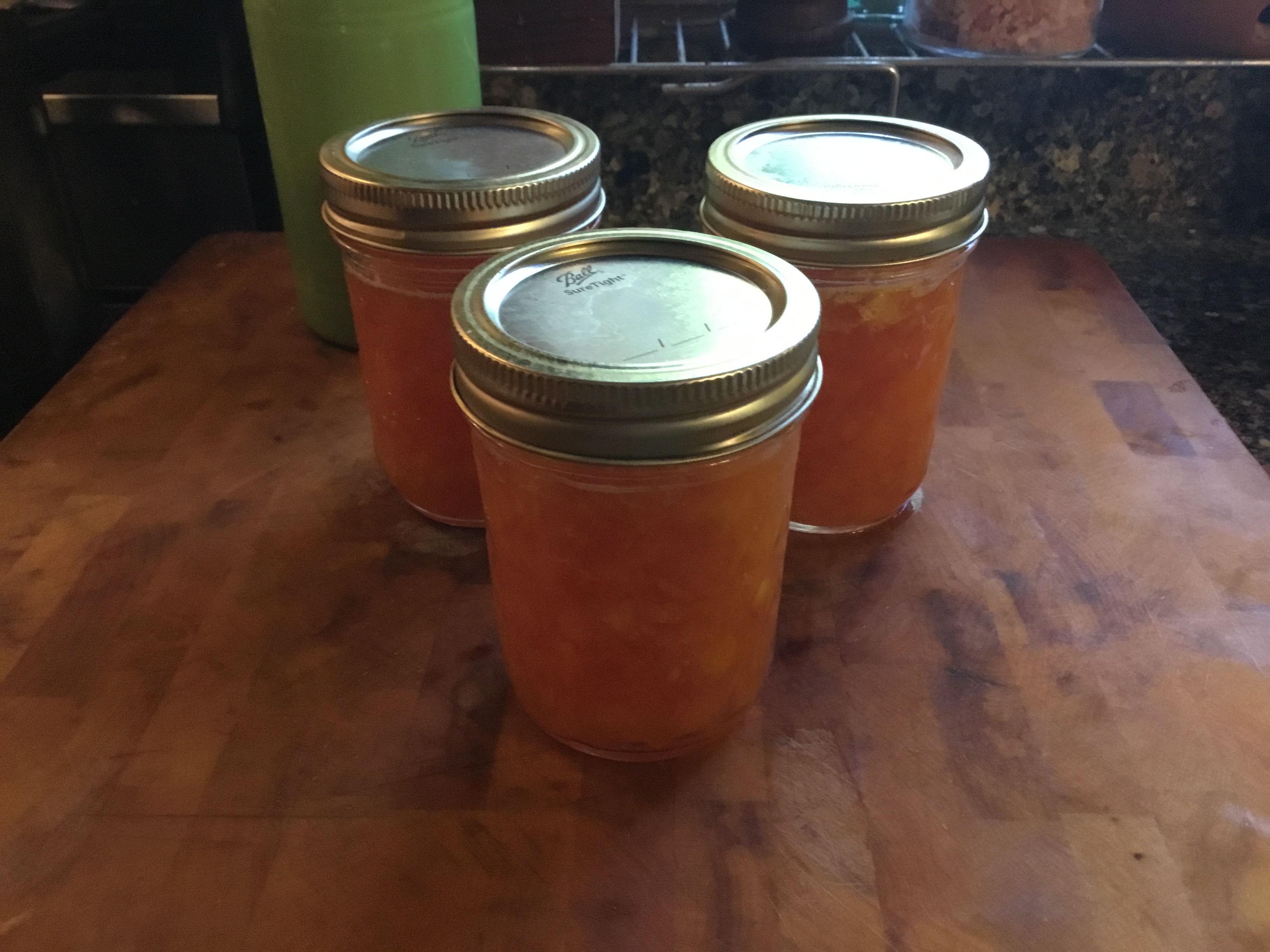
Can at this point, if you want a juicy spread. Add pectin, if you want a firmer marmalade. I use Certo, because it’s quick, and available everywhere. Pour the mixture into jars, and boil ten minutes in a water bath. Here’s the result:
Strangely enough, the diva Patti LaBelle, who recorded “Lady Marmalade,” is also an accomplished cook, and has a number of cookbooks in print. I don’t know if she has a marmalade recipe in any of them, but she is welcome to try this one.

Ingredients here that are specific to the South, though the Grits/Polenta controversy lives on, and probably will, as long as people boil ground corn.

Some well tested dessert recipes here, because everyone deserves to get their just deserts.

This recipe is my wife Melanie Jane’s specialty, and she has been making it since she was a teenager. It originally was for pineapple, but we had fresh peaches, not fresh pineapples; for some reason, there were no fresh pineapples at the farmer’s market.
Ingredients
For the Cake:
3 Eggs, separated
1 cup Sugar
1 cup Flour
1 tablespoon Baking Powder
1 tablespoon Salt
For the Topping:
1/4 cup Butter
1 cup Brown Sugar
1/2 cup Pecans, chopped
2-3 fresh Peaches, sliced
This recipe is upside down, so it is made backwards, topping first, and cake second. Begin by melting the butter in a pan, dissolving the sugar in the hot butter, and adding the pecans. Pour that into a heavy skillet, and arrange the sliced peaches on top of this mixture. We use a really heavy Lodge Pro-Logic cast iron skillet.
Combine the dry ingredients, mix, and then beat the sugar and egg yolks together. Combine those two. Make a meringue with the whites, and fold that into the flour/egg yolk mixture. Pour the whole thing into the skillet with the topping, and cook at 350 degrees F for thirty minutes. It’s imperative that this cake be inverted onto a platter as soon as it comes out of the over–otherwise the now caramelized top will stick like crazy.
In our experience, these things don’t stick around long. We made certain of that by serving ours with some homemade peach ice cream. The result was some serious peach on peach action.

Fresh peach season is here. Get them and cook them while you can.
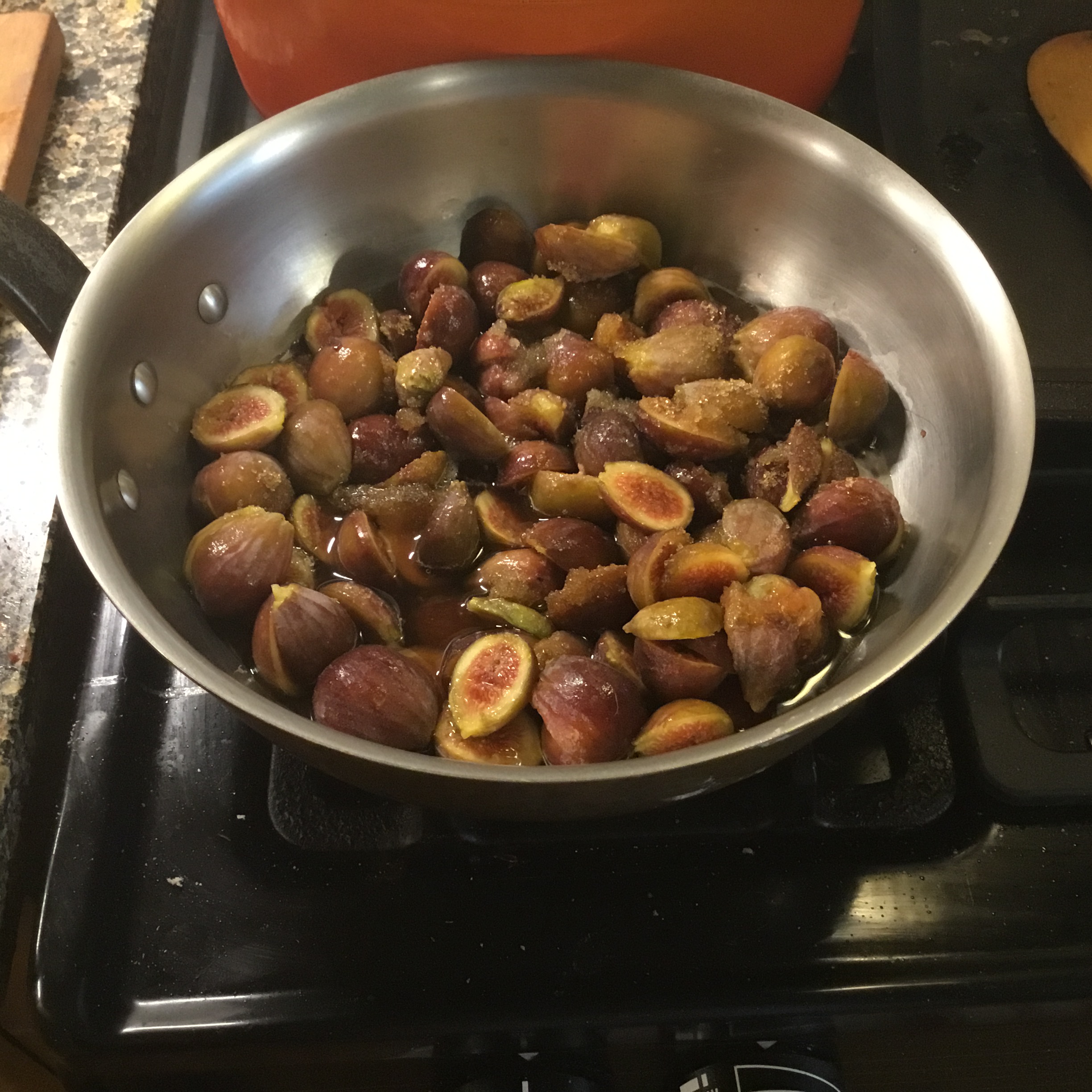
Fig preserves are a staple of Southern breakfasts, and good figs are not easy to come by anymore. I get them whenever I can, and sure enough, a farmer at the Festhalle Farmer’s Market had some this weekend. It was time to make some preserves.
Ingredients
4 cups Figs, halved
1 cup Water
Organic Sugar to taste
1 tablespoon Lemon Juice
That’s it. Just be prepared to simmer these things for at least a couple of hours. The amount of sugar needed depends on how ripe the figs are. These were dead ripe, so I didn’t need that much sugar.
After about an hour and a half of cooking, I resorted to my wife’s medieval looking antique potato masher, to speed things up. It’s a mashing machine.

After about two hours of total cooking, I added a package of Certo liquid pectin–not required, but it does speed things up. The three filled jars then went into a hot water bath for ten minutes, and sealed almost as soon as I took them out. Into the pantry now, and onto some English Muffins or Drop Biscuits, eventually.

Hog killing weather, in this part of the South, begins in November, when it becomes cool enough to cold smoke the meat. Hog eating weather is year round.
because facts really should be sacred
Or not, depending on my mood
I am just a girl who loves reading and talking about books
because I've got to tell someone.
a little lunch, a little wine, a LOT of talking!
Best Friends for Sixty Years and Counting...
Tales of quilting, gardening and cooking from the Kingdom of Chiconia
Refuge of an assumed danophile...
Serving BL since 2017
the Story within the Story
The only impossible journey in life is you never begin!! ~Tanvir Kaur
Country Living in the Southern Appalachians, USA--A little of this, a lot of that
A daily selection of the best content published on WordPress, collected for you by humans who love to read.
Country Living in the Southern Appalachians, USA--A little of this, a lot of that
Longreads : The best longform stories on the web
The latest news on WordPress.com and the WordPress community.
 Southern Fusion Cooking