Above is an impressive specimen of the Florida Flame Azalea (Rhododendron austrinum) that is estimated to be somewhere between 15 to 18 feet tall. Its native range is southern Mississippi, Alabama, Georgia, and northern Florida. Despite its Deep South home, it is hardy all the way into USDA hardiness zone 6a.
This plant is just off of the northern side of our deck, which is about twelve feet tall above the patio below. It is good couple to five feet above that level, which is the basis for the estimated height. I planted it around twenty years ago.
Unlike many native azaleas, these are reliable bloomers year after year–none of that one year on, one year off behavior. It only needs a little supplementary water every summer in order to be happy. And when it is happy, every Spring you will be happy as well.
Being rusticated has its perquisites. In my case, its twenty less hours travel time a week, to do what I will. I have been buying fruit trees, and turning a good part of our garden into a mini-orchard.
New Plants–
Apple “Honey Crisp.” I love these apples, so I bought two. They are about to break dormancy now, as they came from the frozen northland of Michigan.
Cherry “Dwarf Lapin.” We had a great cherry tree when I was a child, and there is nothing better than a fresh cherry–except for good cherry preserves. I bought two, and wish I had bought more. Bring out the biscuits!
Fig “Olympia.” Either a fig from Washington state, or a plant named after one of my favorite opera characters, Olympia, from Les Contes d’Hoffman, or The Tales of Hoffman. Olympia is an automata, or really a life sized wind up doll, but Hoffman falls in love with her anyway, as he is wearing rose colored glasses. The youtube video of the soprano Natalie Dessay singing this role is one of the funniest things I have ever seen. I bought one, fig, that is, not a Natalie.
Fig “Violette de Bordeaux.” One of these also. Alleged to be the best tasting fig. It will have to fight it out with the cherries, as to which one makes the best preserves. Bring out more biscuits! Melanie Jane made me stop calling this violette de bordello.
Olive “Arbequina.” Crossing the border into Spain now, this cold hardy olive has become a hot item in this part of the South. A local nursery has a grove of them, and gives classes about their cultivation. These will stay in containers for at least a year. We have three.
The random evergreen azalea in the picture is not a hybrid, but a species plant from Taiwan. All our other azaleas are native species.
We also have three Hass avocado seedlings, and three Meyer lemon cuttings. Those will have to remain in containers for the rest of their natural lives.
This plant really is sweet. Like the parent that finally has to confess to having a favorite child, this is my favorite native azalea. It blooms late, has spectacular blooms and foliage, and smells like honeysuckle. We also rescued this specimen from our own waterfront.
Happy Shrub
The entire riverbank this was growing on washed away in two floods, though we still have one plant down there, up the hillside. We managed to salvage two in total.
They do need a good bit of water, but they will get as tall as twenty feet. Hence the translation of the Latin name: “tree azalea.” The one in the picture is probably more than twenty years old. We water it in dry weather, but have never fertilized it.
These bloom about a week later than my other favorite native shrub, Mountain Laurel, which is one tough cookie. Ours almost died out three years ago during a two month drought, the longest in recorded state history, and then all re-sprouted from the ground, or miraculously grew leaves from what appeared to be dead limbs.
Almost Done
Our many, many, wild plants are at the end of the blooming cycle, and will make thousands of tiny seeds. I’m looking for a forest full of laurel. It’s also a fine carving wood, if it weren’t too pretty to cut down.
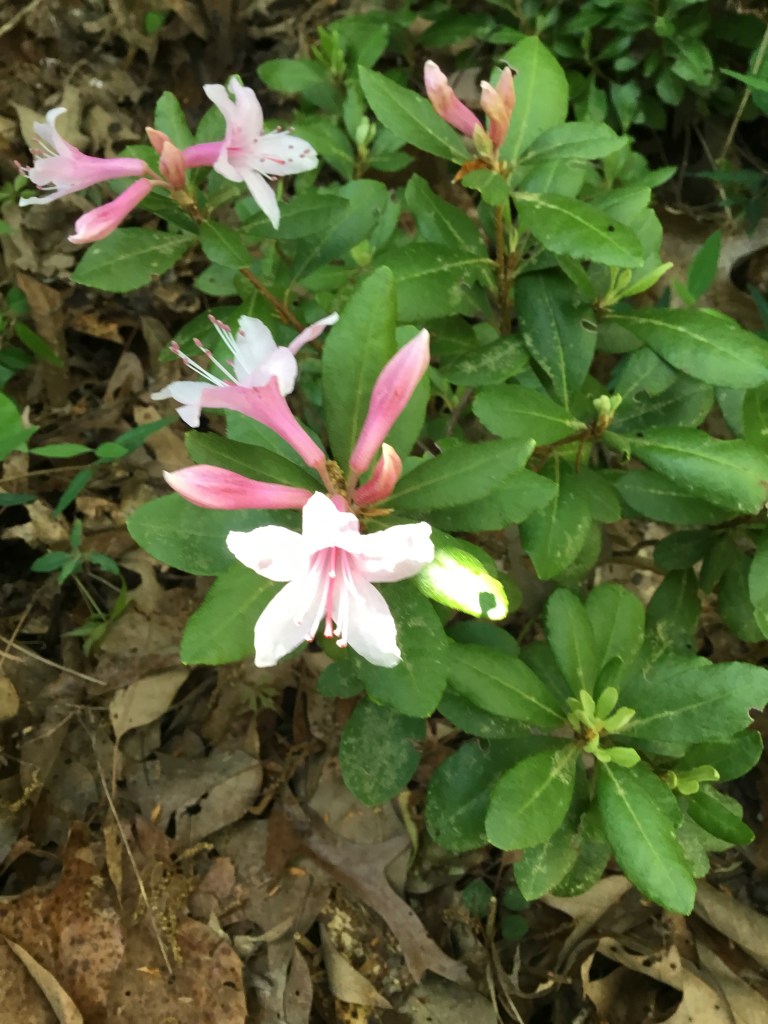
When people think of Florida, it’s either about beaches, or the trailer parks where Florida Man and Florida Woman live, although I also think about possums who drink cognac. They certainly don’t think of evergreen Rhododendrons. However, right there in the panhandle is the rarest of the rare, Rhododendron chapmanii.
Endemic to just around six counties in Florida, this plant is still sometimes listed as a variety of Rhododendron minus, the other deep South rhody. I have both, but the resemblance between the two is slight. Chapmanii is both state and federally endangered, and unfortunately lives exclusively on private timber comany property. In short, the long term survival of the species is in no way assured.
Fortunately, I was able to purchase two nursery propagated plants for my ark of a garden, and these guys are tough. My first plant is about to cross twenty years of growing out in the woodlands of Oak and Hickory. It has also made it through two of the worst droughts in memory.
The Survivor
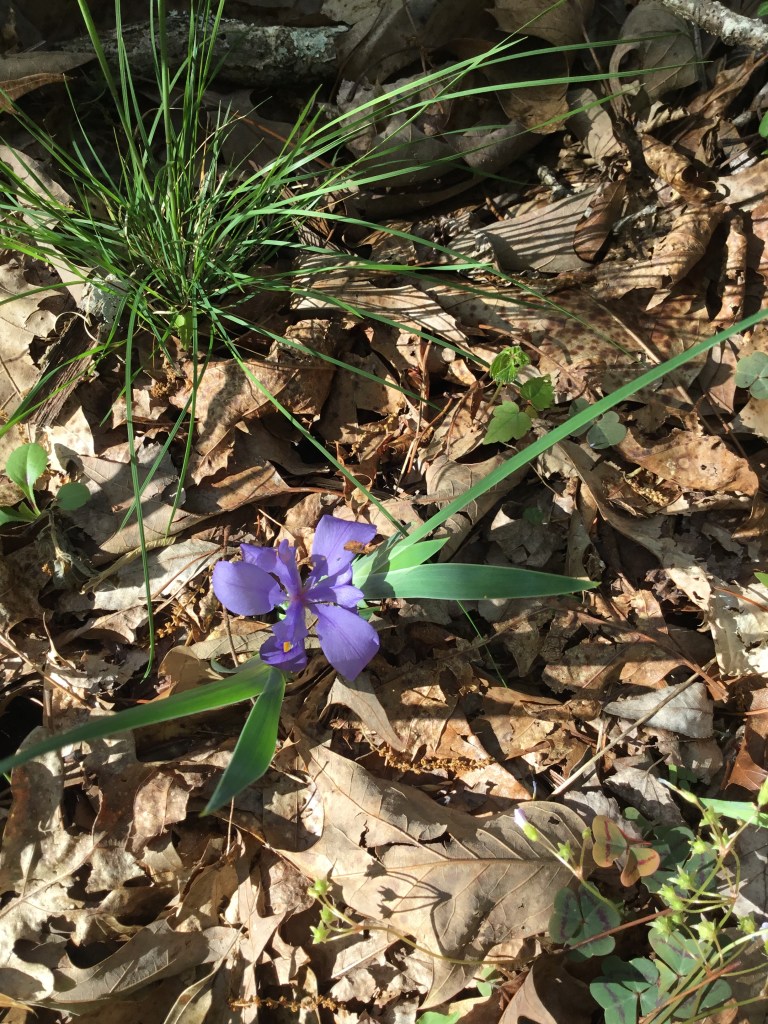
Once again, for those in other hardiness zones, this species blooms at the same time as Vernal Iris (Iris verna). This one happens to be between my two plants.
Iris
Like the Ark of Taste, we need an Ark of Plants as well. Your local friendly bees will thank you with pollination.
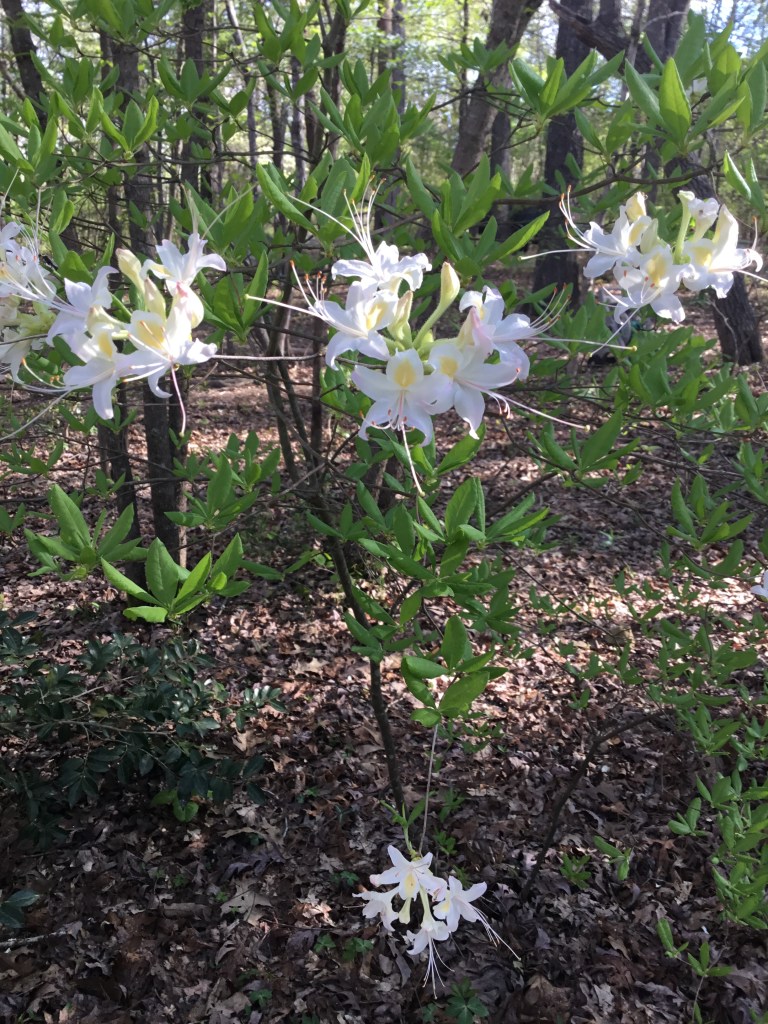
We are officially in the mid-season of the native’s bloom cycle, and the color of the day is white. Rhododendron alabamense is the showiest of these, with that prominent yellow blotch on one petal. Though said to be a small plant, I have one at 6.5′, and another at 7′.
Clouds of White and Yellow
This species was first described by the famous botanist Dr. Charles Mohr from the University of Alabama. Furthermore, he first found it in my home county of Cullman, and naturally, he mistakenly placed it as a variant of a different species. It was not until 1921 that it was recognized as a distinct species by the scientific community.
Not every plant has as dark a yellow dot. This one is faint enough that it is not visible on a photo.
A more sedate species is Rhododendron atlanticum, a native of the east coast, from Georgia to Pennsylvania. Also known as Dwarf Azalea, this is one that really is small, usually no more than 2 or 3′. It makes up for it by spreading underground, and forming colonies. It also has small flowers.
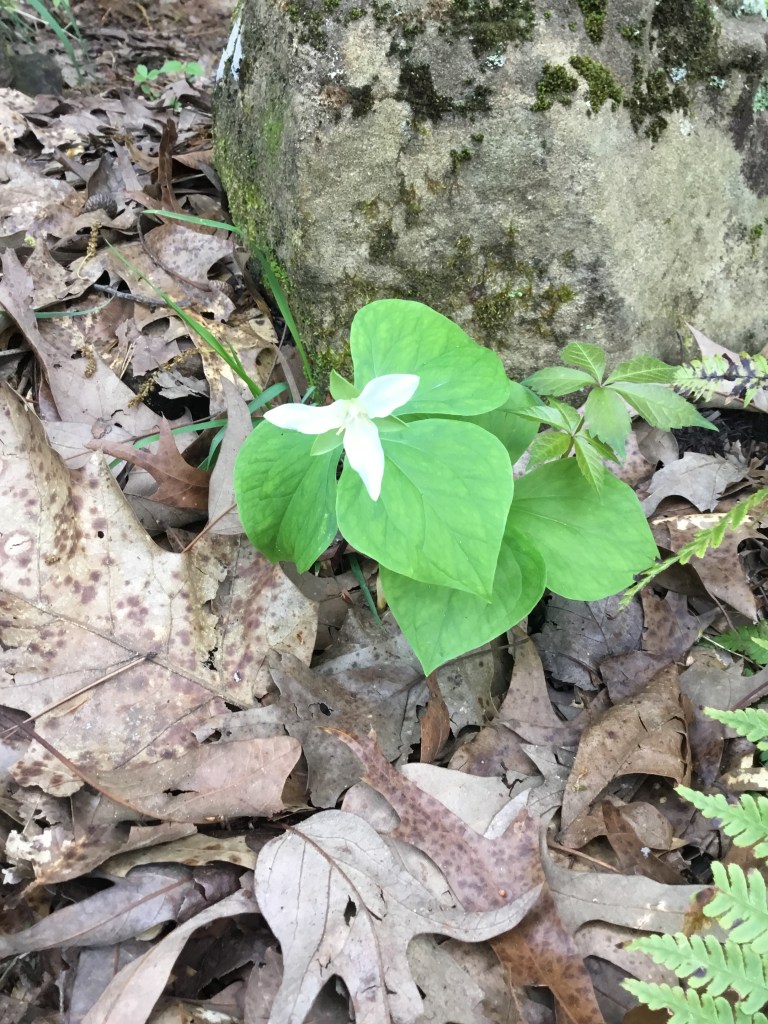
For people in different hardiness zones, these plants bloom at the same time as Trillium grandiflorum. Here’s one blooming now in my rock garden.
Rhododendron austrinum can make a giant shrub, if grown in the right conditions. It has taken over a large portion of my rock garden. How big does it get? So big that I could barely fit it into the frame of my picture.
Wide and Tall
Obviously, this species will make a multi-stemmed shrub. Though the max height is usually ten feet, this one is twelve, and still growing. I have one more normal sized plant. Swallowtail butterflies love both.
Spring is Here
This is definitely not the hardiest of the natives, but it still grows like crazy here on the southern end of zone 7. I will also add, they grow equally well without any fertilizer. Neither of my two plants have ever had any.








 Southern Fusion Cooking