Uncle Samuel decided to remit us some of the tens of thousands of dollars that we have unwillingly sent him over the years. It truly is a paltry sum, but I have decided to invest some of it in pepper futures. It’s a better use than sending money to defense contractors, or bailing out giant banks.
The amount I chose to invest was a total of $8.05. That gets me seventy five pepper seeds, more or less. My rate of return is likely to be enormous, as a small bag of fresh peppers at the Festhalle usually goes for around three bucks. At any rate, these are the three heirlooms I bought.
Piment d’Espelette
Another of the official peppers of the Basque region of Spain. Mildly hot, it has only been around since 1523. Strangely enough, that was the year when I was born.
Sigaretta De Bergamo
Let’s go to the Lombardi region of Italia, virus or no virus. A long sweet pepper, which surprisingly is the diameter of a cigarette. Try and find these at your local market.
Fushimi
Time to go to Nippon! That would be Japan. Another slim sweet pepper, and I can’t wait to try this one.
Moral of this story: grow your own, grow your own.
I am now at sixteen different peppers. Life is good. Thank you to the Federales for floating me eight bucks for pepper seeds. I threw in the nickel.
This plant really is sweet. Like the parent that finally has to confess to having a favorite child, this is my favorite native azalea. It blooms late, has spectacular blooms and foliage, and smells like honeysuckle. We also rescued this specimen from our own waterfront.
Happy Shrub
The entire riverbank this was growing on washed away in two floods, though we still have one plant down there, up the hillside. We managed to salvage two in total.
They do need a good bit of water, but they will get as tall as twenty feet. Hence the translation of the Latin name: “tree azalea.” The one in the picture is probably more than twenty years old. We water it in dry weather, but have never fertilized it.
These bloom about a week later than my other favorite native shrub, Mountain Laurel, which is one tough cookie. Ours almost died out three years ago during a two month drought, the longest in recorded state history, and then all re-sprouted from the ground, or miraculously grew leaves from what appeared to be dead limbs.
Almost Done
Our many, many, wild plants are at the end of the blooming cycle, and will make thousands of tiny seeds. I’m looking for a forest full of laurel. It’s also a fine carving wood, if it weren’t too pretty to cut down.
My Nicaraguan pepper seeds turned out to be sold out, so I compensated by ordering two more heirlooms on Fleabay. These are both from Europa. Now I will have a lucky thirteen pepper varieties.
Szegedi 179 Hungarian Paprika–From the city where Paprika originated. Said to be moderately hot, I got this from the same great grower in Georgia that I have been dealing with.
Antohi Romanian Sweet Peppers–a palm sized pepper, that looks phenomenal. It’s like a giant pimento. I had to order some mini pumpkin seeds from this seller in Arizona as well. MJ loves her some mini pumpkins.
We are finally having pepper weather, with temps in the eighties. We should have more than a hundred plants, if I can keep my stupid Aussie Shepherds out of my pots. Fortunately, the hot weather slows the furry jackals down.
Though people have been pickling garlic scapes (blooms and stems) for centuries, I may be the first to try the traditional Italian method of doing so with so-called Elephant Garlic. It’s really a type of leek, but it was renamed Elephant Garlic by the person who rediscovered it, the owner of the Nichol’s Nursery, out in Oregon. They also reintroduced it to the commercial market.
It has naturalized itself in my semi-abandoned veg garden, which was left dormant after two record breaking droughts. Now three alliums are taking over, including softneck garlic and Rakkyo, the famous Japanese delicacy. We are gradually bringing back other crops, and have a nice patch of potatoes coming on. But to keep the place from being overrun with Elephant Garlic, I have begun harvesting some of the scapes. The recipe is very simple.
Ingredients
Elephant Garlic (or Garlic) Scapes
Vinegar
Salt
Olive Oil
Cook the scapes for five minutes or so, in the salted vinegar. Then bottle them in olive oil and let age a day on the counter, and a week in the fridge. Be aware that they have a short shelf life, so eat them in a week or so.
The taste of Elephant Garlic is intermediate between Garlic and a Leek. It is a plant that requires eternal vigilance, to keep it from overtaking your property.
I probably need professional help on the pepper growing front. After bragging about the eight varieties I have, MJ noted that we haven’t had our favorite, pimentos, in a couple of years, and that I had neglected to plant any seeds. That lead me to the evil Fleabay to buy some.
I found some great sounding pimento seeds from a grower in Cleveland, TN, a town we have driven through a few hundred times, on the way to going fly fishing for trout. Then I made the mistake of staying on there, and found a real specialist in heirloom peppers from Toccoa, GA. Naturally, he had a package deal on three packs of seed, so I was compelled to buy them.
I bought one variety that originated in each of the following three countries–Hungary, Spain, and Nicaragua. That brings me up to an even dozen different peppers.
Peppers, Dude
Pimento–probably the best sweet pepper. We have grown these for years, and like the soprano Maria Callas, they always put out their best effort. The rest are all new to me.
Alba Regia–another sweet pepper, this a Hungarian. In the picture, it looks more blocky than a pimento. My friend George had parents from the Hungarian capitol, and he was impressed when I asked him if they were from Buda, or Pest. He had never met anyone who knew they were on different sides of the Danube.
Piquillo de Lodosa–from the Basque region of Spain, and it is one of their official varieties. Said to be very sweet and mildly hot.
Criolla de Cocina–Sandinista! was one of my favorite albums by The Clash. This pepper looks like a giant habanero, but is described as having a flavor practically without any heat. Came from a Nicaraguan farmer in 1988.
There are my twelve peppers, and I managed to get my two favorite genres of music, opera and punk rock, into this post. Kind of like peppers themselves.
One of my favorite movies is Major League, the goofy baseball movie about the Cleveland racist name/racist logo franchise. My favorite character is Pedro Cerrano, a power hitting Cuban player who worships a voodoo god named Jobu. At the end of the movie, Pedro famously says fornicate you to Jobu, after he thinks his bats are not being protected by the voodoo god anymore, and made into magic bats.
In his honor, and because I can’t stop buying plants, I added a Serrano pepper to my veg list, bringing my pepper total up to eight varieties, with about sixty plants. I also bought my wife a Jobu’s Rum T-shirt as an anniversary present. Jobu loved his rum. “Is not good to steal Jobu’s rum.”
Peppers, Dude
Serrano-Most are three times hotter than a jalapeno., though some can be even hotter than that
Tabasco-The dwarf yellow variety, which is a new one for me
Sweet Banana–We freeze these by the dozen, if they survive our devouring them fresh
Cayenne–No Southern kitchen is complete without a bottle of Cayenne pepper sauce
Poblano–The best mildly hot pepper. Dried when ripe, it makes Ancho powder
Royal Black–A new one, said to be really hot. It goes in the pepper sauce. Some of our seedlings have purple leaves
Early Jalapeno–Early is good
Jalapeno M–A mild Jalapeno. Why did I buy these? They must have been cheap
No regular bell peppers here, but who wants to be a regular pepper grower anyway. I probably will want to stock up on antacids.
It’s been almost a hundreds years since scientists discovered that ethylene gas could artificially ripen fruit. That’s the reason why most supermarket tomatoes taste like yuk. They’re green tomatoes, turned fake red, and sold as “vine ripened.” There are very limited penalties for lying, especially in the food industry.
That’s why I am officially declaring war on Big Tomato. ( I have previously declared war on Big Chicken.) In the spirit of ’76, I now have 76 tomato plants, with more seedlings probably coming. I have fifteen varieties, which I will list below.
Maters, Precious
Plants in the ground–We found a great seller only about four miles away. These are all new varieties to us.
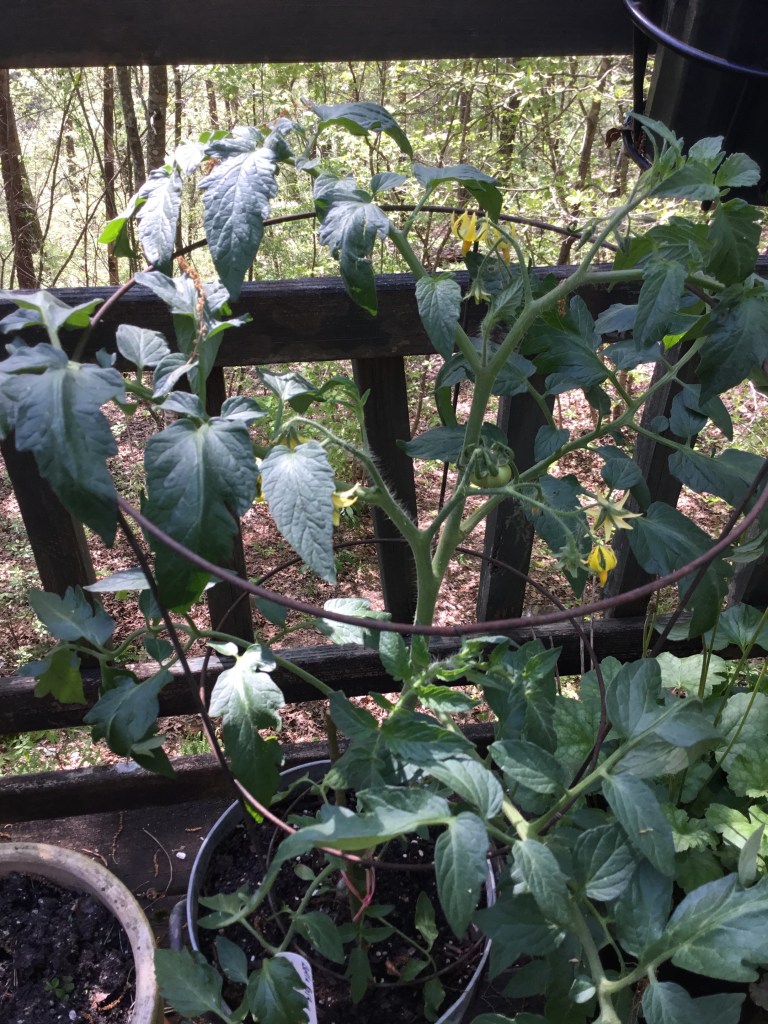
Bella Rosa–A hybrid that already has a tomato on it, and is blooming like crazy
Atkinson–Developed at Aw-burn U, the bitter rival of my Crimson Tide
Roma III–Had to buy three of these hybrid Romas, because it is Roma III
Juliet–“It is the east, and Juliet is the sun. Arise, fair sun, and kill the envious moon.” A mini San Marzano! I was going to buy a couple more of these,but I actually bought three more
Roma-the heirloom variety, not the hybrid. Bought at the Festhalle, as were the rest of these. We’ve grown this before, and all of the below
Wild Cherry-the real wild mater.
Brandywine-the classic heirloom, with great tasting maters
Cherokee Purple-Perhaps the classic heirloom Southern variety
Seeds in the ground–Some are our saved seeds, including a couple of chance hybrids. We have grown all of these before also. All these have now germinated
Purple Calabash–The cabernet wine of tomatoes. Ugly and exquisite
Rio Grande–Why an Italian tomato is named Rio Grande, I have no clue
Creole–From LSU, and this is one Ragin’ Cajun, for hot weather. LSU has the craziest fans in college football. They came to T-town one year, their team beat the hide off the Tide, and then one sorority stole most of the furniture out of their sorority sisters’ house on sorority row, and carried it all back to Louisiana. They eventually returned it.
Black Truffle–We love dark colored tomatoes
Amish Paste–Same with the paste tomatoes
Red Cherry–Saved seed, probably Matt’s Wild Cherry, which grows wild in Texas and Mexico.
Hard Round Red Tomato-More than likely a chance hybrid, this plant has some seriously tasty tomatoes
Peppers, Dude
I only have forty something pepper seedlings, so I have a truce with Big Pepper. I do have three more pots of seeds that have yet to germinate. The cease fire could be temporary, and I do eat a bottle of hot jalapenos every month. Everyone has a weakness.
There is a humorous German term for all the panic buying that has been going on: Hamsterkauf. The literal translation is “Hamster buying,” but the implication is that people are shopping like they are Hamsters.
Having said that, I may require an intervention on the vegetable plant buying front. I’m closing in on seventy tomato plants, and what do I do but buy two more varieties, bringing my total number up to a lucky thirteen. Truthfully, I grew most of the plants myself, but nothing can stop me when it comes to buying heirloom plants.
Yesterday we went to the re-opened Festhalle Farmer’s Market, and on the far end was a woman selling heirloom vegetable plants. That was especially significant considering that it was 43 degrees F, and the north wind was about ten miles an hour, and this is an open air market. Her plants looked very good, so I added two of the all time greats to my tomato roster.
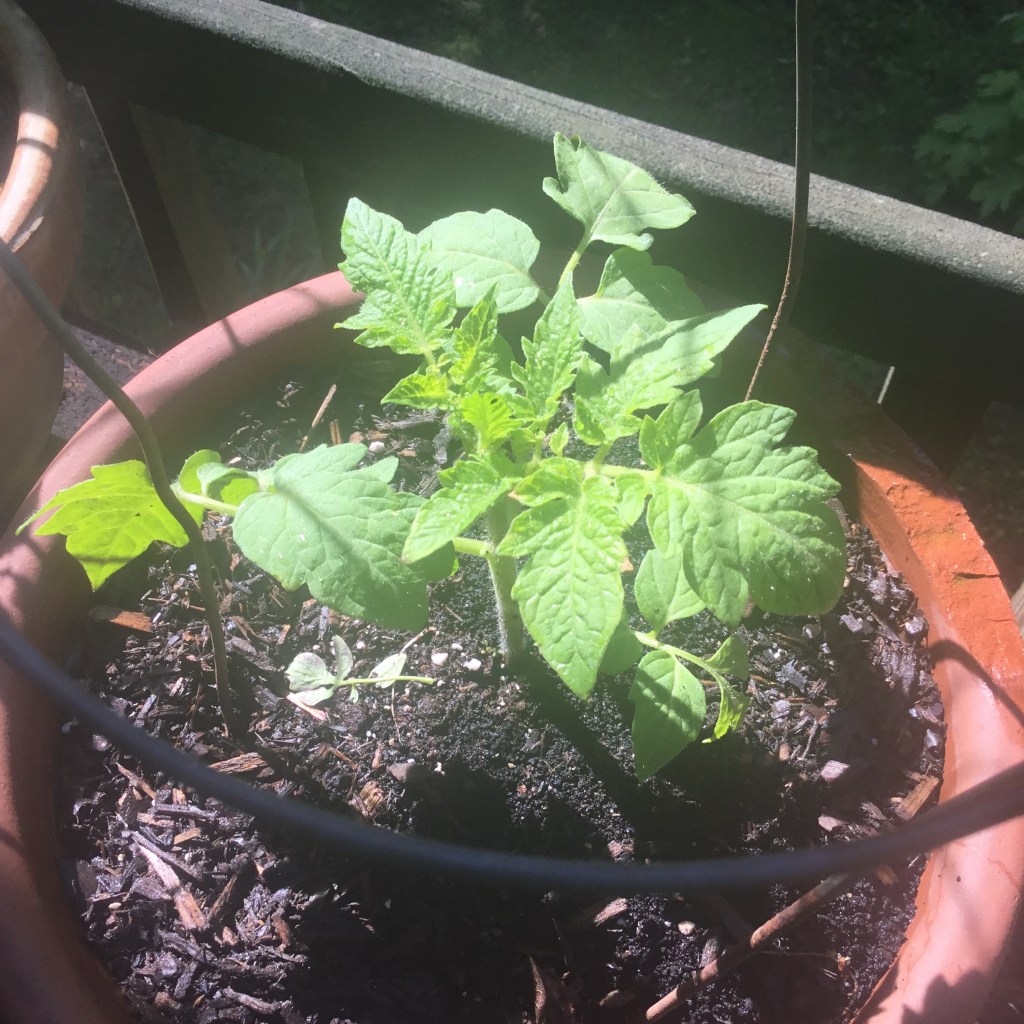
The one at the top is a Roma tomato, which is the classic paste tomato. I have three hybrid Romas already, but usually the taste of the hybrids can’t match that of the original.
Cherokee Purple
My second tomato is the famed Southern variety Cherokee Purple, which came from a seed saver in Tennessee, and was said to have been cultivated by the Cherokee tribe of native Americans. I try and grow at least one of these every year, as the flavor is phenomenal.
Tabasco Short Yellow
This last one is a plant I have not seen before, which I bought at my favorite plant seller’s store on the way home. It’s a fiery hot Tabasco that ripens to yellow fruit instead of red. The Tabasco sauce people once made a yellow sauce, but I think it is no longer available. I will have to make my own fermented sauce with these.
I put Blood Meal in with all these plants. Nothing like pure nitrogen to get them going. Now we need some temps back in the 70’s and 80’s again. When that happens, naturally I will complain that it’s too hot.
When you have nothing else to do, you tend to indulge in excess. Being rusticated for an indeterminate length of time, MJ and myself have gone narting futs with planting our veg. All these plants are just in containers: we haven’t even made it out to our garden yet. How about eleven varieties of tomatoes?
Maters, Precious
Plants in the ground–We found a great seller only about four miles away. These are all new varieties to us.
Bella Rosa–A hybrid that already has a tomato on it, and is blooming like crazy
Atkinson–Developed at Aw-burn U, the bitter rival of my Crimson Tide
Roma III–Had to buy three of these hybrid Romas, because it is Roma III
Juliet–“It is the east, and Juliet is the sun. Arise, fair sun, and kill the envious moon.” A mini San Marzano! Will buy a couple more of these
Seeds in the ground–Some are our saved seeds, including a couple of chance hybrids. We have grown all of these before.
Purple Calabash–The cabernet wine of tomatoes. Ugly and exquisite
Rio Grande–Why an Italian tomato is named Rio Grande, I have no clue
Creole–From LSU, and this is one Ragin’ Cajun, for hot weather. LSU has the craziest fans in college football. They came to T-town one year, their team beat the hide off the Tide, and then one sorority stole most of the furniture out of their sorority sisters’ house on sorority row, and carried it all back to Louisiana with them.. They eventually returned it.
Black Truffle–We love dark colored tomatoes
Amish Paste–Same with the paste tomatoes
Red Cherry–Saved seed, probably Matt’s Wild Cherry, which grows wild in Texas and Mexico.
Hard Round Red Tomato-More than likely a chance hybrid, this plant has some seriously tasty tomatoes
I have two Alma Maters, and now eleven Maters. I also never apologize for a bad pun.
Peppers, Dude
Sweet Banana–We freeze these by the dozen, if they survive our devouring them fresh
Cayenne–No Southern kitchen is complete without a bottle of Cayenne pepper sauce
Poblano–The best mildly hot pepper. Dried when ripe, it makes Ancho powder
Royal Black–A new one, said to be really hot. It goes in the pepper sauce
Early Jalapeno–Early is good
Jalapeno M–A mild Jalapeno. Why did I buy these? They must have been cheap
As the great Neil Young wrote, “Homegrown is the way it should be.” Amen from this corner.
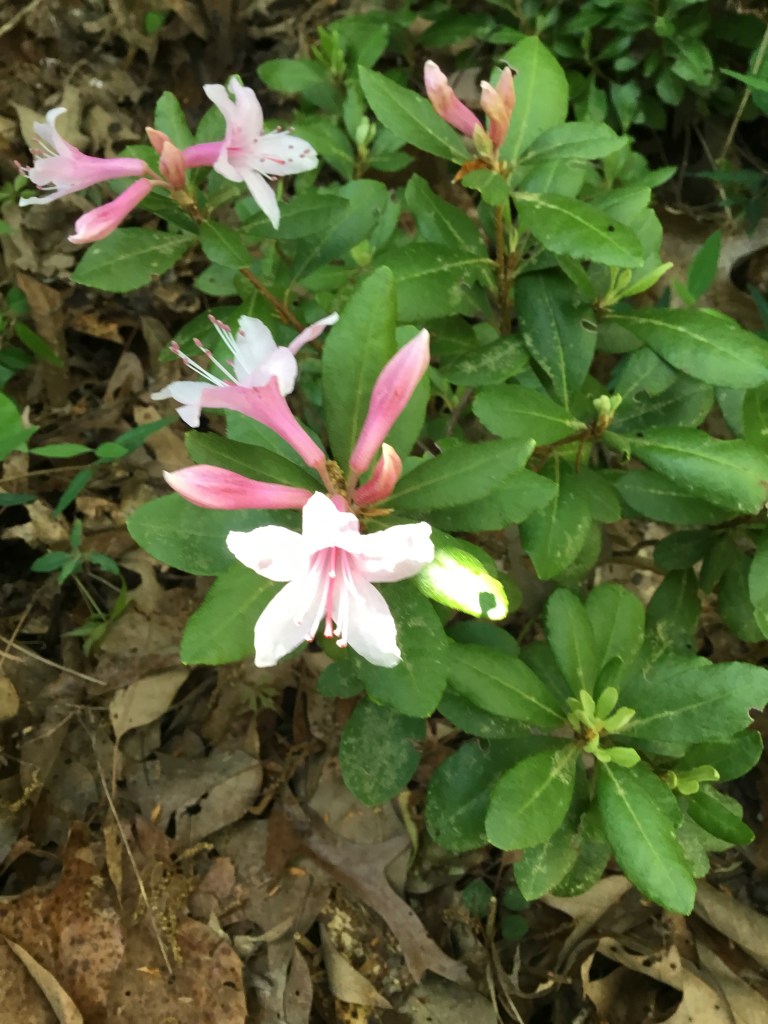
When people think of Florida, it’s either about beaches, or the trailer parks where Florida Man and Florida Woman live, although I also think about possums who drink cognac. They certainly don’t think of evergreen Rhododendrons. However, right there in the panhandle is the rarest of the rare, Rhododendron chapmanii.
Endemic to just around six counties in Florida, this plant is still sometimes listed as a variety of Rhododendron minus, the other deep South rhody. I have both, but the resemblance between the two is slight. Chapmanii is both state and federally endangered, and unfortunately lives exclusively on private timber comany property. In short, the long term survival of the species is in no way assured.
Fortunately, I was able to purchase two nursery propagated plants for my ark of a garden, and these guys are tough. My first plant is about to cross twenty years of growing out in the woodlands of Oak and Hickory. It has also made it through two of the worst droughts in memory.
The Survivor
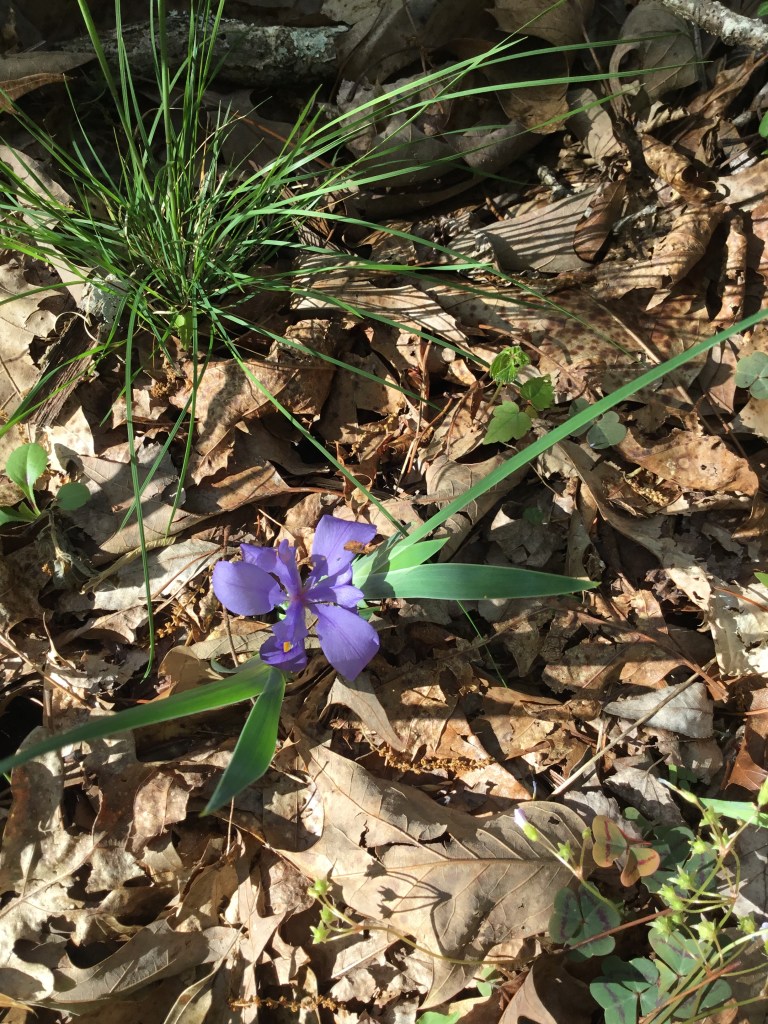
Once again, for those in other hardiness zones, this species blooms at the same time as Vernal Iris (Iris verna). This one happens to be between my two plants.
Iris
Like the Ark of Taste, we need an Ark of Plants as well. Your local friendly bees will thank you with pollination.






 Southern Fusion Cooking