2021–In Praise of Chicken Excrement

Black Gold

When you get up early on New Year’s Day to feed the chickens, and the low temp is 67 F, something is seriously wrong. That something is Anthropogenic Climate Disturbance, aka Global Warming. It’s fine now, but the summer will be when the bill comes due.

There is one constant, however–the wonders of chicken excrement. Americans in general treat chickens like a protein machine, caged, abused, and thrown away and eaten at a very early age. Our flock of eight ramble around all day, eat greens and high protein food, and we get eggs by the dozen. Better, possibly is the giant piles of excrement, which I compost. I am just beginning to use it as fertilizer. It could be the GOAT (greatest of all time.)

Chicken excrement and I go way back. When I grew up on the old farm, that was our main fertilizer, and sometimes the only one. As it turns out, industrial scale chicken production produces industrial scale chicken stuff. We had tons of this stuff at a time, which means we had tons of vegetables, and pounds and pounds of beef–we fertilized the pastures with chicken stuff, and even had to buy a giant stuff spreader to be able to do it.

So the moral for this new year is, what goes around, comes around. I have been fertilizing my mustard greens with chicken stuff, and feed the greens to the chicks, and the egg quality just gets better. I composted my garlic plants (forty in total,) and they took off like weeds. I just layered my young asparagus patch with several inches of compost. I better get the asparagus steamer ready for spring.

Film at eleven.
Making Creole Mustard

Needs to Age

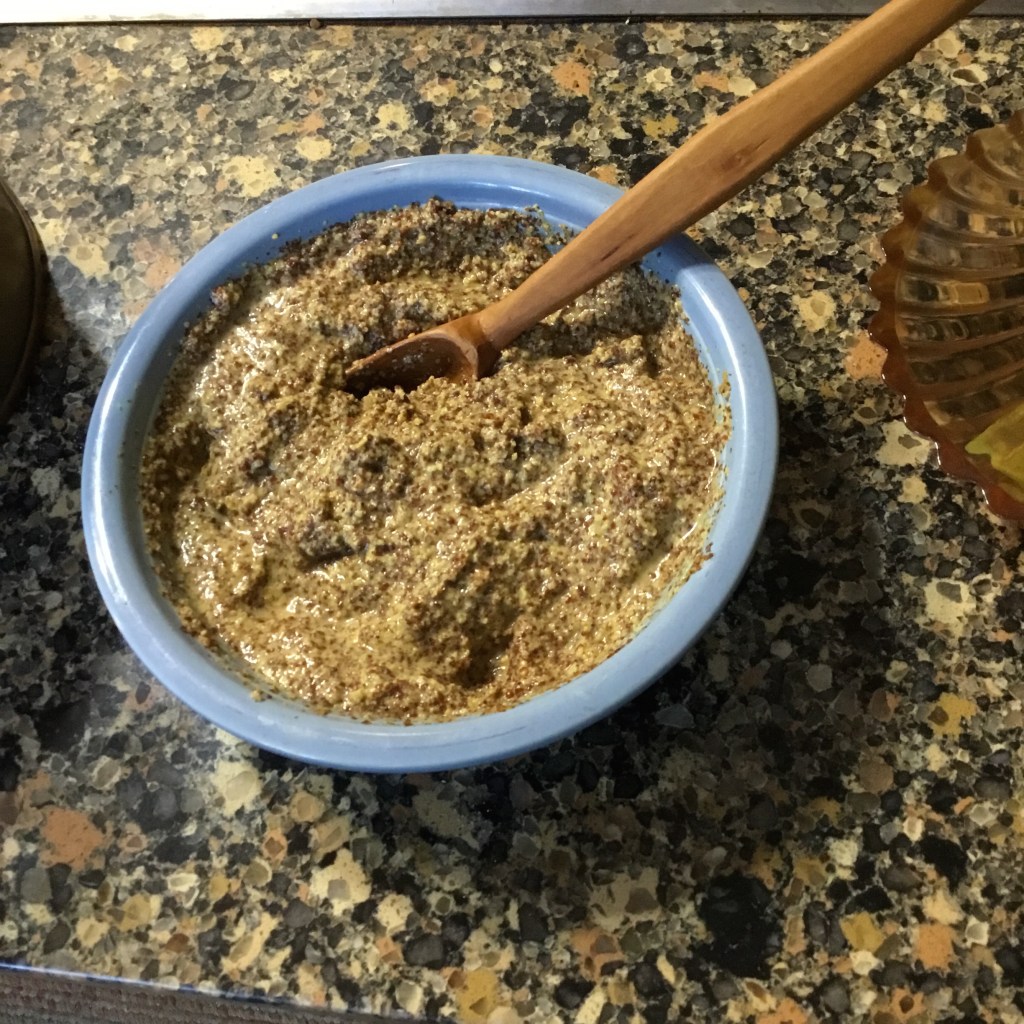
If you are weary of rich and sweet Christmas food, here’s one answer to waking up your taste buds. Make some Creole Mustard. This is a simplified traditional recipe.

Ingredients

1 cup ground Brown Mustard Seeds (I ground mine coarsely in an old hand cranked grinder)

1 teaspoon Garlic Powder

1 teaspoon Horseradish Powder

1 ground Clove

1 ground Allspice

1 teaspoon ground Fennel Seeds

Pinch of Salt

Equal parts White Wine and White Wine Vinegar

Simple and pungent, this whole grain mustard is a modernized version of the classic recipe from The Picayune’s Creole Cookbook (For those who have the newer hardback reprint, edited by Ms. Bienvenu, the recipe is on page 553.) The old method is to steep the spices (they also use Mace) in the white wine on the stove, strain out the spices, add the wine, along with some Tarragon Vinegar and Apple Cider. Warning–the last two ingredients are not included on the ingredient list in the book, and no quantities are specified. I just mix everything after grinding it all, and pour in as much liquid as I need to get the consistency I want. The simplest solution is the best.

This will be blazing hot on the first day, but leave it covered on the counter, and it will become gradually more civilized as the days pass. After a couple of weeks I put it into a mason jar, and then the fridge. You can also can this for future use. Either of these approaches beats anything at any supermarket.

Rejuvenating Cast Iron Cookware

Back in Action Again

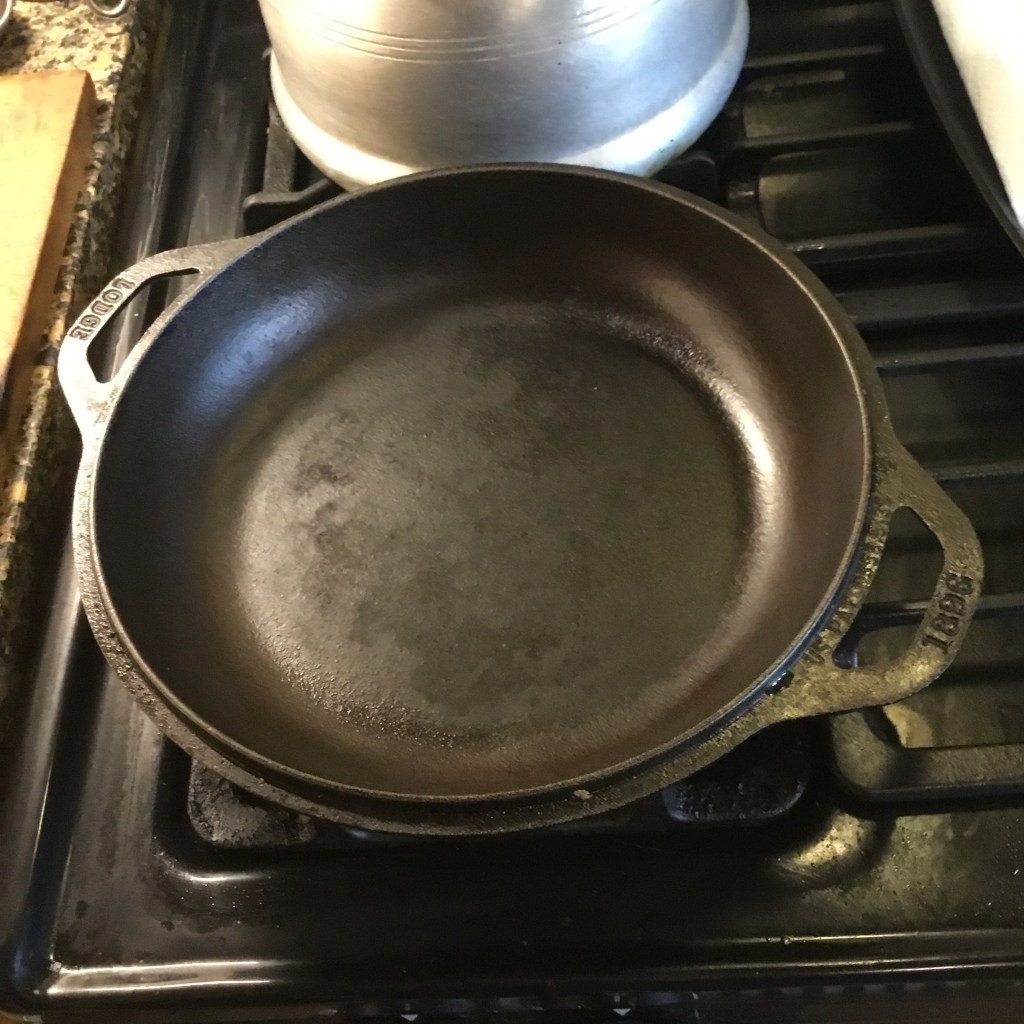
Even someone as OC as myself occasionally slacks off. I pulled out a dutch oven that had this skillet lid sitting upon it, and there were spots of surface rust on the inside of the lid. Time for some rejuvy-nation.

Lard to the Rescue

This was a simple fix–lard and paper towels, plus some heat. This is a stove top treatment, so it does require some adult supervision.

Start with a practically invisible layer of melted lard. Heat until it smokes, wipe it out, and repeat the step until you get tired or fall asleep. After a few rounds, the rust disappears. Magic!

A Stovetop Skillet

It finally dawned on me why I like this skillet lid so much. It’s the handles. There isn’t a long skillet handle to get in the way of all the other things on the stove. This now is no longer a lid for a dutch oven. It’s a permanent resident on the stovetop, where it is used at least a couple of times a day.

Now I have to get MJ the 2020 Rosie the Riveter skillet. This is seriously a 19th amendment year.

Great Southern Cookbooks, Part Three–Big Bob Gibson’s BBQ Book, by Chris Lilly

Alabama is the crossroads of BBQ. We probably ended up with the “world champion pitmaster,” because we have every style of pork barbecue imaginable, and at least one place that serves a pineapple bbq sauce. We even had one poor sod who tried to sell Texas style beef BBQ. Tried.

In short, we have more BBQ joints per capita than any other place in the States. We have one large multi-state chain of restaurants, Jim and Nick’s, which was started by two chefs of Greek extraction. Nick Pihakis, an acquaintance of mine, besides having created this pig empire, is one of the founders of “The Fatback Project,” whose aim is to return pork production to small farms with free range pigs (he even bought his own meat processing plant.) This is definitely a battle cry for those of us who have had enough of the disgusting practices of “Big Hog.”

He’s only resting and Getting a Tan. I swear.

This book is so good, just go and buy a copy. Archduke Bezos sold me this excellent used copy for three bucks, and the restaurant is only about thirty something miles from here. There is a chapter titled “Ode to Pork,”(take that, Schiller,) that quote from one of my favorite Roman poets, Ovid, who died in exile, and the recipe for “Eight-Time World Championship Pork Shoulder.” Don’t read this book while hungry.

In case you didn’t figure out that this is one smart guy who wrote this, Chris Lilly married in to the Big Bob Gibson family, after he graduated from the University of North Alabama. It just occurred to me, that I forgot to ask MJ that most important question, “Honey, does your family own a famous BBQ joint?” The Big Bob signature white sauce recipe is in there as well, though it is also widely available online. Yes, there is a mayo based BBQ sauce. Pure Alabama.

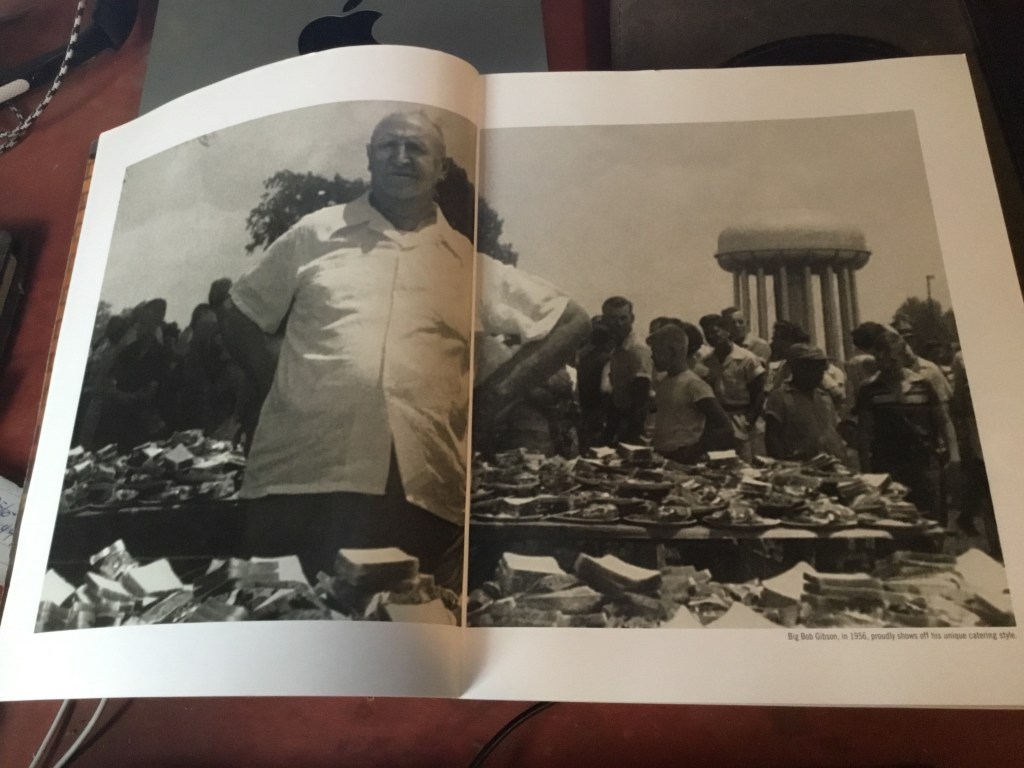
Let’s leave with a pic of Big Bob sporting his goods in 1956.

I be Big Bob

Pig out.

Turkey and Vegetable Soup Gumbo

Healthy Gumbo? Mon Dieu!

I’m a little late with my Thanksgiving leftover recipe, but any fowl will do for this recipe, or even frozen leftover turkey. It’s a simpler version of a standard gumbo, as it uses already prepared soup as the base for the gumbo.

Ingredients

1 tablespoon Bacon Fat or other Oil

1 tablespoon Flour

1 pint Vegetable Soup (preferably home made, and frozen is fine)

1 cup chopped cooked Turkey or Chicken (maybe Guinea Fowl, anyone? P-trak, p-trak)

Poultry Stock

Extra Frozen Okra

Salt and Pepper

Quick and dirty here. The only thing that requires a good deal of attention is the roux, which should be a dark brown roux, so start with the oil/fat flour combo, and stir constantly. Once that is to the as you like it stage, add the soup and the turkey. Cook until it begins to simmer, and gauge how much stock you want, or how soupy you want your Gumbo to be. The extra okra is optional, but it adds some color to my home made veg soup.

Serve over rice, or if you’re really hungry, red beans and rice. Coastal dwellers regularly add shrimp or oysters to their gumbos. The p-trak sound is the incredibly loud call of the crazed and wild guinea fowl. I want a few, as they are predator proof and require zero food. Alas, they will drive your neighbors bonkers. Maybe I should get a dozen.

Grillades with Mushroom Brown Sauce

Accidentally Making Great Food

If you do the right thing, Karma will treat you right. MJ and I have given away so many eggs that we are getting free food in return. Long live bartering.

Case in point was the cooler full of locally grown beef that one brother-in-law gave us, and the cow was grown by yet another brother-in-law. In the pile of meat were a couple of packs of cube steak, something I had never eaten before, and usually associated with greasy spoon diners. Then I read on the interwebs that good quality cube steak is really round steak that has been pounded flat for tenderizing. This was of the best quality, and I immediately thought: Grillades.

Turning round steak into a Grillade is the classic Southern way of turning inexpensive meat into a thing a beauty, and is sometimes referred to as fried meat a la Creole. I adapted the recipe for Grillades with Gravy from the latest reprint of the Picayune’s Creole Cook Book, and the result was unbelievably good.

Ingredients

1 tablespoon Bacon Fat (Grandmother Lilian’s trick)

1/2 Onion, chopped

1 clove Garlic, diced

1 tablespoon Flour

4 inch squares of pounded Round Steak, seasoned highly with Salt and Pepper

6 large Mushrooms, sliced, and sauteed in Bacon Fat, Lard, Butter, or Oil

Water

The recipe in the cook book uses tomatoes instead of mushrooms, but we won’t have good fresh tomatoes here for a while, and I had bunches of shrooms. Begin by cooking the onion in the bacon fat for about a minute. When they begin to soften, add the garlic. Cook until you can smell the garlic but DO NOT burn it.

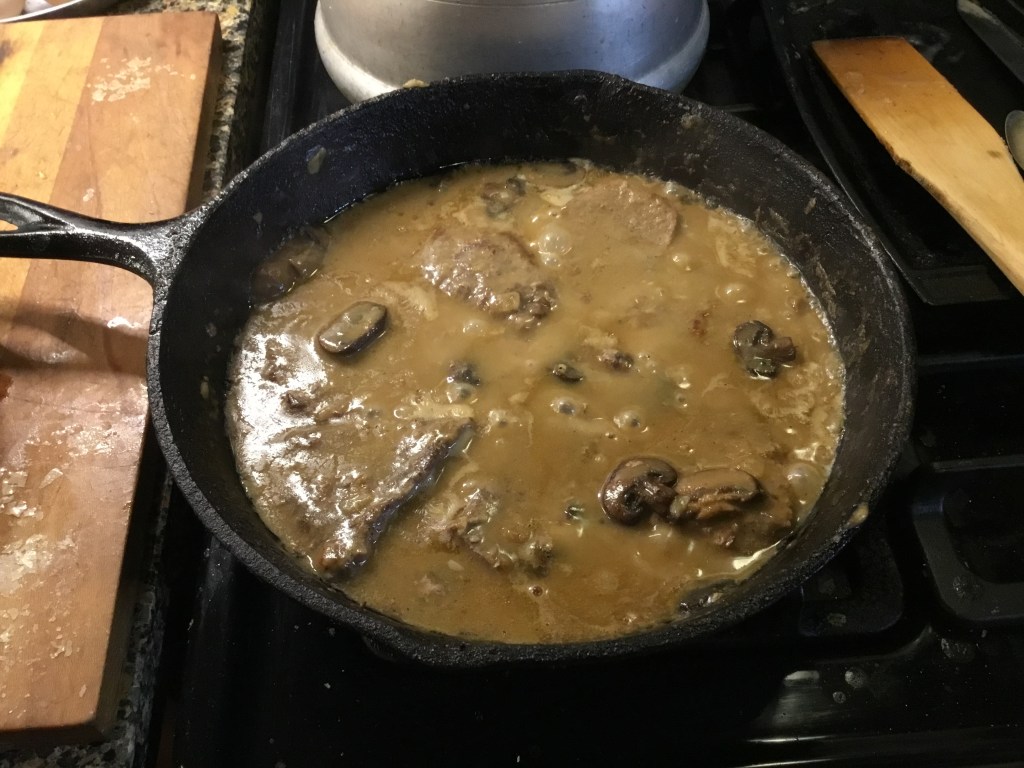
Add the flour, and begin the basis for a brown roux, aka a gravy. Stir regularly, as a roux is also known as “Creole Napalm.” When you get to a brown color to your liking, add the Grillades to the top of the roux, along with the mushrooms. Add the water and stir. Mine looked like this.

Simmer Time!

That’s my favorite heavy cast iron skillet. Close it about 7/8 of the way with an equally heavy cast iron lid. Stir regularly, because even with the stove set at the lowest setting, this sauce will stick and burn, and the dish is ruined. Add more water when the gravy begins to thicken excessively. Simmer a minimum of thirty minutes, though we just cook ours until it is completely tender. This cooked forty or forty five minutes.

Serve over Louisiana, or any other good, rice, and garnish with chopped parsley, unless you enjoy food that is just really brown. That was served on one of Grandmother Lilian’s Tennessee made plates. Leftovers made the best steak and biscuit with gravy, the next morning, in history.

Grillades. It’s what’s for supper.

Shelling Peas during a Hurricane

Field Peas, That Is

I was once scheduled to take the now former Editor of the New York Times fly fishing, but his condo on the Gulf coast got hit by a hurricane, and he had to go and board up the windows instead. He actually is a great writer–a Pulitzer prize winner, in fact,– despite the fact that he had to survive the Alabama educational system. But so did I.

We live in the mountains, where we love a good hurricane. We get the rain during the driest part of the year, and hardly ever get any of the wind. In fact, our last four inches of rain came from tropical systems.

Hurricane Sally stayed around for so long that I thought she was one of my in-laws. Hurricane Delta got out of here like a dog with it’s tail on fire. But Delta gave us some really needed rain.

Here’s how fast it moved. I looked at the radar before I fed my chickens, and there was nothing there. I get to their pen, and it starts raining. I get back to the house, and our entire county is covered with rain.

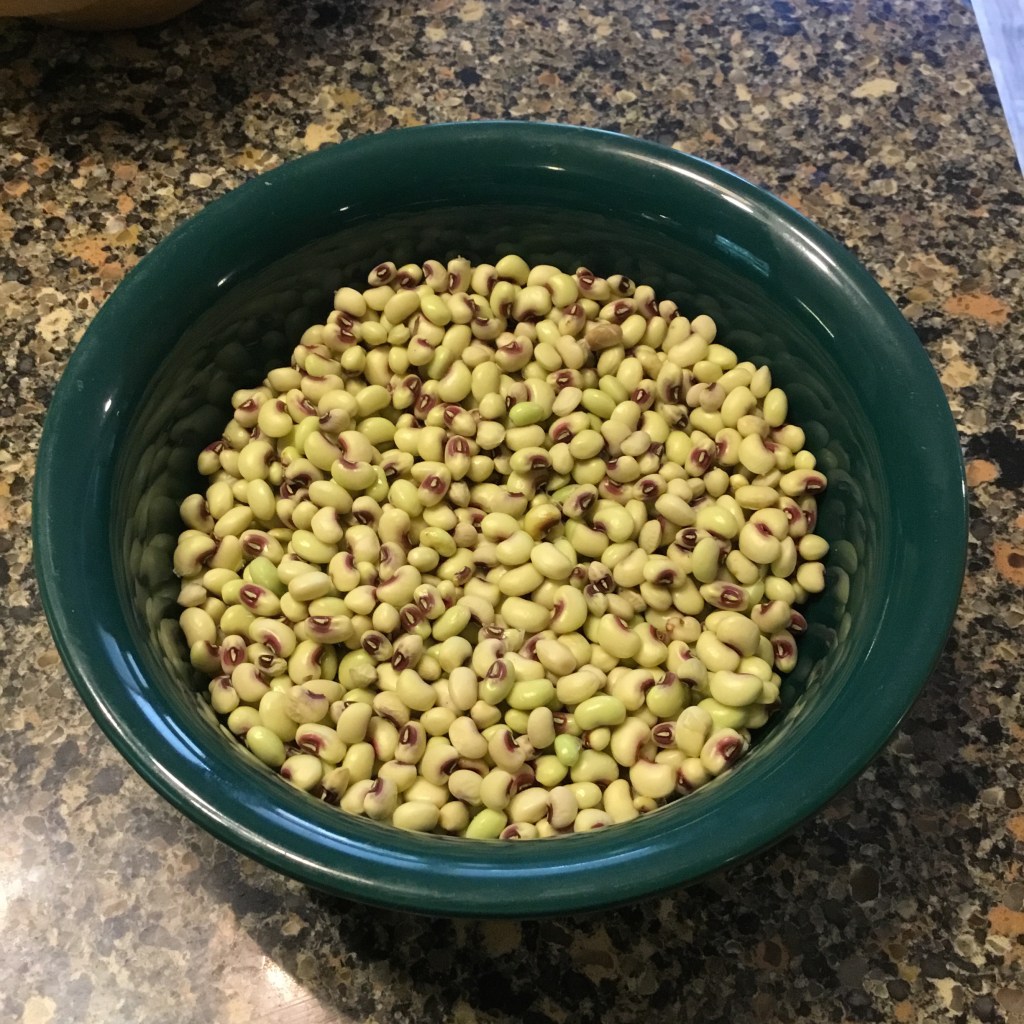
However, nothing can stop MJ and myself from going to the Festhalle Farmer’s Market, not even a hurricane. An older gent there had the latest season field peas that I have ever seen. We bought 1/8 of a Bushel from him, and I spent the rest of the rainy day shelling peas.

Time for another trip to Nerdlandia. A “Market Basket” back in the old days was a standard of dry measure, and this guy had an authentic wooden market basket. That was 1/2 of a Peck, and four Pecks equals one Bushel. File that in the appropriate file.

Now for the backstory. My Aunt June ran the only real restaurant in our community, and she insisted on fresh ingredients. We began selling her field peas, and she sold them as fast as we could grow them. Then my father had the idea that we should sell to every restaurant in the area. So we planted fifteen acres of peas one summer.

The problem: Cooks want shelled peas. I spent a summer developing advanced pea shelling technigues. A sharp thumbnail helps, but there are ways around that.

Just rip the end off the pea. Then there is the thumb bulldozer approach, where your off hand thumb plows out the peas, while your dominant hand yanks on the shell. A really ripe pea gets the zipper approach, where you just pull the shell apart.

A really green pea? Just feed it to the chickens.

The Picayune’s Creole Cookbook, 1901 Edition Reprint

I love people who hate on Amazon and our corporate overlord Bezos, when I know that they are buying like crazy from them. Life these days would be nearly impossible without them.

I have been saving writing about this cookbook for a couple of years now, and this is only a teaser. I’ll begin with the modest assertion that this is the greatest cookbook ever written (or at least it’s my favorite). You are allowed to ask why.

First, thanks to archduke Bezos, I was able to purchase a mint quality hardback of the 1989 version of the book for $3 plus change. It is expertly edited by a great cookbook writer herself, Marcelle Bienvenu, who wrote the definitive cookbook on Cajun cooking, Who’s Your Mama…? And please don’t confuse Creole food with Cajun food, unless you want to get laughed at.

Then, the recipes are superb, especially the meat recipes for chicken, beef, and Gulf seafood, as well as every vegetable imaginable. There is even a suggestion about how to serve broiled Robins or Larks–this one is not suggested by me, but the recommendation is to serve your songbirds on buttered French toast, and garnish with parsley.

The last mystery was as to who wrote this mammoth book (this latest version is 629 pages). An intrepid young scholar at Tulane University named Rien Fertel has determined that the author was one Marie Louise Points, a writer for the Picayune, who was “from a white, French-Creole family in New Orleans; her ancestors were from Virginia and around the Gulf Coast.” This is a common enough history, as my two favorite “Louisiana” writers came from Missouri and Alabama, respectively.

Bienvenu took the interesting approach of using the recipes from the second edition, but the introduction to the first edition. Anyone who has a copy of the second edition knows why. The second edition has an introduction that contains every racist stereotype that one would expect from the city that brought us legalized segregation with the case of Plessy v Ferguson in 1896–only four years before this book was first published. Fortunately, when it comes to the kitchen, all women and men are created equal.

Hot Stuff!

Can’t Get Enough

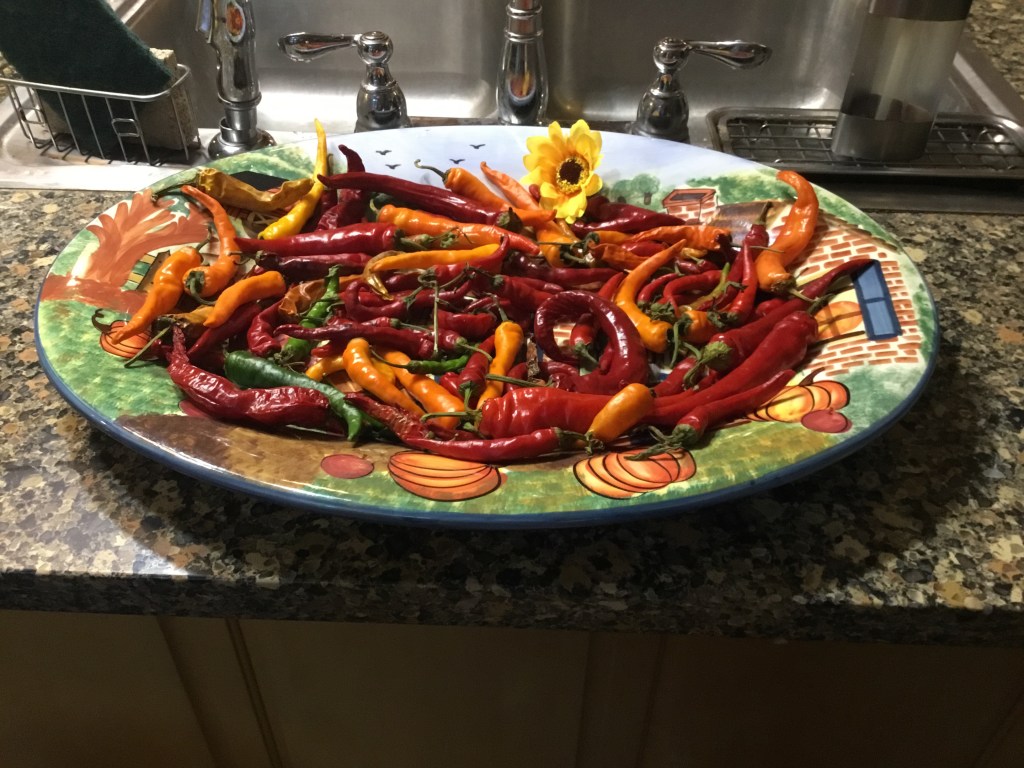
Like every addict, you have to eventually confess about your addiction. That plate tells you that I am addicted to pepper flakes.

This year I am drying my own, with a nice mixture of kinds hot and really hot. Really hot include Cayenne, Tabasco, and Royal Black. Serrano is hot, but not like the first three. The mildest is the old standard Cowhorn pepper. These are all local.

After they are dried, they take a couple of trips through the old Enterprise #602 grinder.

Pizza!

What does MJ do but dive into a scrap pile cabinet of hers, and comes out with a pepper flake shaker–THAT HAS PEPPERS ON IT. Nothing to do this weekend but fire up the brick oven.

ORANGE Tabasco Pepper

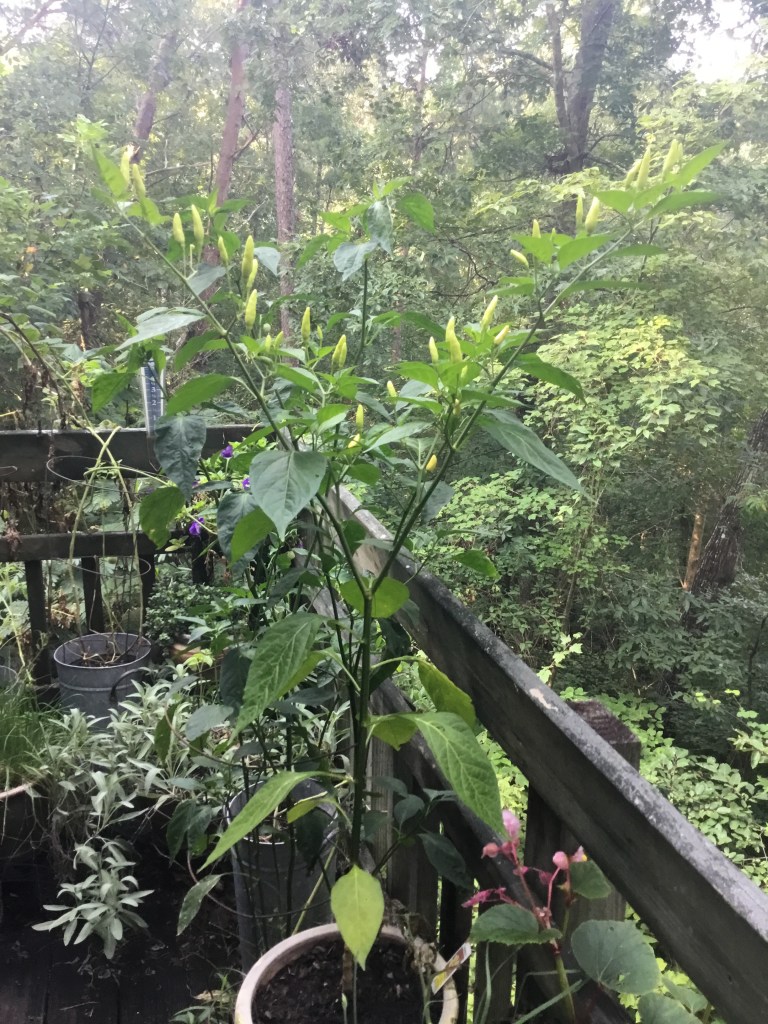
Peppers Galore. The View from our Deck. Sage in the background

Everyone who has used the Southern classic Tabasco Sauce knows that it is dark red. Imagine my surprise when I went to our local vegetable plant seller in the spring, and found that he was selling orange Tabasco pepper plants. I can never resist growing strange new crops–I also have a row of red broom corn, which is actually a plant from the sorghum family.

This was the result.

Future Pepper Flakes

That little reddish orange pepper is the first ripe Tabasco. It’s probably as hot as that whole Serrano that is right below it. I don’t know how this will work, but my goal is to dry all these, and make multi-colored pepper flakes with them. Then I can make some psychedelic sausages.

OffGuardian

because facts really should be sacred

Ruth Blogs Here

Or not, depending on my mood

A Haven for Book Lovers

I am just a girl who loves reading and talking about books

what sandra thinks

because I've got to tell someone.

LadiesWhoLunchReviews,etc

a little lunch, a little wine, a LOT of talking!

Margaret and Helen

Best Friends for Sixty Years and Counting...

talltalesfromchiconia

Tales of quilting, gardening and cooking from the Kingdom of Chiconia

Cyranny's Cove

Refuge of an assumed danophile...

Exiled Rebels

Serving BL since 2017

this is... The Neighborhood

the Story within the Story

Beauty lies within yourself

The only impossible journey in life is you never begin!! ~Tanvir Kaur

Southern Fusion Cooking

Country Living in the Southern Appalachians, USA--A little of this, a lot of that

Discover WordPress

A daily selection of the best content published on WordPress, collected for you by humans who love to read.

The Atavist Magazine

Country Living in the Southern Appalachians, USA--A little of this, a lot of that

Longreads

Longreads : The best longform stories on the web

WordPress.com News

The latest news on WordPress.com and the WordPress community.